
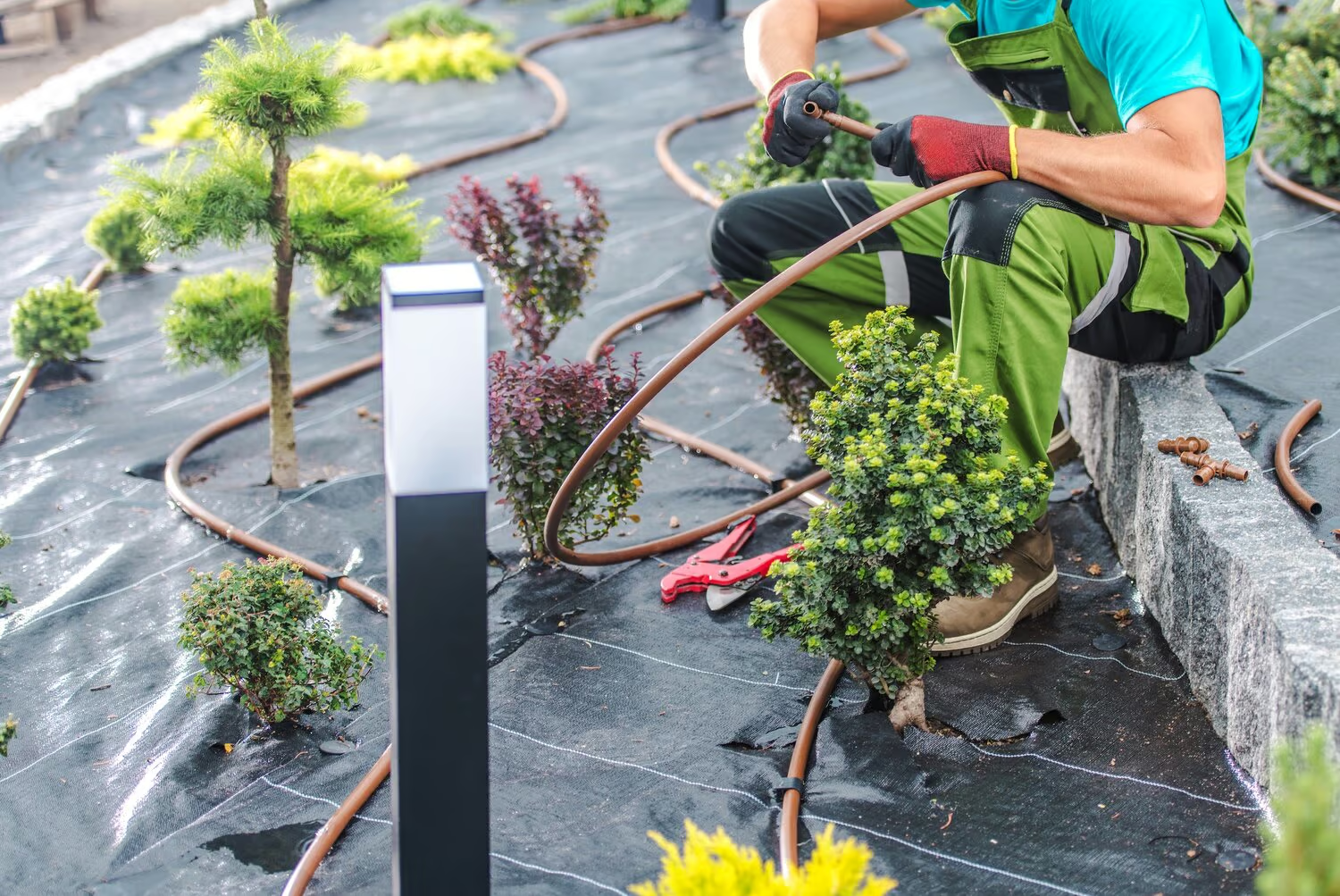
1. The Science of Planting: "Right Plant, Right Place"
Many homeowners ask, "What is the best month to plant a garden in Seattle?" or wonder why their expensive nursery plants die after a month. The secret lies in the preparation and selection.
A. USDA Planting Zones: Understanding Zone 8b
Washington State has diverse micro-climates. Seattle, Kirkland, and the Eastside generally fall into USDA Hardiness Zone 8b.
- What this means: Our winters rarely drop below 15°F-20°F. We select plants specifically rated for this zone (Cold Hardiness) to ensure they survive our freezes.
- Sun Mapping: We analyze your property's exposure. A South-facing wall in Kirkland creates a "heat trap" perfect for Lavenders, while a North-facing slope requires shade-tolerant Ferns or Hostas. We ensure the plant matches the micro-climate.
B. Soil Preparation & Amendment (The Vital Step)
The native soil in our region is often compacted "glacial till" or heavy clay. Digging a hole and dropping a plant in is a death sentence (the clay acts like a pot, drowning the roots).
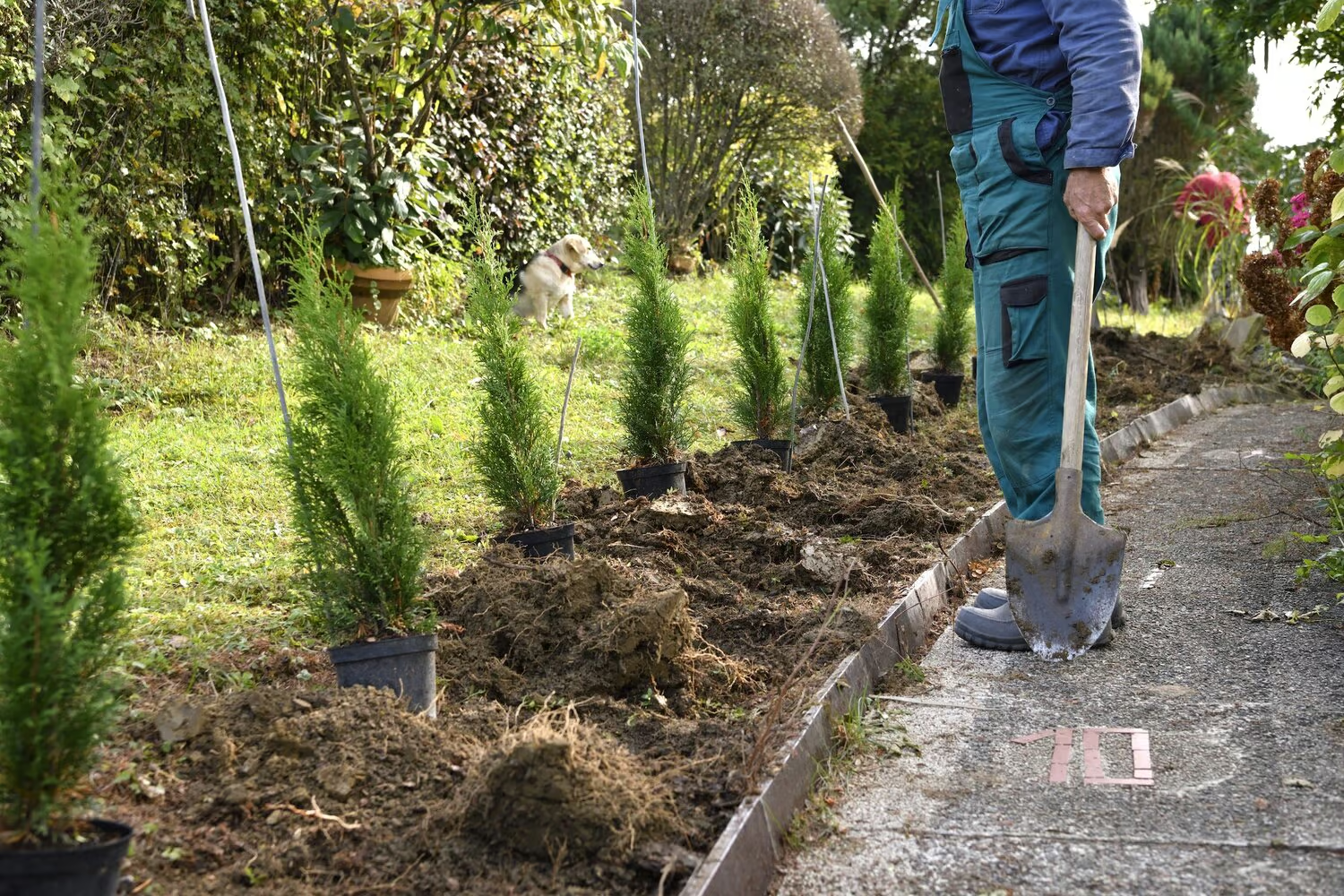
- Our Protocol: We excavate a hole twice the width of the root ball. We then amend the native soil with high-quality organic compost and specialized starter fertilizers rich in phosphorus to stimulate root growth. This creates a nutrient-rich transition zone that encourages roots to expand outward.
C. Privacy Screens & Specimen Trees
We specialize in functional planting.
- Privacy Hedges: We install fast-growing screens (like Emerald Green Arborvitae or English Laurel) to block neighbors and reduce noise. We calculate the exact spacing to ensure they grow into a dense wall without overcrowding.
- Specimen Sizes: Do you want instant impact? We install everything from small 1-gallon starts (economical) to mature 15-30 gallon trees using specialized equipment to handle the weight.
D. The "Plant Health Warranty"
We stand behind our science. Because we control the soil prep and selection, we offer a 30-Day Survival Guarantee. If a plant we install dies within the first month (under proper care), we replace it. We invest in your landscape's long-term success.
2. Weekly Maintenance: The "White Glove" Service
You have seen the "splash and dash" crews, they rush in, scalp the lawn, blow dust everywhere, and leave. That is not us. Our weekly maintenance service is a comprehensive property management solution designed for discerning homeowners.
A. The Full Menu of Services (What's Included)
Our weekly visit includes detail work that others charge extra for:
- Precision Mowing: Using professional-grade equipment with sharp blades to prevent tearing the grass (which causes brown tips).
- Hard Edging: We use a metal blade to cut a vertical trench along sidewalks and driveways. This creates a distinct, crisp separation between the grass and the concrete.
- Bed Maintenance: We don't ignore the gardens. We perform manual weeding and stick-edging of your garden beds to keep grass from creeping into the mulch.
- Blow-Off: We ensure all hard surfaces (decks, patios, driveways) are free of clippings and debris before we leave.
B. Horticultural Mowing (Seasonal Adjustment)
We adjust our mower deck height based on the season.
- Spring: We cut slightly lower to remove dead tips and encourage density.
- Summer: We raise the height. Taller grass shades the soil, retaining moisture and preventing "burnout" during the July/August heat.
C. The "Gate Protocol": Safety for Pets & Kids
This is our strict non-negotiable rule. "If we open it, we close it." We understand that your backyard is a sanctuary for your dogs and children. Our crews are trained to double-check every gate latch before leaving the property. We treat your perimeter security with the same importance as the lawn quality.
D. Consistency & Reliability
You won't have to guess when we are coming. We schedule your property for the same day every week. If a holiday or severe weather disrupts the schedule, we communicate proactively and reschedule immediately.
In-Depth Expert Answers: Planting & Maintenance FAQ
We answer the most searched questions about gardening rules, logistics, and lawn care best practices.
Planting Strategy & Botany
What is the 70/30 rule in gardening? This is a design principle suggesting that 70% of your planting should be reliable, structural plants (evergreens, trees, shrubs) that look good year-round, and 30% should be "accent" plants (annuals, flowering perennials) that provide seasonal pops of color but may die back in winter.
Is it okay to plant in October in Washington? Yes! Fall is actually the best time to plant trees and shrubs in the PNW. The soil is still warm from summer, but the air is cool and moist. This allows roots to establish before the stress of the next summer's heat. "Fall is for planting."
What is the best month to start a garden? For structural planting (trees/shrubs), October/November or March/April are ideal. For summer vegetable gardens or annuals, wait until the threat of frost has passed, usually mid-May.
How many hours is considered "Full Sun"? In landscaping terms, "Full Sun" means at least 6 hours of direct sunlight per day. "Part Shade" is 3-6 hours. Knowing this is critical for our "Right Plant, Right Place" assessment.
Can you move an existing tree (Transplanting)? It depends on the size and season. Small shrubs can often be moved in winter (dormancy). Large, established trees often have root systems too massive to move safely without specialized hydraulic tree spades. We assess this on a case-by-case basis.
Why do you use "starter fertilizer" when planting? Starter fertilizers are high in Phosphorus (the middle number on the bag, e.g., 10-20-10). Phosphorus specifically stimulates root development, which is exactly what a new plant needs to anchor itself in your soil before growing leaves.
Do you guarantee your plants? Yes. Because we follow rigorous soil amendment protocols, we offer a warranty on our plant installations. If a plant fails within 30 days due to health issues, we replace it. (Exclusions apply for neglect or extreme weather events).
Maintenance Logistics & Quality
Do you mow in the rain? In Seattle, if we stopped for rain, we would never work! We mow in light to moderate rain using specialized equipment. However, during torrential downpours or if the ground is saturated (squishy), we may pause service to prevent leaving "mud tracks" or rutting up your lawn.
What is the 3-hour gardening rule? This is a maintenance philosophy: Spending 3 hours a week consistently is better than spending 12 hours once a month. Our weekly maintenance service ensures your yard never gets out of control, preventing the need for massive, expensive cleanups later.
Should I water every day in 90-degree weather? For established lawns, no. It is better to water deeply and infrequently (2-3 times a week) to force roots to go deep. However, for newly planted specimens (first year), daily watering might be necessary during a heatwave to prevent transplant shock.
How do you handle pet waste? For the safety of our crew and to prevent spreading bacteria on our equipment, we ask that pet waste be cleared before our scheduled arrival. However, our Gate Protocol ensures your pet stays safely inside once we leave.
What is "Hard Edging"? Hard edging uses a metal blade to cut a vertical trench along sidewalks and driveways. This creates a distinct separation between the grass and the concrete, giving the property a high-end, manicured appearance that string trimmers alone cannot achieve.
Do you offer bi-weekly mowing? During the peak growing season (April-June), grass grows too fast for bi-weekly service; it results in clumping and an unhealthy cut. We strongly recommend weekly service for the best results. In the slower summer months or late fall, we can adjust the schedule.
What happens on holidays? If your scheduled day falls on a major holiday (like Thanksgiving or Christmas), we typically adjust the schedule to come a day early or a day later. We will always notify you in advance.
Do you mulch the clippings or bag them? We typically recycle clippings (mulching) if the grass length allows, as this returns nitrogen to the soil. However, if the grass is long or wet, we bag and remove the clippings to prevent clumps that can smother the lawn.
Local Experts Serving Kirkland, Seattle & Eastside
Our connection to the region goes beyond holding a business license; we were raised in Kirkland. This background provides us with an inherent understanding of the specific soil compositions and planting zones that affect Seattle landscaping.
We don't need to guess how local terrain reacts to the seasons because we have lived it. When you hire LandscapingFactory, you are engaging specialists who combine botanical science with reliable service.












From the first hole dug to the weekly mow.
Trust the team that understands the science of your garden.
Request a Planting or Maintenance Quote
Landscaping Reviews
Neighbors talk. Here's what they have to say.