July 26, 2026
Why Your Seattle Lawn Looks Dead Every Spring (And the Science That Fixes It for Good)
Growing up in Kirkland taught us the soil, the seasons, and what holds. We build what lasts here because we live here. That matters.
Walk out onto your lawn right now. If you are like most Seattle homeowners, you are looking at a crime scene. The grass — what is left of it under the moss — looks pale, yellowish, and exhausted. The ground feels spongy in some spots, rock-hard in others, and in the worst areas it is just mud. You have been mowing it faithfully for years. You have thrown bags of fertilizer at it every spring. And somehow, it looks worse every season.
Here is what nobody tells you: the problem is not the grass. The problem is underground.
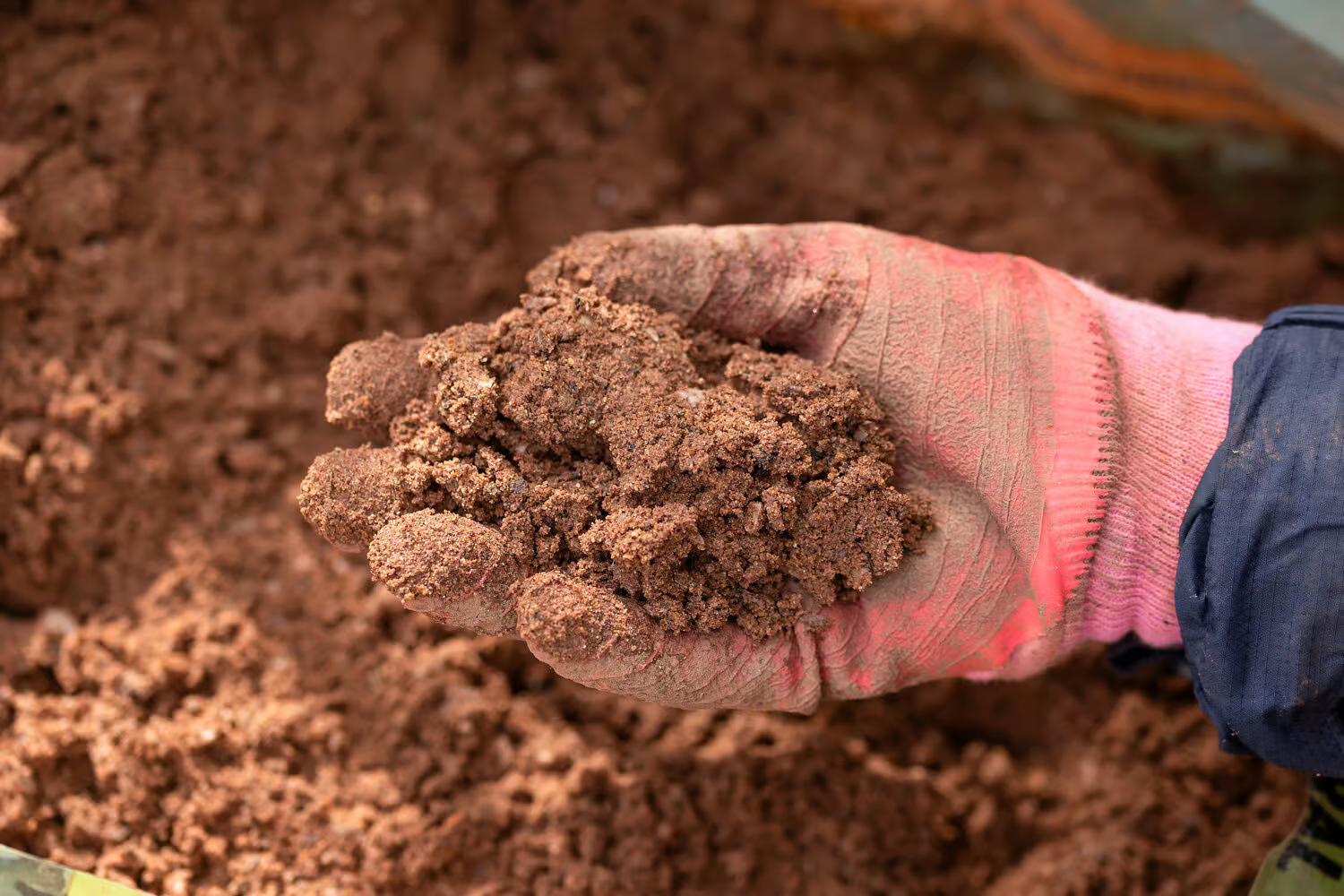
Here in the Puget Sound, our relentless winter rains do something most lawn care companies never explain. That water does not just make the ground wet. It acts as a chemical solvent, leaching critical nutrients like Nitrogen, Calcium, and Magnesium out of the root zone, pushing them deep below where your grass can reach them. What is left behind is a sterile, acidic, compacted layer of soil that actively works against your lawn. The grass starves. The moss thrives. And your bag of synthetic fertilizer from the hardware store does not stand a chance.
You cannot fix this with a mower. You cannot fix it with more water. You need to rebuild the soil itself.
At LandscapingFactory, we treat March not as mowing season but as Soil Reconstruction Season. This is the precise biological window to re-engineer the ground beneath your feet. Here is the science behind how we turn a yellow, mossy mat into a deep green, summer-ready carpet that actually survives July and August.
Why Winter Rain Destroys Your Soil Chemistry
Nutrient Lockout: The Real Reason Your Lawn Struggles
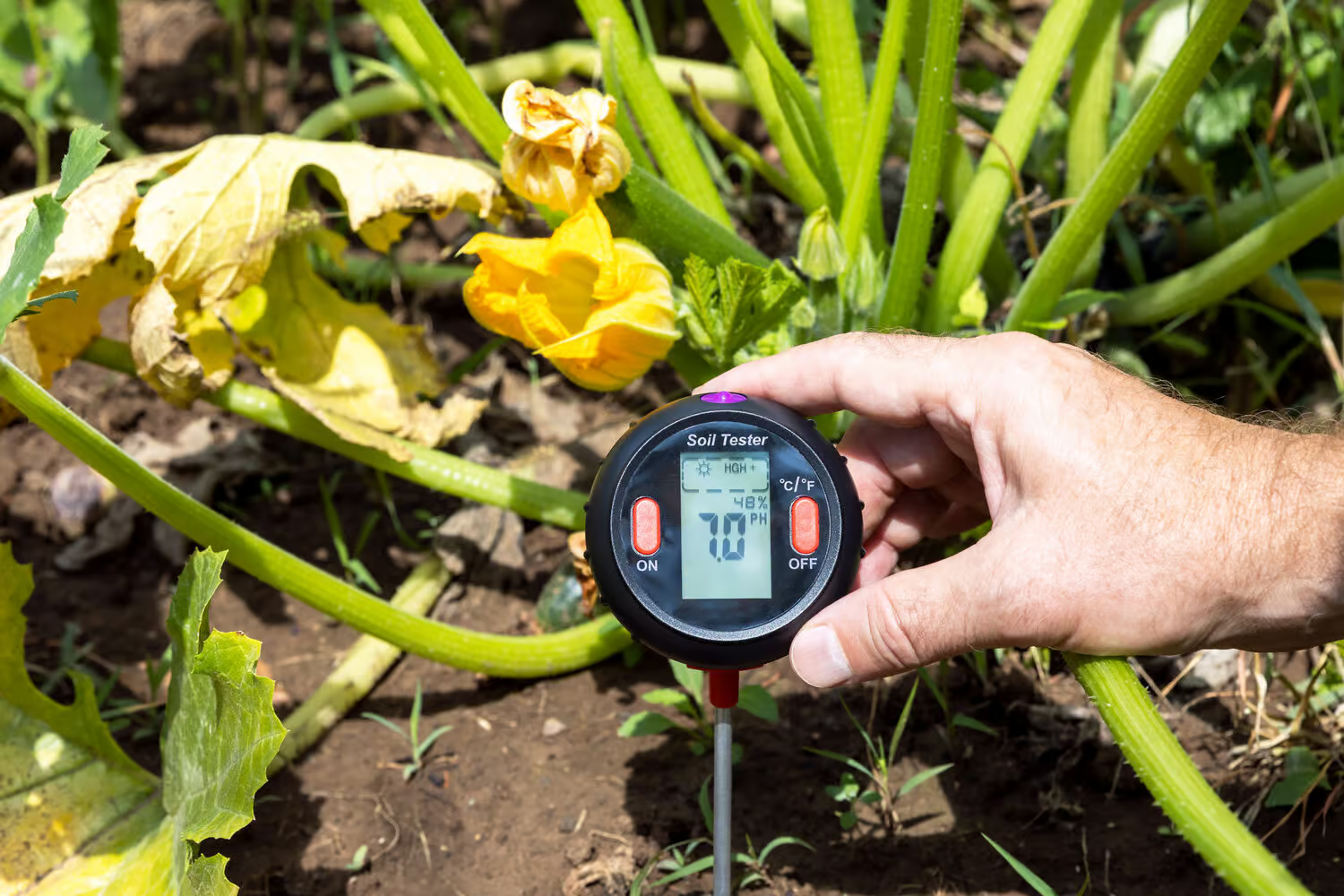
West of the Cascades, our native soil naturally trends toward acidity (pH below 6.0). Five months of winter rain accelerate this by washing away the calcium ions that buffer the soil toward neutral. By March, most untreated Seattle lawns are sitting at a pH of 5.0 to 5.5 — firmly in the acidic zone.
When the pH drops below 6.0, the grass enters a state called Nutrient Lockout. The nutrients are physically present in the soil, but the chemical bonds created by acidity prevent the roots from absorbing them. You can dump expensive fertilizer on your lawn every week, and the grass literally cannot eat it. The food is there, but the door is locked.
You know what loves acidic, low-nutrient soil? Moss. By failing to correct the pH, you are not just starving your grass. You are actively rolling out the red carpet for the one organism that will happily replace it.
How Lime Application Fixes Acidic Soil
The solution is not more fertilizer. The solution is lime.
We apply Dolopril Lime (a fast-acting prilled form of calcium and magnesium carbonate) across the entire lawn surface. As it dissolves, it neutralizes the acid, chemically unlocking the nutrient bonds in the soil. Suddenly, the Nitrogen, Phosphorus, and Potassium that were trapped become available to the grass roots again. Think of it as turning a key — the food was always there. The lime opens the door.
Lime also delivers Calcium and Magnesium directly — two minerals that our winter rains strip away every year. Regular lime application (every 6 to 12 months) is the single most effective long-term strategy for maintaining healthy turf west of the Cascades, according to WSU Extension research.
Lime does NOT kill moss. Iron-based moss killers do that. What lime does is change the soil chemistry so that grass outcompetes moss going forward. It is a long-term preventative, not an instant herbicide. If you have heavy moss, remove it first, then apply lime to prevent it from returning. See our Moss Removal Guide for the full protocol.
What Is the Best Time to Aerate and Overseed a Lawn in Seattle?
The optimal window for lawn aeration and overseeding in Seattle is mid-March to late April, once soil temperatures reach 50°F but before the summer dry season begins. A secondary window exists in late September through October, but spring is superior for reversing winter compaction and acidity damage. Spring aeration and overseeding gives the grass a full growing season to establish before facing summer drought stress.
Core Aeration: How to Undo 5 Months of Compaction
Why Seattle Soil Gets So Compacted
Whether your property sits on clay, the rocky concrete known as Glacial Till (the compacted gravel and clay left behind by Ice Age glaciers), or builder's fill, Seattle soil is heavy. Five months of relentless rain pound it into a dense, airless brick. Grass roots need oxygen just as much as they need water. When the soil is compacted, carbon dioxide gets trapped in the root zone, oxygen cannot enter, and the roots shallow out. The result is a lawn that turns yellow at the first sign of summer heat and can be peeled up like a carpet because the roots never went deep enough to anchor it.
How Core Aeration Works
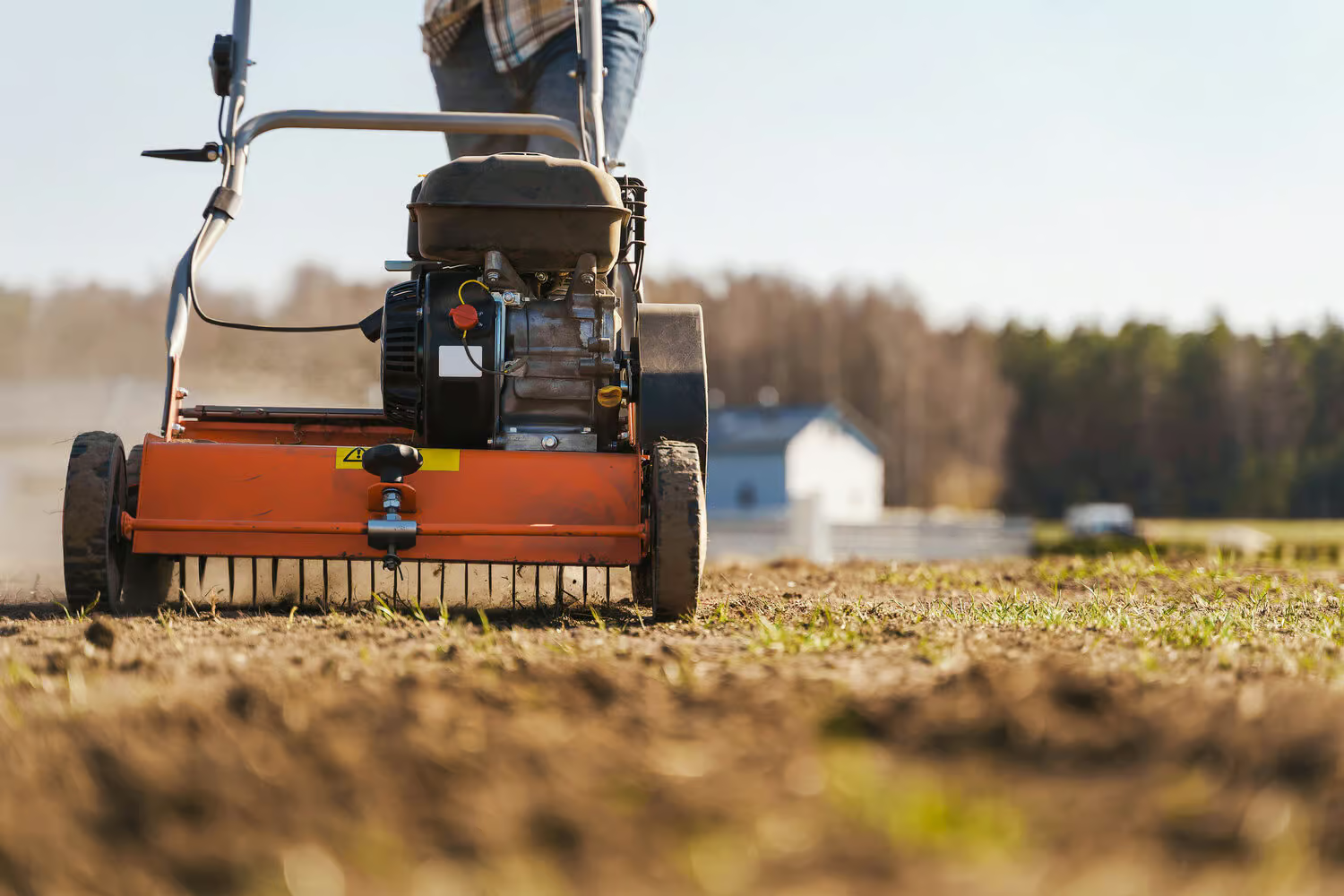
We use heavy-duty commercial core aerators (approximately 300 pounds) that punch hollow tines into the ground and pull out plugs — small cylinders of soil 2 to 3 inches long. These plugs are left on the lawn surface to break down naturally with the next rain.
Why plugs, not spikes: Spike aerators (sandals with nails, rolling spike wheels) do not aerate. They push the soil sideways, which actually increases compaction around each hole. Only hollow-tine core aeration physically removes soil, creating genuine space for air, water, and nutrients to penetrate the root zone.
Those thousands of holes allow oxygen to reach the root zone, break through the compacted surface layer so water penetrates instead of pooling, create channels for fertilizer and lime to bypass the thatch and reach the soil directly, and provide perfect seed pockets for overseeding where seeds drop in with protected soil contact.
The 7-4-9 Organic Formula (And Why Synthetics Make It Worse)
The Problem With Synthetic Lawn Fertilizer
Most big-box lawn fertilizers are high-nitrogen synthetics. They force the grass to produce blade growth rapidly. The lawn turns bright green within days. Then the problems start. That rapid nitrogen-forced growth is structurally weak — soft, succulent, and thin-walled. This makes it a magnet for fungal diseases like Red Thread (Laetisaria fuciformis), which thrives in cool, damp Seattle conditions. There is also an environmental issue: excess synthetic nitrogen washes off with the next rain, enters the stormwater system, and flows directly into Puget Sound, where it feeds toxic algae blooms.
What the 7-4-9 Formula Means
We use Pacific Northwest organic blends formulated at a 7-4-9 ratio (or similar):
7 (Nitrogen): A moderate amount for steady, controlled greening. Enough to produce rich color without the dangerous sugar rush of high-nitrogen synthetics. No burn risk. No excess runoff.
4 (Phosphorus): Critical for root development in spring. After five months of winter dormancy, the root system is weak and shallow. We need energy going down, not just up. Phosphorus rebuilds the underground engine that makes summer survival possible.
9 (Potassium): The immune booster. High potassium strengthens cell walls, making each blade of grass thicker, tougher, and more resistant to disease and summer drought stress. This is the number most homeowners overlook, and it is the one that makes the biggest difference in long-term lawn resilience.
Because the nutrients are derived from organic sources (feather meal, alfalfa, bone meal, kelp), they break down slowly over 8 to 10 weeks, feeding the soil microbiome steadily. This is the difference between a nutritious meal and a candy bar.
Commercial application of fertilizer products on client properties in Washington State requires a WSDA license. The fertilizer protocol described above is for homeowner self-application or a licensed applicator. LandscapingFactory provides aeration and overseeding as part of our lawn care service. For fertilizer application, we work with licensed partners or provide recommendations for homeowner self-application.
Ready to rebuild your lawn from the soil up?
See our Lawn Care and Maintenance service for the full spring restoration program.
Overseeding: Building a Lawn That Adapts to Everything
Why Overseed After Aeration
Individual grass plants do not live forever. Over years, the colony gradually thins as older plants lose vigor — this is why even a well-maintained lawn slowly develops bare spots. Overseeding injects new genetic material, essentially introducing new blood that reinvigorates the turf colony. When we broadcast seed immediately after core aeration, the seeds fall directly into the aeration holes. This gives them perfect soil contact (the number one factor in germination success), protection from birds, and a microenvironment of loose, aerated soil with nutrients and moisture.
The PNW 3-Way Blend
You cannot use Kentucky Bluegrass in Seattle. It hates our wet winters, develops fungal problems constantly, and goes dormant in our dry summers. We use a specialized 3-Way PNW Blend designed specifically for our climate:
Perennial Ryegrass: Germinates fast (as quickly as 7 days in cool soil), wears like iron under foot traffic, and has natural resistance to common PNW pests. This is the workhorse of the blend.
Creeping Red Fescue: Tolerates the deep shade cast by our giant Douglas Firs, Western Red Cedars, and Big Leaf Maples. For lawn areas that get less than 4 hours of direct sun, this is the species that survives.
Chewings Fescue: Fine-textured, drought-tolerant, and low-maintenance. It thrives on neglect and provides the dense, carpet-like appearance that gives a lawn its manicured look.
By combining these three species, we build a polyculture lawn: a diverse ecosystem where different grasses excel in different microclimates across your yard. Instead of one species struggling everywhere, you get three species each thriving where conditions suit them best.
The European Crane Fly: Seattle's Hidden Lawn Killer
If your lawn has mysterious bald patches every March that look like something grazed there overnight, the culprit is probably underground.
How to Identify Crane Fly Larvae (Leatherjackets)
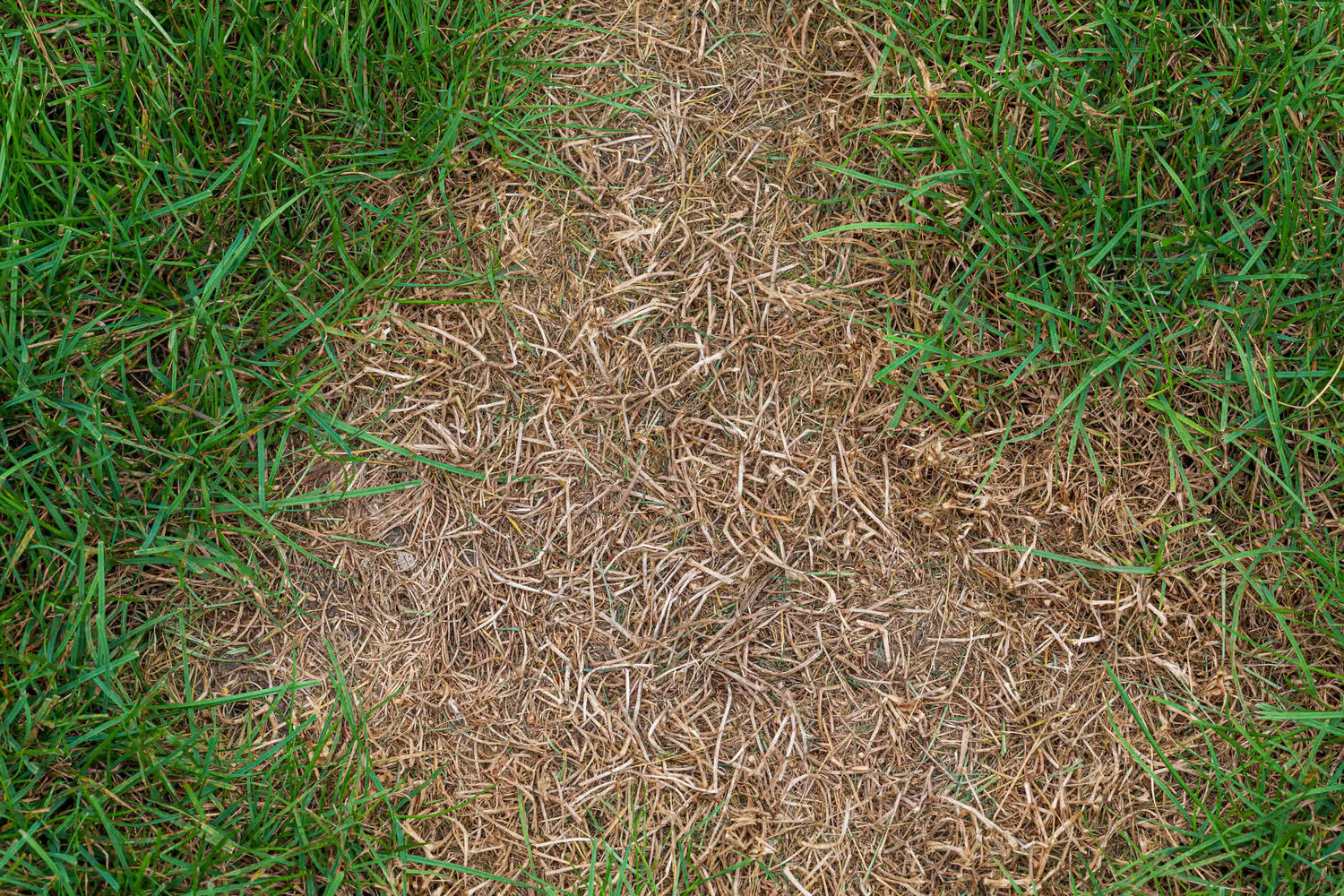
The European Crane Fly (Tipula paludosa) is an invasive pest established throughout the Puget Sound region. The adults are those giant, clumsy, mosquito-like insects that swarm around porch lights in September. They do not bite. But their larvae are devastating. The larvae — called Leatherjackets because of their tough grey-brown skin — live underground all winter, silently eating the roots of your grass. By March, the damage becomes visible as circular dead patches that expand outward as the larvae feed.
The diagnostic test: Cut a 12-inch square of turf and peel it back. If you count more than 25 larvae per square foot, your lawn is in the Kill Zone. At that density, the root system cannot recover without intervention.
Biological Treatment
March and April are the treatment window. Beneficial nematodes (Steinernema feltiae) are microscopic organisms that actively hunt down Leatherjackets underground, penetrate their bodies, and eliminate them biologically. They are 100% safe for pets, children, and beneficial insects. The treatment requires precise timing: soil temperature must be above 42°F, and the soil must be moist for the nematodes to move through it. Seattle's naturally cool, damp March soil is the perfect delivery medium.
Why Weed and Feed Is a Waste of Money on Seattle Lawns
Every March, homeowners load bags of Weed and Feed into their cars convinced they are knocking out two jobs at once. Here is why it usually makes things worse.
The timing mismatch: The Feed component (fertilizer) needs to reach the soil and dissolve into the root zone. The Weed component (herbicide) needs to stick to the leaves of actively growing weeds to be absorbed. One wants to wash in. The other needs to stay dry on the leaf surface. Doing both simultaneously usually means doing neither effectively.
The coverage problem: You end up broadcasting herbicide across your entire lawn, including the 90% of the surface where there are no weeds. That is chemical waste that ends up in your stormwater drain and ultimately in Puget Sound.
Our approach: We feed the entire lawn with organic fertilizer (it benefits every square inch). Then we spot-treat weeds individually in the specific areas where they are growing. This uses a fraction of the chemical, targets only the problem plants, and is safer for your lawn, your pets, and the watershed.
The Triple Threat Protocol: What We Do in a Single Visit
Our March lawn service is a full soil reconstruction designed to reverse five months of winter damage in a single visit. Here is the sequence and why the order matters:
Aerate
We punch thousands of hollow-core holes across the entire lawn surface, physically breaking through the compacted layer and creating channels for everything that follows. This step must come first.
Balance
We apply Dolopril Lime across the aerated surface. The lime particles fall directly into the aeration holes, delivering pH correction deep into the root zone instead of sitting on top of the thatch. This is why we lime after aeration, not before — the holes are the delivery mechanism.
Feed and Seed
We apply organic fertilizer and broadcast our PNW 3-Way seed blend. The fertilizer dissolves into the aeration channels. The seeds settle into the holes with perfect soil contact, protected and nourished. Everything works together because the sequence is designed to be synergistic.
Aeration first creates the channels. Lime second delivers pH correction deep. Fertilizer and seed third take advantage of open, corrected soil. Reversing any step reduces the effectiveness of the others. This is an engineered protocol, not a checklist of random tasks.
How Much Does Professional Lawn Restoration Cost in Seattle?
Pricing depends on lawn size, soil condition, and which services your property actually needs. Here are honest ranges for the Seattle metro area:
| Service | Typical Range | Key Factors |
|---|---|---|
| Core aeration only | $150 – $300 | Lawn size, slope, access |
| Aeration + overseeding | $250 – $450 | Seed blend, coverage area |
| Aeration + lime + organic fertilizer | $300 – $500 | Lawn size, lime volume needed |
| Full Triple Threat (aerate + lime + feed + seed) | $400 – $650 | Complete protocol, lawn size |
| Crane fly (leatherjacket) treatment | $150 – $300 | Severity, lawn size |
| Full lawn renovation (strip + sod install) | $3 – $5 per sqft | Sod variety, prep work, access |
Prices are estimates for greater Seattle as of 2026. Includes all materials and debris cleanup. We provide free on-site assessments with written, itemized quotes.
Your lawn has been starving all winter. Let us rebuild it from the soil up.
LandscapingFactory provides core aeration, overseeding, and the complete spring lawn restoration protocol across Seattle and the Eastside. Free soil assessment.
Frequently Asked Questions About Spring Lawn Care in Seattle
Will aeration make my lawn look messy? +
Can I aerate my lawn in the summer? +
Why is organic fertilizer more expensive than synthetic? +
How long until I see results from the treatment? +
Do I need to water after overseeding? +
Should I aerate over moss or remove the moss first? +
Is the 7-4-9 organic fertilizer safe for my dog? +
Why do you use Perennial Ryegrass instead of Kentucky Bluegrass? +
Should I mow my lawn before the aeration appointment? +
Can you eliminate crane fly larvae without chemicals? +
What is thatch and should I be worried about it? +
Does lime kill moss? +
My lawn is more than 50 percent weeds and moss. Can it be saved? +
Why is Phosphorus (the middle number) important in spring? +
Why should I hire a professional instead of renting an aerator? +
The Soil Is Waking Up. Feed It Right in March.
If you feed it right in March, your lawn will reward you from April through October. If you wait, the window closes and you are chasing the problem all summer.
Similar Posts

Contact Us Today For A Free Consultation
Let's get started.
Tell us what you'd like to tackle when you request a quote and we'll do the rest.