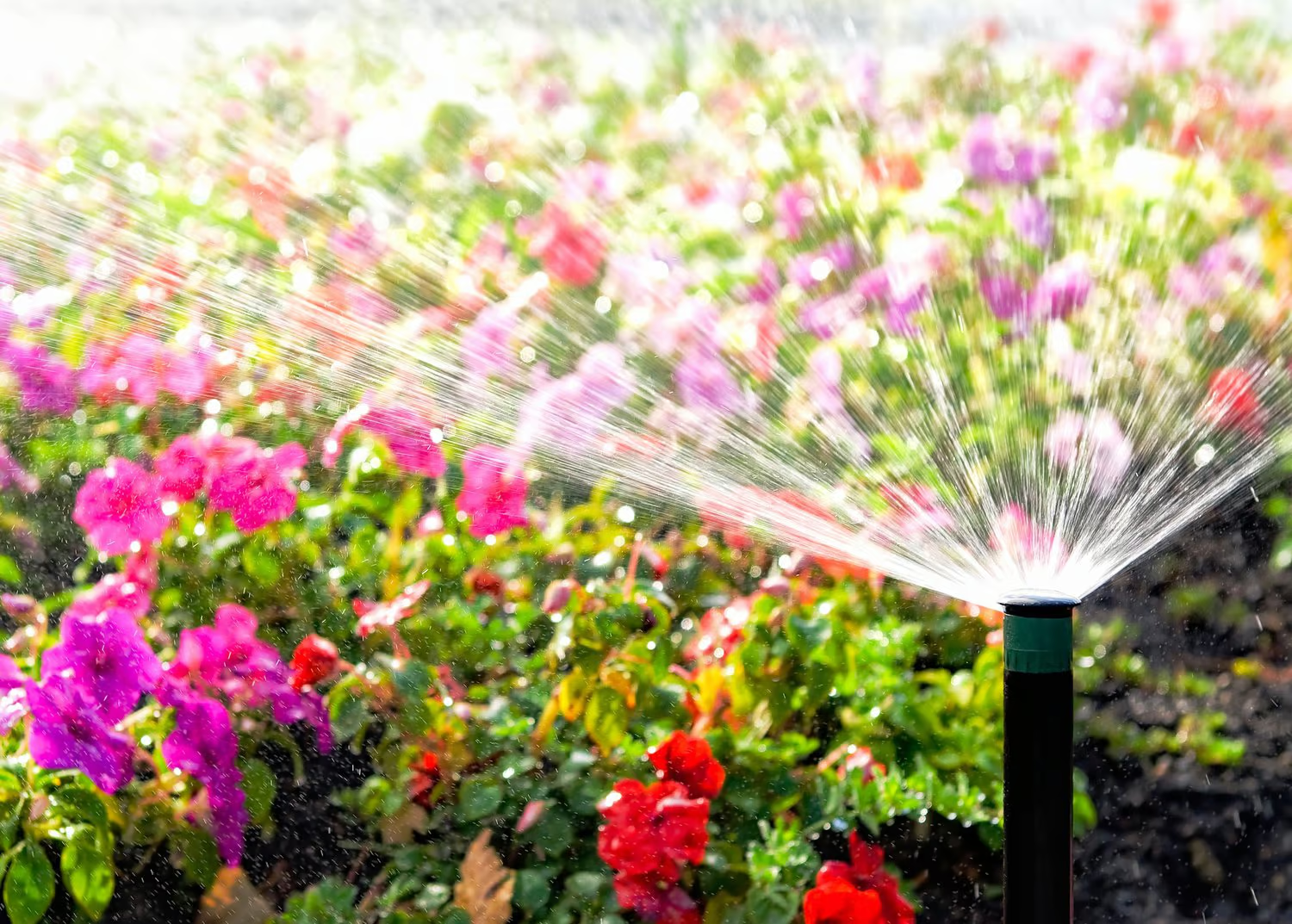
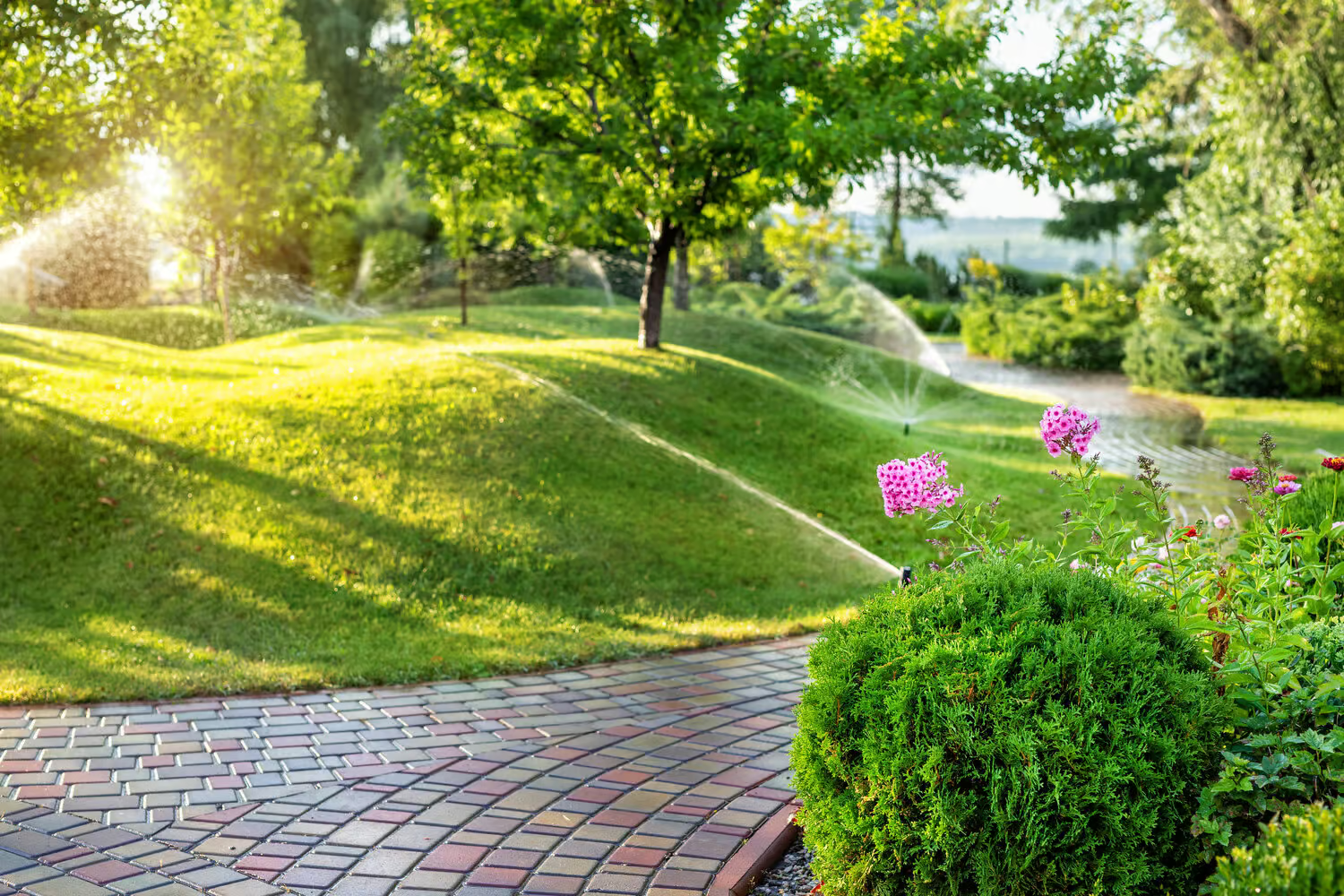
You spent $3,000 to $8,000 on your irrigation system. It worked perfectly the first summer. Then fall came, winter came, and nobody winterized it. A pipe cracked somewhere underground. You did not find out until April when you turned the system on and a geyser appeared next to the driveway. The repair cost more than a year of maintenance would have.
Or maybe the system still runs, technically. But two zones have weak pressure, one head is stuck down and will not pop up, there is a dry brown stripe across the middle of the lawn where coverage does not reach, and the controller on the garage wall is still programmed to the settings from three summers ago. The system is on. It is not working.
Irrigation systems are not set-it-and-forget-it. They are mechanical systems with moving parts, seals, valves, and electronics exposed to Seattle's freeze-thaw cycle, soil shifting, root intrusion, and mower damage. Without seasonal maintenance, they degrade quietly until something breaks visibly. By then the repair costs 5 to 10 times what the maintenance would have.
At LandscapingFactory, we keep existing irrigation systems running. Winterization blowouts in the fall. Spring startups that check every head, valve, and zone. Repairs for broken heads, leaking valves, cracked pipes, and faulty wiring. Smart controller upgrades that replace old dumb timers with WiFi-enabled, weather-responsive technology. Drip irrigation additions for garden beds and shrub borders. Backflow preventer testing to keep you compliant with municipal code.
Winterization: How We Protect Your Irrigation System Before the Freeze
This is the single most important maintenance service for any irrigation system in Seattle. Water left in the pipes, valves, and heads freezes when temperatures drop below 32 degrees. Ice expands. Pipes crack. Fittings split. Valve diaphragms rupture. Backflow preventers break. You do not see the damage until spring, and by then a $75 to $150 winterization has become a $500 to $2,000+ repair.
Seattle's freeze risk is real but unpredictable. Some winters barely touch freezing. Others bring hard freezes in December and January that hold for days. You cannot gamble on which kind of winter it will be. If you have an in-ground irrigation system, it needs to be winterized every year. No exceptions.
Shut Off the Water Supply
We close the main irrigation shutoff valve to isolate the system from the house water supply.
Connect the Compressor
We attach a commercial-grade air compressor to the system at the mainline connection point. We use compressors rated for the volume needed (measured in CFM, cubic feet per minute) to clear each zone. Undersized compressors leave water in the lines. We do not use undersized compressors.
Blow Out Each Zone Individually
Starting from the zone farthest from the compressor, we activate each zone one at a time and push compressed air through the entire line until all water is expelled from the heads. We watch every head on every zone to confirm the air has cleared the water completely. This takes 1 to 2 minutes per zone.
Drain the Backflow Preventer
The backflow preventer — the brass device where the system connects to the house water — has test ports that we open to drain residual water. This component is expensive to replace if it freezes, and it is exposed above ground, making it the most vulnerable part of the system.
Set the Controller to Rain Mode or Off
We set the controller so it does not attempt to run cycles during winter. Rain mode keeps the programming saved while disabling the outputs.
Schedule your blowout for late October through mid-November. The first hard freeze in the Seattle metro typically arrives in late November or December, but it can come earlier. Waiting until December is a gamble. We book winterizations on a first-come, first-served basis and our schedule fills fast in October. Book early.

Book your winterization blowout before the schedule fills.
$75 to $150. One visit protects your entire system.
Spring Startup: What We Check When We Turn the System On
Spring startup is more than flipping a switch. After months of dormancy, the system needs to be pressurized carefully and every component needs to be inspected before it runs unattended. Turning the system on full blast without checking first can turn a small winter crack into a flood.
Slowly Re-Pressurize the Mainline
We open the water supply gradually (not all at once) to allow the pipes to fill and pressurize slowly. Sudden pressure surges can blow out fittings that were weakened over winter.
Run Each Zone and Inspect Every Head
We activate each zone individually and walk the entire coverage area. We are looking for: heads that do not pop up (stuck, damaged, or buried by soil/mulch shift), heads spraying in the wrong direction (knocked by mowers, foot traffic, or settling), heads that mist instead of spraying a clean arc (nozzle clog or pressure issue), heads that leak at the base (cracked riser or fitting), and zones with noticeably low pressure (possible pipe crack or valve issue underground).
Adjust Head Direction, Arc, and Radius
Heads shift over time. We re-aim every head for optimal coverage, adjust the spray arc so water hits the lawn and not the sidewalk or house siding, and set the radius so zones overlap slightly for even coverage with no dry gaps.
Check Valves and Wiring
We verify that each zone valve opens and closes properly and that the controller communicates with every valve. Corroded wire connections and failed solenoids are common after winter.
Reprogram the Controller for Spring Schedule
Watering needs in March are very different from July. We set the controller to an appropriate spring schedule (less frequent, shorter duration) and recommend adjustments as the season progresses and temperatures rise.
Test the Backflow Preventer
We verify the backflow device is functioning and note if annual testing (required by many local jurisdictions) is due.
Spring startup catches small problems before they become expensive ones.
One visit in March or April sets the system up for the entire summer.
Sprinkler Repair: Common Problems and How We Fix Them
If something is wrong with your irrigation system, you will usually see one of these symptoms. Here is what each one means and how we fix it.
Broken or sheared sprinkler head: The most common repair. Mower blades, foot traffic, vehicles, and freeze damage crack or shear heads off at the riser. The head either does not pop up at all or water geysers straight up. Fix: We replace the head and riser with a matching professional-grade unit. 15-minute repair per head.
Head stuck down (does not pop up): Dirt, sand, or debris gets into the head mechanism and prevents retraction. Or the spring inside the head has failed. Fix: We clean or replace the head. If the problem is low pressure preventing pop-up, we diagnose the pressure issue.
Low pressure on one zone: All other zones work fine, but one zone has heads barely popping up and weak spray. This usually means a cracked pipe or failed valve on that specific zone. Fix: We isolate the zone, locate the leak or valve failure, excavate the problem area, and repair or replace the damaged section.
Low pressure on all zones: Every zone has weak performance. This points to a mainline issue, a partially closed shutoff valve, a failing backflow preventer, or a change in municipal water pressure. Fix: We test the static water pressure at the source and work backward to find the restriction.
Misting or fogging (fine spray instead of clean arc): The heads produce a fog that the wind blows away before it reaches the ground. This wastes water and leaves dry spots. It usually means water pressure is too high for the nozzles installed. Fix: We install pressure-regulating heads or a pressure reducer on the zone or mainline to bring pressure into the optimal range.
Leaking valve (water runs even when system is off): You notice a soggy area even when the controller is set to off. A valve diaphragm is stuck open or torn. Fix: We replace the diaphragm or the entire valve. Valve repair is typically faster and cheaper than the water waste it causes if ignored.
Controller not activating zones: The display works but nothing happens when a zone should run. Could be a blown fuse, corroded field wire connections, a failed solenoid on the valve, or the controller itself. Fix: We test the electrical circuit from controller to valve and repair or replace the failed component.
Brown stripe or dry patch in an otherwise green lawn: Coverage gap. A head is aimed wrong, a nozzle is clogged, or the spacing between heads is too wide for the nozzle's throw radius. Fix: We run a "wet check" (activate the zone and walk the area) to map the coverage pattern, then adjust head direction, swap nozzle sizes, or add a head if the gap cannot be closed with adjustments alone.
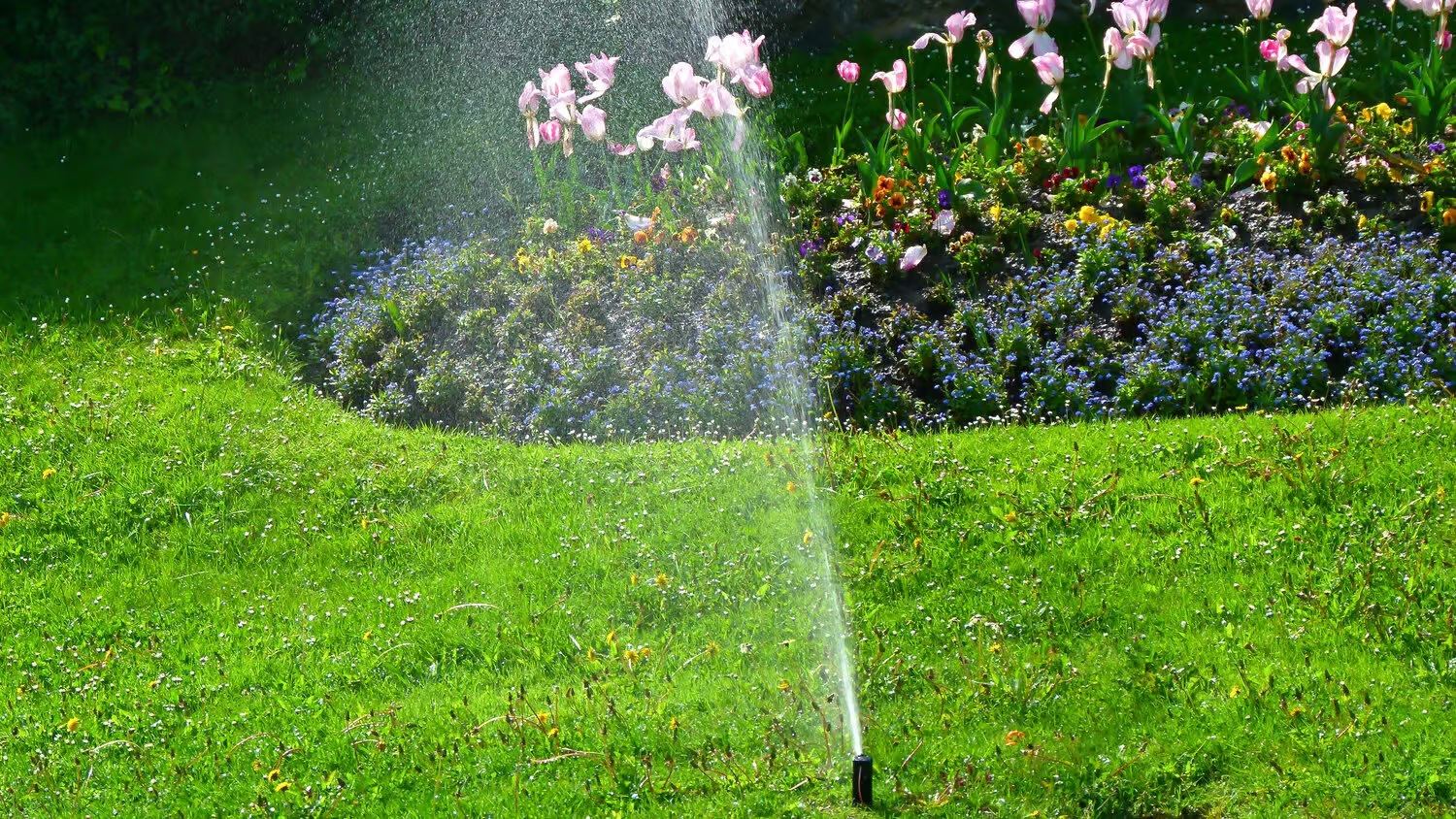
Broken head? Leaking valve? Dry patches?
We diagnose and fix sprinkler problems same week. Free quote.
Smart Controller Upgrades: Replace the Old Timer, Save 20 to 50 Percent on Water
If your irrigation controller is the beige plastic box in the garage with a dial and a row of tiny buttons, it is running the same program regardless of whether it rained yesterday, whether it is 95 degrees or 55 degrees, or whether the soil is already saturated. A smart controller connects to WiFi, monitors local weather data, and automatically adjusts or skips watering cycles based on real conditions.
The EPA's WaterSense program estimates that smart controllers reduce outdoor water use by 20 to 50 percent compared to conventional timers. In Seattle's climate, where summers are dry but variable (some weeks hit 90 degrees, others stay in the 70s), a weather-responsive controller prevents the overwatering that kills lawns and wastes money on the same weeks you could have skipped.
What We Install
Rachio 3: The most popular residential smart controller. WiFi, app control from anywhere, weather intelligence, EPA WaterSense certified. Works with any existing sprinkler system. Supports up to 8 or 16 zones depending on model. Setup takes 1 to 2 hours including wiring transfer and app configuration.
Hunter Hydrawise HC: Professional-grade smart controller from Hunter Industries. Predictive watering based on local weather station data, flow sensing capability (detects leaks automatically), and contractor remote management. We can monitor and adjust your system remotely after installation if you opt into our maintenance program.
Rain Bird ESP-TM2 with LNK WiFi Module: For homes already running Rain Bird valves and heads, adding the LNK WiFi module to an ESP-TM2 controller keeps everything in the same ecosystem. App control, weather adjustments, and seasonal scheduling.
1. App control from your phone (start, stop, adjust from anywhere). 2. Automatic rain skip (no watering when it is raining or rain is forecast). 3. Seasonal auto-adjust (less water in spring and fall, more in July/August). 4. Zone-by-zone programming (different schedules for lawn vs. garden vs. drip). 5. Water usage tracking (see how many gallons each zone uses). 6. Leak alerts (some models detect unusual flow and notify you). The controller upgrade pays for itself within 1 to 2 seasons through water savings alone.
Still running an old dial timer?
We swap it for a smart controller in under 2 hours. Your existing system, new brain. Free quote.
Drip Irrigation for Garden Beds, Shrubs, and Trees
Garden beds, shrub borders, and trees do not need broadcast sprinklers. Pop-up heads spray water over the entire area, soaking foliage and losing water to evaporation and wind. Drip irrigation delivers water directly to the root zone through low-pressure emitters, using 30 to 50 percent less water than sprinklers for the same plants.
In Seattle's climate, keeping foliage dry also reduces fungal disease risk. Powdery mildew, black spot, and other moisture-loving pathogens thrive when leaves stay wet. Drip keeps the soil moist and the leaves dry.
What we install: We design and install drip zones for existing irrigation systems. If you already have a sprinkler system with a controller and valves, we can add dedicated drip zones for garden beds, vegetable gardens, shrub borders, newly planted trees, and containers. The drip zone gets its own valve and controller program so it runs on a different schedule than the lawn zones.
For properties without existing irrigation: We can install standalone drip systems for garden beds that connect directly to an outdoor hose bib with a battery-powered timer. No trenching, no controller box, no complex plumbing. This is a simple, effective solution for homeowners who want automated watering for a specific garden area without the cost of a full sprinkler system.
Vegetable gardens: Drip is the best irrigation method for vegetables. It keeps leaves dry (preventing blight and mildew), delivers water straight to the roots (producing healthier yields), and avoids the soil splash that spreads soil-borne diseases. We install drip lines on a grid pattern spaced to match your planting layout.
Backflow Preventer Testing and Compliance
Every irrigation system connected to the municipal water supply in Washington State is required by law to have a backflow prevention assembly installed. The backflow preventer stops contaminated water — carrying fertilizer, pesticides, soil bacteria, or other pollutants from the irrigation system — from being sucked backward into the clean drinking water supply.
Types of backflow preventers: The most common residential types are the Pressure Vacuum Breaker (PVB), which is mounted above ground near the house, and the Reduced Pressure Zone assembly (RPZ), which provides a higher level of protection and is required in some jurisdictions. The Double Check Valve Assembly (DCVA) is used in some commercial applications.
Annual testing requirement: Many jurisdictions in the Seattle metro area require that backflow preventers be tested annually by a certified tester to verify they are functioning correctly. We perform backflow testing and can coordinate with your local water utility for compliance reporting. If the device fails testing, we repair or replace it.
Winterization note: The backflow preventer is the most freeze-vulnerable component because it is mounted above ground and exposed. We drain it thoroughly during every winterization visit. If your backflow device is not being winterized, it is the first thing that will crack in a hard freeze.
The Seasonal Irrigation Maintenance Calendar for Seattle
Irrigation maintenance follows the same seasonal rhythm every year. Here is when each service should happen for maximum system health and minimum repair cost.
| Season / Month | What We Do | Why This Timing |
|---|---|---|
| March–April | Spring startup: pressurize, inspect all heads, adjust coverage, test valves, reprogram controller, test backflow | System needs full inspection before first use after winter dormancy |
| May–June | Mid-season check: verify coverage after lawn mowing begins (mowers knock heads), adjust schedules for warming temps | First mow damage shows up; watering needs increase as rain decreases |
| July–August | Peak season audit: check for dry spots, verify pressure, adjust run times for heat, clean clogged nozzles | Hottest, driest months. System under maximum demand. Problems show up here. |
| September–October | Reduce watering frequency, check for end-of-season leaks, schedule winterization | Temperatures cool, rain returns. Over-watering causes disease. System prep for shutdown. |
| Late Oct–Mid Nov | Winterization blowout: compressed air, drain backflow, set controller to off/rain mode | Must be completed before first hard freeze. Book early. |
| December–February | System dormant. No service needed. | Pipes are empty. Controller is off. Nothing to do until spring. |
Calendar is calibrated for the greater Seattle metro area. Microclimates and elevation may shift timing by 1 to 2 weeks.
Want us to handle the entire calendar?
Our seasonal plan covers spring startup, mid-season check, and winterization. Free property assessment.
How Much Does Irrigation Maintenance Cost in Seattle?
All pricing below is for residential systems in the Seattle metro area. Commercial systems are quoted separately based on zone count and complexity.
| Service | Typical Range | Notes |
|---|---|---|
| Seasonal Services | ||
| Winterization blowout | $75–$150 | Per visit; based on zone count; includes backflow drain |
| Spring startup and inspection | $75–$150 | Full system pressurization, head inspection, controller programming |
| Full system audit (wet check) | $100–$200 | Run every zone, map coverage, identify problems, written report |
| Seasonal maintenance plan (3 visits) | $200–$400/year | Spring startup + mid-season check + winterization bundled |
| Repairs | ||
| Sprinkler head replacement | $15–$40/head + labor | Professional-grade head; includes aiming and adjustment |
| Valve repair/replacement | $75–$250/valve | Diaphragm replacement or full valve swap; includes diagnosis |
| Pipe leak repair (underground) | $150–$500+ | Depends on depth, location, and repair scope; includes excavation |
| Controller troubleshooting | $75–$200 | Diagnosis of wiring, solenoid, or controller issues |
| Upgrades & Additions | ||
| Smart controller upgrade | $200–$500 | Includes controller (Rachio, Hunter, Rain Bird), wiring transfer, app setup |
| Drip zone addition (existing system) | $200–$600/zone | New valve, drip lines, emitters, filter; connected to existing controller |
| Standalone drip kit (hose bib) | $150–$400 | Timer, filter, pressure regulator, drip lines for one garden area |
| Backflow | ||
| Backflow preventer testing | $50–$100 | Annual compliance test; report to utility if required |
| Backflow preventer replacement | $200–$600 | PVB or RPZ; includes installation and testing |
Prices are estimates for greater Seattle and the Eastside as of 2026. Zone count, system age, accessibility, and parts needed affect final cost. Seasonal maintenance plans save money compared to booking individual visits. All quotes are free.
A 3-visit seasonal plan (spring startup + mid-season check + winterization) costs $200 to $400 per year. A single underground pipe repair from freeze damage costs $300 to $1,000+. A cracked backflow preventer costs $200 to $600 to replace. The seasonal plan prevents both of those. It is the cheapest insurance your irrigation system has.
Get your seasonal plan or schedule a single visit.
We keep the system running so you do not think about it.
Irrigation Maintenance Across Seattle and the Eastside
Irrigation systems behave differently depending on where they are installed. Older Seattle neighborhoods (Capitol Hill, Wallingford, Ravenna, Greenwood) often have lower municipal water pressure on shared service lines, which means systems were designed with fewer heads per zone and lower-throw nozzles. When a head clogs or a valve sticks on these systems, the pressure drop is more noticeable and dry spots appear faster. Smart controllers with flow monitoring are especially valuable here because they detect pressure anomalies early.
Kirkland, Bellevue, and Sammamish have larger lots with 6 to 10 zone systems, more complex valve manifolds, and longer pipe runs. Winterization takes longer (more zones to blow out), and pipe repairs are more common because there is simply more pipe underground. These systems benefit most from the full seasonal maintenance plan.
Eastside properties with clay soil (Kirkland, Issaquah, Sammamish) retain moisture longer, which means irrigation schedules should run less frequently but for longer durations. Over-watering clay soil causes waterlogging and root rot. A smart controller that adjusts for soil type prevents this automatically.
Hillside properties (West Seattle, Beacon Hill, Magnolia) deal with runoff: water runs downhill before it soaks in. Systems on slopes need cycle-and-soak programming (short run, pause, repeat) to allow absorption. We program this during startup.
We serve: Seattle (all neighborhoods), Kirkland, Bellevue, Redmond, Sammamish, Issaquah, Renton, Bothell, Woodinville, Mercer Island, Shoreline, Lake Forest Park, and surrounding King County communities.
Frequently Asked Questions About Sprinkler Repair and Irrigation Maintenance in Seattle
When should I winterize my sprinkler system in Seattle? +
How much does sprinkler winterization cost? +
What happens if I do not winterize my sprinklers? +
When should I turn my sprinkler system on in spring? +
How often should I service my irrigation system? +
Why does my sprinkler have low pressure on one zone? +
Why are my sprinkler heads misting instead of spraying? +
Is a smart sprinkler controller worth it? +
What brands of smart controllers do you install? +
Do I need a backflow preventer for my irrigation system? +
Can I add drip irrigation to my existing sprinkler system? +
How do I know if I have a leak in my irrigation system? +
Should I water my lawn every day? +
What is the best time of day to water? +
Can you fix a sprinkler system that another company installed? +
Your System Already Exists. We Keep It Running.
You already made the investment. The pipes are in the ground. The heads are installed. The controller is on the wall. What it needs is someone who shows up twice a year to make sure it survives the winter and performs all summer. That is what we do. No drama, no surprises, no emergency calls in April because nobody blew out the system in October.
LandscapingFactory provides every irrigation maintenance service Seattle systems need:
- Winterization compressed air blowout (October/November)
- Spring startup, inspection, and controller programming (March/April)
- Mid-season system audit and coverage check (July/August)
- Sprinkler head, valve, and pipe repair (year-round)
- Smart controller upgrades (Rachio, Hunter Hydrawise, Rain Bird WiFi)
- Drip irrigation design and installation for garden beds and shrubs
- Backflow preventer testing, repair, and replacement
- Nozzle replacement, pressure adjustment, and coverage optimization
- Seasonal maintenance plans (3 visits/year bundled pricing)
Serving Seattle, Kirkland, Bellevue, Redmond, Sammamish, Issaquah, Renton, Bothell, Woodinville, Mercer Island, and all of King County.
Book your seasonal maintenance, schedule a repair, or upgrade your controller.
Free quote.
Get a Free Estimate
Let's chat about your needs and landscape dreams. Schedule a call below.
Other Services










Stop dragging hoses around your yard.
Automate your landscape health with a smart irrigation system designed for the Northwest.
Get a Free Irrigation Quote