
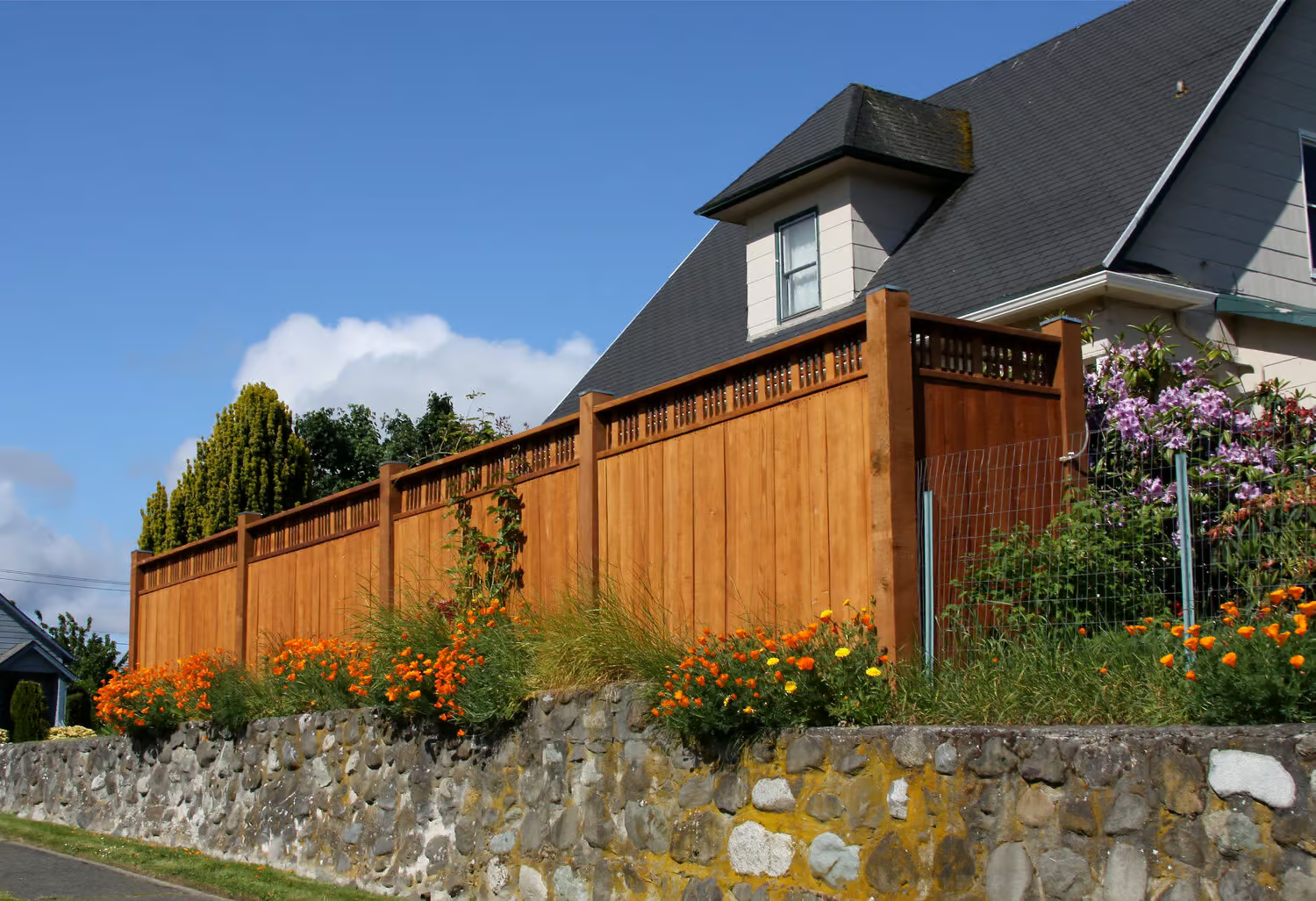
Seattle homes sit close together. In neighborhoods like Capitol Hill, Ballard, Wallingford, and across the Eastside, your neighbor's kitchen window is sometimes 15 feet from your patio. Without a solid fence, your backyard is not really yours. It is a shared space with sightlines from three directions and no boundary between your Saturday morning coffee and your neighbor's Saturday morning yard work.
And if you already have a fence, chances are it was installed by the previous owner, it is leaning after a few winters, the posts are soft at the base, and the gate drags across the concrete every time you open it. That fence is not protecting anything anymore. It is just standing there out of habit.
A fence in the Pacific Northwest has three enemies: rot, wind, and gravity. Constant moisture rots the posts at the ground line. November windstorms push against the panels. And gravity pulls a poorly built gate into a diagonal sag within a year. Every decision we make during installation is designed to beat all three.
At LandscapingFactory, we build fences across Seattle, Kirkland, Bellevue, and the Eastside. Cedar privacy, modern horizontal, vinyl, aluminum, chain link, deer fencing, pool code fencing, fences on slopes, and full old-fence tear-out and replacement. We set every post deep, we use the right materials for the right job, and we build gates that still latch perfectly five years from now.
Cedar Fencing: Styles, Grades, and Why It Works in Seattle
Western Red Cedar is the default fence wood in the Pacific Northwest for a reason. It produces natural oils that resist rot, decay, and insects without chemical treatment. It stays straight and resists warping better than pine or spruce. It weathers into a silver-grey patina that most homeowners find attractive, or it can be stained to keep the warm reddish-brown color. Cedar is the right wood for Seattle's climate. Everything else is a compromise.
Cedar Grades (What You Are Paying For)
Construction Grade: The most affordable cedar. More knots, some color variation, occasional rough patches. Structurally sound and perfectly functional. This is what most standard privacy fences are built with. It looks good, it lasts, and it keeps the budget reasonable.
Standard/Select Grade: Fewer knots, more consistent color, smoother appearance. A step up that is noticeable when you look at the fence up close. Popular for front yards and fences that face the street where appearance matters more.
Premium/Clear Grade: No knots, tight grain, uniform color. The best-looking cedar available. Costs significantly more, but for a fence that serves as a design feature rather than just a boundary, premium cedar is the material that makes the difference.
Cedar Fence Styles
Board-on-Board (Good Neighbor): Overlapping boards on alternating sides of the rails. This gives you full privacy while creating a finished look on BOTH sides of the fence. No "ugly side" facing the neighbor. This is the style we recommend for any fence on or near the property line because it prevents disputes and looks intentional from every angle.
Solid Privacy (Dog Ear or Flat Top): Boards attached side by side on one face of the rails with no gaps. Maximum privacy at the lowest material cost. The flat top style is cleaner and more modern than the rounded dog ear cut.
Shadow Box: Boards on alternating sides with a slight gap between them. Allows some airflow and light through while still providing significant privacy. A nice middle ground between full privacy and an open feel.
Lattice Top: Solid panels below with a decorative lattice section on top. Adds height for privacy while keeping the upper portion open and airy. Popular for garden enclosures and side yards.

Not sure which cedar style or grade fits your budget?
We bring samples to your property so you can see and feel the difference. Free quote.
Horizontal Cedar Fencing: Seattle's Most Requested Style
If you have driven through Ballard, Fremont, Wallingford, or any Eastside neighborhood recently, you have seen it: horizontal fencing is everywhere. The clean, modern lines work with contemporary and mid-century homes in a way that traditional vertical pickets do not. It has become the dominant aesthetic for new fence installations in the Seattle metro area.
Horizontal fencing uses the same cedar material as vertical styles, but the boards run side to side instead of up and down. The visual effect is dramatically different: wider, sleeker, and more architectural. It pairs especially well with modern landscaping, concrete patios, and clean-edged garden beds.
What horizontal fencing requires that vertical does not: more framing. Vertical pickets are supported by two or three horizontal rails. Horizontal boards need vertical posts spaced closer together (typically 4 to 6 feet apart instead of 8) to prevent the boards from bowing outward over time. More posts mean more concrete, more labor, and a higher cost per linear foot. The result is worth it, but the price difference is real and we want you to know about it upfront.
We build horizontal fencing in 1x6 and 1x4 boards, with gaps or without, using all cedar grades. Wider boards with narrow gaps is the most popular configuration right now.
Vinyl, Metal, and Chain Link Fencing
Vinyl Fencing
Vinyl does not rot, does not need painting, does not need staining, and cleans up with a garden hose. For homeowners who want zero maintenance forever, vinyl is the answer. We install high-thickness commercial-grade vinyl panels that resist becoming brittle in cold weather, which is a real concern with cheap vinyl in our freeze-thaw climate. The tradeoff: vinyl does not have the natural warmth of cedar, and it costs more per linear foot for comparable quality. But if you never want to touch the fence again after installation, vinyl earns its price over the lifetime of the fence.
Aluminum Fencing
Aluminum gives you an elegant, open look that establishes property boundaries without blocking views. Perfect for front yards, gardens, and properties with mountain or water views you do not want to hide. Aluminum does not rust, which matters in Seattle. Steel and wrought iron look similar but require constant painting to prevent corrosion in our wet climate. Aluminum holds up maintenance-free for decades.
Chain Link Fencing
The most affordable fencing option by a wide margin. Chain link is practical, durable, and effective for large areas where privacy is not the primary goal: back property lines, wooded lots, utility enclosures, and dog runs. We install residential and commercial gauge chain link with optional vinyl coating for a cleaner look and added corrosion resistance. Privacy slats are available to add screening to existing or new chain link.
How We Install a Fence That Lasts in Seattle?
Every fence fails from the bottom up. Posts rot at the ground line. Concrete footings crack because they were too shallow. Rails sag because the posts moved. Everything we do during installation is designed to prevent that chain of failure.
Post Installation: Deep, Plumb, and Concrete-Set
Every post goes a minimum of 24 inches into the ground, encased in concrete. In Seattle's saturated winter soil, shallow posts heave and lean. The 24-inch depth gets below the topsoil and into stable subgrade, and the concrete collar keeps the post locked in position against wind load. We use pressure-treated 4x4 posts for all ground-contact points. The chemical treatment resists rot, fungi, and insects in continuous soil contact. The cedar pickets and rails stay above ground where they do not need that level of protection.
Rails: Level, Secured, and Spaced for Strength
We run horizontal rails between the posts — two rails for fences under 5 feet, three rails for 6-foot and taller. Rails are attached with structural brackets or dado joints, not just face-nailed. Proper rail attachment is what prevents the fence from racking in the wind.
Fasteners: Stainless or Hot-Dip Galvanized Only
Standard zinc-plated screws corrode in Seattle's moisture within 2 to 3 years. They leave black streaks running down the fence and lose holding power. We use stainless steel or hot-dip galvanized fasteners exclusively. They cost more but they do not rust, do not stain, and do not let go.

Want a fence that still looks straight after five winters?
It starts with the posts. Free on-site estimate.
How Do You Install a Fence on a Slope? (Stepped vs. Racked)
Almost no yard in Seattle is perfectly flat. When the ground slopes, the fence has to follow it. There are two methods, and the right one depends on the grade, the fence style, and what you need the fence to do.
| Factor | Stepped Fencing | Racked Fencing |
|---|---|---|
| How it works | Panels step down the hill like a staircase, each section level but offset from the next | Rails and pickets follow the slope of the ground in a smooth, continuous line |
| Best for | Steeper slopes, pre-made panels, consistent panel height | Gentle to moderate slopes, custom-built fencing, continuous lines |
| Gaps at bottom? | Yes, triangular gaps appear at each step. Can be filled with extra board, mesh, or gravel | No gaps. The fence follows the ground closely along the entire length |
| Pet containment | Gaps may allow small dogs or animals to squeeze through if not filled | Better for pet containment because the fence stays close to the ground |
| Visual appearance | Formal, structured, staircase pattern | Smooth, flowing, natural appearance that follows the terrain |
| Cost difference | Less labor (standard panels can be used) | More labor (each section is custom-cut to follow the grade) |
We assess your slope during the site visit and recommend the method that gives you the best combination of appearance, security, and budget.
Gates: Why They Sag and How We Prevent It
A gate is the hardest-working part of any fence. It gets opened and closed hundreds of times a year, it swings on two hinge points that carry the full weight of the panel, and gravity is constantly trying to pull the latch side downward. Most gate problems start within the first year because the builder used the same lightweight construction as the fence panels. A gate needs more.
Heavy-duty hinges: We use commercial-grade, adjustable hinges rated for the weight of the gate. Standard residential hinges are the first point of failure on most fences.
Anti-sag bracing: Every gate gets diagonal cross-bracing (steel cable with a turnbuckle, or a rigid steel corner bracket). This transfers the weight from the latch corner back to the hinge post and prevents the diagonal sag that makes gates drag on the ground.
Reinforced hinge posts: The posts that carry a gate get set deeper (30+ inches) with larger concrete footings than standard fence posts. A gate post that moves even a quarter inch throws off the latch alignment.
Optional metal gate frames: For wide gates — double gates for driveway access, RV gates, equipment access — we build steel frames with cedar cladding. The steel provides the structural rigidity and the cedar provides the look. This eliminates sag permanently on gates that would be too heavy for an all-wood frame.

Specialty Fencing: Deer, Rabbit, Pool Code, and Dog Containment
Deer Fencing for Gardens
On the Eastside and in semi-rural areas around Seattle, deer will eat a vegetable garden down to bare soil in a single night. Standard 6-foot fences are not enough because deer can clear 6 feet easily. We install high-tensile deer fencing (typically 7 to 8 feet) that is nearly invisible from a distance and does not ruin the view. These can be standalone enclosures around garden beds or integrated into your property perimeter fence.
Rabbit and Small Pest Barriers
Rabbits, raccoons, and other small animals dig under or squeeze through gaps in standard fencing. We integrate tight wire mesh (hardware cloth) at the base of your fence, buried 4 to 6 inches into the ground and extending up behind the lower pickets. This blocks burrowing and squeezing without affecting the appearance of the fence from the outside.
Pool and Hot Tub Code Fencing
If you have a pool or hot tub, Washington state requires a safety barrier that meets specific code requirements: self-closing and self-latching gates, specific latch heights that children cannot reach, non-climbable fence design, and minimum height. We build pool fencing that meets all applicable barrier codes so you pass inspection and, more importantly, keep children safe.
Dog-Friendly Fencing
If the fence's primary job is keeping your dog in the yard, every detail matters: no gaps at the bottom (especially on slopes), tight picket spacing, secure gate latches, and reinforcement at known dig zones. For determined diggers, we add buried mesh along the base or a concrete mow strip that eliminates the ability to tunnel under. We ask about your dog during the consultation because a 10-pound escape artist needs different solutions than a 90-pound jumper.
Need a fence that handles deer, dogs, pool code, or all three?
Tell us the problem and we will design the solution. Free quote.
Old Fence Removal and Replacement
Most fence projects in established Seattle neighborhoods are replacements, not first-time installations. The existing fence is leaning, rotted at the posts, missing pickets, or just worn out. We handle the entire process: tear out the old fence, pull or cut the old posts and concrete footings, haul everything away, and install the new fence in the same trip when possible.
What old fence removal includes: Dismantling all panels, rails, and posts. Extracting concrete footings from the ground. Loading and hauling away all debris. Filling post holes if the new fence uses different spacing. Disposal at an appropriate facility. The removal cost is included as a separate line item in your quote so you see exactly what you are paying for.
If only a section of your fence has failed — wind damage, a fallen tree, one rotted post — we can repair or replace just that section and match the existing style and material as closely as possible.
Do You Need a Permit for a Fence in Seattle?
The general rule in Seattle and most Eastside cities: fences at or below standard residential height (typically 6 feet in backyards, 4 feet in front yards) do not require a building permit. This covers the vast majority of residential fence installations.
There are exceptions. Corner lots and waterfront properties often have visibility and setback requirements. Front-yard fences may be restricted in height or required to be partially transparent (open metal or lattice rather than solid wood). Fences taller than standard height, fences with masonry or concrete components, and fences near public rights-of-way may trigger permit requirements.
Code enforcement varies by municipality. Seattle, Kirkland, Bellevue, Redmond, and unincorporated King County each have their own fencing rules. We check the specific code requirements for your property during the site assessment so there are no surprises after the fence is built.
Washington does not have a single 'Good Neighbor Fence Law' the way some states do. In practice, a fence on the property line may be considered shared between both property owners, but the person who builds it typically pays for it. The 'Good Neighbor' style (board-on-board, finished on both sides) is not a legal requirement. It is a courtesy that avoids disputes and keeps the neighborhood friendly. We always recommend it for fences on or near the property line.
How Much Does Fence Installation Cost in Seattle?
Pricing depends on the material, style, height, total linear footage, slope complexity, number of gates, and whether an old fence needs to be removed first. Here are honest ranges for the Seattle metro area. Every quote is free, on-site, and written with line-item detail.
| Fence Type / Service | Typical Range | Notes |
|---|---|---|
| Cedar | ||
| Cedar privacy fence (6 ft, construction grade) | $35–$55 /linear ft | Board-on-board or solid; includes posts, concrete, rails, pickets |
| Cedar privacy fence (6 ft, premium grade) | $55–$80 /linear ft | Fewer knots, cleaner appearance |
| Horizontal cedar fence | $55–$90 /linear ft | Closer post spacing required; modern style premium |
| Cedar shadow box / lattice top | $40–$65 /linear ft | Partial privacy with airflow |
| Vinyl & Metal | ||
| Vinyl privacy fence (6 ft) | $30–$65 /linear ft | Zero maintenance; commercial-grade panels |
| Aluminum ornamental fence | $35–$70 /linear ft | Rust-free; decorative; open style |
| Chain link fence (4 ft residential) | $15–$30 /linear ft | Most affordable option; vinyl coating available |
| Chain link with privacy slats | $20–$40 /linear ft | Screening added to chain link |
| Specialty | ||
| Deer fencing (7–8 ft, high-tensile) | $8–$20 /linear ft | Nearly invisible mesh; garden enclosures |
| Pool code fence (aluminum or wood) | $40–$80 /linear ft | Self-closing gate, code-compliant design included |
| Gates | ||
| Single gate (pedestrian, wood) | $300–$600 each | Standard width; includes hardware and anti-sag bracing |
| Double gate / driveway gate (wood) | $600–$1,500 each | Steel frame available for wide spans |
| Extras | ||
| Old fence removal and haul-away | $3–$8 /linear ft | Includes post extraction and disposal |
| Fence staining (new cedar) | $2–$5 /linear ft | Applied at installation; extends lifespan and locks in color |
Prices are estimates for greater Seattle and the Eastside as of 2026. Includes all materials, labor, post concrete, hardware, and cleanup. Lumber prices fluctuate with market conditions; cedar costs may vary seasonally. Multi-feature quotes (fence + gate + removal) are packaged. All quotes are free and on-site.
If you want your cedar fence stained rather than left to weather naturally, doing it at the time of installation is the most cost-effective approach. The fence is brand new, the wood pores are open and ready to absorb stain, and our crew is already on site. Staining a new fence costs $2 to $5 per linear foot. Hiring a separate staining crew later costs more and requires a separate mobilization.
Get your free fence estimate.
We measure your property, show you material samples, and quote every linear foot.
Fence Installation Across Seattle and the Eastside
Every neighborhood in this metro area has its own fencing personality. Capitol Hill and Queen Anne have tight lot lines with zero setback, where board-on-board is almost mandatory to keep things neighborly. Ballard and Fremont lean heavily into horizontal cedar. Mercer Island and Bellevue want clean, premium installations that match high-end landscaping. Kirkland and Sammamish have larger lots where deer fencing and long property-line runs matter. West Seattle and Beacon Hill have steep slopes that require stepped or racked installations.
The soil varies too. Sandy soil near lakeshores sets concrete footings quickly but drains so fast that posts can shift if the footing is undersized. Clay-heavy soil in south Seattle and parts of Kirkland holds water around the post base, making pressure-treated ground contact even more critical. We know which neighborhoods have which conditions because we have been driving fence posts into this ground for years.
We serve: Seattle (all neighborhoods), Kirkland, Bellevue, Redmond, Sammamish, Issaquah, Renton, Bothell, Woodinville, Mercer Island, Shoreline, Lake Forest Park, and surrounding King County communities.
Frequently Asked Questions About Fence Installation in Seattle
How long does fence installation take? +
How long will a cedar fence last in Seattle? +
Should I stain or paint my cedar fence? +
What is the difference between horizontal and vertical fencing? +
Can you install a fence on a steep slope? +
How do you prevent gates from sagging? +
Do you remove old fences? +
What is a Good Neighbor fence? +
Is vinyl or cedar better for Seattle? +
Can you build a fence that keeps deer out of my garden? +
Do I need a survey before installing a fence? +
What kind of fence do I need for a pool or hot tub? +
Can you match a new fence section to my existing fence? +
Do you build fences year-round? +
How tall can I build a fence without a permit in Seattle? +
Your Property Line Deserves a Real Fence
That leaning, rotted, gap-riddled fence is not doing its job anymore. Your dog knows it. Your neighbors know it. And every windstorm is one gust away from putting it on the ground. A new fence changes everything: the privacy, the security, the look of the entire yard, and how much time you actually spend using the outdoor space you are paying for.
LandscapingFactory installs every type of fence Seattle properties need:
- Cedar privacy fencing (board-on-board, solid, shadow box, lattice top)
- Horizontal cedar fencing (modern style, all grades)
- Vinyl fencing (zero maintenance, commercial-grade panels)
- Aluminum ornamental fencing (rust-free, open style)
- Chain link fencing (residential and commercial gauge)
- Deer, rabbit, and wildlife fencing for gardens
- Pool and hot tub code-compliant safety fencing
- Dog-friendly fencing with dig-proof reinforcement
- Stepped and racked installations for slopes
- Sag-proof gates with steel bracing and commercial hardware
- Old fence tear-out, haul-away, and full replacement
Serving Seattle, Kirkland, Bellevue, Redmond, Sammamish, Issaquah, Renton, Bothell, Woodinville, Mercer Island, and all of King County.
Ready for a fence that actually works?
Request your free on-site estimate. We measure, show samples, and quote every foot.
Get a Free Estimate
Let's chat about your needs and landscape dreams. Schedule a call below.
Other Services













Secure your property with a fence built to last.
From rabbit-proof garden borders to privacy fences, trust the local experts.