In the Pacific Northwest, plants do not just grow. They explode. A rhododendron that was the right size in April is blocking the walkway by August. A laurel hedge that was neat in June is three feet over the fence by October. An azalea that should be flowering is all wood and no blooms because someone sheared it at the wrong time. And a Japanese maple that took twenty years to develop its shape is ruined in twenty minutes by a landscaper with a gas-powered hedgetrimmer.
Most pruning damage is not from neglect. It is from bad cutting. The wrong tool, the wrong technique, the wrong time of year. An electric hedgetrimmer used on a Japanese maple turns it into a ball (the "meatball effect"). Rhododendrons pruned in fall lose next spring's blooms because the buds were already set. Hedges sheared flat on top grow leggy and bare at the base because no light reaches the lower branches.
At LandscapingFactory, we treat pruning as a skill, not a chore. We know which plants get hand pruners and which get hedge trimmers. We know when each species sets its flower buds. We know how to bring an overgrown shrub back without killing it. And we sanitize our tools between every property so we do not carry disease from one garden to the next.
What We Prune (And What We Do Not)
We specialize in the plants that make up the body of your landscape: shrubs, hedges, small ornamental trees, fruit trees, and perennials. These are the plants that homeowners interact with daily, that define the shape of the yard, and that most often suffer from improper cutting.
What we prune: Flowering shrubs (rhododendrons, azaleas, camellias, lilacs, hydrangeas, roses, forsythia). Formal hedges (English laurel, arborvitae, boxwood, yew, privet, holly, Leyland cypress). Small ornamental trees (Japanese maple, dogwood, magnolia, stewartia, vine maple). Fruit trees (apple, pear, cherry, plum, fig). Ornamental grasses (cutback). Perennials (deadheading, cutback, division).
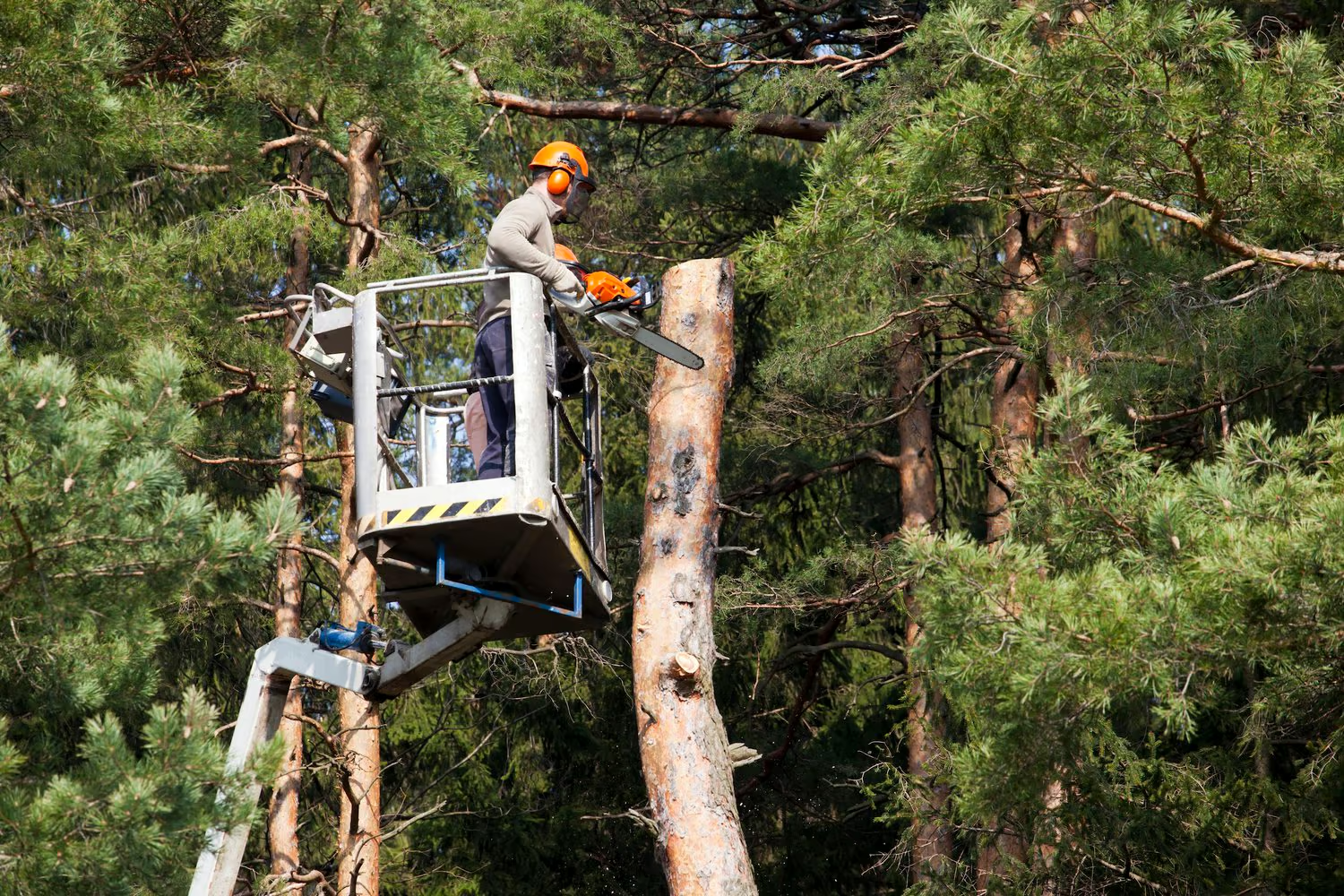
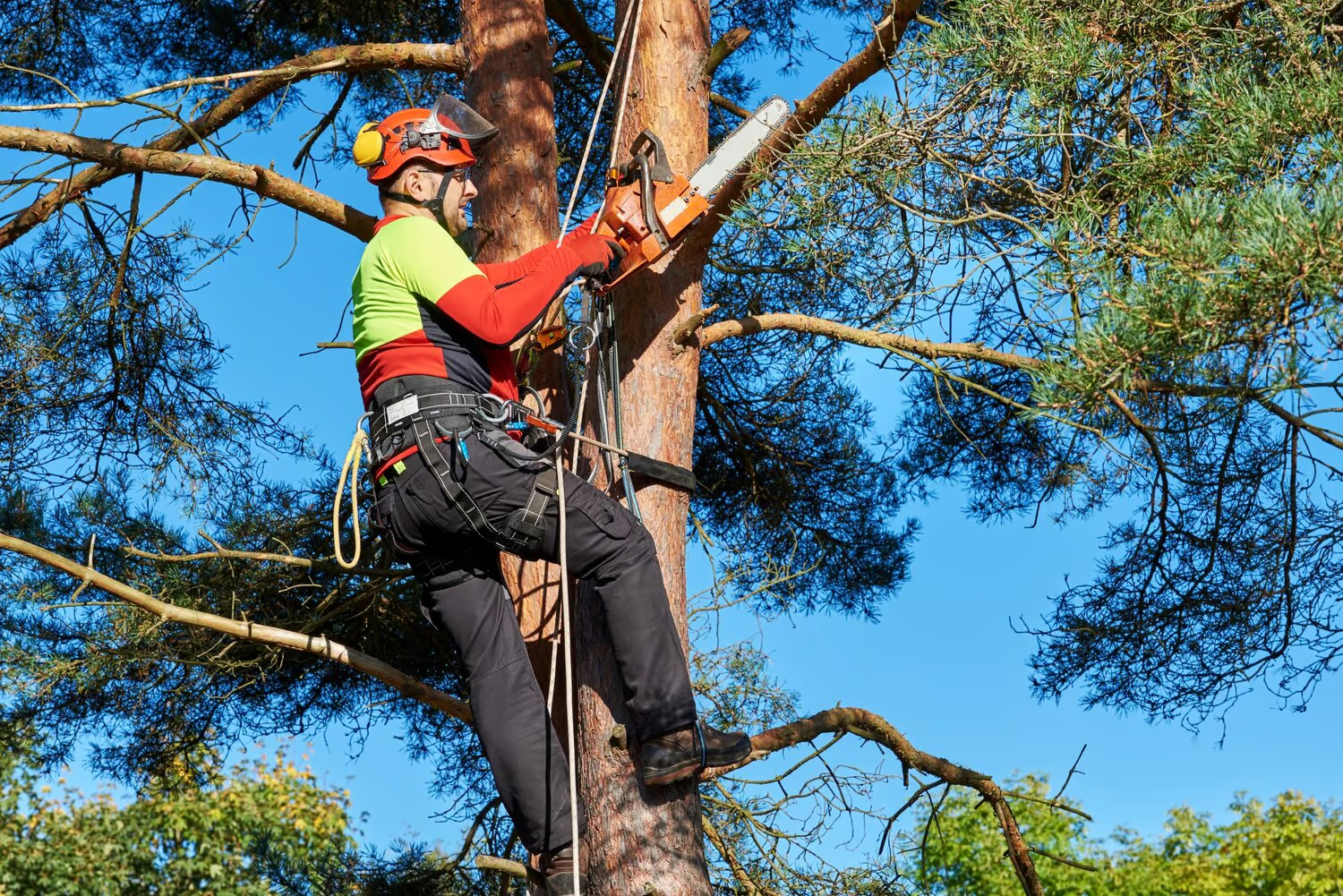
Since August 2024, Seattle requires all tree work to be performed by a Registered Tree Service Provider (RTSP) registered with SDCI. Pruning large trees — especially branches over 4 inches in diameter or more than 25% of the canopy — also requires a public notice filed 3 business days before work begins. We are not RTSP registered and do not perform large tree pruning or removal. For large tree work, we recommend hiring an ISA Certified Arborist who is RTSP registered. We are happy to provide referrals. This page covers shrubs, hedges, small ornamental trees, and fruit trees — which is the scope of work that a landscaping contractor performs.
Why are we telling you this? Because the company that claims to do everything usually does nothing well. We know our scope. We are excellent at what is in it. For what is outside it, we connect you with the right specialist.
Hand Pruning vs. Mechanical Shearing: The Right Tool for the Plant
This is where most landscaping companies fail. They show up with a gas-powered hedgetrimmer and run it across everything. Every shrub becomes a box or a ball. This is fast, cheap, and devastating to plants that should never be sheared.
Hand Pruning (Selective, Structural, Natural Shape)
Tools: Bypass hand pruners, loppers, hand saw.
Used on: Flowering shrubs (rhododendrons, azaleas, camellias, roses, hydrangeas), Japanese maples, dogwoods, and any plant where the natural form is the beauty.
Technique: We make individual cuts at nodes, buds, or lateral branches. Each cut is intentional. We select which branches to remove based on structure, health, and aesthetics. We thin the interior to allow air circulation and light penetration. We remove dead, crossing, and rubbing branches. The result is a plant that looks manicured but natural, retaining its graceful shape.
Why it matters: A rhododendron has an open, layered habit. When you shear it with a hedgetrimmer, you cut through every branch at the same plane, destroying the layers and creating a dense outer shell that blocks light from the interior. The center dies. The plant pushes growth only at the sheared surface, becoming a hollow green ball with dead wood inside. Hand pruning preserves the layered structure and keeps the entire plant healthy.
Mechanical Shearing (Formal Hedges and Privacy Screens)
Tools: Electric or gas-powered hedge trimmers, manual hedge shears.
Used on: Plants intended to be structural walls — English laurel, arborvitae, boxwood, yew, privet, Leyland cypress, holly. These are hedge plants selected specifically because they respond well to repeated shearing.
Technique: We shear hedges in a trapezoid shape: slightly wider at the bottom than at the top. This is not an aesthetic preference. It is a biological requirement. If the top of the hedge is wider than the base, it shades out the lower branches. The lower leaves die, and the hedge becomes "leggy": bare and woody at the bottom with all the foliage on top. The A-shape taper allows sunlight to reach every level of the hedge, keeping it dense from ground to crown.
Frequency: Fast-growing hedges (English laurel, Leyland cypress) need shearing 2 to 3 times per year in Seattle to maintain a sharp profile. Moderate growers (boxwood, yew) need 1 to 2 trims per year. We schedule recurring visits so the hedge never gets away from you.
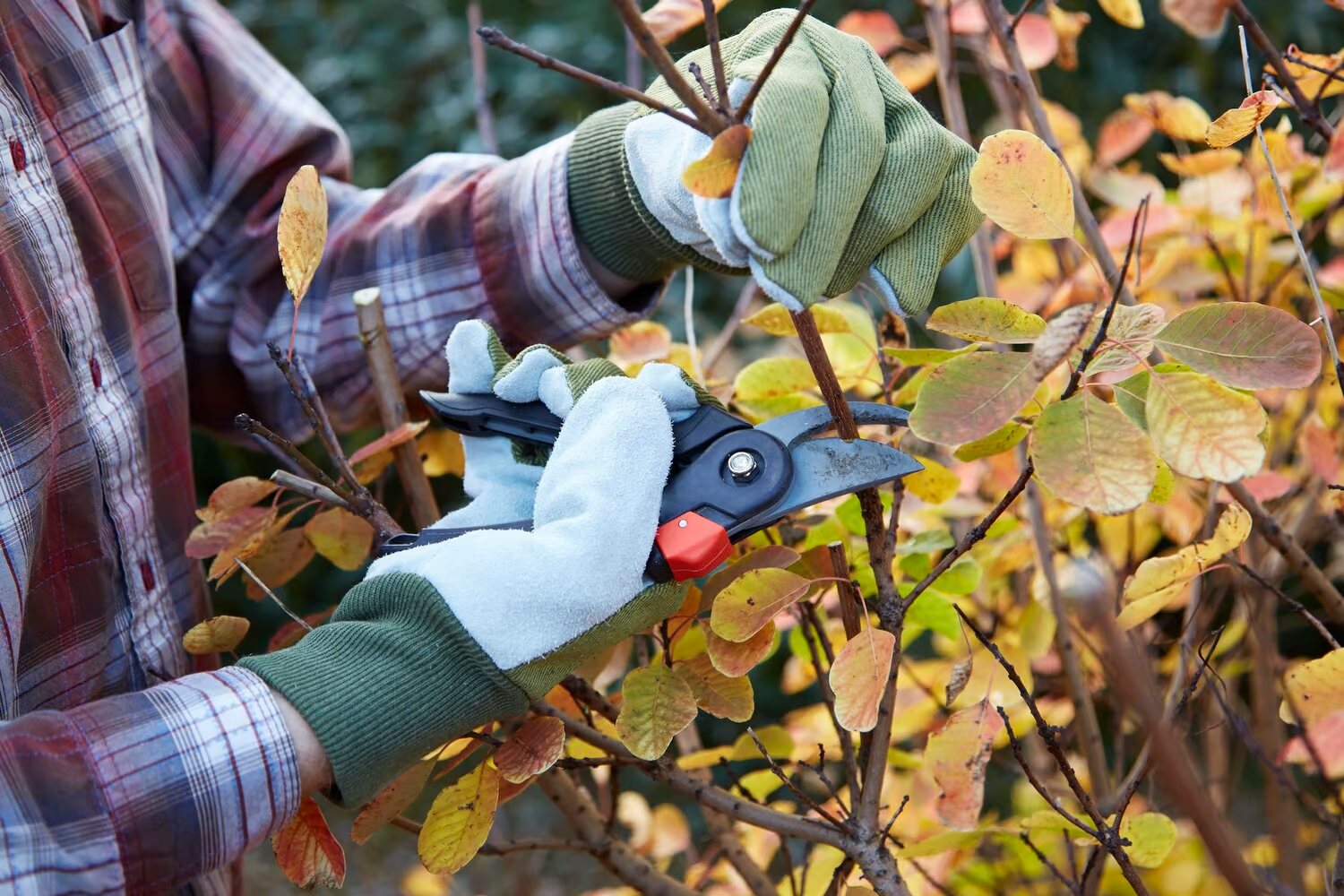
Hand pruning for ornamentals. Precision shearing for hedges.
The right tool for every plant. Free pruning assessment.
Botanical Timing: When to Cut for Maximum Bloom
Pruning at the wrong time of year is the number one reason plants fail to flower. The timing depends on one question: does the plant bloom on old wood or new wood?
Spring-Flowering Plants (Bloom on Old Wood)
Plants like rhododendrons, azaleas, lilacs, forsythia, and mophead hydrangeas set their flower buds the previous summer and fall. The buds sit on last year's branches ("old wood") through winter, ready to open in spring. If you prune these plants in winter or early spring, you cut off the buds and get no flowers.
When to prune: Immediately after they finish blooming, typically late spring into early summer (May through June in Seattle). This gives the plant the entire summer and fall to grow new wood and set buds for next year.
Summer-Flowering Plants (Bloom on New Wood)
Plants like roses, panicle hydrangeas, butterfly bush, and some spireas bloom on growth produced in the current season ("new wood"). They push new stems in spring and flower on those stems in summer.
When to prune: Late winter while dormant (February through early March in Seattle). Hard pruning in late winter stimulates vigorous new growth in spring, which produces more flowers in summer.
Hydrangeas confuse everyone because different types bloom on different wood. Mophead (bigleaf) hydrangeas bloom on OLD wood. Prune them after flowers fade in late summer (August/September). If you prune them in winter, you lose the bloom. Panicle hydrangeas (the ones with cone-shaped flowers) bloom on NEW wood. Prune them in late winter (February/March). The critical step is identifying which type you have BEFORE you cut. If you are not sure, send us a photo and we will identify it.
When to Prune: Seattle Plant Calendar (USDA Zone 8b)
This calendar covers the most common shrubs, hedges, and small trees in Seattle residential landscapes. Timing is adjusted for our Zone 8b climate.
| Plant | When to Prune | Method and Notes | Blooms On |
|---|---|---|---|
| Rhododendron | After bloom (May–June) | Hand prune. Remove spent flower trusses (deadhead). Thin interior for airflow. Shape lightly. | Old wood |
| Azalea | After bloom (May–June) | Hand prune. Deadhead. Thin crossing branches. Responds well to hard rejuvenation if overgrown. | Old wood |
| Camellia | After bloom (April–May) | Hand prune. Light shaping. Remove dead wood. Avoid cutting into bare wood (slow to regenerate). | Old wood |
| Lilac | After bloom (June) | Hand prune. Remove spent flowers. Thin oldest canes to ground for rejuvenation. 1/3 rule. | Old wood |
| Forsythia | After bloom (April–May) | Hand prune. Remove oldest canes to ground. Responds to hard rejuvenation. | Old wood |
| Mophead hydrangea | After bloom (Aug–Sept) | Hand prune. Remove spent flowers above first fat bud pair. DO NOT prune in winter. | Old wood |
| Panicle hydrangea | Late winter (Feb–March) | Hand prune. Cut back hard (by 1/3 to 1/2). Stimulates vigorous new stems. | New wood |
| Rose (hybrid tea/floribunda) | Late winter (Feb–March) | Hand prune. Remove dead canes. Shape to outward-facing bud. Cut to 12–18 inches. | New wood |
| Rose (climbing) | After first bloom (June) | Hand prune. Train laterals. Remove oldest canes. Light deadheading through season. | Old + new |
| Butterfly bush | Late winter (Feb–March) | Cut hard to 12–18 inches from ground. Blooms on new wood. Vigorous regrowth. | New wood |
| Lavender | Early spring (March) | Hand prune. Shape by 1/3. Never cut into bare wood (will not regenerate). | New wood |
| English laurel (hedge) | Late spring + late summer | Shear 2–3x/year. A-shape taper. Fast grower. Can also hand-prune for natural look. | N/A (hedge) |
| Arborvitae (hedge) | Late spring + early fall | Shear 1–2x/year. A-shape taper. Do not cut into brown interior (will not regrow). | N/A (hedge) |
| Boxwood (hedge) | Late spring + optional fall | Shear 1–2x/year. Slow grower. Holds shape well. Dense growth at all levels. | N/A (hedge) |
| Yew (hedge) | Late spring + optional fall | Shear or hand prune 1–2x/year. Tolerates hard pruning. Regenerates from old wood. | N/A (hedge) |
| Leyland cypress (hedge) | Late spring + late summer | Shear 2–3x/year. Fast grower. Do not cut into brown interior (dead zone). | N/A (hedge) |
| Japanese maple | Late fall or late winter | Hand prune ONLY. Thin crossing branches. Shape canopy. Remove deadwood. NEVER shear. | N/A (structure) |
| Dogwood | Late fall–early winter | Hand prune. Remove dead and crossing branches. Minimal pruning needed. Shape lightly. | N/A (structure) |
| Apple tree | Dormant winter (Jan–Feb) | Open center or central leader. Remove water sprouts, crossing branches. Fruit spur management. | N/A (fruit) |
| Cherry / plum tree | Dormant winter (Jan–Feb) | Open center form. Remove suckers and crossing branches. Light summer prune for sprouts. | N/A (fruit) |
| Pear tree | Dormant winter (Jan–Feb) | Central leader form. Remove vertical water sprouts. Thin for airflow (fire blight prevention). | N/A (fruit) |
| Blueberry | Late winter (Feb–March) | Remove oldest canes to ground (1/3 rule). Thin twiggy growth. Promote new fruiting wood. | Old wood |
| Ornamental grasses | Late winter (Feb–March) | Cut to 4–6 inches from ground before new growth emerges. | N/A |
Timing is for Seattle/Puget Sound (USDA Zone 8b). Adjust 2–3 weeks later for higher elevations and cooler microclimates on the Eastside.
Not sure when to prune?
Send us a photo and we will identify the plant and tell you the right timing. Free.
Rejuvenation Pruning: Rescuing Overgrown Shrubs
If you have a massive shrub that is 80 percent wood and only has leaves at the very top, do not remove it yet. Many shrubs can be brought back to life with rejuvenation pruning.
The One-Third Rule (3-Year Rejuvenation)
For shrubs like lilacs, forsythia, azaleas, and many deciduous species, we use a 3-year renewal process:
Year 1: We cut one-third of the oldest, thickest canes down to the ground (6 to 12 inches). This forces the plant to push new shoots from the root crown.
Year 2: We remove the next one-third of old canes. New growth from Year 1 is now filling in.
Year 3: We remove the final one-third of old wood. The plant is now entirely renewed: all young, vigorous growth that flowers heavily and has a compact, healthy form.
Why not cut everything at once? Some species tolerate hard rejuvenation (cutting the entire plant to 6 inches). But many do not recover well from the shock. The one-third method keeps the plant alive and photosynthesizing while gradually replacing old wood with new.
Plants That Respond Well to Hard Rejuvenation
Can be cut to the ground and will regrow: Forsythia, butterfly bush, spirea, red-twig dogwood, some hydrangeas, privet, lilac (slowly).
Use the one-third method (do not cut all at once): Rhododendron, azalea, camellia, viburnum, witch hazel.
Cannot be hard-pruned (will not regenerate from old wood): Arborvitae, Leyland cypress, most conifers, lavender (below the green growth). If you cut these into the brown interior, the brown stays brown. There is no coming back.
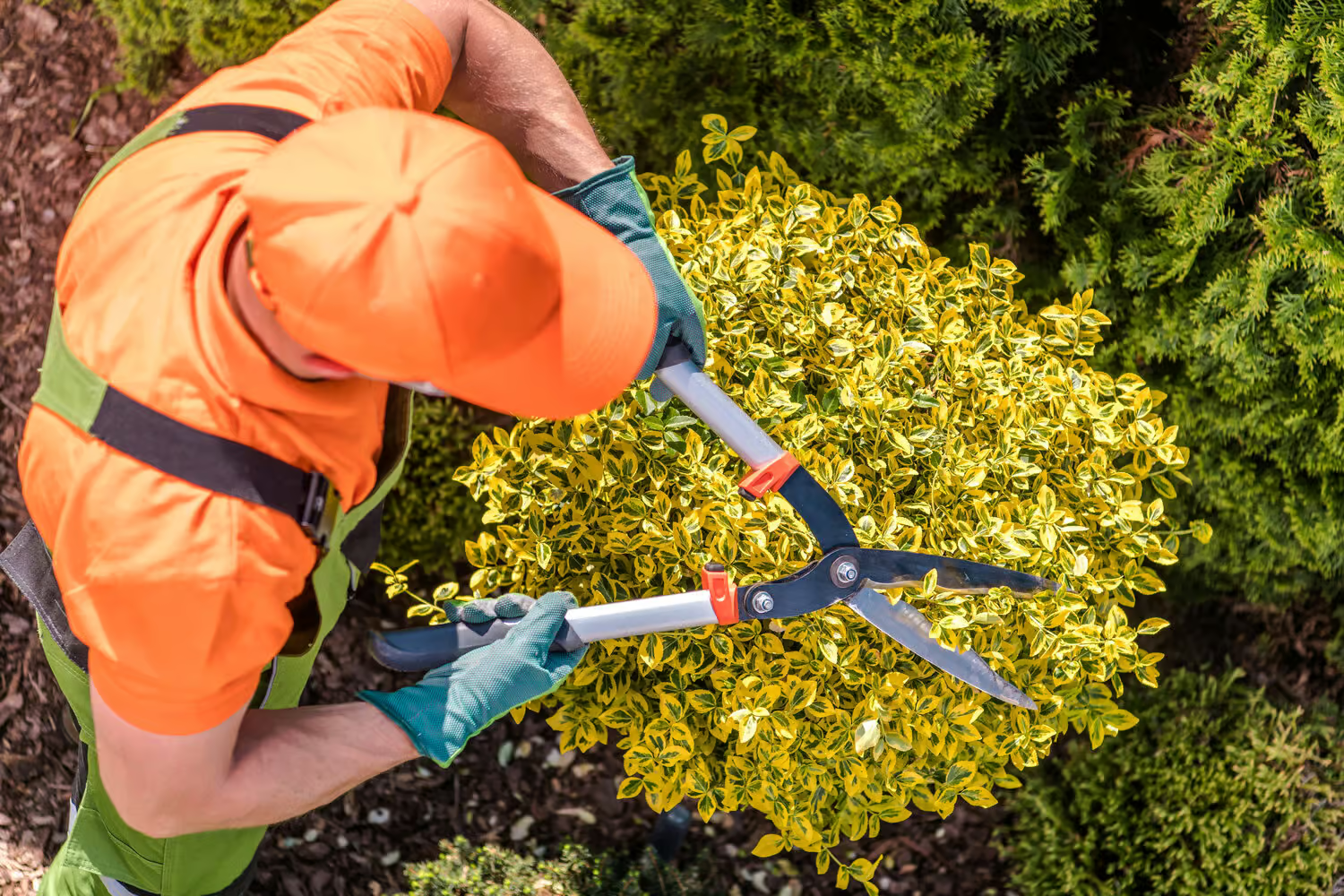
Hedge Trimming: Formal Shaping and Privacy Screens
A well-maintained hedge is a living wall. It provides privacy, wind protection, noise reduction, and structure. But a hedge that misses two trims goes from sharp to shaggy, and a hedge that is sheared incorrectly goes from dense to leggy.
| Hedge Species | Trims per Year | Typical Height | Notes |
|---|---|---|---|
| English laurel (Prunus laurocerasus) | 2–3x | 6–15 ft | Very fast grower. Can add 2+ feet per year. Shear or hand prune. |
| Leyland cypress | 2–3x | 10–20+ ft | Very fast. Do NOT cut into brown dead zone. Maintain outer green shell. |
| Arborvitae (Thuja) | 1–2x | 6–15 ft | Moderate grower. Do not cut into brown interior. A-shape essential. |
| Boxwood (Buxus) | 1–2x | 2–5 ft | Slow grower. Dense. Holds shape well. Formal gardens and borders. |
| Yew (Taxus) | 1–2x | 4–10 ft | Moderate grower. Tolerates hard pruning. Regenerates from old wood (rare for evergreens). |
| Privet (Ligustrum) | 2–3x | 4–10 ft | Fast grower. Semi-evergreen in Seattle. Responds well to hard rejuvenation. |
| Holly (Ilex) | 1–2x | 6–15 ft | Moderate grower. Thorny (slower to trim). Dense and effective privacy. |
| Photinia (Red Tip) | 2x | 6–12 ft | New growth is red. Time trims to encourage red flush for color. |
The leggy hedge fix: If your hedge is bare and woody at the bottom, it was sheared too flat on top for too long. The top shaded out the bottom. We correct this by narrowing the top (cutting it shorter and narrower than the base) to allow sunlight to reach the lower branches. In most species, the lower branches will push new growth within one to two growing seasons if light is restored. Yew is the most forgiving. Leyland cypress and arborvitae are the least (once the bottom browns out, it rarely recovers).
Hedge trimming on a schedule.
We come 2–3x per year so it never gets away from you. Free quote.
Fruit Tree Pruning: Structure, Airflow, and Production
Seattle's mild, wet climate is excellent for growing apples, pears, cherries, plums, and figs. But the same moisture that helps fruit grow also promotes fungal disease (apple scab, fire blight, brown rot) if the tree canopy is too dense. Pruning is how you manage both production and disease prevention.
When: Dormant season, January through February, before buds break. Dormant pruning allows you to see the tree's branch structure clearly (no leaves) and make structural cuts that heal before spring growth begins.
Goals: Open the canopy for air circulation and sunlight penetration. Remove water sprouts (the vertical shoots that grow straight up from branches). Remove crossing and rubbing branches. Establish and maintain the desired form (open center for stone fruit, central leader for apples and pears). Manage fruit spurs (the short, knobby branches where fruit forms).
Summer touch-up: A light summer pruning (June/July) removes new water sprouts before they harden off. This saves energy the tree would otherwise waste on unproductive growth. Summer pruning is a 15-minute visit, not a full structural session.
Fig trees: Figs are increasingly common in Seattle's warmer microclimates. Prune in late winter to remove dead wood and manage size. Figs fruit on both old and new wood, so light pruning is usually sufficient.
Our Tool Sanitation Protocol
Plant diseases travel on pruning tools. Fungal spores, bacterial pathogens (like fire blight on fruit trees), and viral infections adhere to blade surfaces and transfer from plant to plant, property to property. A landscaping crew that prunes a diseased shrub on one property and then prunes your healthy shrub with the same blades has just introduced the disease to your garden.
Our protocol: We sanitize all pruning tools (hand pruners, loppers, saws) with 70 percent isopropyl alcohol between every property and between any visibly diseased plants within the same property. This is the sanitation method recommended by the International Society of Arboriculture. The alcohol denatures proteins in fungal spores and bacterial cells on contact, breaking the chain of transmission.
When we sanitize: Before starting work on your property. After cutting any plant that shows signs of disease (discolored leaves, cankers, oozing sap). Between different species when disease transfer risk exists (e.g., between a fire blight-susceptible pear and an apple). At the end of the day before tools are stored.
Why this matters in Seattle: Our wet climate is ideal for fungal disease proliferation. Anthracnose, powdery mildew, verticillium wilt, apple scab, and fire blight are all present in Seattle's urban landscape. Tool sanitation is the single most effective way to prevent spreading these diseases between properties.
How Much Does Pruning and Shrub Trimming Cost in Seattle?
Pricing depends on plant type, size, quantity, and access. Below are typical ranges for Seattle residential properties.
| Service | Typical Range | Details |
|---|---|---|
| Individual Shrubs | ||
| Individual shrub trimming (per shrub, under 6 ft) | $10–$25 | Hand pruning or shearing depending on species. Includes cleanup. |
| Individual shrub pruning (per shrub, over 6 ft) | $25–$75 | Larger shrubs requiring ladder work or extensive hand pruning. |
| Hedges | ||
| Hedge trimming per visit (up to 50 linear ft) | $100–$300 | Shearing, shaping, blow-off, debris removal. Height dependent. |
| Hedge trimming per visit (50–150 linear ft) | $250–$600 | Larger hedge runs. May require ladder work on tall hedges. |
| Hedge trimming per visit (150+ linear ft) | $500–$1,200+ | Estate-length hedges, full perimeter. Priced by scope. |
| Full Property & Specialty | ||
| Full property pruning (all shrubs + hedges) | $300–$1,500+ | Comprehensive: every shrub hand-pruned, every hedge shaped, all debris removed. |
| Rejuvenation pruning (per shrub, heavy cut) | $50–$200 | Old cane removal, structural reset. Depends on size and species. |
| Fruit tree pruning (per tree, residential) | $75–$300 | Dormant pruning, water sprout removal, structural shaping. Size dependent. |
| Deadheading (roses, rhododendrons, perennials) | $25–$75/hour | Spent flower removal. Usually combined with other pruning work. |
| Programs | ||
| Recurring hedge program (2–3 visits/year) | 10–15% discount | Scheduled visits. Consistent shape. Priority scheduling. Annual pricing. |
| Debris haul-away | Included | All pruning and trimming quotes include complete cleanup and disposal. |
Prices are estimates for greater Seattle and the Eastside as of 2026. Access (slopes, stairs, tight gates), plant density, and severity of overgrowth affect final cost. All debris cleanup and haul-away is included. All estimates are free and on-site.
Hedges grow on a schedule. We trim on a schedule. Clients who commit to 2 or 3 visits per year at the beginning of the season receive a 10 to 15% discount on the annual total versus one-off visits. You also get priority scheduling during peak season (May through September) when demand is highest.
Get your pruning quote.
Every shrub, every hedge, every fruit tree. Cleanup included.
Pruning Across Seattle and the Eastside
Capitol Hill and Queen Anne have older properties with mature rhododendrons that reach second-story windows and Japanese maples in small front yards. These are the neighborhoods where hand pruning skill matters most. The rhododendrons often need rejuvenation pruning to bring them back to a manageable size without destroying their shape. The Japanese maples need delicate crown thinning by someone who understands the tree's natural structure.
Kirkland, Bellevue, and Sammamish have large privacy hedges (English laurel, arborvitae, Leyland cypress) running 100 to 200+ linear feet along property lines. These hedges need 2 to 3 trims per year to stay sharp. Recurring hedge programs are our most common service on the Eastside. Many Eastside properties also have extensive rhododendron collections planted in the 1970s and 1980s that are now dramatically overgrown.
West Seattle, Beacon Hill, and Renton have older residential lots with mature fruit trees (apple, cherry, plum) that have gone years without dormant pruning. The canopies are dense, production has declined, and disease pressure is increasing. Dormant winter pruning restores structure, opens airflow, and brings production back.
We serve: Seattle (all neighborhoods), Kirkland, Bellevue, Redmond, Sammamish, Issaquah, Renton, Bothell, Woodinville, Mercer Island, Shoreline, Lake Forest Park, and surrounding King County communities.
Frequently Asked Questions About Pruning and Shrub Trimming in Seattle
When should I prune my rhododendrons in Seattle? +
When should I prune my hydrangeas? +
How much does shrub trimming cost? +
How much does hedge trimming cost? +
What is the difference between pruning and trimming? +
What is the meatball effect? +
Can you fix a leggy hedge that is bare at the bottom? +
How often should hedges be trimmed in Seattle? +
Should I use wound paint or sealer on pruning cuts? +
Do you prune large trees? +
Do you do fruit tree pruning? +
Do you haul away the branches and debris? +
What is rejuvenation pruning? +
Do you disinfect your pruning tools? +
Can you reduce the size of a giant rhododendron? +
Every Cut Should Have a Reason
That is the difference between pruning and hacking. A cut made at the right node sends growth in the right direction. A cut made at the right time preserves next spring's flowers. A cut made with clean tools does not spread disease. And a plant that is never sheared into a ball retains the shape that made you plant it in the first place.
LandscapingFactory provides pruning and trimming for every shrub, hedge, and small tree on your property:
- Hand pruning for flowering shrubs: rhododendrons, azaleas, camellias, roses, hydrangeas, lilacs
- Precision hedge shearing: laurel, arborvitae, boxwood, yew, Leyland cypress, privet, holly
- Japanese maple and small ornamental shaping (hand tools only, never sheared)
- Fruit tree dormant pruning: apple, pear, cherry, plum, fig, blueberry
- Rejuvenation pruning for overgrown shrubs (1/3 rule, multi-year renewal)
- Deadheading roses, rhododendrons, and perennials
- Ornamental grass cutback (spring seasonal)
- Recurring hedge programs (2–3 visits/year, 10–15% annual discount)
- Tool sanitation with 70% isopropyl alcohol between every property
- Complete debris cleanup and haul-away included in every quote
Serving Seattle, Kirkland, Bellevue, Redmond, Sammamish, Issaquah, Renton, Bothell, Woodinville, Mercer Island, and all of King County.
Professional pruning. Right plant. Right tool. Right time.
Free assessment.
Get a Free Estimate
Let's chat about your needs and landscape dreams. Schedule a call below.
Other Services










Don't risk a lawsuit or a dead tree.
Get professional, legally compliant pruning that enhances beauty and promotes health.
Schedule a Pruning Assessment