Every spring in Seattle, the same thing happens. You step onto your lawn for the first time since November, and it is more moss than grass. The patches where grass used to grow are spongy and green with the wrong kind of green. The edges are ragged. Leaves from last fall are still matted against the soil in the corners. And somewhere between the rain and the short winter days, the lawn crossed from "needs attention" into "needs a plan."
You already know the cycle. Mow it, ignore it, fight the moss, lose the fight, repeat. Most homeowners in Seattle have been through this loop enough times to know that random weekend effort does not produce a healthy lawn in this climate. The conditions here are specific: 37+ inches of rain, acidic soil, heavy shade from mature trees, clay-based ground that compacts under its own weight, and a growing season that swings from explosive in spring to bone-dry in August.
A healthy lawn in the Pacific Northwest is not a product of occasional attention. It is a system: consistent mowing at the right height, soil pH correction, aeration to break the compaction cycle, overseeding to thicken bare spots, moss treatment that addresses the cause instead of the symptom, and watering that actually reaches the roots during the dry months.
At LandscapingFactory, we manage that entire system. Weekly mowing, seasonal treatments, moss control, full lawn renovations with new sod, irrigation installation, and everything in between. Residential and commercial properties across Seattle, Kirkland, Bellevue, and the Eastside.
Lawn Care vs. Yard Maintenance: Two Services, One Crew
We split our services into two categories because they solve different problems. Most clients need both, and we bundle them into a single recurring plan, but understanding the distinction helps us build the right program for your property.
Lawn Care (Turf Health)
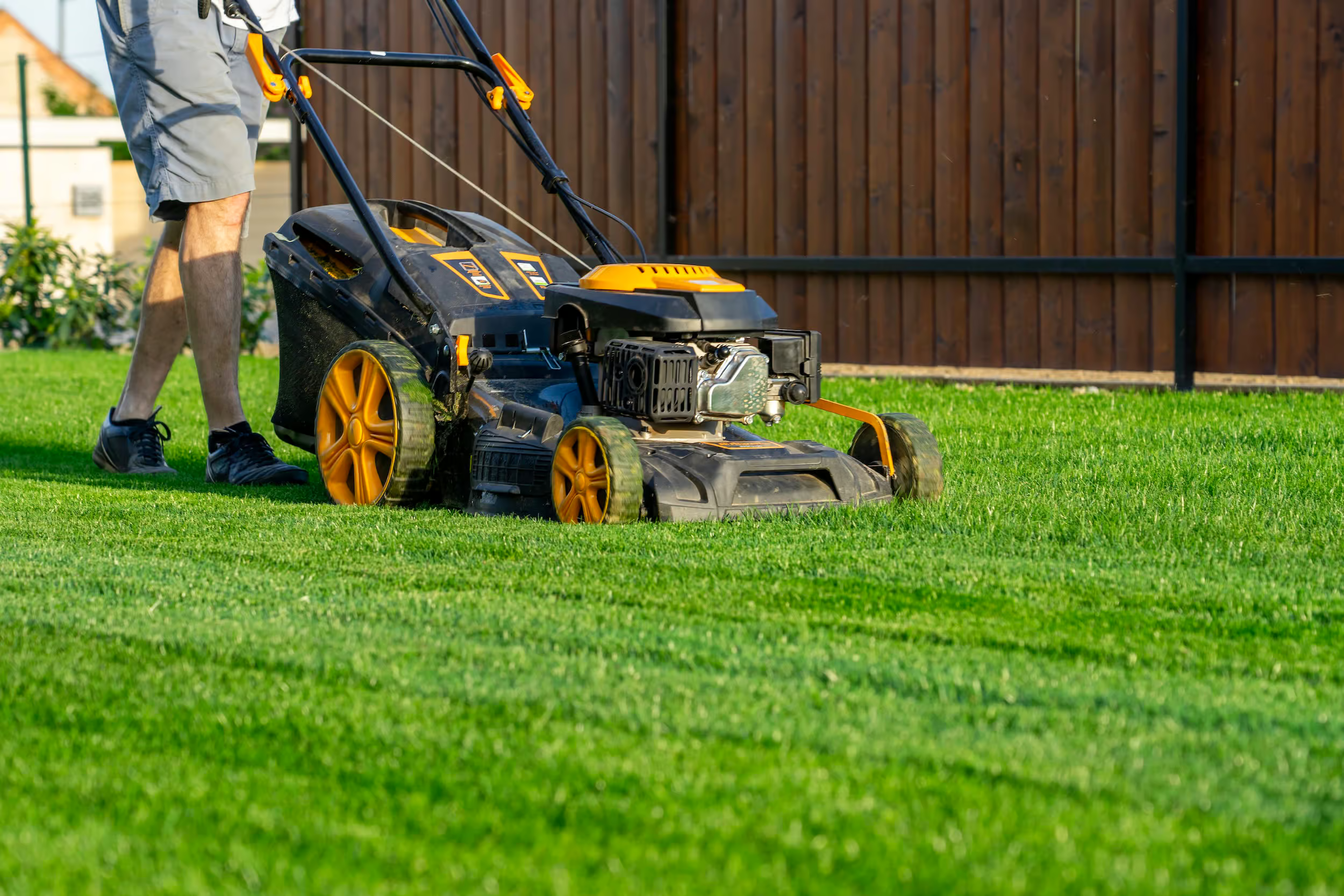
This is the science of keeping the grass itself green, dense, and weed-free. It is the system that fights moss, compaction, and thinning. Lawn care includes: scheduled mowing and edging at the correct blade height, fertilization (organic or conventional), weed control, aeration, dethatching, overseeding, moss treatment, and soil amendments like lime. These services have specific timing windows based on the season, which is why we run them on a calendar rather than on demand.
Yard Maintenance (Everything Around the Lawn)
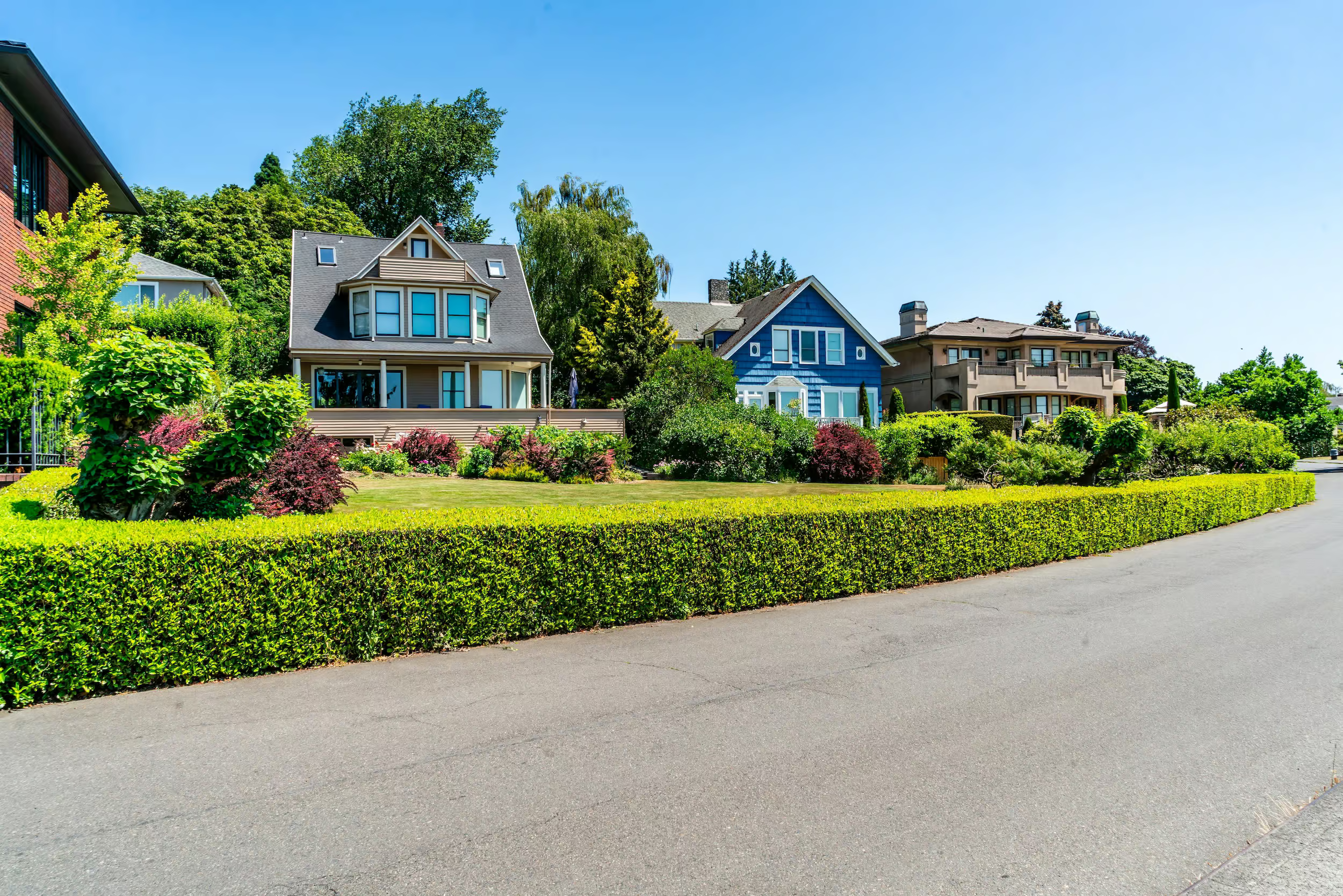
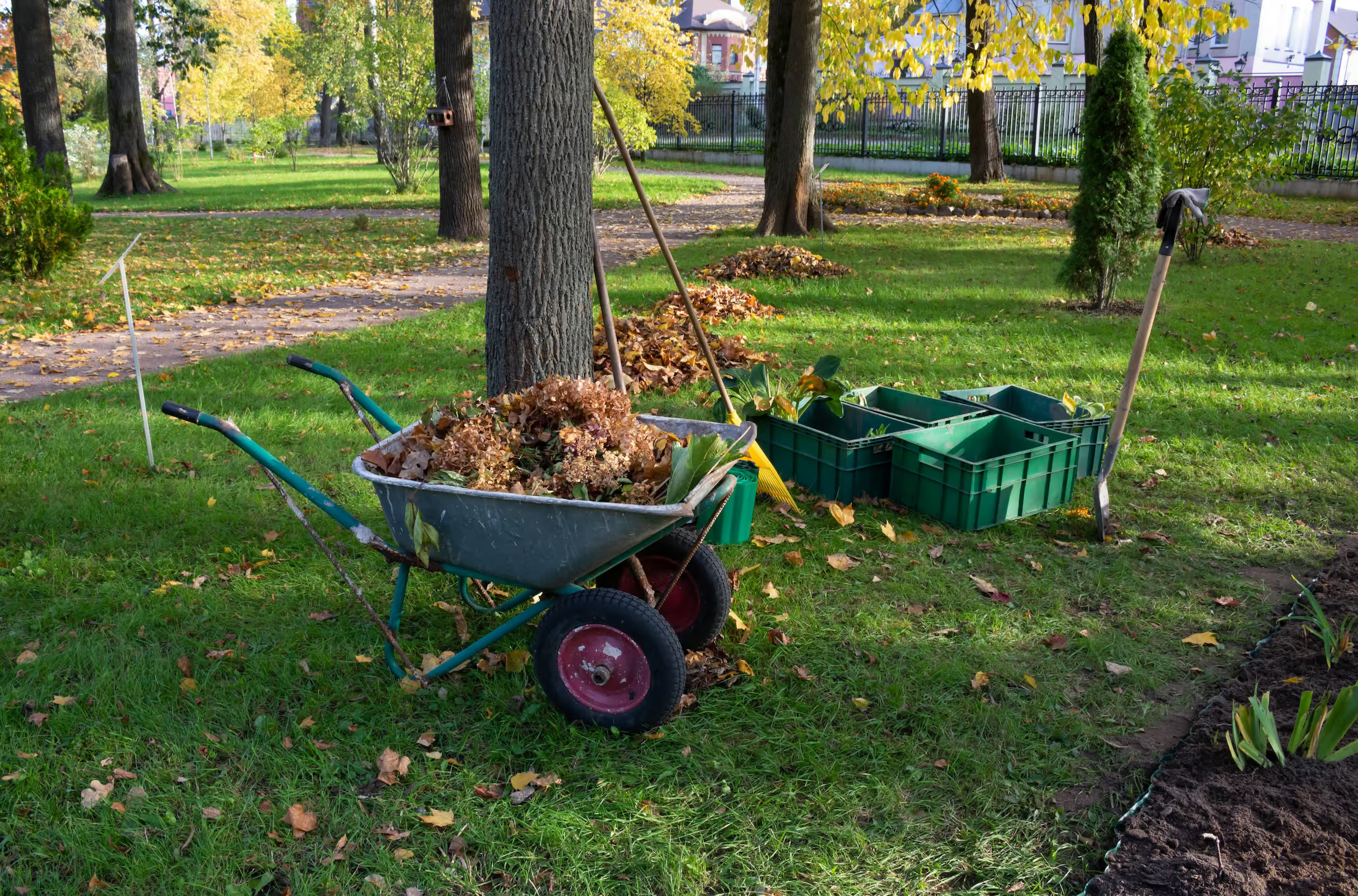
Yard maintenance includes: leaf cleanup (critical in autumn to prevent lawn suffocation), hedge and shrub trimming, mulch refresh for garden beds, fence line cleanup, debris removal, gutter line clearing, and general property tidying. These services keep the entire property presentable and prevent the small problems that become expensive if ignored.
Most clients on a recurring plan get both: weekly mowing with seasonal turf treatments, plus periodic yard maintenance visits that cover the beds, edges, and non-lawn areas.
Need a plan that covers both?
We build custom recurring programs based on your property size, turf condition, and budget. Free quote.
Why Is My Seattle Lawn Full of Moss? (And How to Fix It for Good)
Moss is the number one lawn problem in the Pacific Northwest. If you live in Seattle, you have moss. It is not a sign that you are a bad homeowner. It is a sign that the conditions in your yard are better for moss than they are for grass. Fixing it means changing those conditions, not just raking the moss out.
Here is why moss wins in Seattle, and what we do about each cause:
Acidic soil: Seattle soil is naturally acidic (low pH), often in the 5.0 to 5.5 range. Grass prefers a pH of 6.0 to 7.0. Moss thrives in acidity. Our fix: We test the soil pH and apply lime (calcium carbonate) to raise it into the range where grass outcompetes moss. Liming is not a one-time fix. Seattle's rain continuously acidifies the soil, so lime applications need to happen annually or biannually to maintain the correction.
Compacted soil: Clay-heavy Seattle soil compacts under its own weight, under foot traffic, and under rain. Compacted soil holds water at the surface (which moss loves) and suffocates grass roots. Our fix: Core aeration punches thousands of small holes in the soil, allowing air, water, and nutrients to reach the root zone. We combine aeration with overseeding so the new grass seed falls directly into the holes and germinates in protected contact with the soil.
Shade: Mature Douglas firs, Big Leaf maples, and the short winter daylight hours mean many Seattle lawns get limited direct sunlight. Moss tolerates shade far better than grass. Our fix: We recommend shade-tolerant grass varieties (fine fescue blends) for low-light areas, and we can coordinate with tree trimming to open the canopy where possible. In areas where shade is too dense for any grass variety, we help design alternative ground cover solutions.
Poor drainage: Flat areas where water pools after rain create ideal moss habitat. Our fix: Aeration improves surface drainage. For persistent pooling, we can regrade small areas or install French drains to redirect water.
Iron-based moss treatment: We apply ferrous sulfate or iron-based moss control products that kill existing moss without harming the grass. The dead moss is then dethatched (power raked) and removed, creating space for new grass seed to fill in.
1. Test soil pH. 2. Apply iron-based moss killer (wait 2 weeks). 3. Dethatch / power rake the dead moss. 4. Core aerate the entire lawn. 5. Apply lime to correct pH. 6. Overseed with a shade-tolerant PNW grass blend. 7. Apply starter fertilizer. 8. Water consistently for 3 to 4 weeks while seed germinates. This is the only sequence that produces lasting results. Skipping steps means the moss returns within one season.
When Should You Aerate, Dethatch, and Overseed in Seattle?
These three services work together and should be done in sequence. Aeration breaks the compaction. Dethatching removes the dead layer. Overseeding fills the gaps. Doing them separately at random times wastes money. Doing them together at the right time transforms a lawn in 4 to 6 weeks.
Core Aeration
We use a core aerator (not a spike aerator) that pulls small plugs of soil out of the ground. The holes relieve compaction, improve drainage, and allow fertilizer and water to reach the root zone. The plugs are left on the surface to break down naturally and return organic matter to the soil. Core aeration is the single most important treatment for compacted Seattle clay soil.
Dethatching (Power Raking)
Thatch is the layer of dead grass, moss, and organic debris that accumulates between the soil surface and the living grass blades. A thin layer (under half an inch) is normal and beneficial. Anything thicker than that becomes a barrier that prevents water, air, and nutrients from reaching the roots. We use a power rake (dethatcher) to remove excess thatch. In Seattle, dead moss is often the biggest contributor to thatch buildup.
Overseeding
After aeration and dethatching, the soil is exposed and the holes from the aerator create thousands of seed pockets where new grass seed makes direct contact with the soil. We use Perennial Ryegrass and Fine Fescue blends specifically adapted for Western Washington. Ryegrass germinates fast and fills in quickly. Fescue tolerates shade and requires less water once established. The combination gives you a thick, resilient lawn that crowds out weeds and moss naturally.
Best times: Spring (March through May) and Fall (September through October). Fall is slightly better because cool soil temperatures, consistent rainfall, and reduced weed competition give new seed the best chance to establish before winter.
Seattle Lawn Care Calendar: What to Do Each Month
Lawn care in the Pacific Northwest follows a specific seasonal rhythm. Here is when we schedule each service for maximum effectiveness.
| Month | What We Do | Why This Timing |
|---|---|---|
| January–February | Monitor; light cleanup if weather allows | Lawn is dormant. Soil is too wet for equipment. |
| March | First mow (high setting); soil pH test; lime application if needed | Grass starts growing. Lime needs time to work before spring treatments. |
| April | Begin weekly mowing; apply spring fertilizer; spot-treat moss | Peak growth begins. Fertilizer feeds the spring surge. |
| May | Continue weekly mowing; apply weed control; dethatch if moss is present | Weeds are actively growing and vulnerable to treatment. |
| June | Weekly mowing; irrigation on; apply grub preventive if needed | Growth slows as rain decreases. Irrigation becomes critical. |
| July–August | Weekly mowing (raise blade height); irrigate consistently; avoid heavy treatments | Summer stress period. Taller grass shades roots and retains moisture. |
| September | Core aerate; overseed; apply starter fertilizer; dethatch if needed | Best window for overseeding. Cool nights + warm soil = ideal germination. |
| October | Continue mowing (growth slows); apply fall fertilizer; final weed treatment | Fall fertilizer strengthens roots for winter storage. |
| November | Final mow; leaf cleanup; winterize irrigation system | Grass enters dormancy. Leaves left on lawn cause snow mold. |
| December | No lawn work; equipment maintenance | Lawn is dormant. Plan for spring. |
This calendar is calibrated for the greater Seattle metro area (USDA Zones 8b–9a). Microclimates, elevation, and shade exposure may shift timing by 1 to 2 weeks in either direction.
Want us to handle the entire calendar?
Our recurring plans put every treatment on the right month automatically. Free property assessment.
New Lawn Installation: Sod, Soil Prep, and Instant Results
Sometimes the lawn is too far gone for aeration and overseeding to save it. If more than 40 to 50 percent of the surface is moss, bare dirt, or weeds, a full renovation with new sod is faster, cheaper in the long run, and gives you a finished lawn the same day.
Remove the existing lawn
We strip the old turf, moss, and weeds down to bare soil using a sod cutter. All removed material is hauled away. We do not spray herbicide to kill the old lawn; we physically remove it.
Soil amendment and preparation
Healthy grass needs healthy soil. We till the exposed ground to a depth of 4 to 6 inches, breaking up compacted clay. We mix in compost, topsoil, and starter fertilizer to create a nutrient-rich planting bed. If the soil pH is low (acidic), we add lime during this stage. This step is the most important part of the entire process. Sod laid on poor soil fails within a year.
Grading and leveling
We grade the prepared soil for proper drainage (slight slope away from the house and any structures) and level it so the finished lawn mows evenly. A bumpy lawn is a mowing nightmare and a tripping hazard.
Sod selection and delivery
We use locally grown Perennial Ryegrass and Fine Fescue blend sod adapted specifically for Western Washington. This blend handles sun and partial shade, germinates dense, and establishes quickly in our cool, wet conditions. The sod is delivered fresh from the farm and installed the same day to prevent drying.
Installation and rolling
Sod is laid in staggered rows (like bricks), pressed firmly against the soil, and rolled with a weighted roller to eliminate air pockets and ensure full root-to-soil contact. All seams are tight with no gaps or overlaps.
Initial watering and aftercare
New sod needs heavy watering for the first 2 weeks (twice daily in dry weather) while the roots establish. We set up your irrigation system or provide a detailed manual watering schedule. After 2 to 3 weeks, roots anchor into the soil and watering frequency can be reduced. First mow is typically 3 to 4 weeks after installation.
Ready for a new lawn?
We strip the old, prep the soil, and install fresh sod in one day. Free on-site estimate.
Irrigation Systems: Sprinklers, Drip Lines, and Smart Controllers
Seattle gets 37+ inches of rain per year, but almost none of it falls in July and August. Those two months are increasingly hot and dry, and a lawn without irrigation will go dormant (brown and crispy) by mid-July. If you are investing in new sod or a lawn renovation, an irrigation system is not optional. It is the difference between a lawn that survives the summer and one that dies.
In-Ground Sprinkler Systems
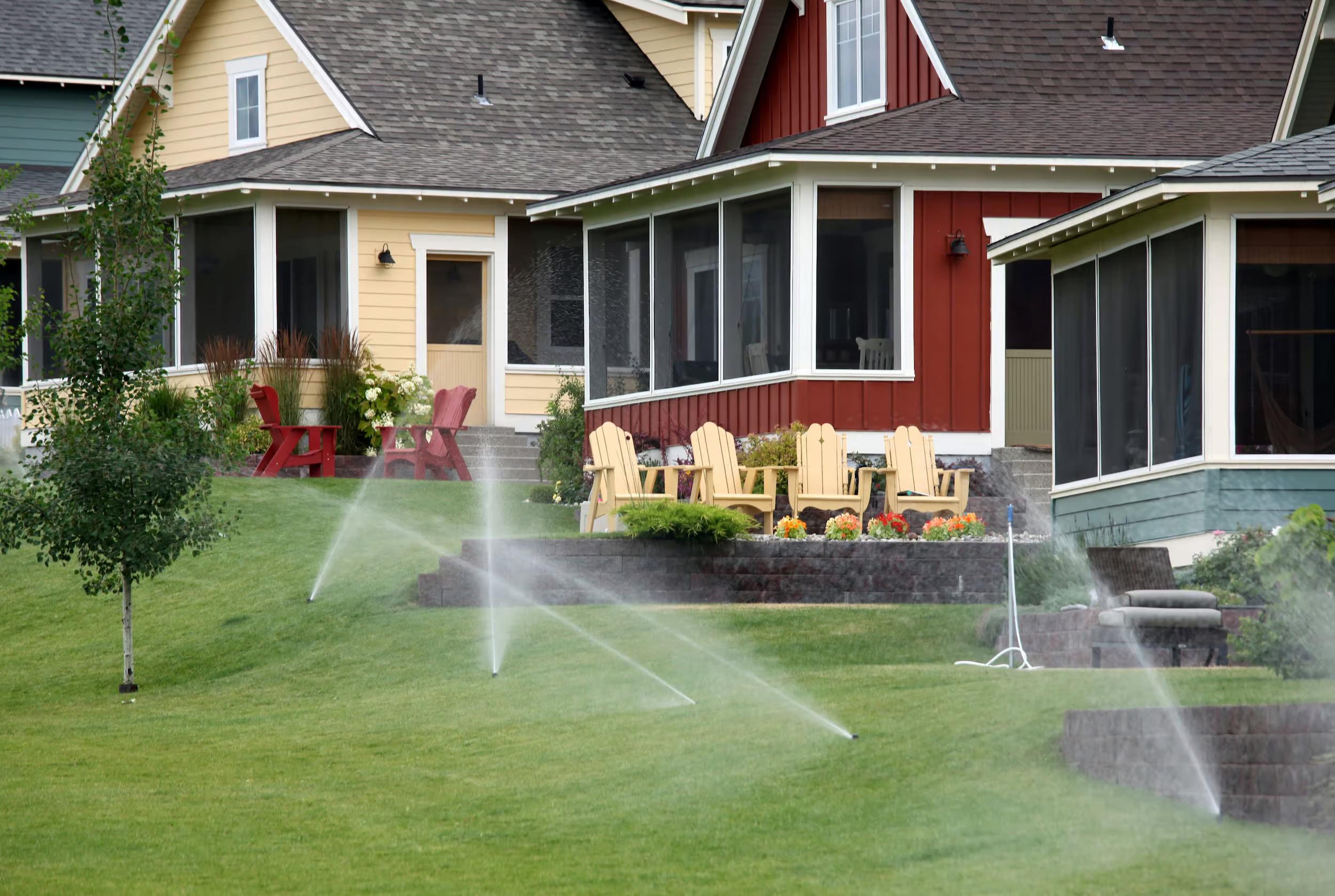
Automated pop-up sprinklers cover large lawn areas evenly and efficiently. We design the layout with overlapping spray zones to eliminate dry spots, install the pipe and heads, and connect everything to a programmable controller. Heads retract flush with the ground when not in use, so they do not interfere with mowing.
Drip Irrigation for Beds and Borders
Garden beds, shrub borders, and trees do not need broadcast sprinklers. Drip irrigation delivers water directly to the root zone through low-pressure emitters, minimizing evaporation and waste. We install drip zones separately from lawn sprinkler zones so each area gets exactly the amount of water it needs.
Smart Controllers and Seasonal Adjustments
We install WiFi-enabled smart controllers that adjust watering schedules based on weather forecasts and seasonal changes. A smart controller typically saves 20 to 50 percent on water usage compared to a basic timer because it skips watering before rain and adjusts run times as temperatures change. We also handle seasonal startup (spring) and winterization (late fall) to protect the system from freeze damage.
Water left in irrigation pipes will freeze and crack the lines during Seattle's occasional hard freezes (usually December through February). We blow compressed air through the entire system in late November to clear all water from the pipes, heads, and valves. This takes about an hour and prevents hundreds of dollars in spring repair costs.
Lawn Pests in Seattle: Crane Flies, Leatherjackets, and Brown Patches
If your lawn develops brown, thinning patches in late spring that do not respond to watering, the problem may not be drought. It may be European Crane Fly larvae (leatherjackets) eating the grass roots from below the surface.
Crane flies — the large, mosquito-looking insects that swarm porches in September — lay eggs in lawns during the fall. The larvae hatch in winter and feed on grass roots through spring. By April or May, the damage becomes visible as brown patches where the root system has been destroyed. The larvae are grey, legless grubs about an inch long, just below the soil surface.
What we do: We monitor lawns on our recurring plans for crane fly damage. If larvae are present, we apply targeted treatments that eliminate the grubs without harming beneficial insects, earthworms, or soil biology. Timing is critical: treatment in early spring (before the damage peaks) is far more effective than treating after the lawn has already been destroyed. Healthy, thick lawns are also more resistant to crane fly damage because the grass can tolerate some root feeding without showing symptoms.
Commercial and HOA Lawn Maintenance
The exterior of your building is the first thing clients, tenants, and visitors see. A neglected lawn tells people something about the business before they walk through the door. We maintain commercial properties, office parks, HOA common areas, retail centers, and multi-family complexes across Seattle and the Eastside.
What commercial clients need from us: Invisible service. We show up on schedule, do the work without disrupting operations, and leave the property looking sharp. No surprise invoices. No missed visits. No half-finished jobs. Commercial contracts are built on reliability, and we run our commercial routes with the same crew on the same schedule every week so your property always looks the same: maintained.
Commercial plans include weekly mowing, edging, blowing, seasonal fertilization, moss control, aeration, leaf cleanup, mulch refresh, and irrigation management. We also handle snow and ice response for properties that need year-round coverage.
Organic and Eco-Friendly Lawn Care Options
Seattle is one of the most environmentally conscious markets in the country, and many of our clients want lawn care that does not rely on synthetic chemicals. We offer fully organic treatment programs that use OMRI-listed fertilizers, iron-based moss control, corn gluten meal for weed suppression, and compost-based soil amendments.
Organic programs work. They take slightly longer to show results than conventional programs (weeks instead of days) because organic fertilizers release nutrients slowly as soil biology breaks them down. But the long-term effect is stronger: healthier soil, deeper root systems, and a lawn that sustains itself with less input over time.
For clients with children and pets: Our organic treatments are safe for immediate reentry after application. No waiting period, no chemical residue, no worry. For clients who prefer conventional treatments, we use EPA-registered products and recommend keeping pets and children off the lawn for 24 hours after application until the product is watered in and dry.
Want a fully organic lawn care program?
We build custom plans with zero synthetic chemicals. Same results, safer for your family. Free quote.
How Much Does Lawn Care Cost in Seattle?
Pricing depends on the property size (square footage of turf), service frequency, terrain complexity, and which treatments are included. Here are honest ranges for the Seattle metro area. All quotes are free and based on an on-site assessment of your specific property.
| Service | Typical Range | Notes |
|---|---|---|
| Mowing & Maintenance | ||
| Weekly mowing + edging + blowing | $40–$80 /visit | Based on lawn size; includes trimming around beds and structures |
| Biweekly mowing + edging + blowing | $50–$100 /visit | Slightly higher per visit due to taller grass between cuts |
| Full-service monthly plan | $150–$400 /month | Mowing, fertilization, weed control, seasonal treatments bundled |
| Turf Health Treatments | ||
| Core aeration | $100–$300 | Per visit; based on lawn size; recommended 1–2x per year |
| Dethatching / power raking | $100–$300 | Per visit; often combined with aeration and overseeding |
| Overseeding (with aeration) | $150–$400 | Seed, starter fertilizer, and application included |
| Moss treatment (iron-based) | $75–$200 | Per application; may need 1–2 treatments per season |
| Lime application (pH correction) | $50–$150 | Per application; based on lawn size and pH test results |
| Fertilization (per application) | $50–$150 | Organic or conventional; 3–4 applications per year recommended |
| Cleanups | ||
| Spring cleanup | $150–$400 | Debris removal, first mow, bed cleanup, edge trimming |
| Fall cleanup (leaf removal) | $200–$500 | Multiple visits; price depends on tree coverage and property size |
| Installation | ||
| Sod installation (full renovation) | $1.70–$3.00 /sqft | Includes old lawn removal, soil prep, sod, and initial watering setup |
| Irrigation system installation | $3,000–$10,000 | Full in-ground sprinkler; depends on zone count and property size |
| Irrigation winterization | $75–$150 | Compressed air blowout; late November |
Prices are estimates for greater Seattle and the Eastside as of 2026. Recurring plans (weekly or biweekly mowing + seasonal treatments) are more cost-effective than booking individual services separately. All quotes are free and on-site.
A seasonal subscription (mowing + fertilization + weed control + aeration + overseeding) costs less per year than booking each service individually. It also puts every treatment on the right month automatically, which prevents the expensive emergency repairs that happen when problems are caught too late. Most residential clients spend $200 to $350 per month on a full-service plan and have a lawn that stays healthy year-round.
Get your free lawn care quote.
We measure your property, assess the turf, and build a plan that fits your budget.
Lawn Care Built for Seattle Soil and Shade
Every neighborhood in this metro area has its own lawn personality. Capitol Hill and Wallingford have small, heavily shaded yards under mature canopy where moss dominates and shade-tolerant fescue blends are the only grass that survives. Ballard and Fremont have slightly larger lots with more sun exposure, where standard ryegrass blends thrive but compaction from clay soil still drives moss in the shaded corners. Mercer Island and Bellevue have estate-sized lawns that need full irrigation systems and commercial-grade maintenance programs. Kirkland and Sammamish sit on some of the heaviest clay in the metro, and lawns there compact faster and need aeration more frequently than average.
The soil pH varies too. We have tested lawns across Seattle and the Eastside that range from 4.8 (very acidic, almost impossible for grass) to 6.5 (borderline ideal). Most fall in the 5.2 to 5.8 range, which means most lawns need lime. The amount and frequency depend on the starting pH and the ongoing acidification from rainwater.
We serve: Seattle (all neighborhoods), Kirkland, Bellevue, Redmond, Sammamish, Issaquah, Renton, Bothell, Woodinville, Mercer Island, Shoreline, Lake Forest Park, and surrounding King County communities.
Frequently Asked Questions About Lawn Care in Seattle
How often should I mow my lawn in Seattle? +
What is the one-third rule for mowing? +
Why does my Seattle lawn have so much moss? +
When is the best time to aerate my lawn in Seattle? +
Should I leave my grass clippings or bag them? +
Is it illegal to mow your lawn at 7am in Seattle? +
How long does new sod take to root? +
What type of grass seed works best in Seattle? +
Are your lawn treatments safe for dogs and kids? +
What are those big mosquito-looking bugs on my porch in September? +
How much water does a Seattle lawn need in summer? +
Can I mow my lawn in October and November? +
How much does a new sod lawn cost? +
Do you offer organic lawn care? +
Is a recurring lawn care plan worth it? +
Your Lawn Can Look Better Than This
The moss, the bare patches, the weeds creeping in from the edges, the brown summer dormancy. None of that is inevitable. It is the result of a lawn that is not getting what it needs at the right time. A lawn in Seattle needs a system: mow, feed, aerate, overseed, control the moss, manage the pH, water through July and August. When every step happens on schedule, the lawn responds. Every season it gets thicker, greener, and harder for moss and weeds to penetrate.
LandscapingFactory provides every lawn care service Seattle properties need:
- Weekly and biweekly mowing, edging, and blowing
- Moss control (iron-based treatment, lime, aeration, overseeding)
- Core aeration and dethatching
- Overseeding with PNW-adapted grass blends
- Fertilization (organic and conventional programs)
- Full sod lawn installation and renovation
- Irrigation system design, installation, and winterization
- Crane fly and lawn pest treatment
- Spring and fall cleanups, leaf removal, mulch refresh
- Commercial and HOA maintenance contracts
- Organic and eco-friendly treatment programs
Serving Seattle, Kirkland, Bellevue, Redmond, Sammamish, Issaquah, Renton, Bothell, Woodinville, Mercer Island, and all of King County.
Ready to break the cycle?
Request your free lawn assessment. We test, measure, and build a plan that actually works.
Get a Free Estimate
Let's chat about your needs and landscape dreams. Schedule a call below.
Other Services











Stop fighting the weeds and start enjoying your yard.
Whether you need a brand new lawn installed or a reliable maintenance team, we are here to help.
Get a Free Lawn Care Quote