
The sun sets before 4:30 PM in Seattle from November through January. That means if you get home from work at 5:00, your yard is already dark. The patio you built last summer is invisible. The walkway from the driveway to the front door is a slip hazard on wet pavement. The landscaping you invested thousands in disappears for five months of the year.
Most people respond to this by leaving the porch light on and calling it done. That one overhead light creates a bright spot at the door and harsh shadows everywhere else. It does not light the path. It does not make the patio usable. It does not show off the yard. It makes the front of the house look like a gas station and leaves the back in total darkness.
Landscape lighting changes how you use your property from October through March. A few well-placed path lights mean you can walk from the car to the door without guessing where the steps are. Patio string lights or under-cap LEDs turn a dark deck into an evening living room. A pair of uplights on the two trees flanking the front entry makes the whole house look like a different property from the street. And all of it runs on low-voltage LED, which means the entire system costs $2 to $5 per month in electricity.
At LandscapingFactory, we install the practical landscape lighting that makes your outdoor spaces usable after dark: path lights, patio and deck lights, accent uplighting, step lights, and holiday lighting. We also maintain, repair, and upgrade existing lighting systems. We already take care of the landscaping. Adding lighting to it is a natural next step.
Why Low-Voltage LED? (And Why Not Solar in Seattle)
Every landscape lighting system we install is low-voltage (12V) LED. Here is why both of those choices matter.
Low voltage means safe and simple: A transformer plugged into a standard outdoor GFCI outlet steps your home's 120-volt power down to 12 volts. At 12 volts, the wires can be direct-buried just 6 inches underground without rigid conduit (in most applications), the risk of electrical shock is negligible, and a licensed electrician is not required for installation. The transformer is the brain of the system: it powers all the fixtures through a single buried cable.
LED means efficient and long-lasting: LED fixtures consume 75 to 80 percent less electricity than halogen bulbs. A system of 10 to 15 LED fixtures costs $2 to $5 per month to run. LED bulbs last 25,000 to 50,000 hours (compared to 2,000 to 5,000 hours for halogen), which means years of use before any bulb replacement. The light quality is also better: modern LEDs produce warm, natural tones that are indistinguishable from incandescent.
Why We Do Not Recommend Solar Lighting in Seattle
Solar landscape lights charge from direct sunlight and store energy in a battery. In Arizona, they work well. In Seattle, they struggle. From October through March, the days are short, the sky is overcast, and the solar panels cannot charge fully. The result: lights that turn on dim, fade by 7 or 8 PM, and provide unreliable illumination exactly when you need it most — the dark months.
Solar path lights from the hardware store cost $5 to $20 each and last 1 to 3 seasons before the batteries degrade. A hardwired low-voltage LED system is reliable 365 days a year regardless of weather or daylight hours. It costs more upfront, but it works every night, all night, for years.
Path Lighting: Safety and Curb Appeal After Dark
Path lighting is the most impactful single lighting upgrade you can make. It solves two problems at once: it prevents trips and falls on dark, wet walkways (a real liability issue in Seattle's rainy months), and it transforms the approach to your front door from invisible to inviting.
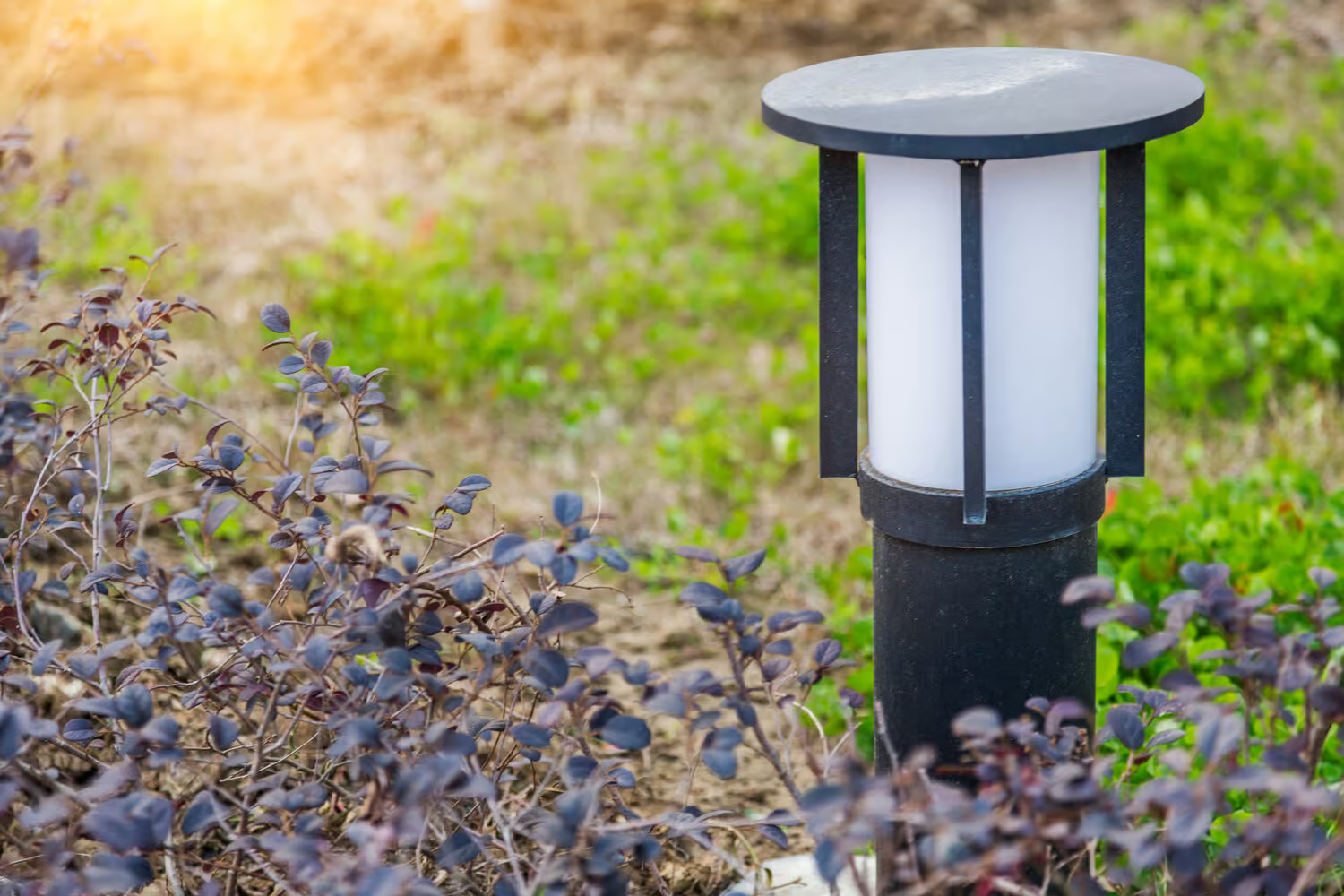
We install low-profile LED path fixtures along walkways, driveways, garden borders, and steps. The fixtures emit a downward-directed glow (typically 100 to 200 lumens each) that illuminates the walking surface without blinding anyone. Spacing is typically every 6 to 8 feet, staggered on alternating sides for even coverage.
Fixture styles: We offer several styles to match your property's character. Traditional mushroom-cap path lights work on most homes. Modern bollard-style fixtures suit contemporary architecture. Low-profile spread lights tuck into garden beds and provide light without visible hardware. We help you choose the style that fits during the consultation.
How many do you need? A standard front walkway (30 to 50 feet) typically needs 6 to 10 path lights. A longer driveway path or wraparound side path adds 4 to 8 more. Most residential path lighting projects use 8 to 15 total fixtures.
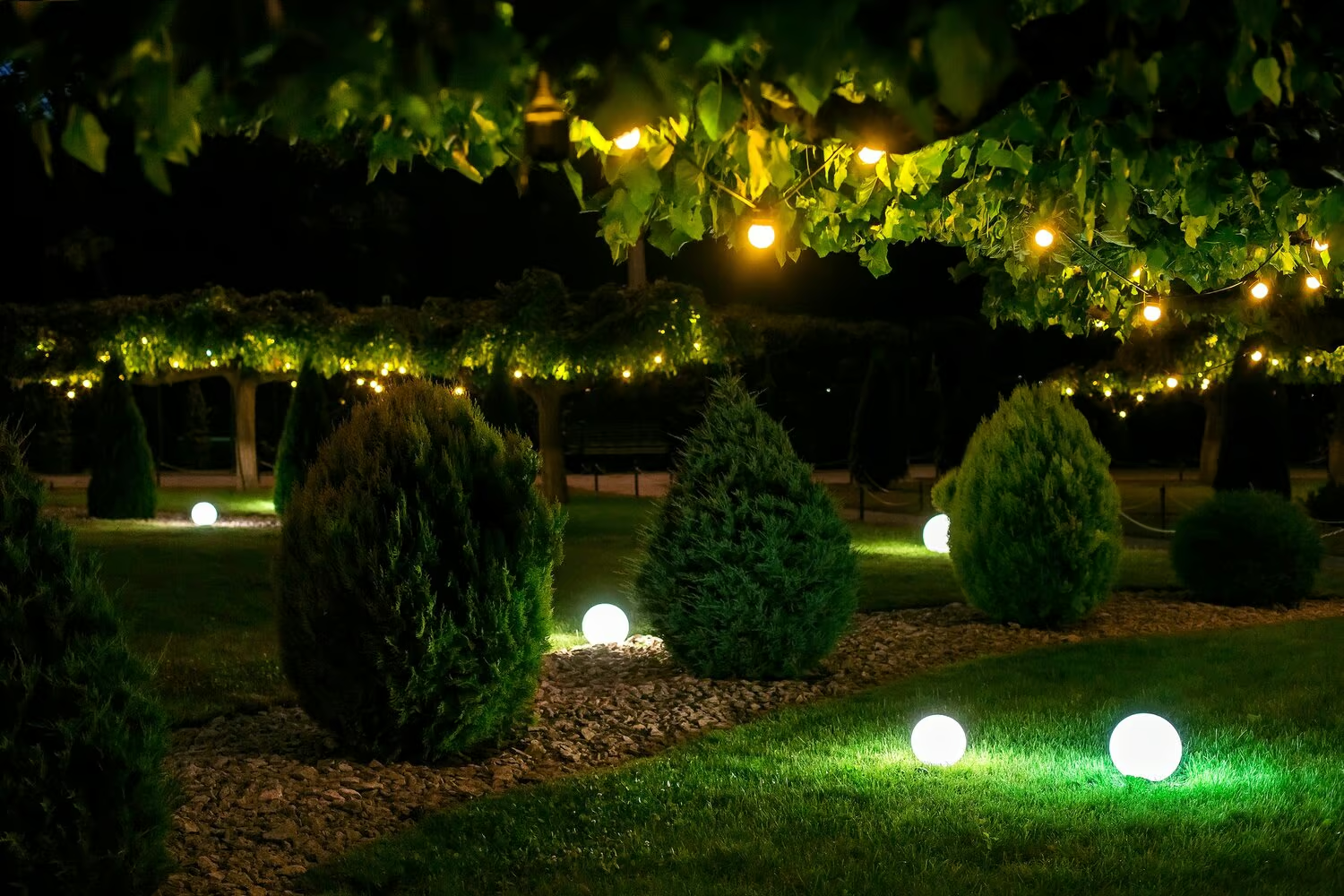
Path lighting makes your home safer and more inviting from the street.
8 to 15 fixtures, one afternoon install. Free quote.
Patio, Deck, and Outdoor Living Lights
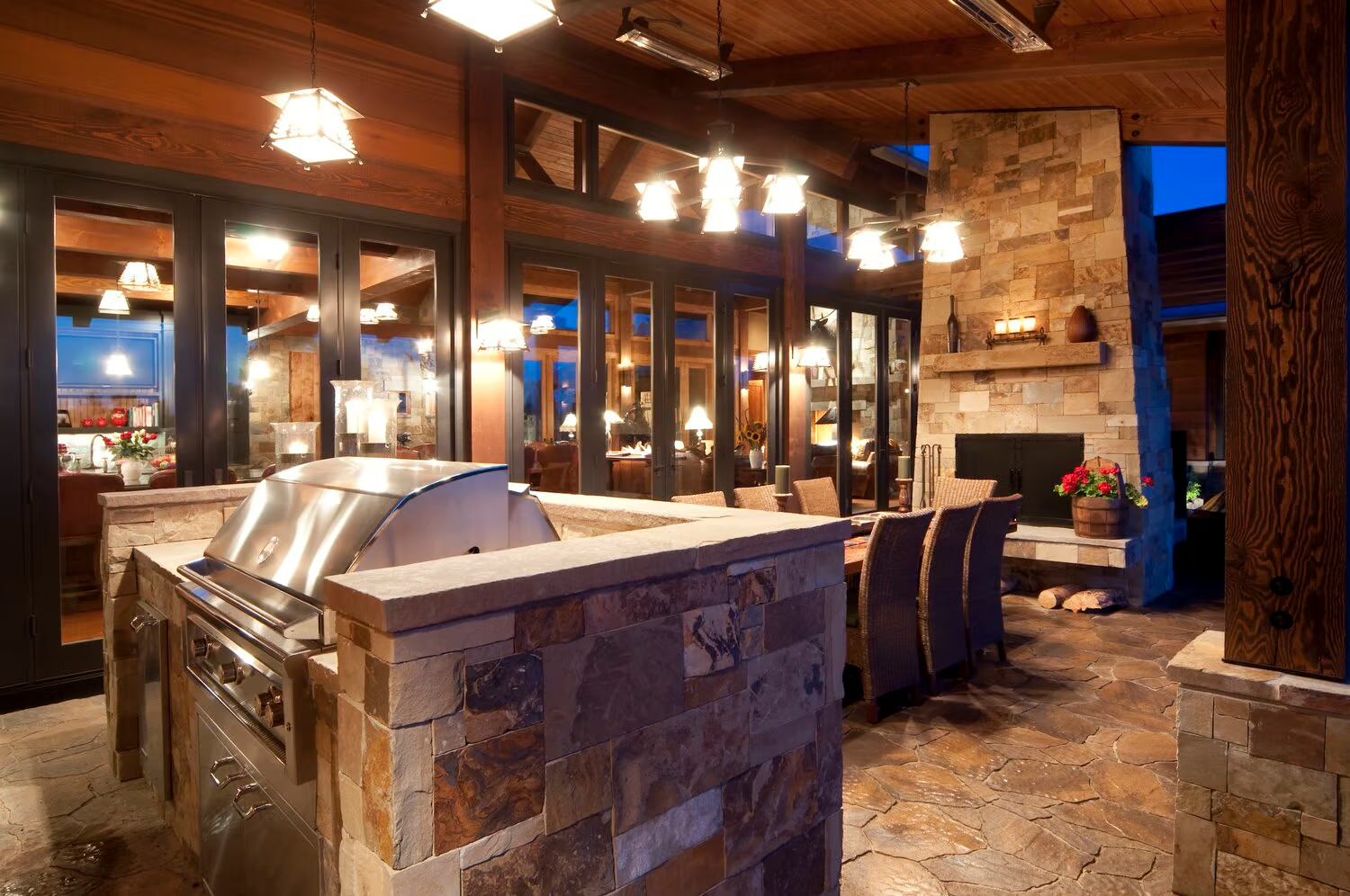
If you built a patio, a deck, or an outdoor kitchen, you already invested in outdoor living space. Lighting extends the usable hours of that space by 4 to 6 hours per day during the dark months. Without lighting, a $15,000 patio is only usable until sunset.
String lights / bistro lights: The most popular patio lighting option. Commercial-grade string lights with Edison-style LED bulbs hung above a patio, pergola, or dining area create a warm, ambient glow perfect for entertaining. We install permanent mounting points (hooks, cables, or posts) so the lights stay up year-round without sagging or tangling. Commercial-grade strings use shatterproof bulbs, heavy-duty sockets, and weatherproof wiring rated for permanent outdoor installation.
Under-cap and under-rail lights: Small LED fixtures mounted under the railing caps of a deck or under the edge of a patio cover. They provide soft downward light that illuminates the floor and steps without any visible fixture from the seating area. Subtle and effective.
Step and stair lights: Recessed LED lights installed into the risers of deck stairs, patio steps, or landscape retaining wall steps. They illuminate each tread for safety. In Seattle's wet climate, stairs are the number one outdoor slip hazard after dark. Step lights are functional first and aesthetic second.
Post cap lights: LED caps that sit on top of deck posts or fence posts. They add a low ambient glow to the perimeter of the deck without overhead wiring.
Uplighting and Accent Lighting for Trees and Architecture
Uplighting is the technique that makes people say "your house looks completely different at night." A ground-level spotlight aimed upward at a tree, a stone column, or the face of the house creates dramatic vertical dimension that flat overhead lighting cannot achieve.
Tree uplighting: A single spotlight at the base of a mature tree illuminates the trunk and lower canopy, creating depth and shadow play. For larger trees, two lights placed on opposite sides create more even coverage. We use 300 to 500 lumen spotlights with adjustable beam angles so the light hits the canopy, not the sky.
Architectural uplighting: Spotlights aimed at the house facade, stone columns, garage pillars, or retaining walls highlight texture and create a layered look from the street. This is the single biggest curb appeal upgrade after dark.
Garden accent lighting: Small spotlights tucked into garden beds to highlight a specimen plant, a water feature, a sculpture, or a focal point. These are low-lumen (100 to 200) and meant to draw the eye to a specific feature without flooding the entire bed with light.
The goal of uplighting is contrast, not coverage. You do not want to light every tree and every wall. You want to light 2 to 4 focal points and leave the rest in soft shadow. The contrast between lit and unlit areas is what creates drama and depth. Over-lighting makes the yard look like a parking lot. Selective lighting makes it look like a magazine.
Want to see what your property looks like lit up?
We offer evening consultations. Free quote.
Holiday and Seasonal Light Installation
Holiday light installation is one of our most requested seasonal services. Every November and December, homeowners in Seattle want their rooflines, trees, porches, and entryways lit up for the holidays but do not want to climb ladders in the dark and rain to do it themselves.
We handle the entire process:
Design and planning: We visit your property and recommend a layout: roofline outline, tree wraps, porch framing, window borders, or a combination. We help you choose between warm white (classic, elegant) and multi-color (festive, traditional) and between LED and incandescent.
Professional installation: We install commercial-grade holiday lights using clips, hooks, and mounting hardware that protect your roofline, gutters, and siding. No staples, no nails, no damage. We test every strand before we leave.
Takedown and storage: After the season (typically early to mid-January), we return, take everything down, and either store the lights for next year or dispose of them. Your roofline is left clean with no holes, no clips left behind, and no damage.
Book in September or October. Our holiday lighting schedule fills fast and installations begin in early November. If you wait until late November, availability is limited. Takedown is scheduled for January. We also install lights for other occasions and events on request.
How Low-Voltage Landscape Lighting Systems Work
If you are not familiar with how outdoor lighting is wired, here is a plain explanation of the components and the process.
The transformer: A weatherproof box (about the size of a small shoebox) mounted on an exterior wall near a GFCI outlet. It plugs into the outlet and converts 120-volt household power to safe 12-volt power. It also houses the timer or smart control module that turns the lights on and off automatically.
The wire: A single low-voltage cable runs from the transformer to each fixture. We use direct-burial rated wire (typically 12 or 14 gauge, depending on the number of fixtures and length of run) buried approximately 6 inches underground. We bury the wire by slicing a narrow channel in the soil. No trenching machine needed for most residential projects. The lawn heals in 1 to 2 weeks.
The connections: Each fixture connects to the main cable via a waterproof connector. This is the most failure-prone point in any outdoor lighting system. In Seattle's wet climate, a bad connection corrodes within one season and kills the fixture. We use silicone-filled wire nuts or heat-shrink waterproof connectors on every joint. This is the difference between a system that works for 10 years and one that fails in 18 months.
The fixtures: Path lights, spotlights, step lights, and string lights all connect to the same 12-volt system. We use professional-grade fixtures with metal housings (aluminum, brass, or composite) rather than the plastic fixtures sold at hardware stores, which crack and yellow within 2 to 3 seasons of UV exposure.
Voltage drop: The farther a fixture is from the transformer, the less voltage it receives, and the dimmer it shines. We calculate the load (how many watts the system draws) and select the correct wire gauge and wiring configuration (hub, T, or loop) to ensure the last fixture on the run is just as bright as the first.
Smart timers and astronomical clocks: We install timers that know exactly when sunset occurs in Seattle on any given day. The lights turn on automatically at dusk and off at your preferred time. As the days get longer in spring and shorter in fall, the on-time adjusts automatically. App-based smart timers allow you to control the system from your phone.
Lighting Maintenance, Repair, and LED Upgrades
We maintain and repair landscape lighting systems, including systems we did not install. If your existing lighting has problems, we can diagnose and fix them.
Common Problems We Fix
Fixtures that stopped working: Usually a failed bulb, a corroded connection, or a wire break. We trace the circuit, find the failure point, and repair it. If the fixture itself has corroded beyond repair (common with old plastic housings), we replace it with a professional-grade unit.
Dim lights or uneven brightness: Voltage drop from an undersized wire gauge or too many fixtures on one run. We reconfigure the wiring or add a second cable run to balance the load.
Timer not working or lights staying on all day: Failed timer, tripped GFCI outlet, or a transformer issue. We diagnose and replace the failed component.
Fixtures buried by mulch or overgrown by plants: Landscaping grows. Fixtures that were perfectly positioned two years ago are now buried or hidden. We reposition, raise, or relocate fixtures as the landscape matures.
Halogen to LED Upgrade
If your system was installed with halogen bulbs (common on systems more than 8 to 10 years old), upgrading to LED is one of the best investments you can make. LED bulbs use 75 to 80 percent less electricity, produce less heat (which extends fixture life), and last 5 to 10 times longer. In most cases, the halogen bulb can be swapped for an LED equivalent without changing the fixture or the transformer. We audit the system, verify compatibility, and swap every bulb in one visit.
Existing lighting not working right?
We diagnose, repair, and upgrade systems we did not install. Same-week service.
Design Tips: Lumens, Color Temperature, and Fixture Materials
How Many Lumens Do You Need?
| Application | Recommended Lumens | Notes |
|---|---|---|
| Path lights | 100–200 lumens | Soft glow to illuminate walking surface without glare |
| Step / stair lights | 50–100 lumens | Enough to see each tread; recessed to prevent blinding |
| Patio / deck ambient | 100–300 lumens total | String lights, under-cap, and post caps; cumulative warmth |
| Spotlights / uplights (small) | 200–400 lumens | Focused beam; adjustable to highlight without overspill |
| Spotlights (large trees, facade) | 400–700 lumens | Higher output to reach canopy or illuminate a wide wall |
| Security / floodlights | 700–1,500+ lumens | Bright, broad coverage; motion-activated recommended |
Color Temperature: Warm vs Cool
We recommend 2700K to 3000K (Warm White) for all landscape lighting. This range produces the warm, golden tone that mimics incandescent and candlelight. It feels inviting, natural, and residential. Avoid 4000K+ (Cool White or Daylight), which produces a bluish, stark tone that looks commercial and uninviting in a garden setting.
Fixture Materials: What Lasts in Seattle's Climate
Brass and copper: The longest-lasting materials. Do not corrode. Develop a natural patina over time. Expected lifespan: 20+ years. Premium cost.
Cast aluminum (powder-coated): The most common professional-grade material. Lightweight, rust-resistant, available in many finishes. Expected lifespan: 10 to 15 years. Good balance of cost and durability.
Composite / high-grade polymer: Weather-resistant and affordable. Does not corrode. Can yellow or become brittle with UV exposure over 5 to 8 years. Good for budget projects.
Plastic (big-box store): Inexpensive but not built for permanent installation. Cracks, fades, and becomes brittle within 2 to 3 seasons. We do not install plastic fixtures.
How Much Does Landscape Lighting Cost in Seattle?
Pricing depends on the number and type of fixtures, the length of wire runs, transformer size, and whether smart controls are included. Here are honest ranges for the Seattle metro area.
| Service / Product | Typical Range | Notes |
|---|---|---|
| Per Fixture | ||
| Path light (installed) | $100–$200 | Includes fixture, bulb, wire connection, and burial |
| Spotlight / uplight (installed) | $150–$350 | Adjustable beam; includes stake, aiming, and wire |
| Step / stair light (installed) | $75–$175 | Recessed into riser; includes cutting, wiring, and finishing |
| String / bistro lights (per run) | $200–$500 | Commercial-grade; includes mounting hardware, hooks, cable |
| Under-cap / under-rail (per section) | $100–$250 | LED strips or puck lights; includes mounting and wiring |
| Post cap lights (per post) | $30–$75 | Solar or low-voltage; installed on existing deck/fence posts |
| System Components | ||
| Transformer (supply and install) | $150–$400 | Size depends on total system wattage; includes timer/smart module |
| Smart timer / WiFi controller upgrade | $75–$200 | Replaces old mechanical timer; app-controlled, astronomical clock |
| Halogen to LED conversion (per fixture) | $15–$40 | Bulb swap; includes compatibility check and testing |
| Complete Projects | ||
| Full system: 8–15 fixtures + transformer | $1,500–$4,000 | Path + accent; typical front/back yard residential project |
| Holiday Lighting | ||
| Holiday light installation (per home) | $300–$1,500+ | Depends on roofline length, tree wraps, and fixture count |
| Holiday light takedown and storage | $150–$400 | January; includes removal, packaging, and storage or disposal |
| Maintenance | ||
| Lighting maintenance visit | $75–$200 | Inspection, cleaning, repositioning, bulb replacement, connection check |
| Monthly electricity (10–15 LED fixtures) | $2–$5/month | Running dusk to midnight; low-voltage LED |
Prices are estimates for greater Seattle and the Eastside as of 2026. Per-fixture pricing includes fixture, LED bulb, wire, waterproof connector, burial, and aiming. Multi-fixture projects include transformer and timer. All quotes are free and on-site.
Front walkway: 8 path lights + 2 uplights on flanking trees + transformer with smart timer = $1,800 to $3,000 installed. Monthly electricity: $3. That is the cost of two lattes per month to make your entire front approach safe, visible, and dramatically better-looking from the street every single night.
Light up the yard.
Request your free on-site lighting quote.
Landscape Lighting Across Seattle and the Eastside
Capitol Hill, Queen Anne, and Wallingford have Craftsman and Tudor homes with half-round columns, covered porches, and mature landscaping. Path lighting along the front walkway combined with uplighting on the columns and a specimen tree creates a period-appropriate look. These tight urban lots benefit from focused lighting on 2 to 3 features rather than broad coverage.
West Seattle and Magnolia have view properties with elevated decks and patios that look out over the city or the Sound. Deck lighting and string lights over the entertaining area extend the usable hours of these high-value outdoor spaces. We position fixtures to avoid light pollution that would wash out the view.
Kirkland, Bellevue, and Sammamish have larger lots with long driveways, mature tree canopy, and expansive front entries. Driveway path lighting, tree uplighting, and architectural accent lighting on the facade are the most common requests. Longer wire runs require careful voltage drop calculation to keep brightness even.
Ballard, Fremont, and Greenwood have compact lots where neighbors are close. We design lighting that enhances your property without throwing light onto the neighbor's windows. Shielded fixtures, low-lumen path lights, and downward-directed deck lights keep the ambiance contained to your space.
We serve: Seattle (all neighborhoods), Kirkland, Bellevue, Redmond, Sammamish, Issaquah, Renton, Bothell, Woodinville, Mercer Island, Shoreline, Lake Forest Park, and surrounding King County communities.
Frequently Asked Questions About Landscape Lighting in Seattle
How much does landscape lighting cost? +
Does landscape lighting increase home value? +
Do I need an electrician to install landscape lighting? +
How many lumens do I need for path lights? +
What is the best color temperature for outdoor lighting? +
Can I use solar landscape lights in Seattle? +
How long do LED landscape lights last? +
What is voltage drop and why does it matter? +
Are landscape lighting connections waterproof? +
How deep do you bury landscape lighting wire? +
Will landscape lighting increase my electric bill? +
Do you install holiday lights? +
Can you fix landscape lights that another company installed? +
Should I upgrade my halogen landscape lights to LED? +
What is the difference between a spotlight and a floodlight? +
You Built the Yard. Now Light It Up.
The landscaping, the patio, the walkway, the trees you planted five years ago that finally look mature: all of it disappears at sunset for five months of the year. A few well-placed lights bring it back. The front path becomes safe and inviting. The patio becomes a room. The trees become sculpture. And the whole thing costs less per month than your streaming subscriptions.
LandscapingFactory installs and maintains practical landscape lighting for Seattle homes:
- Path lights for walkways, driveways, and garden borders
- Patio and deck lighting (string lights, under-cap, step lights, post caps)
- Uplighting and accent spotlights for trees and architecture
- Holiday and seasonal light installation and takedown
- Smart timer and WiFi controller upgrades
- Halogen to LED bulb conversion
- Lighting maintenance, repair, and fixture replacement
- Low-voltage systems: safe, energy-efficient, reliable year-round
- Waterproof connections rated for Seattle's wet climate
Serving Seattle, Kirkland, Bellevue, Redmond, Sammamish, Issaquah, Renton, Bothell, Woodinville, Mercer Island, and all of King County.
Ready to see your property after dark?
Request your free lighting quote.
Get a Free Estimate
Let's chat about your needs and landscape dreams. Schedule a call below.
Other Services












Bring your backyard to life after dark.
Safety, security, and ambiance in one package.
Request a Free Lighting Demo