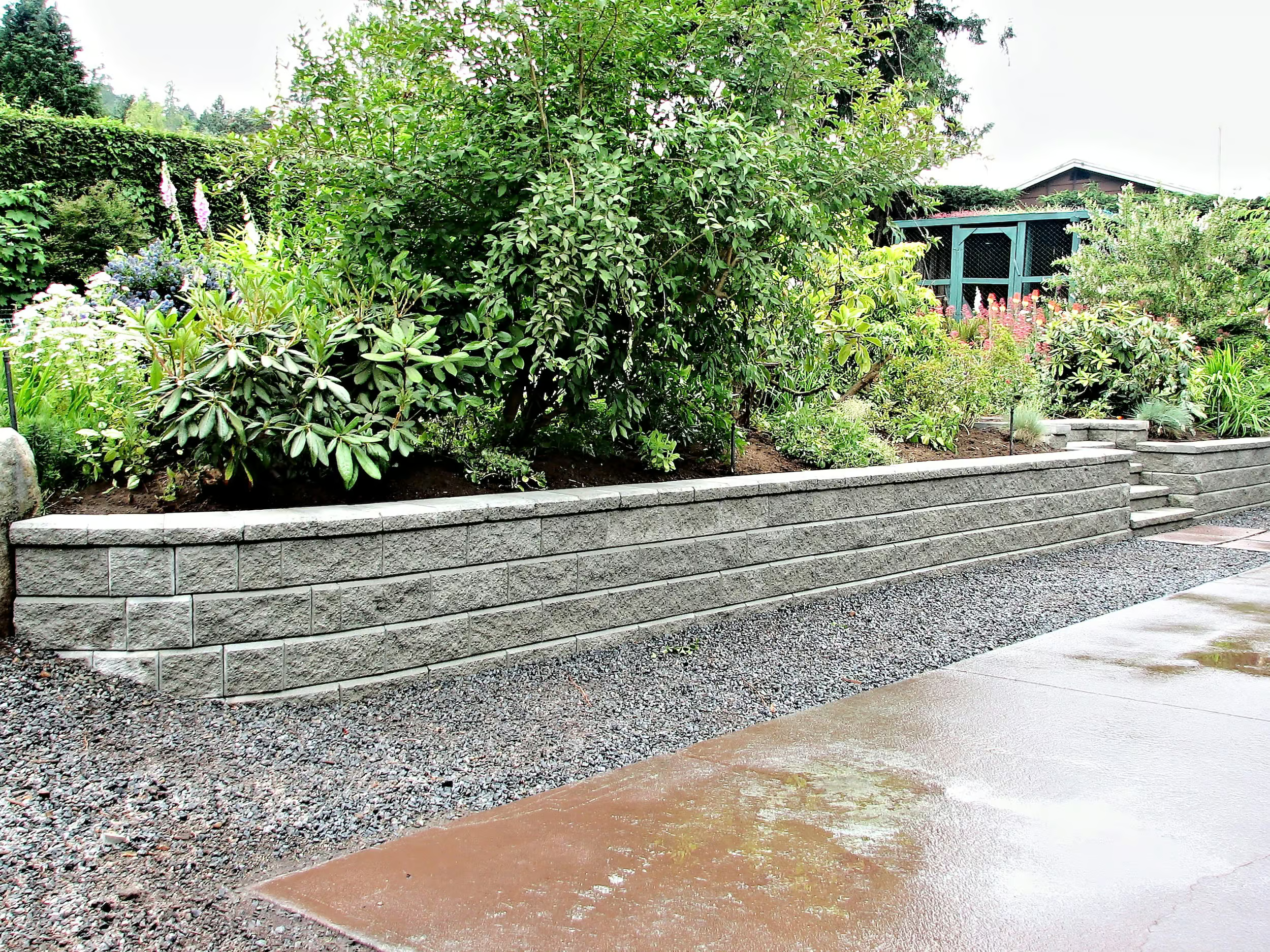
Half of Seattle is built on a hill. If your property is one of them, you already know the frustration: the backyard you are paying a mortgage on is a slope you cannot use. The patio you want? Impossible without level ground. The garden beds you planned? Washing downhill every November. The kids' play area? More like a mud slide with a property tax bill attached.
And it gets worse every year. Erosion does not pause. Each rainy season, a little more soil moves downhill. That bare patch on the slope gets wider. The fence at the bottom starts leaning. The neighbor's property starts receiving your dirt. Eventually, the slope becomes a structural problem, not just an aesthetic one.
A retaining wall stops all of that. It holds the earth in place, creates flat surfaces where slopes used to be, manages water drainage, and turns the most frustrating part of your property into the most valuable part. A yard that was 40% usable becomes 80% usable. That is not an exaggeration. That is what a well-built wall does on a Seattle hillside.
At LandscapingFactory, we build retaining walls across Seattle, Kirkland, and the Eastside. Block walls, natural stone, boulder rockeries, terraced systems, walls with integrated steps, walls with fences on top. Every wall we build includes full drainage behind it — because in this climate, a wall without drainage is a wall that will eventually fall over.
What Can a Retaining Wall Do for Your Property?
A retaining wall is not decoration. It is a structural solution that physically changes what your yard can do. Here is what becomes possible once a wall is in place:
Create flat ground on a slope: We cut into the hillside, build a wall to hold the earth back, and backfill to create a level surface behind it. That level surface becomes a patio, a lawn, a garden, a play area, or whatever you need it to be. This is the most common reason homeowners call us.
Stop soil erosion: Seattle's 37+ inches of annual rain moves soil downhill every season. A retaining wall stops the movement at its source. No more bare patches. No more lost topsoil. No more dirt washing onto your neighbor's property or pooling against your foundation.
Create terraced garden beds: Instead of one tall wall, we can build two or three shorter walls that step up the slope, creating flat planting beds on each level. These are dramatically easier to maintain than trying to garden on a hillside, and they look intentional and designed rather than wild.
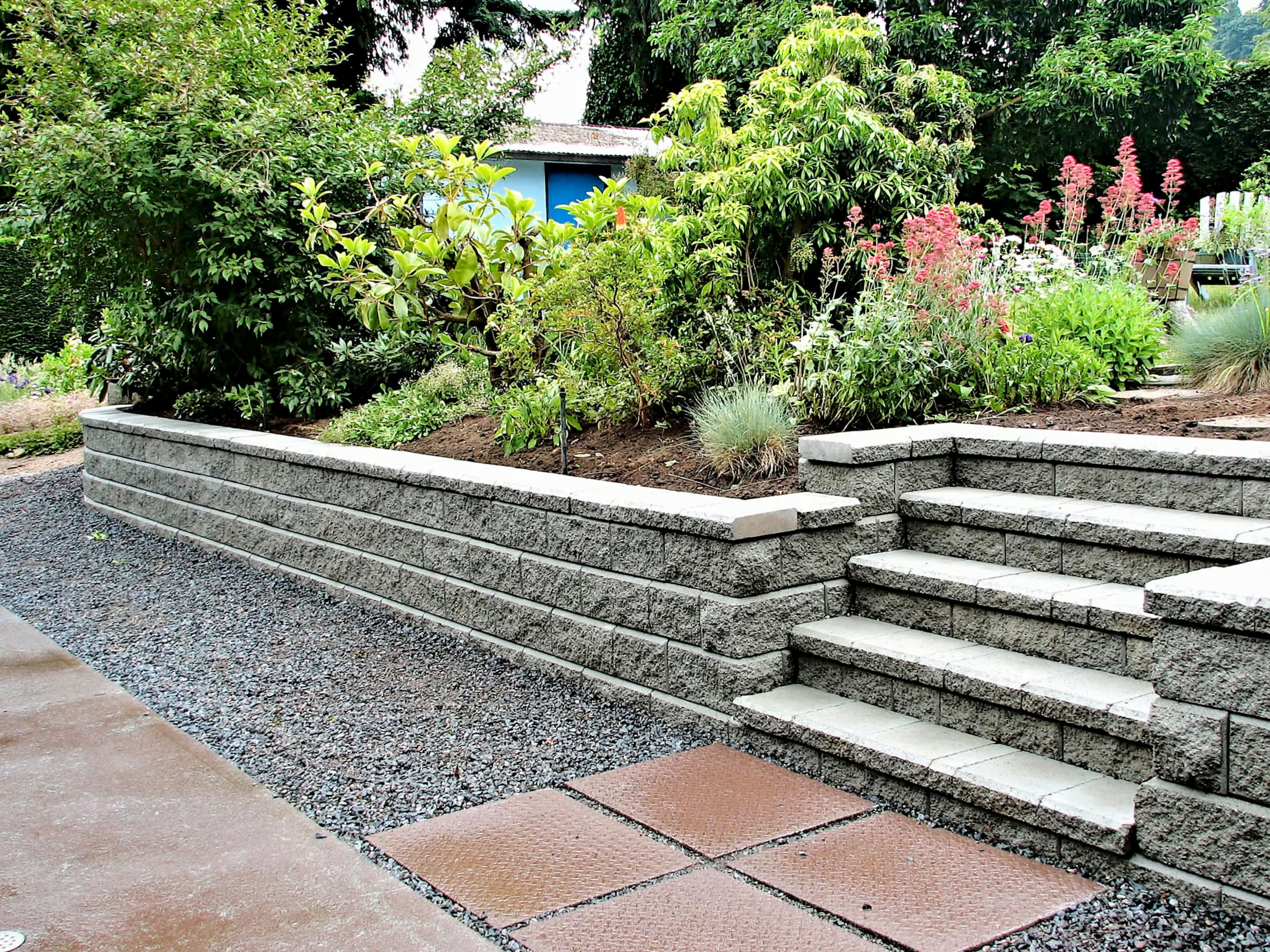
Add retaining wall steps between levels: If your property has different elevations (front to back, house to street, upper yard to lower yard), integrated stone or block steps built directly into the wall give you safe, permanent access between levels without a separate staircase.
Support a patio, driveway, or structure above: Many Seattle properties cannot have a flat patio without first building a wall to hold the grade change. The wall becomes the structural foundation that makes the patio possible.
Got a slope that's eating your usable yard?
Tell us what you want the space to become. Free site assessment.
Why Do Retaining Walls Fail in Seattle? (The 5 Most Common Mistakes)
We get called to fix failed retaining walls almost as often as we get called to build new ones. The pattern is always the same: someone built a wall without understanding what it has to fight against. In Seattle's wet climate, a retaining wall is fighting water, not just dirt. That changes everything about how it needs to be built.
Here are the five reasons walls lean, crack, bulge, and collapse:
Mistake 1: No Drainage Behind the Wall
This is the number one killer. When rain saturates the soil behind a wall, hydrostatic pressure builds up. Think of it like filling a bathtub behind the wall — that water pushes forward with thousands of pounds of force. If there is no drainage system to relieve that pressure, the wall eventually gives. Every wall we build includes perforated pipe, clean drainage gravel, and filter fabric. No exceptions.
Mistake 2: Backfilling with Dirt Instead of Gravel
Dirt holds water. When wet dirt sits behind a wall, it swells and gets heavier. Gravel does the opposite: water passes through it instantly and drains down to the pipe at the base. We never backfill with dirt. The first 12 inches behind every wall we build is clean, crushed drainage gravel.
Mistake 3: No Compacted Base (Building on Bare Soil)
A retaining wall weighs thousands of pounds. If you set that weight on soft, uncompacted soil, it sinks unevenly. One end settles more than the other. The wall tilts, joints open, and structural integrity is gone. We excavate to stable subgrade, lay a minimum of 6 inches of compacted crushed rock, and level it with precision before the first block goes down.
Mistake 4: No Geogrid Reinforcement on Tall Walls
Gravity walls work fine up to about 3 feet. Above that, the earth pressure behind the wall exceeds what gravity alone can resist. Geogrid is a high-strength mesh that gets layered between block courses and extends back into the compacted soil behind the wall. It anchors the wall into the hillside so it cannot be pushed forward. Skipping geogrid on a tall wall is the difference between a wall that lasts 30 years and one that lasts 3.
Mistake 5: No Edge Restraints or Caps
An uncapped wall lets rain pour directly into the hollow cores of the blocks, adding water weight and freeze-thaw damage from the inside out. A wall without proper end returns or edge detailing unravels at the corners over time. We cap every block wall with finished cap stones and detail every corner and termination point for structural completeness.
If you have a retaining wall that is leaning, bulging, cracking, or losing blocks, we can assess whether it needs repair or full replacement. In some cases, we can stabilize an existing wall by adding drainage and reinforcement without tearing it down. In other cases, the foundation has failed and the wall needs to come out. We will tell you honestly which situation you are in.
Worried your wall is failing?
We assess existing walls and give you honest options. Free.
What Goes Behind a Retaining Wall? (Our Drainage and Construction Process)
The front of a retaining wall is what you see. The back of the wall is what keeps it standing. Here is exactly what we install behind every retaining wall, from the ground up.
Excavation to Stable Subgrade
We dig until we reach solid, undisturbed soil. In Seattle's clay-heavy neighborhoods, this sometimes means going deeper than expected because the top layers are soft fill or organic material that cannot support a wall. All excavated material is hauled away.
Compacted Gravel Footing
We lay a minimum of 6 inches of clean crushed rock at the base and compact it in lifts to 95%+ density. The first course of blocks sits on this footing, perfectly level. If this step is wrong, every course above it inherits the error.
Perforated Drain Pipe
A 4-inch perforated pipe runs along the entire base of the wall, behind the first course of blocks. This pipe captures groundwater as it filters down behind the wall and diverts it to a daylight outlet or a connected drainage system. This is the single most important component in preventing hydrostatic pressure buildup.
Clean Gravel Backfill
The first 12 inches behind the wall is filled with clean, angular drainage gravel — not dirt, not round river rock. Angular gravel locks together and allows water to flow freely down to the drain pipe. We wrap the gravel zone in filter fabric to prevent fine soil particles from migrating into the gravel and clogging the system over time.
Geogrid Reinforcement (Tall Walls)
For walls that exceed 3 feet in exposed height, we install layers of geogrid between block courses. Each layer extends back into the compacted soil behind the wall, typically 60% to 100% of the wall height. This creates a reinforced soil mass that acts as a single, heavy unit rather than a stack of blocks fighting the earth alone.
Block Placement and Leveling
Each course of blocks is placed, leveled, and checked for alignment. Interlocking blocks have a built-in lip or pin system that automatically sets the wall angle (called batter or setback). This slight backward lean uses gravity to the wall's advantage.
Cap Stones and Finishing
The top course is finished with adhesive-bonded cap stones that seal the block cores, shed water, and create a clean finished edge. All exposed corners and end returns are detailed for structural integrity and visual completeness.
Retaining Wall Materials: Block, Stone, and Boulder
The right material depends on the wall height, the load it needs to hold, the look you want, and your budget. Here are the four options we work with.
Segmental Concrete Block (Most Popular)
Interlocking concrete blocks are the most common choice for residential retaining walls in Seattle. They are engineered to stack without mortar (the interlock system handles alignment and structural connection), they come in dozens of textures and colors that mimic natural stone, and they are compatible with geogrid reinforcement for taller walls. This is the best balance of strength, appearance, and cost for most residential projects.
Natural Cut Stone
For a premium, handcrafted look, natural stone walls use cut and shaped pieces of basalt, granite, limestone, or sandstone. Each piece is unique. The result is a wall with real texture and color variation that concrete block cannot fully replicate. Natural stone costs more in both material and labor — each piece must be individually fitted — but for visible, front-facing walls it can be worth the investment.
Boulder Rockery Walls
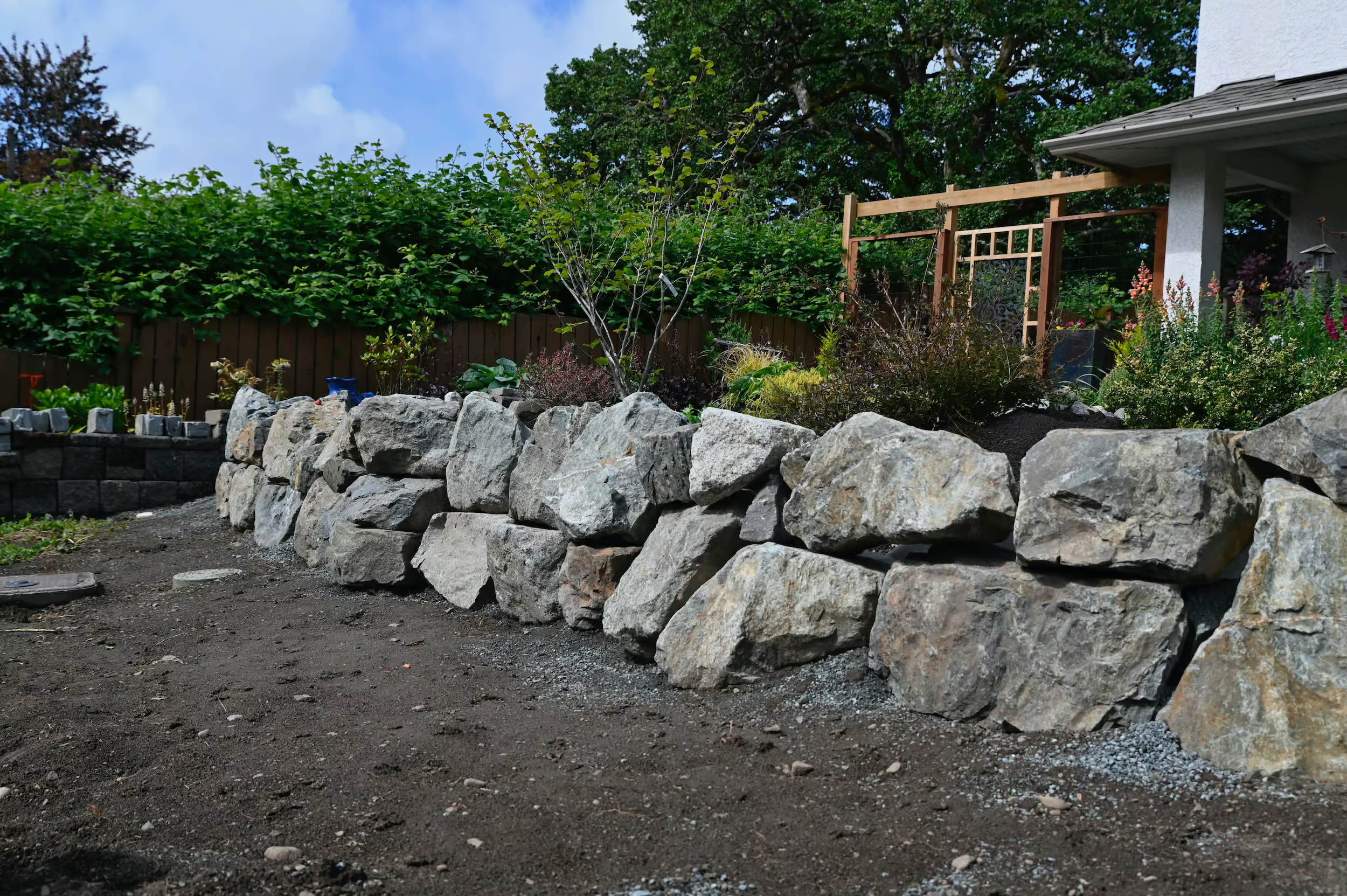
Rockeries use large, naturally shaped boulders stacked and fitted together by weight and gravity. This is a traditional Pacific Northwest style that blends with natural landscapes and wooded lots. Boulders are sourced regionally and range from 200 to 2,000+ pounds each. Rockery walls work well for shorter walls and naturalistic settings where a clean, engineered look is not the goal. They also provide natural drainage between the gaps.
Poured Concrete
Poured-in-place concrete walls are the strongest option and are used for high-load situations: tall walls, walls supporting driveways or structures above, and commercial applications. They require formwork, rebar reinforcement, and curing time. The cost is higher, but for walls that need to carry significant structural loads, poured concrete is sometimes the only viable option.
Terraced Retaining Walls: The Smarter Way to Handle Steep Slopes
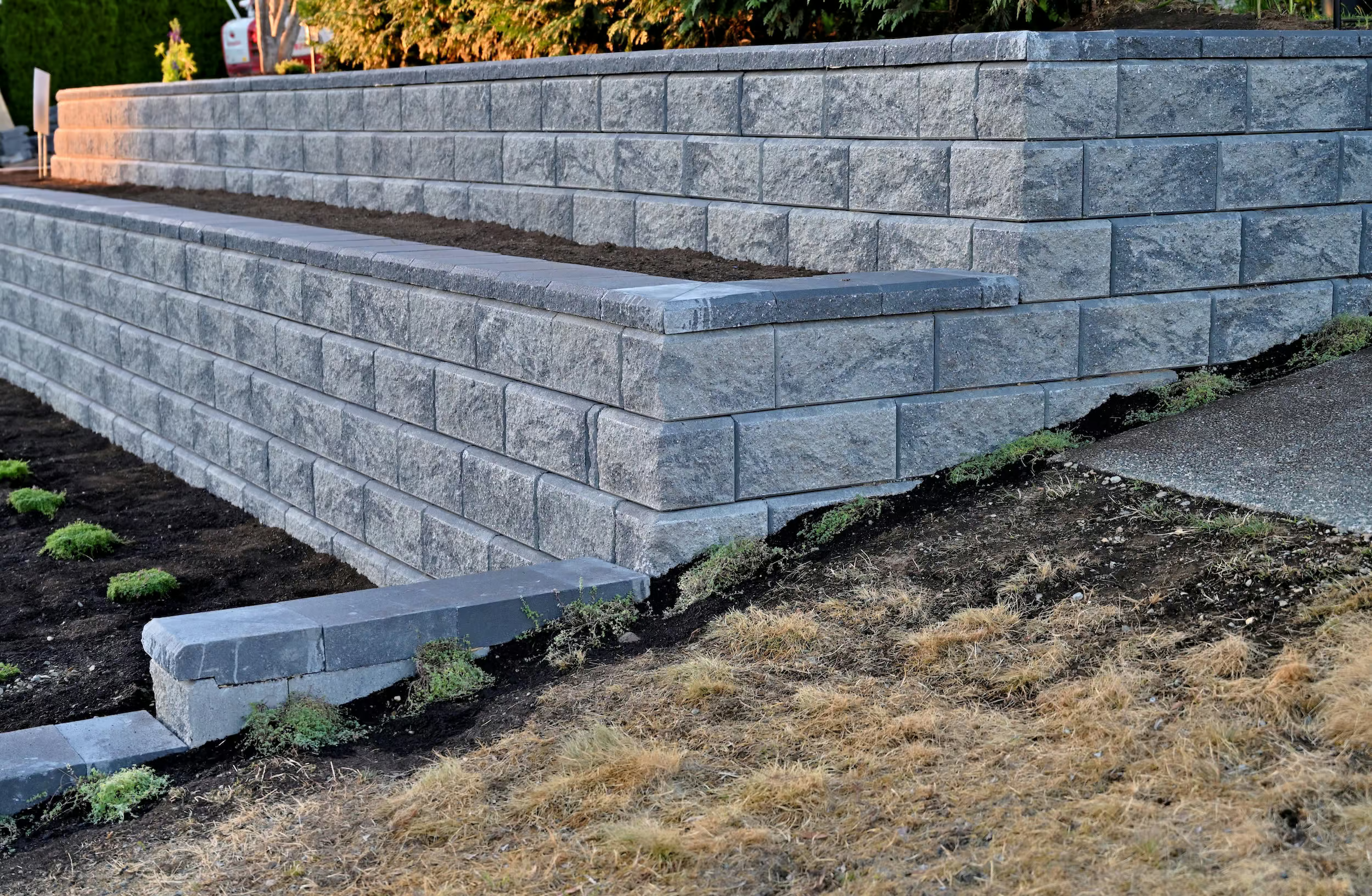
If your slope needs more than 4 feet of height change, you have two choices: one tall wall, or two or three shorter walls stepped up the slope with flat areas between them. In many cases, terracing is the smarter option.
Why terracing works:
Less earth pressure per wall: Each wall holds back less soil, which means each wall can be simpler, lighter, and less expensive to build. Two 3-foot walls are often cheaper than one 6-foot engineered wall.
Usable space between tiers: The flat areas between terraced walls become garden beds, pathways, or additional usable yard. A single tall wall just gives you one flat area at the top. Terracing gives you multiple levels, each with its own purpose.
Better drainage distribution: Water drains in stages down each terrace instead of concentrating all the pressure at the base of one tall wall. This reduces the drainage engineering required and makes the overall system more resilient.
Visual scale: A single 6-foot wall can feel like a fortress. Three 2-foot walls feel like a designed landscape. Terracing breaks the visual mass into approachable levels that work better in residential settings.
We see the best results when clients combine terraced walls with intentional planting on each level. Native groundcovers on the lowest tier. Ornamental grasses on the middle. A patio or seating area on top. The hillside that used to be an eyesore becomes the most interesting part of the yard.
Retaining Wall Steps, Fences, and Integrated Features
A wall does not have to be a wall and nothing else. We integrate features directly into the structure during construction.
Built-In Steps
If the wall creates a grade change between two areas you need to access — upper yard to lower yard, patio to garden, house to street — we build steps directly into the wall structure. Block steps or natural stone treads are integrated during construction so they share the same base and drainage system as the wall itself. No separate staircase needed.
Fences on Top of Retaining Walls
Need privacy or a safety barrier at the top of your wall? We install fence post sleeves directly into the wall during construction. The posts are anchored into the block structure itself, not surface-mounted on top. This is stronger, cleaner looking, and prevents the wobble that comes from trying to bolt a fence to a finished wall after the fact.
Seat Walls and Caps
A retaining wall at the right height (18 to 24 inches) doubles as seating. We finish these with wide, flat cap stones that are comfortable to sit on and give the wall a polished, intentional look. Popular around fire pit areas and patio edges.
Lighting Integration
Low-voltage landscape lights can be recessed into the wall face or mounted on cap stones during construction. This is much easier to do during the build than trying to retrofit it after the wall is finished.
Have a slope project in mind?
We assess your site, design the wall system, and quote every line item. All free.
Do You Need a Permit for a Retaining Wall in Seattle?
In Seattle and most Eastside cities, retaining walls under 4 feet in exposed height typically do not require a building permit. This covers the majority of residential projects: garden terraces, patio support walls, landscape walls, and most erosion control applications.
Walls that exceed 4 feet in exposed height generally require a permit and may need structural engineering drawings. Walls that support a surcharge load — a driveway, a structure, or a slope above the wall — may also trigger permit requirements regardless of height. The exact threshold varies by municipality: Seattle, Kirkland, Bellevue, and unincorporated King County each have their own codes.
We specialize in walls under 4 feet, which covers the vast majority of residential slope management, terracing, garden bed creation, and patio support. For projects that may approach or exceed the permit threshold, we will tell you upfront during the site assessment so there are no surprises.
Even when a permit is not required, every wall still needs proper drainage, a compacted base, and quality materials to last. The permit threshold is about structural risk to neighboring properties, not about whether the wall is built correctly. We build every wall to the same standard regardless of height.
How Much Does a Retaining Wall Cost in Seattle?
Cost depends on the wall height, total length, material, site access, slope severity, and whether the project includes terracing, steps, or demolition of an existing failed wall. Here are honest ranges for the Seattle metro area. Every quote is free, on-site, and written with line-item detail.
| Wall Type / Service | Typical Range | Notes |
|---|---|---|
| Segmental block wall (under 3 ft) | $30–$50 /sqft face | Includes base, drainage, backfill, caps |
| Segmental block wall (3–4 ft) | $45–$70 /sqft face | Geogrid reinforcement included at this height |
| Natural cut stone wall | $50–$90 /sqft face | Material and labor intensive; varies by stone type |
| Boulder rockery wall | $25–$55 /sqft face | Depends on boulder size and sourcing distance |
| Terraced system (2–3 tiers) | $40–$75 /linear ft per tier | Includes drainage on each tier and flat areas between |
| Retaining wall steps (block) | $150–$300 /step | Integrated into wall during construction |
| Retaining wall steps (natural stone) | $250–$500 /step | Cut stone treads with block or stone risers |
| Fence post integration | $75–$150 /post | Sleeve installed during wall construction |
| Cap stones (block wall finish) | $8–$15 /linear ft | Adhesive-bonded; included in most block wall quotes |
| Seat wall cap (wide, flat) | $15–$30 /linear ft | Natural stone or concrete; seating-height walls |
| Demo and removal of failed wall | $10–$20 /sqft face | Includes haul-away and disposal |
| Drainage retrofit (existing wall) | $20–$40 /linear ft | Adding drain pipe and gravel to a wall built without them |
| Wall repair (localized) | $500–$2,000 | Re-stacking, re-leveling, or replacing damaged sections |
Prices are estimates for greater Seattle and the Eastside as of 2026. Square foot pricing refers to the visible face of the wall (height × length). Includes all materials, drainage system, labor, equipment, backfill, and cleanup. Multi-feature projects (wall + steps + patio) are quoted as packages.
A retaining wall is a structural investment, not a cosmetic one. It creates usable square footage that did not exist before. If a 40-foot wall at 3 feet tall costs $6,000 to $8,000 and creates 400 square feet of flat patio space that adds $15,000+ to your home's value and decades of daily use, the math works out quickly. Compare that to spending nothing and watching the slope erode further every year.
Get your free estimate.
We measure the slope, design the wall, and quote every line item. No pressure.
Retaining Walls Built for Seattle Soil
Most of Seattle and the Eastside sit on glacial till: a dense mix of clay, silt, sand, and gravel compressed by ice sheets thousands of years ago. In some neighborhoods, this till is 2 feet below the surface. In others, it is 6 feet down with soft fill on top. The depth to stable subgrade determines how deep we need to excavate for the wall footing, and it varies dramatically by location.
Clay-heavy soil — common in Kirkland, parts of Bellevue, and south Seattle — holds water and expands when saturated. This makes drainage behind the wall even more critical because the soil itself becomes a water reservoir pushing against the structure. Sandy soil, more common near lakeshores and in some Eastside neighborhoods, drains faster but can shift under load if not properly compacted.
We know these soil profiles because we build in these neighborhoods. We serve: Seattle (all neighborhoods), Kirkland, Bellevue, Redmond, Sammamish, Issaquah, Renton, Bothell, Woodinville, Mercer Island, Shoreline, Lake Forest Park, and surrounding King County communities.
Frequently Asked Questions About Retaining Walls in Seattle
How long does it take to build a retaining wall? +
How long will a retaining wall last in Seattle's climate? +
Does a short retaining wall (2 feet) still need drainage? +
What is geogrid and when is it used? +
Can you build a retaining wall in winter? +
Can I put a fence on top of a retaining wall? +
What is the difference between a retaining wall and a rockery? +
My existing retaining wall is leaning. Can it be saved? +
Can you build steps into a retaining wall? +
Do you handle excavation and haul-away? +
What is the cheapest retaining wall option that lasts? +
Can a retaining wall help with drainage problems on my property? +
How deep is the footing for a retaining wall? +
Do you do retaining wall repairs? +
Can I plant on top of or next to a retaining wall? +
That Slope Is Not Going to Fix Itself
Erosion gets worse every year. The soil keeps moving. The usable space keeps shrinking. And every rainy season that passes without a retaining wall is another season of damage that makes the eventual project more complex and more expensive.
LandscapingFactory builds every type of retaining wall Seattle properties need:
- Segmental concrete block walls — the most popular and cost-effective
- Natural cut stone walls — premium look, handcrafted fit
- Boulder rockery walls — Pacific Northwest natural style
- Terraced wall systems — multiple levels, usable space between tiers
- Integrated steps, fences, seat walls, and lighting
- Full drainage systems on every wall (pipe, gravel, filter fabric)
- Repairs and drainage retrofits for existing failed walls
Serving Seattle, Kirkland, Bellevue, Redmond, Sammamish, Issaquah, Renton, Bothell, Woodinville, Mercer Island, and all of King County.
Ready to reclaim your slope?
Request your free on-site estimate. We measure, design, and quote everything.
Get a Free Estimate
Let's chat about your needs and landscape dreams. Schedule a call below.
Other Services













Ready to level your yard and stop erosion?
Don't let the rain wash your property away. Contact the retaining wall specialists at LandscapingFactory for a structural assessment.
Get a Free Retaining Wall Estimate