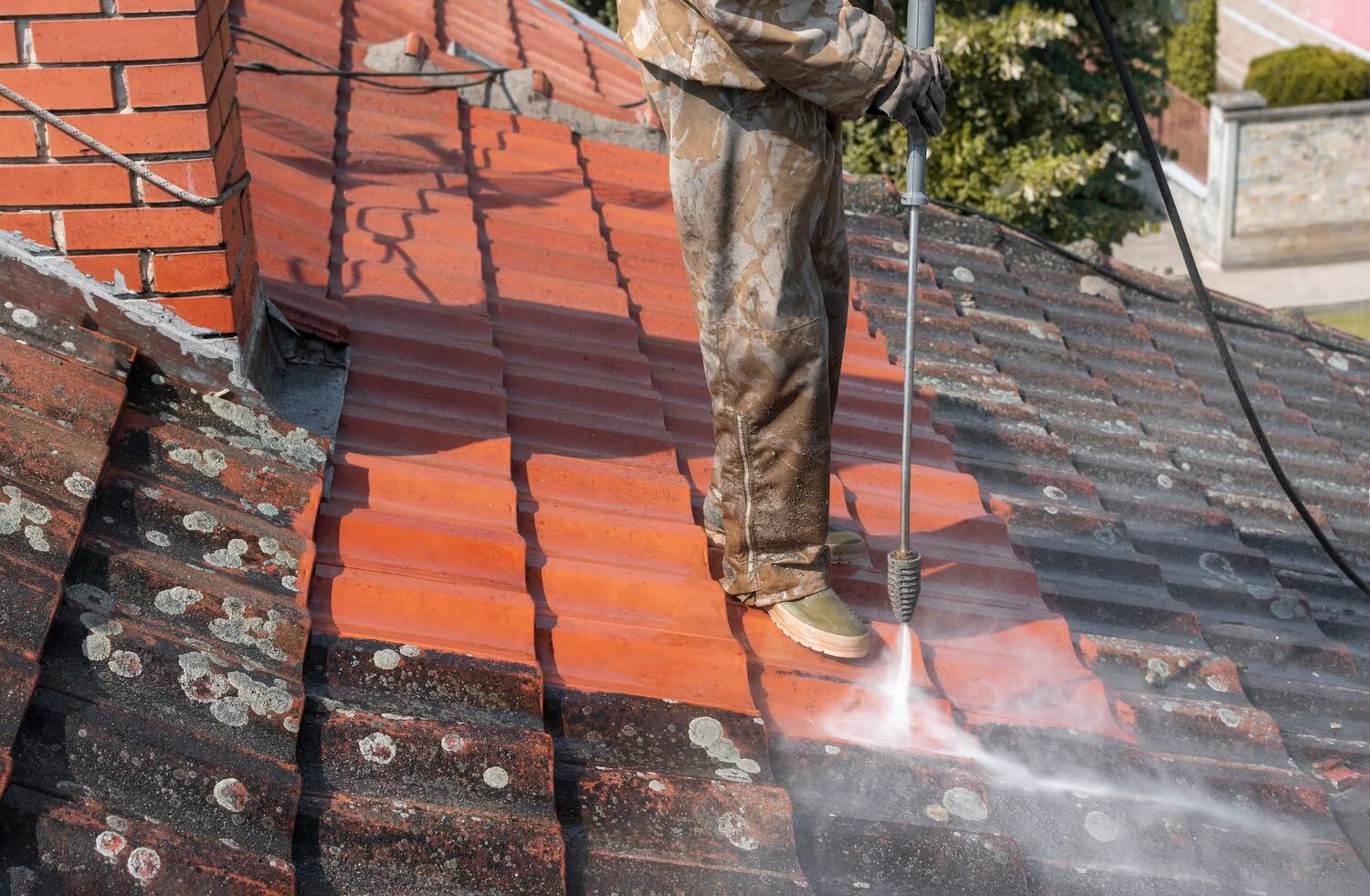
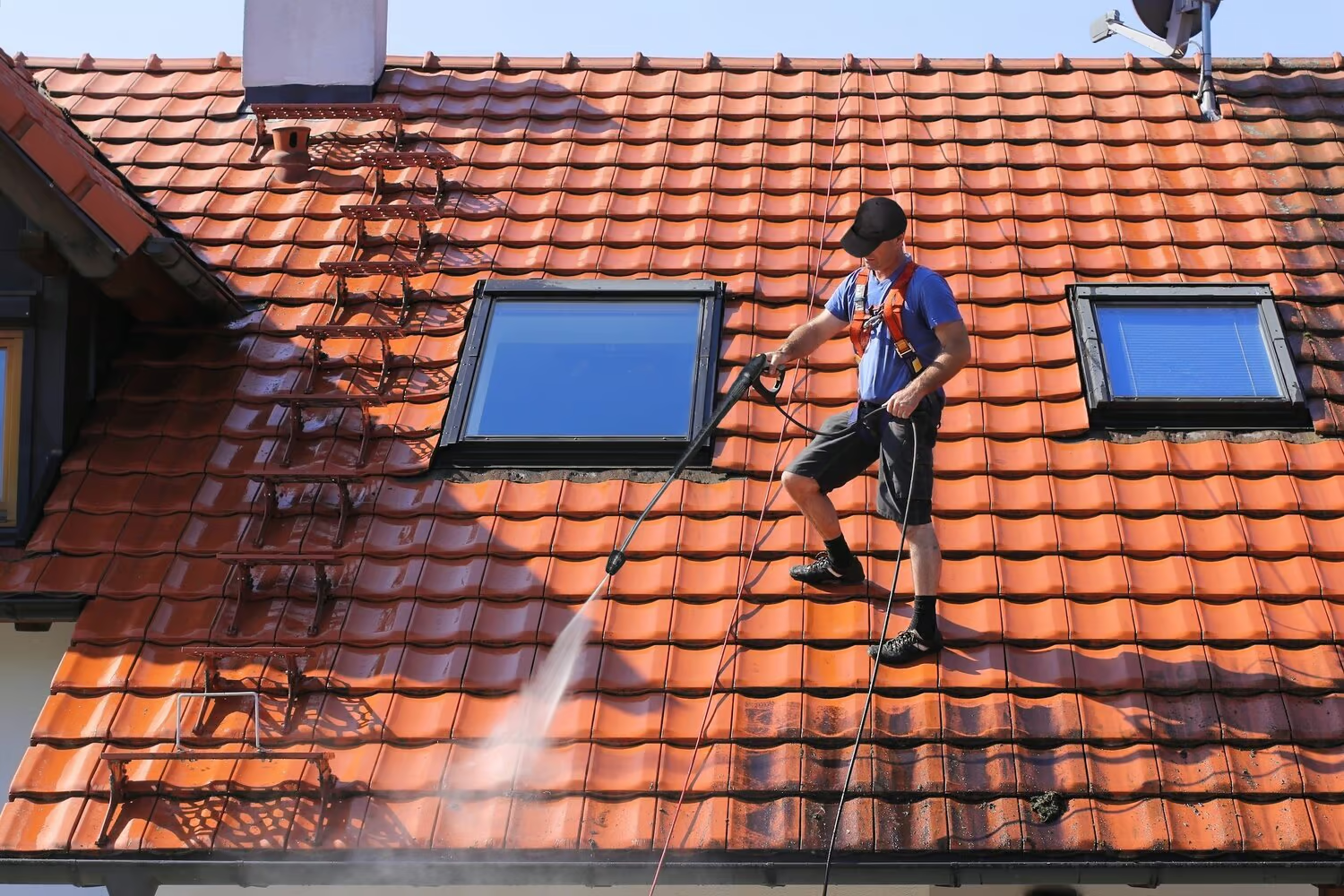
In the Pacific Northwest, your roof is under biological attack. The combination of Douglas fir canopy (shade), year-round moisture, and cool temperatures creates the ideal environment for moss, algae, and lichen. These organisms do not just sit on the surface. Moss roots (rhizoids) push under shingle edges, lifting them and creating gaps where water enters. Algae (Gloeocapsa Magma) feeds on the limestone filler in asphalt shingles, producing black streaks that spread across the roof. Lichen bonds to the surface so aggressively that pulling it off can tear roofing material.
Left untreated, these organisms shorten your roof's lifespan by years. A $25,000 to $40,000 roof replacement is the eventual cost of skipping a $400 to $800 cleaning.
At LandscapingFactory, we clean roofs. We do not replace them, repair them, or try to sell you a new one. Our only goal is to preserve the roof you have using low-pressure soft wash techniques that kill moss and algae without damaging the roofing material. We clean all roof types: asphalt composition shingles, cedar shake, metal, tile, and flat (TPO/EPDM/built-up). And we flush your gutter system after every roof cleaning because the debris we dislodge has to go somewhere.
Why Soft Wash, Not Pressure Wash
If you search "roof pressure washing," you will find companies willing to blast your roof with 3,000+ PSI. This is one of the most damaging things you can do to a roof.
What pressure washing does to asphalt shingles: Asphalt shingles are covered in tiny granules that serve two critical functions: they protect the asphalt layer from UV degradation, and they provide fire resistance. High-pressure water strips these granules off the shingle surface. Every granule lost is protection lost. Finding granules in your gutter is a sign of an aging roof. Blasting them off with high pressure accelerates that aging by years in a single afternoon.
What pressure washing does to cedar shake: Cedar is a soft wood. High pressure gouges the surface, opens the grain, and forces water deep into the wood fibers. This accelerates rot instead of preventing it. A pressure-washed cedar roof may look clean for a month, then deteriorate faster than before the cleaning.
What pressure washing does to metal: High pressure can dent thin gauge metal panels and strip protective coatings and paint. Once the coating is compromised, the metal is exposed to oxidation and corrosion.
Soft Wash: Chemistry, Not Force
Soft washing uses cleaning chemistry to kill moss, algae, and bacteria at the cellular level. The water is delivery, not the weapon. Our equipment is calibrated to low PSI (comparable to a garden hose) to rinse away dead organic matter without disturbing the roofing material.
Why this matters: The Asphalt Roofing Manufacturers Association (ARMA) recommends low-pressure cleaning with appropriate cleaning solutions as the approved method for maintaining asphalt shingles. High-pressure washing voids warranties from major shingle manufacturers. If your roof is under warranty and someone pressure washes it, you may lose coverage.
Walk away. Any reputable roof cleaning company uses low-pressure soft wash. High-pressure roof cleaning is faster and cheaper, which is why some companies do it. But it damages the roofing material, strips protective granules from asphalt shingles, gouges cedar, and can void manufacturer warranties. The short-term result looks the same. The long-term damage is invisible until leaks appear.
Our Roof Cleaning Process (Step by Step)
Every roof cleaning follows this sequence regardless of roof type. Material-specific adjustments are covered in the next section.
Property Protection
We pre-soak all landscaping, flower beds, and ground surfaces adjacent to the house with fresh water. This dilutes any cleaning solution that drips down during the process. Plants are saturated so their cells are already full of clean water before any chemistry reaches them.
Debris Removal
We clear the roof of loose debris: pine needles, leaves, branches, seed pods, and any loose moss that can be removed by hand or with high-volume air (leaf blower). This exposes the surface for treatment.
Heavy Moss Removal (If Needed)
For thick moss pads (the "carpet" effect where moss is 1 to 3 inches deep), we use soft-bristle brushes and gentle manual agitation to remove the bulk of the moss before chemical treatment. We work from the top of the shingle downward to avoid lifting edges. No wire brushes. No metal scrapers. No aggressive tools that can tear roofing material.
Soft Wash Application
We apply a professional-grade biodegradable cleaning solution across the entire roof surface. This solution kills moss spores, algae (including Gloeocapsa Magma), lichen, and bacteria at the root level. The chemistry does the work, not the pressure.
Low-Pressure Rinse
After the solution has dwelled (time varies by severity and roof type), we rinse the entire roof with low-pressure water. Dead organic matter, loosened moss, and cleaning residue wash off the surface and into the gutter system.
Moss Prevention Treatment
We apply a moss inhibitor to the cleaned surface. This coats the roofing material and creates conditions that prevent moss and algae from reestablishing. Coverage is even across the entire roof surface.
Gutter Flush
Everything we dislodged from the roof is now in your gutters. We flush the entire gutter system: scoop troughs, rinse downspouts, and verify water is flowing freely to ground-level drainage. This is included in every roof cleaning. We do not leave clean shingles with clogged gutters.
Ground Cleanup and Plant Rinse
We rinse all landscaping, decks, patios, walkways, and driveways that received runoff during the cleaning. We bag and remove large moss clumps. The property is left cleaner than we found it.

Full roof cleaning with gutter flush. Every time.
Free on-site estimate.
Cleaning by Roof Type
Each roofing material requires a different approach. The chemistry, dwell time, pressure, and tools change based on what is on your house. We clean all five common roof types in Seattle.
Asphalt Composition Shingles
The most common roofing material in Seattle residential neighborhoods. Asphalt shingles are covered in mineral granules that protect the asphalt from UV radiation and provide fire resistance. These granules are the shingle's armor, and preserving them is the entire goal of cleaning.
Our approach: Soft wash with ARMA-approved cleaning solution. Low-pressure rinse. No scraping, no wire brushing, no high-pressure water. We work from the ridge down to avoid lifting shingle tabs. For heavy moss, gentle manual removal with soft-bristle tools before chemical treatment.
Common issues: Moss growth (especially on north-facing slopes), Gloeocapsa Magma (black streaks), lichen, granule loss from age or improper previous cleaning, and lifted shingle edges from moss root penetration.
Cedar Shake and Cedar Shingle
Cedar roofs are common in older Seattle neighborhoods, particularly Capitol Hill, Queen Anne, Magnolia, and Bellevue waterfront properties. Cedar is a natural wood product and requires fundamentally different handling than asphalt.
Why cedar is different: Cedar is a soft wood that absorbs water. The natural oils in cedar (thujic acid) provide rot resistance, but these oils deplete over 10 to 15 years. Once the oils are gone, the wood is vulnerable to moisture retention, moss penetration, and decay. Cleaning must preserve whatever oil remains in the wood, not strip it.
Our approach: We use a cedar-specific cleaning solution that is less aggressive than the asphalt formulation. Lower concentration, longer dwell time. We never use chlorine bleach at full strength on cedar because it degrades wood fibers. Manual moss removal is more extensive on cedar because moss roots penetrate deeper into the grain. We use soft-bristle brushes and work along the grain, never against it. The rinse pressure is lower than asphalt.
Honest note: If the cedar shakes are splitting, curling, or crumbling, cleaning will not save them. A roof that is structurally failing needs a roofer, not a cleaner. We will tell you if this is the case.
Metal Roofs (Standing Seam, Corrugated, Steel, Aluminum)
Metal roofs are increasingly common in Seattle, especially on modern builds and ADUs. They are durable but not maintenance-free. Metal roofs accumulate pollen, bird droppings, oxidation, and algae that dull the factory finish and reduce the roof's ability to shed water cleanly.
Our approach: We use a metal-safe cleaning solution that removes oxidation, pollen film, and organic growth without damaging paint, powder coating, or galvanized finishes. Low-pressure rinse. Metal is the one roof type where the surface is durable enough that cleaning is relatively straightforward, but the coatings are not. Preserving the coating preserves the roof.
Tile Roofs (Concrete and Clay)
Tile roofs are less common in Seattle than asphalt or cedar but are found on Mediterranean-style and higher-end homes. Concrete and clay tiles are heavy, brittle, and can crack under foot traffic if walked on improperly.
Our approach: Soft wash with a solution formulated for masonry surfaces. We minimize foot traffic on tile roofs and use distribution boards to spread weight when walking is necessary. Moss grows prolifically in the overlapping joints between tiles, and manual removal from these joints is meticulous work. The rinse is low-pressure to avoid chipping tile edges.
Flat Roofs (TPO, EPDM, Built-Up, Modified Bitumen)
Flat roofs are common on commercial buildings and some mid-century residential and modern homes in Seattle. They present unique cleaning challenges because water does not drain passively, organic debris pools in low spots, and standing water creates ideal moss and algae conditions.
Our approach: We clear all debris, clean standing-water areas, and apply a flat-roof-compatible treatment. We inspect and clear drain openings and scuppers to ensure drainage is functional after cleaning. Flat roof membranes (TPO, EPDM) are sensitive to certain chemicals, so we use membrane-safe formulations.
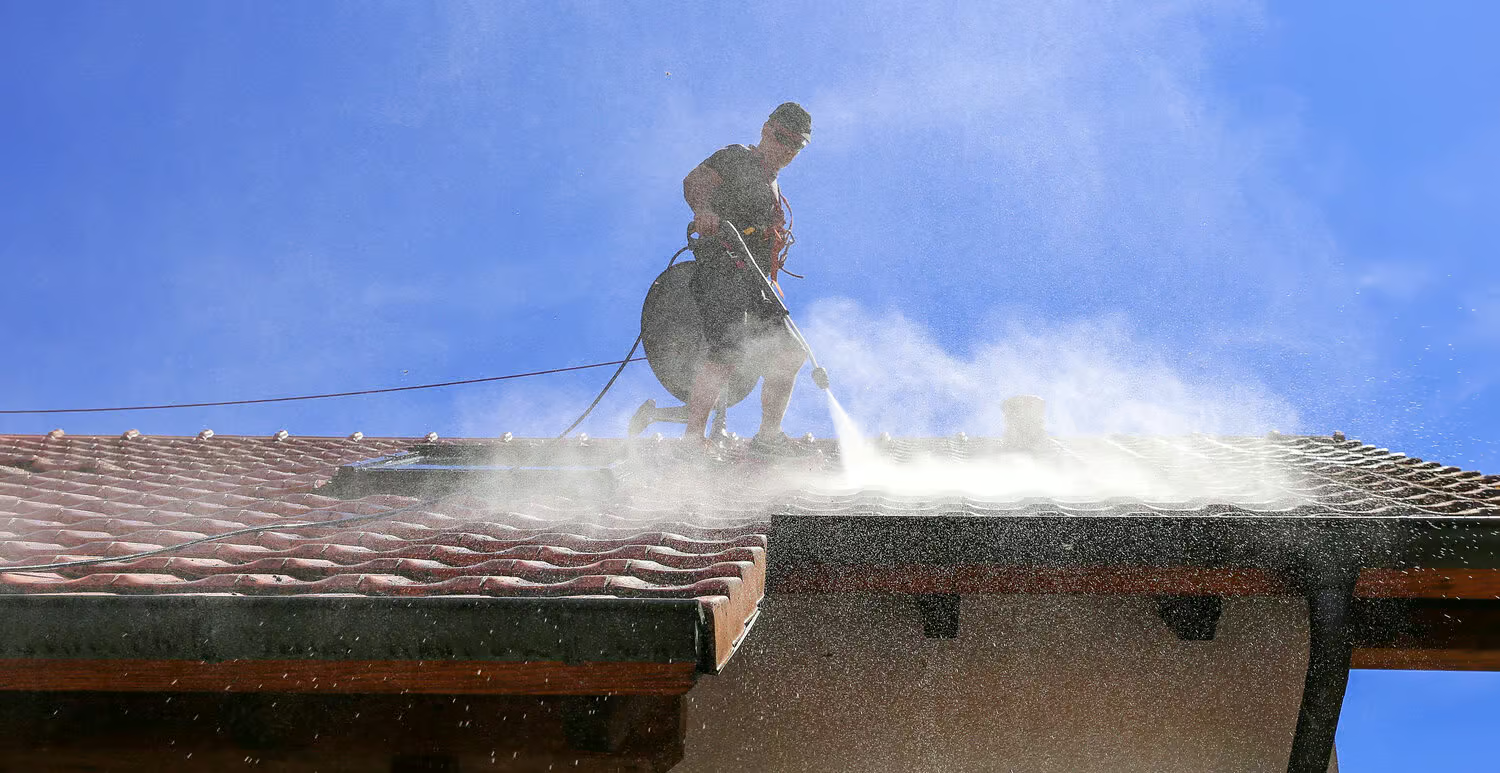
| Roof Type | Cleaning Solution | Rinse Pressure | Manual Work | Treatment Duration | Key Notes |
|---|---|---|---|---|---|
| Asphalt shingles | Soft wash + ARMA-approved solution | Low | Soft-bristle brush for heavy moss | 1–2 years | Most common. Granule preservation is priority. |
| Cedar shake/shingle | Cedar-specific solution, lower concentration | Very low | Soft brush along grain, manual moss removal | 1–2 years | No bleach at full strength. Preserve natural oils. |
| Metal | Metal-safe solution, oxidation removal | Low | Minimal (surface debris) | 2–3 years | Preserve factory coating and finish. |
| Tile (concrete/clay) | Masonry-safe solution | Low | Manual moss from joints, weight distribution | 1–2 years | Minimize foot traffic. Fragile material. |
| Flat (TPO/EPDM/BUR) | Membrane-safe formulation | Low | Clear drains, scuppers, ponding areas | 1–2 years | Inspect drainage. Membrane-specific chemistry. |
All roof types. One company. Soft wash only.
Free estimate.
Cleaners, Not Roofers: Why That Matters
There is an important difference between a company that cleans roofs and a company that replaces them. A roofing contractor has a financial incentive to tell you your roof needs replacement. A cleaning specialist has a financial incentive to preserve the roof you have.
What we do: Deep cleaning, moss removal, algae and lichen treatment, moss prevention application, gutter flush, and debris removal.
What we do not do: Replace shingles, patch leaks, perform structural repairs, install new roofs, or provide roofing inspections for warranty or insurance claims.
Why this matters to you: We are not trying to upsell you into a $30,000 roof replacement. Our only goal is cleaning and preserving. If we spot damage during our work (a missing shingle, a cracked flashing boot, a soft spot in the decking), we photograph it, inform you, and recommend you contact a licensed roofing contractor. We document, we do not repair. This keeps our incentives aligned with yours.
The Clog Cascade: Why Gutter Flush Is Included
When we clean a roof, everything we remove (moss, algae, pine needles, granular sediment) washes into the gutter system. If you clean the roof without flushing the gutters, you create a problem worse than the one you started with.
What happens: The mixture of dead moss, cleaning solution residue, and asphalt granules forms a thick, cement-like sludge inside the gutters and downspouts. This "moss slurry" is heavier and more adhesive than normal leaf debris. It cements itself inside downspouts and can completely block drainage within hours of a roof cleaning.
The weight problem: Wet moss and sediment are heavy. If this sludge settles and sits in your gutters, it can add hundreds of pounds of load to the gutter system. Gutters sag, spikes pull loose, and the gutter can physically separate from the fascia board, damaging the fascia and siding.
The foundation problem: The purpose of your gutter system is to move water away from the foundation. If the roof is clean but the gutters are blocked, water cascades over the gutter edge and pools against the foundation. This creates hydrostatic pressure that forces water through concrete cracks into basements and crawl spaces. A clean roof with clogged gutters is worse than a mossy roof with clear gutters.
The fascia problem: When gutters overflow, water wicks backward by capillary action into the fascia board (the wood behind the gutter) and the soffits. In Seattle's damp climate, this moisture exposure causes rapid wood rot. Replacing rotted fascia boards costs $1,000 to $3,000+.
We never leave a property with clean shingles and clogged pipes. Every roof cleaning includes a full gutter flush: troughs scooped, downspouts cleared, and water flow verified from the roof peak to the ground-level drainage. If you have gutter guards or mesh screens, we rinse them clear of sludge to restore their permeability. This is not an add-on. This is how roof cleaning should be done.
Moss Prevention Treatment: How Long It Lasts
After cleaning, we apply a liquid moss inhibitor across the entire roof surface. This treatment creates conditions that prevent moss and algae from reestablishing.
Why liquid treatment, not zinc strips: Zinc strips are metal strips nailed along the roof ridge. Rain is supposed to wash zinc ions down the roof surface, creating a zone where moss cannot grow. In practice, zinc strips create clean vertical stripes directly below the strip, with moss growing in between. Coverage is uneven. Liquid treatment provides complete, even coverage across every square inch of the roof surface.
How long does it last? With our full treatment (cleaning + moss inhibitor application), most roofs in Seattle stay moss-free for 1 to 2 years. The exact duration depends on your specific conditions:
Heavy tree canopy (Douglas fir, bigleaf maple directly over roof): Closer to 12 months.
Moderate shade (some tree coverage, partial sun exposure): 12 to 18 months.
Open exposure (minimal tree coverage, good sun): 18 to 24 months or longer.
North-facing roof slopes: Always shorter duration than south-facing on the same house.
Annual maintenance recommendation: For homes under heavy tree cover (which is most of Seattle), we recommend annual roof cleaning. This prevents moss from re-establishing deep root systems. A maintenance cleaning on a roof that was cleaned the previous year is faster, less labor-intensive, and less expensive than a heavy moss removal on a roof that has been neglected for 3 to 5 years.
How Much Does Roof Cleaning Cost in Seattle?
Pricing depends on roof size (square footage), pitch (steepness), height (stories), roof type, moss severity, and access. Below are typical ranges for Seattle residential properties.
| Service | Typical Range | Details |
|---|---|---|
| Roof Cleaning | ||
| Basic roof cleaning (debris removal + soft wash, light moss) | $300–$500 | Single-story, low to moderate pitch, light moss or algae. Includes gutter flush. |
| Standard roof cleaning (moss removal + soft wash + treatment) | $450–$800 | Most common service. Moderate moss on 1,500–2,500 sq ft roof. Includes gutter flush and moss prevention treatment. |
| Heavy moss removal + full treatment | $700–$1,200+ | Deep carpet moss. Multiple years of buildup. Extensive manual removal before chemical treatment. Includes gutter flush. |
| By Roof Type | ||
| Cedar shake cleaning | $500–$1,000+ | Cedar-specific chemistry. More manual labor. Longer dwell times. Size and moss severity dependent. |
| Metal roof cleaning | $300–$600 | Oxidation removal, pollen, algae. Generally less labor than asphalt or cedar. |
| Tile roof cleaning | $500–$1,000+ | Labor-intensive moss removal from tile joints. Weight distribution required. Fragile material. |
| Flat roof cleaning | $300–$800 | Size dependent. Includes drain and scupper clearing. Membrane-safe chemistry. |
| Add-Ons & Surcharges | ||
| Moss prevention treatment only (no cleaning) | $75–$200 | Applied to a recently cleaned roof that does not need re-cleaning. Prevention only. |
| Steep roof surcharge (8/12 pitch or higher) | Add 20–30% | Safety harnesses, specialized equipment, slower work pace. Required for crew safety. |
| Multi-story surcharge (3+ stories) | Add 15–25% | Additional setup time, equipment, and safety requirements. |
| Gutter flush (included with roof cleaning) | Included | Scoop troughs, flush downspouts, verify flow. Always included. Not a separate charge. |
| Gutter flush (standalone, no roof cleaning) | $150–$350 | See Gutter Services page for full gutter cleaning details and pricing. |
Prices are estimates for greater Seattle and the Eastside as of 2026. Every roof is different. Steep roofs, multi-story homes, heavy moss, and difficult access affect cost. All estimates are free, on-site, and include a visual inspection of roof condition.
A first-time heavy moss removal on a neglected roof costs $700 to $1,200+. An annual maintenance cleaning on a roof that was cleaned the previous year costs $300 to $500. The moss never gets a chance to establish deep root systems. The labor is less. The time is less. The roof lasts longer. Annual maintenance is the most cost-effective approach for Seattle homes under tree canopy.
Free on-site roof cleaning estimate.
We inspect, quote, and schedule.
When to Clean Your Roof (Timing and Frequency)
Best time of year: Late winter through early spring (February through April) is the ideal window in Seattle. Moss is at peak moisture content during winter, making it easier to remove. The treatment applied after cleaning has the entire dry season (summer) to bond to the surface before fall rain returns. Cleaning before the summer UV season also means your shingles get maximum sun exposure to help keep the surface dry and inhospitable to regrowth.
Second-best window: Early fall (September through October), after the summer dry spell and before the heavy rains begin. Moss is dry and dormant, which makes it lighter and easier to remove manually. However, treatment has less dry time before wet season begins.
Can we clean in rain? We can remove moss and debris in light rain (the moisture actually helps). However, for moss prevention treatment to bond properly, we need a dry window of at least 4 to 6 hours after application. We monitor weather forecasts and schedule treatment application for dry days.
| Condition | Recommended Frequency | Why |
|---|---|---|
| Heavy tree canopy (firs, maples directly over roof) | Annual (every 12 months) | Fastest regrowth. Annual prevents deep root establishment. |
| Moderate shade (some trees, partial sun) | Every 18–24 months | Monitor north-facing slopes. They regrow first. |
| Open exposure (minimal shade, good sun) | Every 2–3 years | Sun and airflow naturally inhibit moss. Longest treatment duration. |
| North-facing slopes (any canopy level) | Annual regardless | Always the first area to regrow. Least sun, most moisture retention. |
Roof Cleaning Across Seattle and the Eastside
Capitol Hill, Queen Anne, and Magnolia have the highest concentration of cedar shake roofs in Seattle, many of them 20 to 40+ years old on Craftsman and Tudor-style homes. These cedar roofs sit under mature tree canopy (bigleaf maples, Douglas firs) and accumulate heavy moss. Cedar-specific cleaning is our most requested service in these neighborhoods.
Kirkland, Bellevue, Redmond, and Sammamish have larger homes with 2,500 to 4,000+ square foot roof areas, often multi-story with steep pitches. Eastside HOAs frequently issue moss violation notices. We provide before-and-after photo documentation that HOA boards accept as proof of compliance. Asphalt composition shingles are the dominant roof type on the Eastside.
West Seattle, Beacon Hill, and Renton have a mix of older single-story homes (often with original 30-year-old roofs) and newer construction. These are neighborhoods where a roof cleaning can extend the life of an aging roof by several years, delaying a $25,000+ replacement. Many homes have heavy bigleaf maple canopy that drops massive leaf volume in fall and supports rapid moss growth.
Ballard, Fremont, and Greenwood have compact lots where moss and algae are highly visible from the street. The curb appeal impact of a clean roof is immediate and significant on these smaller properties. Many homeowners in these neighborhoods clean the roof in preparation for listing (real estate market).
We serve: Seattle (all neighborhoods), Kirkland, Bellevue, Redmond, Sammamish, Issaquah, Renton, Bothell, Woodinville, Mercer Island, Shoreline, Lake Forest Park, and surrounding King County communities.
Frequently Asked Questions About Roof Cleaning in Seattle
How much does roof cleaning cost in Seattle? +
Will pressure washing damage my roof? +
What are the black streaks on my roof? +
How often should I clean my roof in Seattle? +
What chemicals do you use? Are they safe for plants? +
Can you clean cedar shake roofs? +
Do you clean metal roofs? +
Is it worth cleaning a 20-year-old roof? +
My HOA sent me a violation for roof moss. Can you help? +
Does insurance cover roof cleaning? +
Do you install zinc strips for moss prevention? +
How long does the moss treatment last? +
Do you do roof repairs if you find damage? +
Can I do roof cleaning myself? +
Do you clean around solar panels? +
Your Roof Is Your Most Expensive Surface. Treat It That Way.
A roof replacement in Seattle costs $25,000 to $40,000 or more. A roof cleaning costs $300 to $800. The math is simple. Regular cleaning removes the organisms that destroy roofing material and extends the life of the investment you have already made. And it should never be done with high pressure.
Soft wash. Every roof type. Gutter flush included. Clean property when we leave.
- Asphalt composition shingles: soft wash with ARMA-approved solutions, granule preservation
- Cedar shake and shingle: cedar-specific chemistry, manual moss removal, wood preservation
- Metal roofs: oxidation removal, coating-safe cleaning, pollen and algae treatment
- Tile roofs (concrete and clay): masonry-safe solutions, careful weight distribution, joint cleaning
- Flat roofs (TPO/EPDM): membrane-safe formulations, drain and scupper clearing
- Gloeocapsa Magma (black streak) removal on all asphalt surfaces
- Moss prevention treatment applied to every cleaned roof
- Full gutter flush included with every roof cleaning (not an add-on)
- Plant protection protocol: pre-soak before, rinse after
- Solar panel cleaning available
- Before-and-after photo documentation for HOA and insurance compliance
- Free on-site estimates with visual roof condition assessment
Serving Seattle, Kirkland, Bellevue, Redmond, Sammamish, Issaquah, Renton, Bothell, Woodinville, Mercer Island, and all of King County.
Professional roof cleaning. Soft wash only. Gutter flush included.
Free estimate.
Get a Free Estimate
Let's chat about your needs and landscape dreams. Schedule a call below.
Other Services













Don't let moss eat your investment.
Get a professional low-pressure wash that restores your home's beauty and safety.
Get a Free Roof Cleaning Quote