Seattle grows fast. Not the city (although that too). The plants. Between October rain and July sun, your property generates growth at a rate that most of the country cannot imagine. Blackberry vines add 6 feet of cane in a single summer. English ivy climbs 20 feet up an oak tree in two years. Moss colonizes every north-facing surface. And if you skip one fall cleanup, the wet leaves mat down on the lawn and kill it by February.
Keeping a Seattle property looking good requires consistent, seasonal work. Not just mowing (see our Lawn Care page for mowing and maintenance), but the deeper landscaping work: cleaning out beds, removing invasive growth, installing fresh mulch, pruning for shape and health, planting the right species for this climate, and laying sod where the grass has given up.
At LandscapingFactory, we handle all of it. One-time deep cleanups that reset neglected properties. Annual mulch refreshes that keep beds looking sharp and suppress weeds. Spring services that wake the garden up after winter. Fall services that put it to bed before the storms. Native planting that actually survives here. Sod installation that gives you a lawn in a day. And commercial maintenance contracts that keep business properties clean year-round.
Yard Cleanups: One-Time Deep Cleans and Overgrown Property Restoration
A yard cleanup is the reset button. Whether you are preparing a house for sale, moving into a property that has been neglected, or just catching up after a season (or several) of deferred maintenance, a professional cleanup takes it from overwhelmed back to managed.
This is not a mow-and-blow visit. A full cleanup touches every surface and every bed on the property:
Debris and hazard removal: We remove dead plants, fallen branches, accumulated leaves, trash, and any foreign objects hidden in beds and brush. We clear anything that does not belong.
Garden bed cleaning: We pull weeds, remove dead annuals, cut back overgrown perennials, and clear accumulated debris from every planting bed. Beds are left clean, defined, and ready for mulch.
Pruning and shaping: We cut back low-hanging branches that block walkways, shape overgrown shrubs, remove dead wood from trees, and define the structure of the landscape. This is not hedge trimming — that is maintenance. This is restorative pruning that brings shape back to plants that have lost it.
Invasive species removal: English ivy, blackberry, and invasive vines are cut, pulled, and removed. We do not spray herbicide. We remove by hand and tool.
Hard surface blow-off: Every patio, driveway, walkway, and step is blown clean of debris, leaves, and dirt. The hardscape looks as good as the softscape when we leave.
Complete haul-away (dump included): This is a differentiator. Our price includes hauling and disposal of all green waste, debris, and removed material. We do not leave bags on the curb for you to deal with. We do not charge dump fees as a surprise add-on. The quote includes removal. We leave the property spotless.
Overgrown and Extreme Properties
We accept extreme cases. Abandoned lots, rental properties with years of deferred maintenance, estates where blackberry has taken over entire sections of the yard. These projects require more labor, more equipment, and more haul-away capacity, and the pricing reflects that. But we have the crew and the equipment to handle properties that other landscaping companies turn down.
Need a reset?
One-time deep cleanup. Haul-away included. Free on-site estimate.
Mulch Installation: Types, Coverage, Depth, and the Right Way to Do It
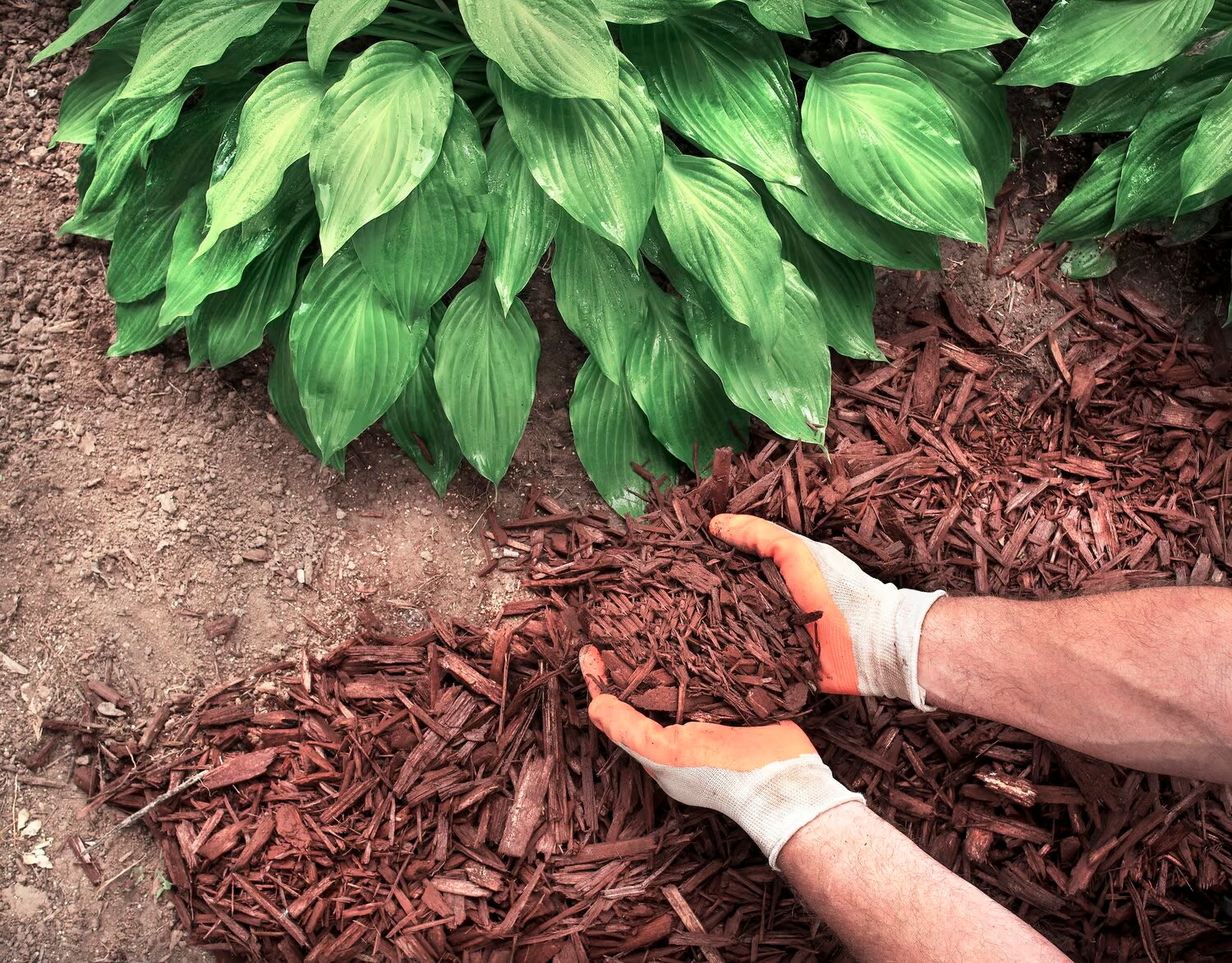
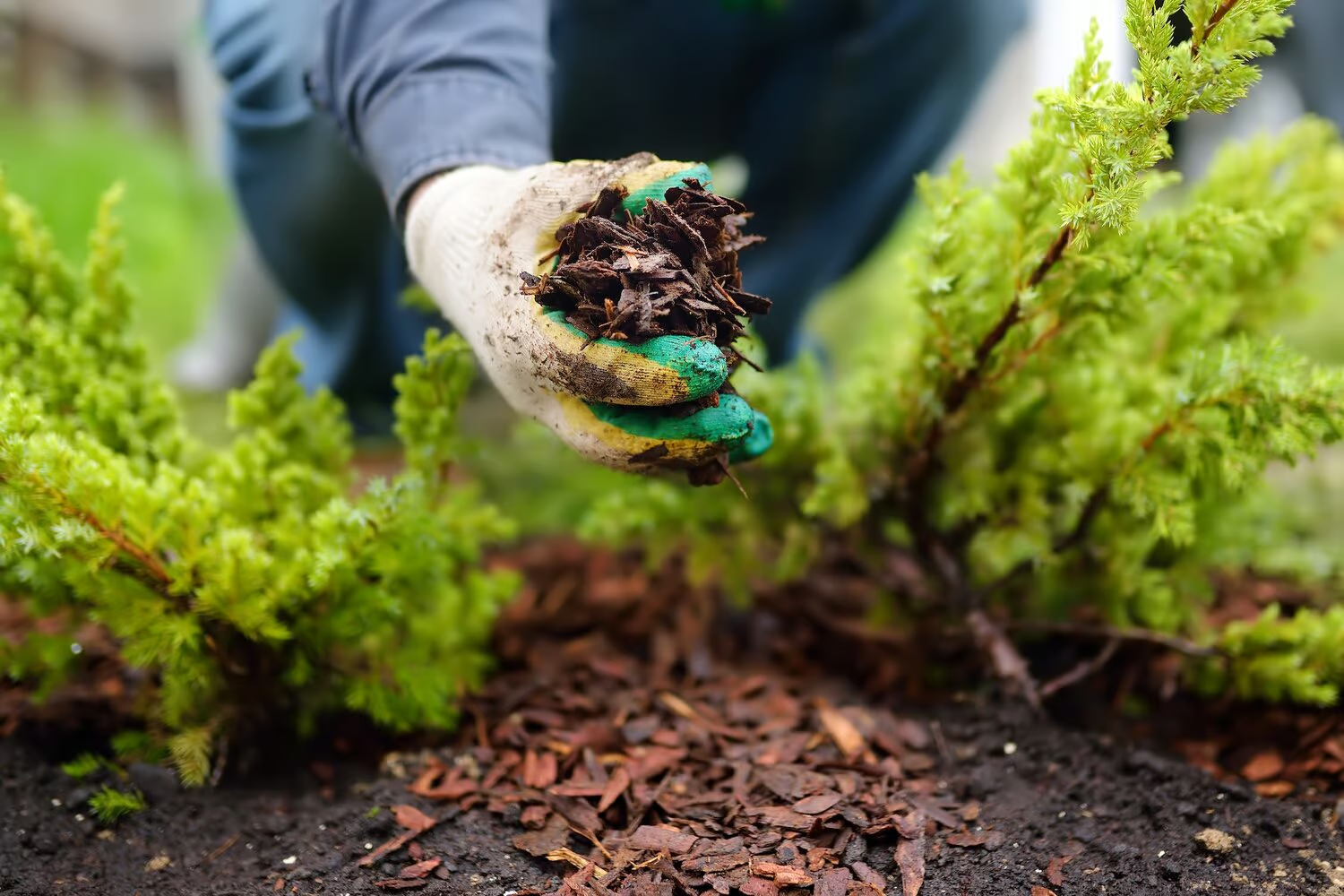
Mulch is the single highest-impact, lowest-cost upgrade for any garden bed. Fresh dark mulch on clean, edged beds makes the entire property look professionally maintained. Beyond aesthetics, mulch retains soil moisture (critical in Seattle's dry summers), suppresses weeds, insulates roots from temperature swings, and improves soil health as organic mulch decomposes.
But mulch done wrong causes problems. Piled too deep, it suffocates roots. Piled against tree trunks ("volcano mulching"), it rots bark and kills trees. Applied on top of existing weeds, it just buries them temporarily. Our process avoids all of these mistakes.
Weed and Clean All Beds First
We never dump mulch on top of weeds. Every bed is hand-weeded and cleared of debris before any mulch goes down.
Edge All Beds
We cut crisp, defined edges between lawn and garden beds using a blade edger. This border line is what gives the property that "just landscaped" look. Without it, mulch bleeds into the lawn and the lawn creeps into the bed.
Install Landscape Fabric (Where Appropriate)
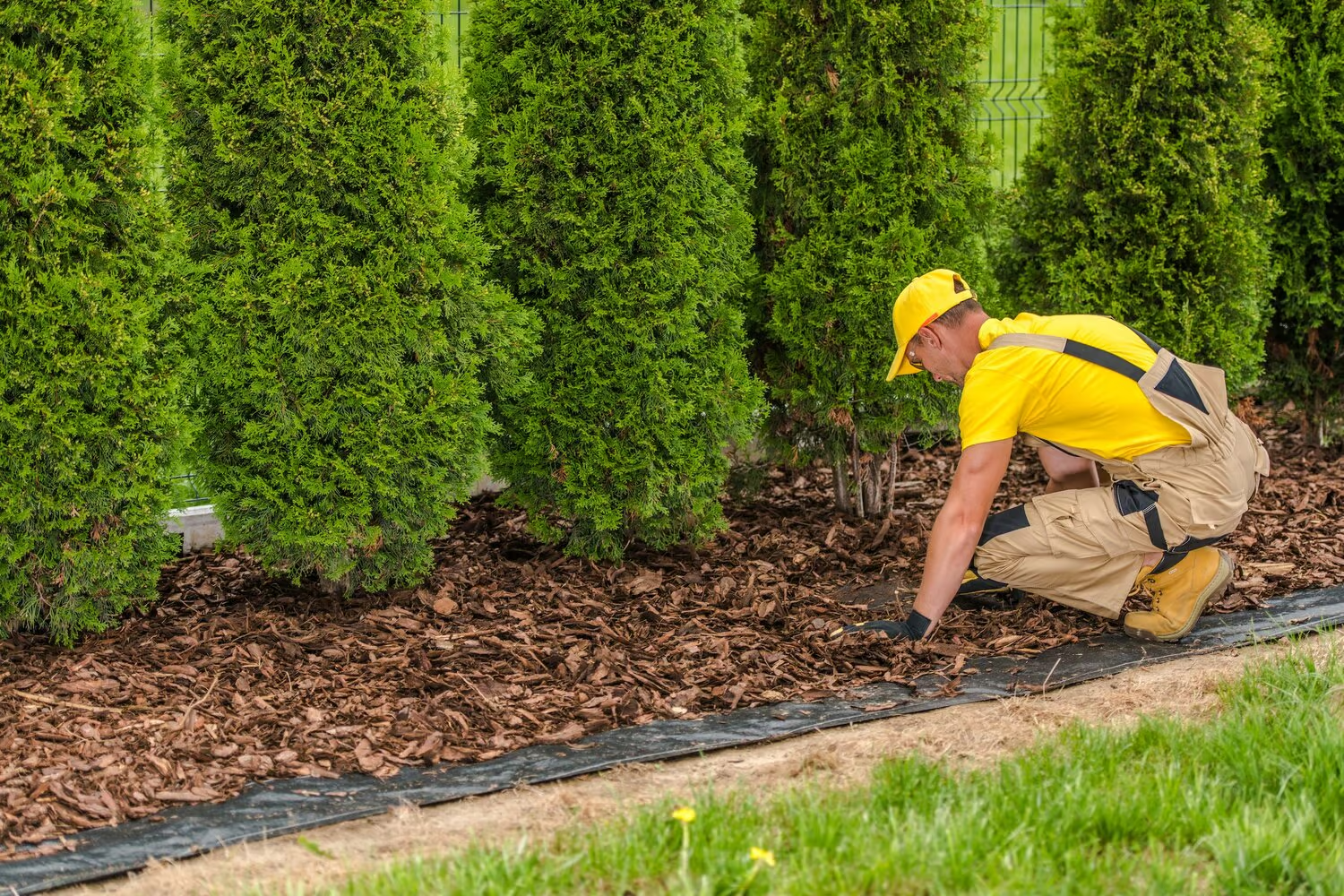
For beds where weed suppression is the priority, we install heavy-duty landscape fabric beneath the mulch. The fabric blocks weeds physically while allowing water to pass through to the soil. We do not use chemical weed killers. Washington State regulations restrict pesticide application by landscapers without special applicator licenses, and we believe physical barriers are safer for pets, children, and the watershed.
Spread Mulch at 2 to 3 Inches Depth
This is the optimal range. Less than 2 inches does not suppress weeds effectively. More than 3 inches smothers root systems and traps too much moisture. We spread evenly by hand, pulling mulch 3 to 4 inches away from every tree trunk and plant crown to prevent rot.
Mulch Types and Pricing
| Mulch Type | Cost (per cubic yard, installed) | Best For | Lifespan |
|---|---|---|---|
| Bark mulch (fir, hemlock) | $50–$80 | General garden beds, acid-loving plants (rhododendrons, azaleas) | 1–2 years |
| Cedar bark mulch | $65–$110 | Beds near the house (natural insect repellent), slower decomposition | 2–3 years |
| Shredded hardwood | $50–$85 | Slopes (stays in place), general beds, soil improvement | 1–2 years |
| Dyed mulch (black or red) | $55–$95 | High-contrast modern look, curb appeal for home sales | 1–2 years (color fades) |
| Wood chips (arborist) | $30–$55 | Budget option, large areas, paths, naturalistic look | 1 year |
| River rock / gravel | $80–$180 | Drainage areas, xeriscaping, modern beds, permanent | Permanent (no replacement) |
| Playground rubber mulch | $100–$160 | Play areas, safety surfacing, no decomposition | 7–10+ years |
How Many Cubic Yards of Mulch Do You Need?
| Depth | Coverage per Cubic Yard | Typical Use |
|---|---|---|
| 2 inches | 162 square feet | Standard bed refresh, weed suppression |
| 3 inches | 108 square feet | New beds, heavy weed areas, maximum moisture retention |
| 4 inches | 81 square feet | Paths, play areas (not recommended for plant beds) |
Measure the total square footage of your garden beds. At 2-inch depth, one cubic yard covers 162 square feet. At 3-inch depth, one cubic yard covers 108 square feet. Example: A property with 600 total square feet of garden beds at 3-inch depth needs approximately 5.5 cubic yards. A typical Seattle residential property needs 3 to 8 cubic yards for a full mulch refresh.
Never pile mulch against the trunk of a tree. This practice (called "volcano mulching") traps moisture against the bark, promotes rot, creates a habitat for boring insects, and can girdle the tree's vascular system. Pull mulch 3 to 4 inches away from the trunk. You should see the root flare (where the trunk widens into the ground) above the mulch line. If your current mulch covers the trunk, pull it back immediately.
Fresh mulch transforms the entire property.
We clean, edge, and mulch every bed in one visit. Haul-away included.
Spring Services: Waking Up the Garden (February Through May)
After five months of rain, wind, and darkness, every Seattle property needs spring cleanup. This is the service that transitions the landscape from winter survival mode to growing season readiness.
Bed preparation and weeding: We clear winter debris from every bed, pull early-season weeds before they establish, remove dead annuals from last year, and redefine bed edges that have softened over winter.
Pruning winter damage: Wind, ice, and heavy rain break branches and damage shrubs. We remove dead, broken, and crossing branches. We shape shrubs that have become leggy or lopsided. We cut back ornamental grasses and perennials that were left standing for winter interest.
Mulch refresh: The single best time to apply fresh mulch in Seattle is late March through April, after the soil has warmed but before summer drought stress begins. We lay 2 to 3 inches of fresh mulch on all prepared beds.
Soil amendment and fertilization: Seattle's naturally acidic soil benefits from lime application (to raise pH for lawns) and compost top-dressing (to improve structure and nutrition for beds). We test and amend based on what your soil actually needs.
Dividing and transplanting perennials: Spring is the window for dividing overcrowded hostas, daylilies, and ornamental grasses. We split, replant, and fill gaps with divisions.
Lawn preparation: Dethatching, aeration, and overseeding happen in spring. See our Lawn Care page for detailed lawn-specific services and pricing.
.avif)
Fall Services: Putting the Garden to Bed (October Through December)
Fall cleanup in Seattle is not optional. Wet leaves left on the lawn cause fungal disease and moss. Unpruned perennials rot in place. Clogged gutters overflow onto beds. The work you do in October and November determines how the property looks in March.
Leaf removal (complete): We do not blow leaves into a pile and leave. We remove every leaf from every lawn area, bed, walkway, patio, and driveway on the property. In Seattle's deciduous-heavy neighborhoods, a single large maple or oak can drop enough leaves to fill a truck bed. We remove them completely. Our pricing includes haul-away.
Perennial cutback: We cut back perennials that are done flowering to prevent rot during the wet months. We leave ornamental grasses and plants with winter structure interest standing (we discuss what to cut and what to leave during the consultation).
Final mow and lawn treatment: The last mow of the season at a slightly lower height, combined with a fall fertilizer application, prepares the lawn for winter dormancy and spring recovery.
Gutter check reminder: Fall is when gutters clog with leaves. See our Gutter Services page for gutter cleaning, repair, and guard installation. We can coordinate gutter cleaning with fall yard cleanup for a single mobilization.
Winterization of irrigation: If you have an irrigation system, fall is when it must be winterized (blown out with compressed air). See our Irrigation Maintenance page for winterization scheduling and pricing.
Fall cleanup: leaves, pruning, bed prep, haul-away.
One visit before the storms. Free quote.
Planting: Native Species, Shrubs, Trees, and Garden Bed Design
The Pacific Northwest is one of the best growing environments in North America. The combination of mild winters, adequate rainfall, and long summer days means that the right plants thrive here with minimal intervention. The key phrase is "the right plants."
We design planting plans around species that are adapted to Seattle's conditions: acidic soil (pH 5.5 to 6.5), wet winters, dry summers, and partial shade under the tree canopy that dominates most residential lots.
Native and Adapted Plants We Recommend
Sword fern (Polystichum munitum): The workhorse of Pacific Northwest shade gardens. Evergreen, drought-tolerant once established, no maintenance. Fills large shaded areas with rich green texture.
Rhododendron and azalea: Seattle's signature shrubs. They love acidic soil and filtered shade. Hundreds of varieties in every size and color. Spring blooms are spectacular.
Japanese maple (Acer palmatum): The most popular ornamental tree in Seattle. Weeping, upright, laceleaf, and full-moon varieties. Fall color is outstanding. Thrives in filtered light.
Salal, Oregon grape, and huckleberry: Native understory shrubs that provide year-round interest, require no irrigation once established, and support native pollinators.
Lavender and rosemary: For sunny, well-drained spots (rare in Seattle but they exist). Mediterranean herbs that love dry summers and provide fragrance, pollinator habitat, and year-round evergreen structure.
Ornamental grasses: Miscanthus, blue fescue, and Japanese forest grass add movement, texture, and low-maintenance structure. Cut back in spring and they return.
The Rule of Three: We plant in odd-numbered groupings (3, 5, 7). Odd numbers create natural, organic patterns that look intentional rather than rigid. Two identical shrubs look like sentries. Three look like a designed planting. Five look like a naturalized drift.
Right plant, right place: Sun-loving plants in shaded beds die. Shade plants in full sun burn. Moisture-loving plants on a dry hillside fail. Drought-tolerant plants in a bog rot. We match every plant to the light, moisture, and soil conditions of its specific location on your property.
Sod Installation: A New Lawn in One Day
If your lawn is more than 50 percent weeds, moss, or bare soil, overseeding will not save it. Starting over with fresh sod gives you a fully established lawn in a single day instead of waiting 6 to 8 weeks for seed to germinate and fill in (with unpredictable results).
Our sod process: We remove the existing lawn (dead grass, weeds, and all), grade the soil surface for drainage, amend the soil with compost, compact lightly, and lay fresh sod in a tight brick pattern with staggered joints. We roll the sod for contact, water it deeply, and provide you with a 2 to 3 week watering schedule for establishment.
When to install sod in Seattle: Spring (March through May) and early fall (September through October) are the best windows. Summer sod installation is possible but requires intensive daily watering during the establishment period. Winter installation is not recommended because roots do not establish in cold, saturated soil.
Sod vs. seed: Sod costs more upfront ($1.50 to $2.50 per square foot installed vs. $0.10 to $0.30 per square foot for seed) but delivers immediate results. Seed is cheaper but takes 6 to 8 weeks to fill in, is vulnerable to birds, washout, and uneven germination. For small patches, seed works fine. For a full lawn replacement, sod is the practical choice.
For homeowners who want to eliminate lawn maintenance entirely: See our Artificial Grass page for synthetic turf options that look like lawn but require no mowing, watering, or fertilizing.
Invasive Species Removal: Ivy, Blackberry, and Bamboo
Three invasive species dominate neglected properties in Seattle. Left unchecked, they destroy gardens, strangle trees, damage fences, and take over entire sections of the yard.
English ivy (Hedera helix): Climbs trees, fences, and structures. The weight of mature ivy pulls branches off trees and damages siding. Ivy on the ground creates a dense mat that smothers all other plants. We cut ivy at the base, peel it from trees and fences, and remove the root system from the soil. Ivy on tree trunks is cut at waist height and chest height, and the upper growth dies and falls off naturally over weeks.
Himalayan blackberry (Rubus armeniacus): The most aggressive invasive in the Pacific Northwest. Canes grow 15 to 20 feet in a single season. Thorns make manual removal painful. Root systems are deep and extensive. We cut canes with brush cutters, remove above-ground growth, and dig out root crowns. Large infestations may require multiple visits over 1 to 2 seasons for complete control.
Running bamboo: Once escaped from containment, running bamboo sends underground rhizomes 20+ feet in all directions. It invades neighboring properties and is extremely difficult to eradicate. We cut above-ground culms, excavate rhizomes, and install rhizome barrier (a physical HDPE plastic wall buried 24 to 30 inches deep) to prevent re-invasion from neighboring properties.
We do not spray chemical herbicides for invasive removal. All removal is mechanical: hand-pulling, cutting, digging, and excavation. This is safer for your soil, your pets, your children, and the watershed. Physical removal also produces better long-term results because it addresses root systems rather than just killing visible growth.
Commercial Landscaping: Contracts for Business Properties
A well-maintained commercial property reflects the quality of the business inside. An overgrown parking strip, dead plants in the entrance beds, or leaves piled on the walkway tells customers and tenants that nobody is paying attention.
What we maintain: Apartment complexes and HOA common areas. Retail centers and office parks. Medical and dental office exteriors. Restaurant patios. Church and school grounds. Any commercial property where exterior appearance matters.
Service scope: Mowing and edging all turf areas. Pruning hedges and shrubs. Weeding and mulching beds. Leaf removal (seasonal). Blowing all hardscapes clean. Spot-treating dead plants with replacements. Reporting irrigation problems, drainage issues, or damage.
Contract structure: We offer annual contracts with consistent monthly billing. Whether it is June or January, the cost remains the same month to month. This makes budgeting predictable for property managers and HOA boards. Contracts include a defined scope of work, visit frequency (weekly, bi-weekly, or monthly depending on season), and emergency response for storm cleanup.
Commercial contracts start at $300 per month for small properties with bi-weekly service. Larger properties and more frequent service are quoted based on scope. All quotes are free and include a property walkthrough.
Property manager or HOA board?
We keep the exterior clean so you do not get complaints. Annual contracts with flat monthly billing.
How Much Do Landscaping Services Cost in Seattle?
All pricing below is for residential properties in the Seattle metro area. Commercial properties are quoted separately based on scope and contract terms.
| Service | Typical Range | What Is Included |
|---|---|---|
| Cleanups | ||
| Standard yard cleanup (maintained property) | $250–$600 | Bed cleaning, weeding, pruning, edging, blow-off, haul-away |
| Large / overgrown yard cleanup | $600–$1,500 | Heavy clearing, invasive removal, multiple loads of haul-away |
| Extreme / abandoned property cleanup | $1,500–$5,000+ | Full restoration, brush cutting, heavy equipment, all disposal |
| Mulch | ||
| Mulch installation (per cubic yard) | $50–$110 | Bed prep, edging, fabric (if needed), mulch material, spreading |
| Mulch refresh (existing beds, per cubic yard) | $40–$80 | Light weeding, top-up to restore 2–3 inch depth |
| Typical residential mulch project (3–8 yards) | $200–$800 | Complete bed prep + mulch for average Seattle lot |
| Landscape fabric installation | $0.50–$1.50/sqft | Heavy-duty woven fabric, stapled, under mulch |
| Seasonal Services | ||
| Spring cleanup (per visit) | $200–$600 | Bed prep, pruning, mulch, edging, blow-off, haul-away |
| Fall cleanup (per visit) | $250–$700 | Leaf removal, perennial cutback, final mow, bed prep, haul-away |
| Planting & Sod | ||
| Planting (shrubs, installed each) | $25–$150+ | Plant, soil amendment, planting, mulch ring; price depends on size |
| Planting (trees, installed each) | $150–$600+ | Tree, delivery, planting, staking, mulch ring; size-dependent |
| Garden bed design and install (per sqft) | $8–$25 | Soil prep, fabric, plants, mulch; complexity varies |
| Sod installation (per sqft) | $1.50–$2.50 | Old lawn removal, grading, soil amendment, sod, rolling, watering |
| Invasive Removal | ||
| Invasive removal (ivy, blackberry) | $300–$2,000+ | Cutting, pulling, root removal, haul-away; priced by area/density |
| Commercial | ||
| Commercial maintenance (monthly) | $300–$1,500+/month | Annual contract, flat monthly billing, scope-dependent |
Prices are estimates for greater Seattle and the Eastside as of 2026. Property size, accessibility, slope, material choices, and volume of waste affect final cost. All haul-away and dump fees are included in our quotes. All estimates are free and on-site.
Every cleanup, mulch project, and seasonal service we quote includes complete removal and disposal of all green waste, debris, and old material. We do not leave bags on the curb. We do not charge dump fees as a surprise add-on. The number on the quote is the number you pay. This is not standard in the industry. Many landscaping companies quote low and then add $100 to $300 in dump fees on the invoice. Ask before you hire anyone: is disposal included?
Get your free landscaping estimate.
We show up, walk the property, and give you a price that includes everything.
Frequently Asked Questions About Landscaping Services in Seattle
How much does a yard cleanup cost in Seattle? +
How much does mulch cost installed? +
How many cubic yards of mulch do I need? +
When is the best time to mulch in Seattle? +
Do landscapers charge by the hour or by the job? +
Do you take the yard waste with you? +
How often should I mulch my garden beds? +
Do you use chemicals for weed control? +
Can you handle extremely overgrown properties? +
What is volcano mulching and why is it bad? +
Do I need to be home during landscaping work? +
What native plants do you recommend for Seattle? +
How much does sod installation cost? +
What is the difference between landscaping and hardscaping? +
Do you offer ongoing maintenance contracts? +
Your Property Deserves to Look Like Someone Cares About It
That is what landscaping is. Not perfection. Not a magazine cover. Just a property that clearly has someone paying attention to it. Clean beds, fresh mulch, defined edges, shaped shrubs, healthy plants, and no weeds taking over. The difference between a neglected yard and a maintained one is not thousands of dollars. It is one or two visits per season.
LandscapingFactory provides every landscaping service Seattle properties need:
- One-time deep yard cleanups with complete haul-away
- Mulch installation: bark, cedar, hardwood, dyed, rock (all types, all beds)
- Spring cleanup: bed prep, pruning, mulch, edging, fertilization
- Fall cleanup: leaf removal, perennial cutback, winterization prep
- Native and adapted planting design and installation
- Sod installation for full lawn replacement in one day
- Invasive species removal: ivy, blackberry, bamboo (no chemicals)
- Commercial property maintenance contracts (annual, monthly billing)
- Overgrown and extreme property restoration
Serving Seattle, Kirkland, Bellevue, Redmond, Sammamish, Issaquah, Renton, Bothell, Woodinville, Mercer Island, and all of King County.
Transform your property.
One-time cleanup or ongoing maintenance. Free estimate. Dump fees included.
Get a Free Estimate
Let's chat about your needs and landscape dreams. Schedule a call below.
Other Services














Transform your property from overgrown to outstanding.
Whether you need a one-time deep clean or a complete mulch refresh, we are ready to work.
Get a Free Landscaping Estimate