
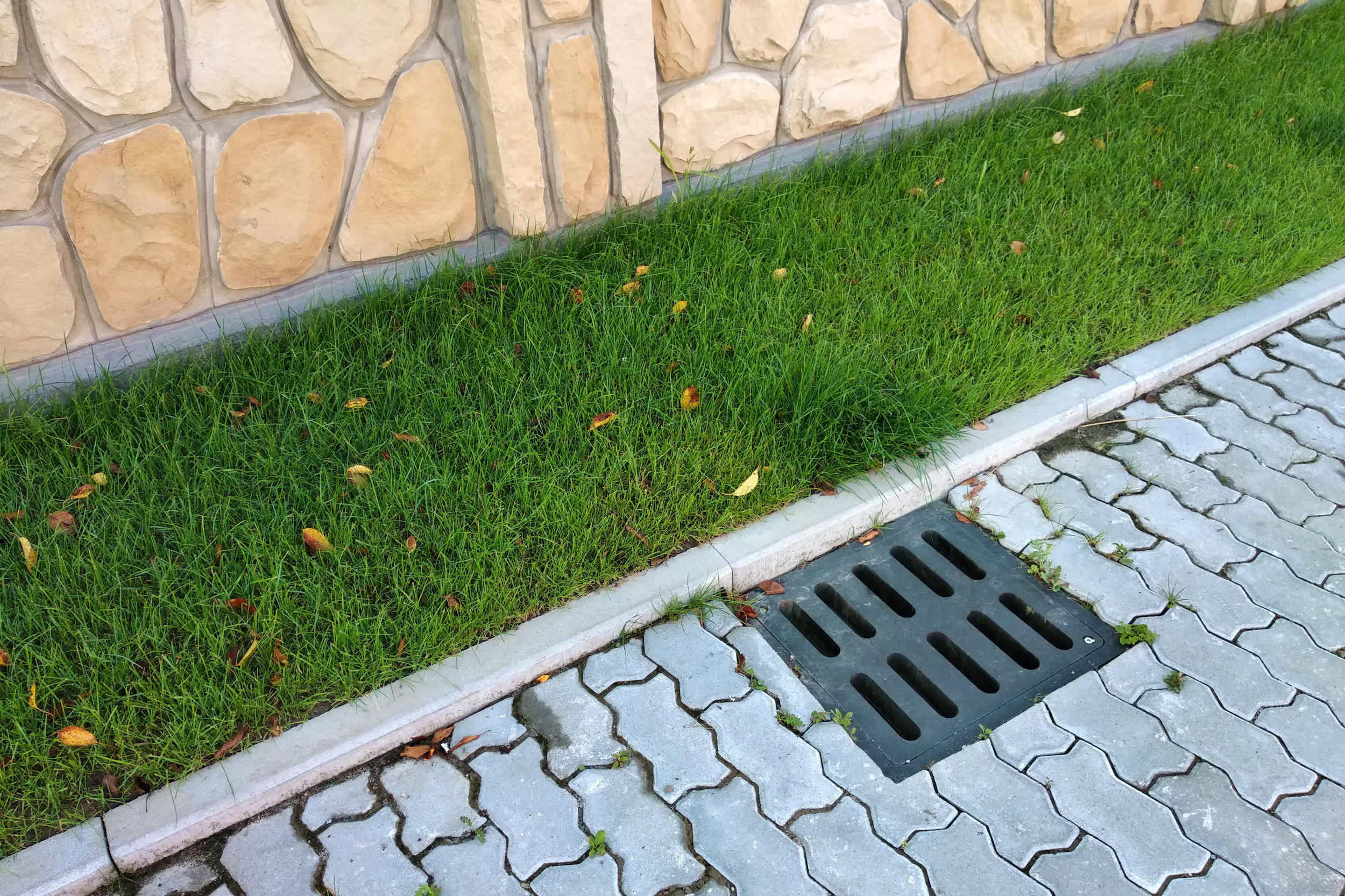
There is a sound every Seattle homeowner recognizes. It is the sound of water pouring over the edge of the gutter instead of through the downspout. You hear it at 2am during a November storm, and you know exactly what it means: something is clogged, disconnected, or undersized up there, and the water that should be going to the downspout is instead hammering into the soil next to your foundation.
Most people ignore it. They wait until the weekend, climb up with a ladder, scoop out a handful of decomposed leaves and pine needles, and hope it holds until the next storm. It does not hold. Seattle gets 152 days of measurable rain per year. Your gutters work harder than almost any other component on your home's exterior, and they get the least attention.
The consequences of neglect are expensive and invisible until they are not. Water cascading behind the gutter rots the fascia board. Overflowing gutters saturate the soil against the foundation, and that moisture finds its way into the basement or crawlspace through hydrostatic pressure. Backed-up water in winter freezes and expands, pulling the gutter away from the house. Moss growing on the roof creeps into the gutters and creates dams that hold water instead of moving it.
At LandscapingFactory, gutters are one of the services we do most often. We install new seamless systems, replace old 20-year gutters, clean and flush existing systems, install gutter guards, repair sagging and leaking sections, replace rotted fascia, and fix the roof flashings that protect the joint between your roof and your gutter. We keep water going where it is supposed to go.
Seamless Gutter Installation: Materials, Sizes, and Styles
Seamless gutters are formed on-site from a single continuous piece of metal. A gutter machine mounted on our truck rolls out the exact length needed for each run of your roofline, with no seams along the straight sections. Why does seamless matter? Because seams are where gutters fail. Every joint between two gutter sections is a potential leak point. Over time, caulk degrades, metal expands and contracts with temperature changes, and seams separate. Seamless gutters eliminate those failure points along the run, leaving joints only at corners and end caps where they can be properly sealed.
Inspect the Fascia and Roof Edge
Before we hang a single foot of gutter, we inspect the fascia board (the flat board behind the gutter) and the roof edge. If the fascia is rotted, soft, or pulling away from the rafter tails, we replace it first. Hanging new gutters on bad fascia is throwing money away. We also check that the roof shingles extend properly over the drip edge.
Remove Old Gutters and Hardware
We remove the existing gutters, downspouts, brackets, and spikes. All old material is hauled away. We inspect the exposed fascia for hidden damage that was covered by the old system.
Form Seamless Gutters On-Site
Using our truck-mounted gutter machine, we roll continuous aluminum (or steel or copper) gutter to the exact measurements of each roofline run. No cutting, no splicing, no seams along the straight sections.
Pitch and Hang
Gutters must slope toward the downspouts at the correct pitch (typically 1/4 inch per 10 feet of run) to ensure water flows and does not pool. We use hidden hangers (internal brackets that are invisible from below) spaced every 24 to 30 inches for strength. No external spikes.
Install Downspouts
Downspouts are positioned at the optimal locations based on your roofline layout, typically one downspout per 30 to 40 feet of gutter run. We secure them with brackets and connect them to gutter drain extensions or splash blocks to direct water away from the foundation.
Seal Corners, End Caps, and Outlets
All joints are sealed with high-quality polyurethane sealant that remains flexible through freeze-thaw cycles. Corners are hand-cut and fitted for a clean appearance and tight seal.
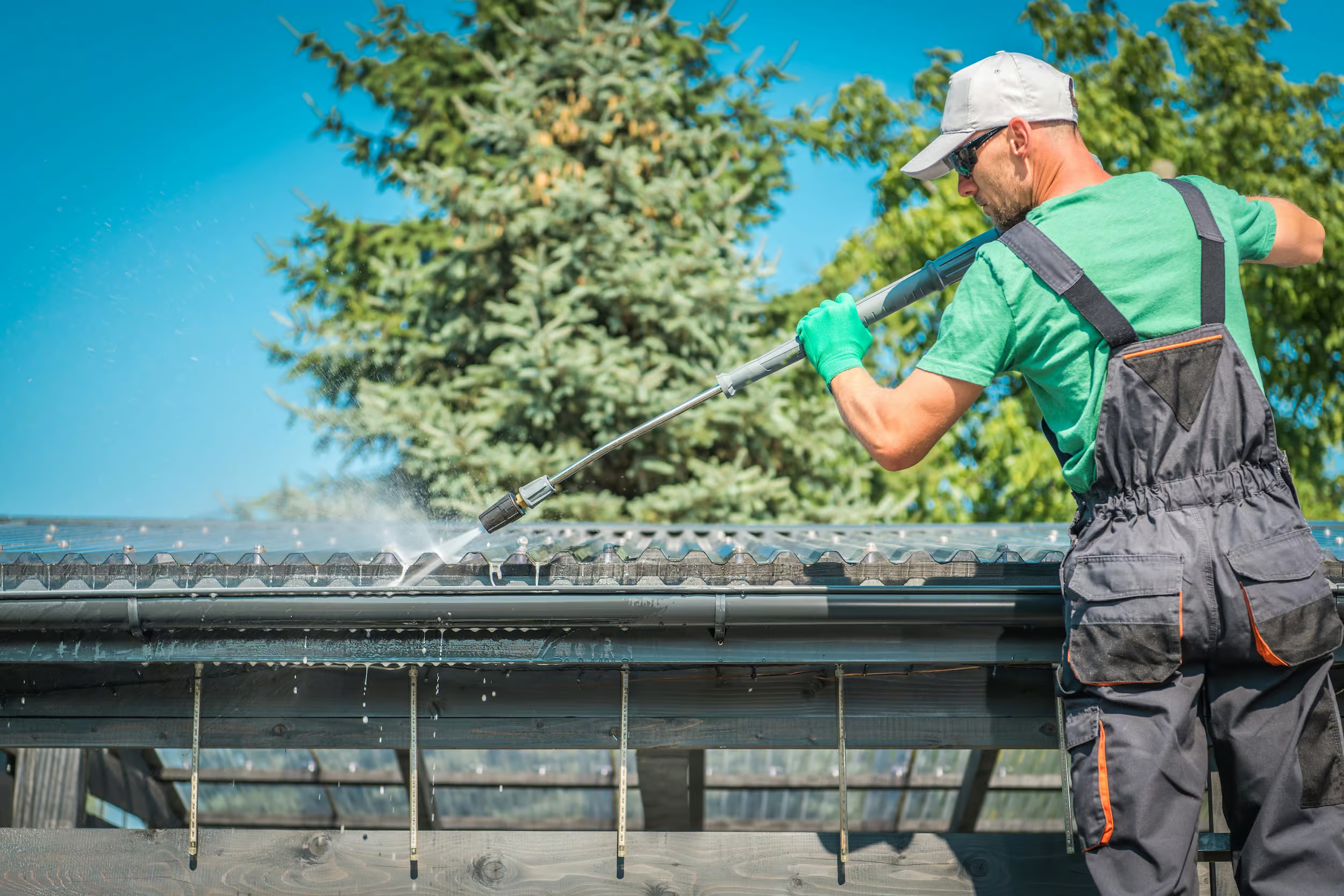
Need new gutters?
We measure your roofline, recommend the right size and material, and install seamless systems with hidden hangers. Free on-site estimate.
What Size Gutters Do I Need? (5-Inch vs 6-Inch)
Gutter size is one of the most common questions we get, and the answer depends on your roof area, pitch, and the volume of water your roofline collects during a heavy Seattle downpour.
5-Inch K-Style (Standard Residential): The most common gutter size for single-story and smaller two-story homes. A 5-inch K-style gutter handles approximately 5,520 square feet of roof drainage area per downspout. For homes with a moderate roof pitch and standard tree coverage, 5-inch gutters are sufficient and cost-effective.
6-Inch K-Style (Heavy-Duty Residential / Commercial): A 6-inch gutter handles approximately 40% more water volume than a 5-inch. We recommend 6-inch for: roofs larger than 2,500 square feet, steep-pitch roofs that accelerate water flow, homes surrounded by heavy tree canopy (Douglas firs, Big Leaf maples) where debris loads are high, and any home where existing 5-inch gutters overflow during heavy rain. If your current gutters overflow regularly and they are clean and properly pitched, they are almost certainly undersized.
Half-Round (Aesthetic / Historic): Half-round gutters have a U-shaped profile and are common on older Craftsman and Tudor-style homes in neighborhoods like Capitol Hill, Wallingford, and Queen Anne. They are available in 5-inch and 6-inch sizes. Half-round is more expensive to install because it requires different bracket systems, but it preserves the character of historic architecture.
| Factor | 5-Inch K-Style | 6-Inch K-Style |
|---|---|---|
| Water capacity | ~5,520 sqft roof area/downspout | ~7,960 sqft roof area/downspout |
| Best for | Small to medium homes, moderate tree coverage | Large homes, steep roofs, heavy tree canopy |
| Downspout size | 2x3 inch standard | 3x4 inch (higher flow rate) |
| Cost | Standard pricing | 10–20% more than 5-inch |
| Debris handling | Adequate with regular cleaning or guards | Handles larger debris loads before clogging |
| Most common use | Single-story, standard two-story | Multi-story, complex rooflines, commercial |
Gutter Materials Compared: Aluminum vs Steel vs Copper
The material you choose affects durability, appearance, weight, cost, and maintenance requirements. Here is an honest comparison for Seattle conditions.
Aluminum (Our Standard Recommendation): Aluminum is the most popular gutter material in the Pacific Northwest and what we install on the majority of residential projects. It does not rust, is lightweight (easier on fascia boards), comes in dozens of factory-baked colors, and lasts 20 to 30 years with proper maintenance. We use 0.027-gauge aluminum as standard. For homes in heavy tree coverage or high-wind areas, we offer 0.032-gauge (thicker, more rigid, resists denting).
Galvanized Steel: Heavier and stronger than aluminum. Steel gutters resist denting from falling branches and ladder contact. The tradeoff is weight (heavier load on fascia) and eventual rust. Galvanized coating slows rust, but in Seattle's wet climate, you can expect corrosion to begin at 15 to 20 years. Steel is a good choice for homes with heavy debris impact risk or where aluminum has been dented repeatedly.
Copper: The premium option. Copper gutters are virtually indestructible (50 to 100 year lifespan), develop a distinctive green patina over time, and are stunning on historic or high-end homes. The cost is 3 to 5 times higher than aluminum. Copper is soldered at joints rather than caulked, creating permanent waterproof connections. We install copper on period-correct restorations, Craftsman homes, and clients who want a lifetime gutter system with zero rust risk.
| Material | Lifespan | Rust Risk | Weight | Color Options | Cost vs Aluminum |
|---|---|---|---|---|---|
| Aluminum (0.027) | 20–30 years | None | Light | 30+ factory colors | Baseline |
| Aluminum (0.032) | 25–35 years | None | Medium-light | 30+ factory colors | 10–15% more |
| Galvanized Steel | 15–25 years | Yes (eventually) | Heavy | Limited (paintable) | 20–30% more |
| Copper | 50–100 years | None (patina only) | Heavy | Natural copper / patina | 300–500% more |
Lifespans assume proper installation, regular cleaning, and Seattle climate conditions. Heavy tree coverage and deferred maintenance shorten lifespan for all materials.
Gutter Repair: Common Problems and How We Fix Them
If you see water falling over the edge of your gutters during a storm, something is wrong. Rain gutters in good condition should handle even a heavy Seattle downpour without overflow. Here are the problems we fix most often:
Sagging gutters: The most visible problem. The gutter pulls away from the fascia and dips in the middle, creating a low point where water pools instead of flowing toward the downspout. Causes: brackets that have loosened over time, fascia board softening from rot, or original installation with too few hangers. Our fix: We re-secure the gutter with new hidden hangers at 24-inch spacing. If the fascia is rotted, we replace the damaged section before reattaching.
Leaking joints: Water dripping from corners, end caps, or splice points. Old caulk dries out and cracks over 5 to 10 years, and metal expansion/contraction opens gaps. Our fix: We clean the joint, remove old sealant, and reseal with flexible polyurethane gutter sealant rated for temperature cycling. If the joint is badly corroded, we replace the section.
Overflowing gutters (clean but still overflow): If the gutters are clean and water still pours over the front edge, the gutters are either pitched incorrectly (water pools instead of flowing) or undersized for the roof area. Our fix: We check the pitch with a level and re-slope to the correct grade. If pitch is fine but volume exceeds capacity, we recommend upgrading from 5-inch to 6-inch gutters.
Downspout clogs: Water backs up at the gutter outlet and overflows. Usually caused by a bend in the downspout (the elbow section) packed with debris. Our fix: We flush the downspout from the top with a pressure nozzle to clear the blockage, then inspect the elbow and underground connection.
Gutter pulling away from fascia: The gutter separates from the house, creating a gap behind it. Water runs down the back of the gutter and behind the fascia, causing rot that is invisible until the damage is serious. Our fix: We remove the gutter, inspect and replace rotted fascia, install starter flashing (drip edge) if missing, and rehang the gutter with properly spaced hangers.
Ice damage: In Seattle's occasional hard freezes, water in gutters can freeze, expand, and deform the gutter channel. Ice dams at the roof edge push water back under shingles. Our fix: We reshape deformed sections or replace them if the metal is cracked. For chronic ice dam locations, we ensure proper drip edge flashing and check attic insulation (poor insulation causes the roof surface warming that creates ice dams).
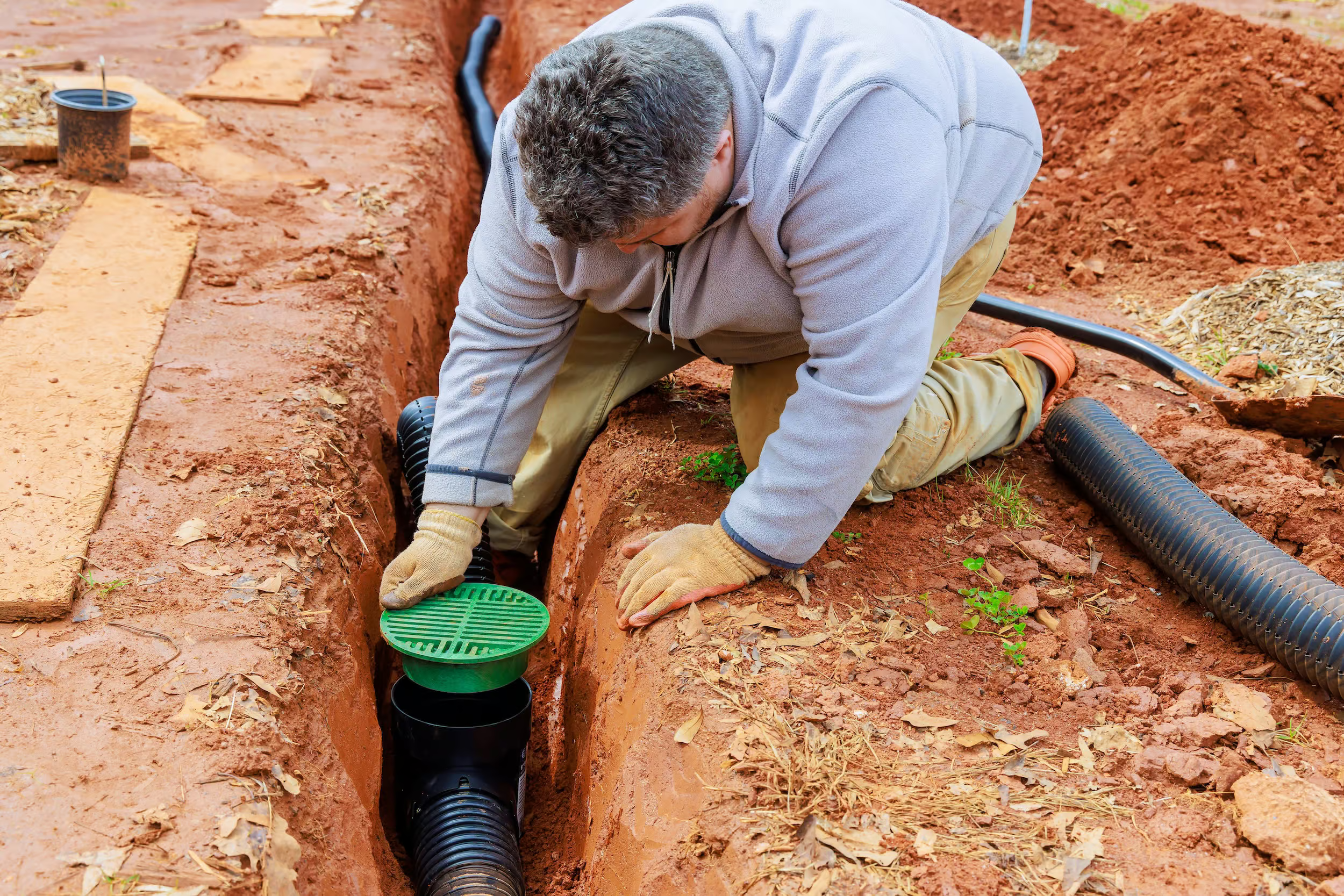
Gutter Cleaning in Seattle: How Often and Why It Matters
A clogged gutter is worse than no gutter at all. No gutter: water falls off the roof edge in a sheet and hits the ground 12 to 18 inches from the foundation. Clogged gutter: water backs up, overflows at a concentrated point, and hammers the same spot of soil repeatedly. That concentrated flow creates erosion trenches and saturates the foundation zone faster than a sheet flow ever would.
Seattle's combination of Douglas fir needles, Big Leaf maple leaves, moss, and roof grit means gutters fill fast. Even well-functioning gutters need regular cleaning to maintain flow.
How Often Should Gutters Be Cleaned in Seattle?
Without gutter guards: 3 to 4 times per year. We recommend: once in late spring (after tree pollen and seed drop), once in late summer (before fall leaves arrive), once in late November (after the major leaf drop), and once in late winter/early spring (after winter storms deposit debris and moss growth peaks).
With gutter guards: 1 to 2 times per year. Guards keep out the bulk of debris but are not maintenance-free. Pine needles, shingle grit, and small seeds still get through or accumulate on top of the guard mesh. An annual flush in late fall and a check in spring keeps guarded systems performing.
What We Do During a Gutter Cleaning Visit
Scoop and Remove All Debris
We hand-clear leaves, needles, moss, and sediment from every section of every gutter run. All debris is bagged and removed from your property.
Flush the System
We run water through the entire gutter and downspout system to verify flow. This catches hidden clogs in the downspout elbows and underground connections that are not visible from above.
Check Pitch and Hangers
While we are up there, we verify that the gutter pitch is correct and that no hangers have loosened. Minor adjustments are included in the cleaning visit.
Inspect Condition
We look for rust, separated joints, fascia softness, and flashing damage. If we see a problem developing, we let you know before it becomes an emergency.
A gutter cleaning costs $150 to $350. A rotted fascia replacement costs $1,000 to $3,000+. Foundation waterproofing from chronic overflow costs $5,000 to $15,000+. Gutter cleaning is the cheapest protection your home has against water damage. The math is not close.
Schedule your gutter cleaning before the next storm.
We clean, flush, inspect, and report. Free quote.
Gutter Guards: Are They Worth It in the Pacific Northwest?
Short answer: yes, for most Seattle homes. Long answer: it depends on your trees.
Gutter guards (also called gutter covers, leaf guards, or gutter protection systems) are mesh, screen, or solid covers installed over the gutter opening to keep debris out while letting water in. They do not eliminate maintenance entirely, but they reduce cleaning frequency from 3 to 4 times per year to 1 to 2 times per year, and they prevent the catastrophic clogs that cause overflow and fascia rot.
What Type of Guard Do We Install?
We install high-flow stainless steel micro-mesh guards that sit flush with the gutter edge. The micro-mesh — fine enough to block pine needles and shingle grit, open enough to allow heavy rain through — is the best performing type for Pacific Northwest conditions. We do not install solid-top reverse-curve guards because they struggle with the high-volume, low-intensity rain Seattle gets for months at a time. Water sheets over the curved surface and can miss the gutter entirely in sustained rain.
When Guards Make the Biggest Difference
Homes surrounded by conifers (Douglas fir, Western Red Cedar): Pine needles are the worst gutter enemy because they are small enough to bypass basic screens and they interlock inside the gutter to form dense mats. Micro-mesh stops them.
Homes under deciduous canopy (Big Leaf maple, alder): Leaf volume is huge in October and November. Without guards, gutters can fill in a single week during peak leaf drop.
Multi-story homes where ladder access is difficult: If cleaning requires a 28-foot ladder or roof access, guards pay for themselves in reduced service calls and reduced risk.
No gutter guard product eliminates cleaning entirely. Debris accumulates on top of the mesh and needs to be brushed off. Small particles work through over time. Moss can grow on the surface of any guard in Seattle's climate. What guards DO is reduce cleaning frequency, prevent catastrophic clogs, and extend the working life of the gutter system. We tell every client this upfront because the industry is full of 'never clean your gutters again' claims that are not accurate.
Roof Flashings: The Part Most People Miss
Many leaks that homeowners blame on gutters are actually caused by missing, damaged, or improperly installed roof flashings. Flashing is the thin metal material installed at critical transition points on the roof to direct water into the gutter and away from the building envelope. If the flashing fails, water gets behind the gutter, behind the fascia, and into the wall structure.
Drip edge flashing: Installed at the eaves (the bottom edge of the roof) to ensure water drips directly into the gutter channel, not behind it. Many older Seattle homes were built without proper drip edge, or the original metal has corroded. Without drip edge, water wicks back under the shingle and rots the fascia board from behind. We install or replace drip edge on every gutter installation.
Roof-to-wall flashing (step flashing and kick-out flashing): Where a lower roof meets a wall — common on two-story homes, dormers, and additions — water must be directed away from the siding and into the gutter. Poor step flashing or missing kick-out flashing at the bottom of the run sends water behind the siding. This is one of the most common sources of hidden water damage on multi-story Seattle homes.
Chimney and vent pipe flashing: Metal collars around chimneys, plumbing vents, and exhaust pipes prevent water from entering at the roof penetration. We inspect these during gutter visits and repair or replace corroded or separated flashings.
Downspout Extensions and Water Direction
Getting water into the gutter is half the job. The other half is getting it away from your foundation once it reaches the ground. A downspout that dumps water right at the base of the house defeats the purpose of the entire gutter system.
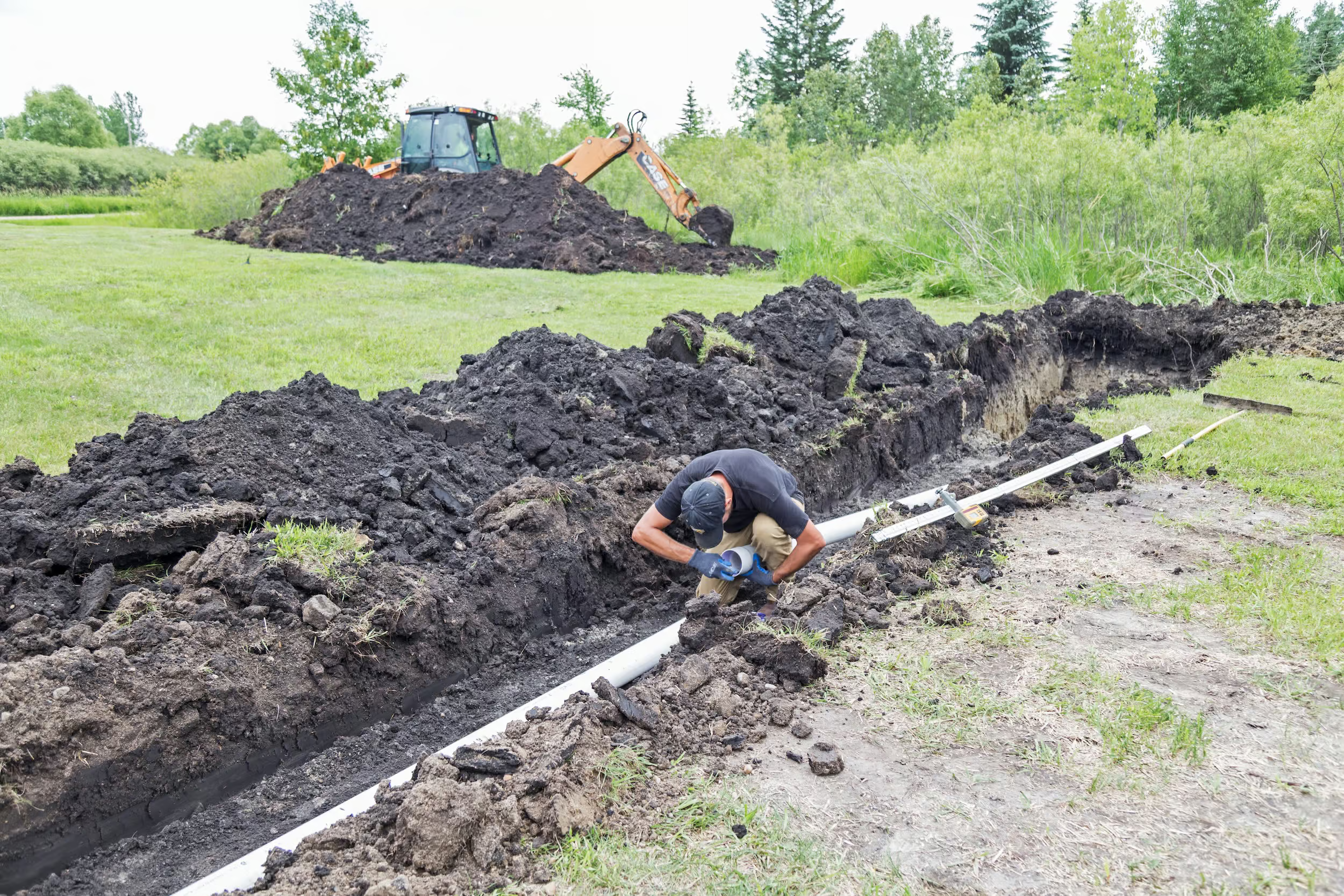
Our approach: We install downspout extensions and splash blocks that direct water at least 4 to 6 feet away from the foundation. We prefer above-ground extensions over buried downspout connections for most residential applications. Here is why: buried downspout pipes are out of sight and out of mind, which means when they clog (and they will, with Seattle's debris load), nobody notices until water backs up into the gutter and overflows at the house. An above-ground extension is visible, easy to inspect, easy to clear, and easy to reposition. It is not as aesthetically clean as a buried pipe, but it is more reliable.
For clients who prefer buried downspout connections (typically for aesthetic reasons or where foot traffic crosses the drainage path), we install solid (non-perforated) pipe at a proper grade with cleanout access points, so clogs can be flushed without digging up the line. We also ensure the buried line exits to an appropriate destination: a street storm drain, a dry well, or a pop-up emitter at a safe distance from the foundation.
How Much Do Gutters Cost in Seattle?
Pricing depends on the linear footage of your roofline, the material, the gutter size, the number of stories, the number of corners and downspouts, and site access. Here are honest ranges for the Seattle metro area.
| Service | Typical Range | Notes |
|---|---|---|
| Installation | ||
| Seamless aluminum gutter installation (5-inch) | $8–$14 /linear ft installed | Standard residential; includes hangers, downspouts, and sealant |
| Seamless aluminum gutter installation (6-inch) | $10–$18 /linear ft installed | Heavy-duty residential or commercial; larger downspouts |
| Steel gutter installation | $12–$20 /linear ft installed | Heavier gauge; recommended for high-impact areas |
| Copper gutter installation | $25–$50+ /linear ft installed | Premium; soldered joints; lifetime material |
| Gutter replacement (full home, typical) | $1,500–$5,000+ | Based on 100–200 linear ft; includes removal and haul-away |
| Cleaning & Repair | ||
| Gutter cleaning (single story) | $150–$250 | Scoop, flush, inspect; 2–3 hours depending on size |
| Gutter cleaning (two story) | $200–$350 | Requires taller ladder access; additional time |
| Gutter repair (per visit) | $150–$400 | Re-pitching, hanger replacement, joint sealing, minor patching |
| Old gutter removal and disposal | $2–$4 /linear ft | Included in replacement quotes; standalone if separate |
| Guards & Flashings | ||
| Gutter guard installation (micro-mesh) | $7–$15 /linear ft | Stainless steel micro-mesh; installed on existing gutters |
| Fascia board replacement | $8–$20 /linear ft | Depends on wood type and access; often combined with gutter work |
| Downspout replacement | $5–$12 /linear ft | Includes elbows and mounting brackets |
| Drip edge flashing (install/replace) | $4–$8 /linear ft | Critical for protecting fascia; included with new installs |
| Roof-to-wall flashing repair | $200–$600 per area | Step flashing, kick-out flashing; price depends on access |
Prices are estimates for greater Seattle and the Eastside as of 2026. Linear footage pricing includes materials, labor, hardware, and sealant. Multi-service discounts apply when combining installation with guards or fascia work. All quotes are free and on-site.
Aluminum gutters last 20 to 30 years. If yours are 20+ years old and you are spending $300+ per year on repairs and extra cleanings to keep them functional, a full replacement at $2,000 to $4,000 for a typical home pays for itself in 5 to 8 years and comes with modern seamless construction, proper pitch, and a fresh warranty.
Get your free gutter estimate.
We measure the roofline, inspect the fascia, and quote everything. No hidden fees.
Gutter Services Across Seattle and the Eastside
Every neighborhood in this metro area puts different demands on a gutter system. Capitol Hill, Wallingford, and Queen Anne have older homes (1910s–1940s) with original 4-inch or undersized 5-inch gutters, often hung with exposed spike-and-ferrule brackets that loosen over decades. Many of these homes need a full upgrade to modern seamless 5-inch or 6-inch systems with hidden hangers. Half-round gutters are common on Craftsman homes in these neighborhoods, and we match the style when replacing.
Ballard, Fremont, and Greenwood have heavy deciduous tree canopy (maples, alders) that drops massive leaf volume in October and November. Gutter cleaning frequency is highest in these neighborhoods, and gutter guards make the biggest practical difference here.
Kirkland, Bellevue, and Sammamish have larger homes on wooded lots, often surrounded by Douglas fir and Western Red Cedar. Pine needles are the primary debris challenge. The combination of longer rooflines, two-story access requirements, and year-round needle drop makes 6-inch gutters with micro-mesh guards the standard recommendation for these properties.
West Seattle, Beacon Hill, and Renton have homes on slopes where gutter overflow sends water directly downhill toward the foundation. Proper pitch, adequate downspout sizing, and downspout extensions are especially critical on sloped lots where gravity amplifies the damage from any overflow.
We serve: Seattle (all neighborhoods), Kirkland, Bellevue, Redmond, Sammamish, Issaquah, Renton, Bothell, Woodinville, Mercer Island, Shoreline, Lake Forest Park, and surrounding King County communities.
Frequently Asked Questions About Gutters in Seattle
How much does gutter installation cost in Seattle? +
How often should gutters be cleaned in Seattle? +
Is it normal for gutters to overflow in heavy rain? +
What size gutters do I need for my house? +
Should I replace 20-year-old gutters? +
Are gutter guards worth it in Seattle? +
What happens if you do not have gutters? +
What is the difference between K-style and half-round gutters? +
How long does gutter installation take? +
What gauge aluminum should I choose for gutters? +
When is the best time to install gutters? +
Why is water running behind my gutters? +
Can I divert my gutter water onto my neighbor property? +
Do you remove old gutters and haul them away? +
Do you repair fascia boards during gutter installation? +
Keep the Water Moving. That Is the Entire Job.
Gutters are not glamorous. Nobody invites friends over to admire their new seamless aluminum. But when they work, everything else on the house is protected: the fascia stays dry, the foundation stays stable, the basement stays dry, the landscaping stays intact, and you do not wake up at 2am to the sound of water pouring where it should not be. When gutters fail, the damage compounds fast and the repairs get expensive.
LandscapingFactory provides every gutter service Seattle homes need:
- Seamless gutter installation (aluminum, steel, copper)
- 5-inch and 6-inch K-style, fascia, and half-round gutters
- Full gutter replacement with old system removal and haul-away
- Gutter cleaning and downspout flushing (2–4x/year service plans)
- Gutter guard installation (stainless steel micro-mesh)
- Gutter repair (sagging, leaking, re-pitching, hanger replacement)
- Fascia board inspection and replacement
- Drip edge, roof-to-wall, and chimney flashing repair
- Downspout extensions and water direction solutions
- Emergency gutter repair (year-round)
Serving Seattle, Kirkland, Bellevue, Redmond, Sammamish, Issaquah, Renton, Bothell, Woodinville, Mercer Island, and all of King County.
Stop the overflow.
Schedule your free gutter estimate or cleaning today.
Get a Free Estimate
Let's chat about your needs and landscape dreams. Schedule a call below.
Other Services














Don't let the rain rule your property.
From roof cleaning to deep French drains, we manage the water so you don't have to.
Request a Free Drainage Assessment