You have tried everything. You reseeded in September. You aerated. You applied moss killer. You even roped off sections of the yard to let the grass recover. And by February, it looks exactly the same: moss, mud, bare patches, and a dog that brings a half pound of dirt inside every time the back door opens.
At some point, the math stops making sense. You are spending $1,000+ per year on lawn care for a yard that looks good for about six weeks in June and spends the other ten months fighting a climate it cannot win against. Some yards in Seattle are simply not built for natural grass. Too much shade from mature trees. Too much rain. Too much clay. Too much foot traffic from kids and pets. And no amount of aeration, lime, or reseeding will change the underlying conditions.
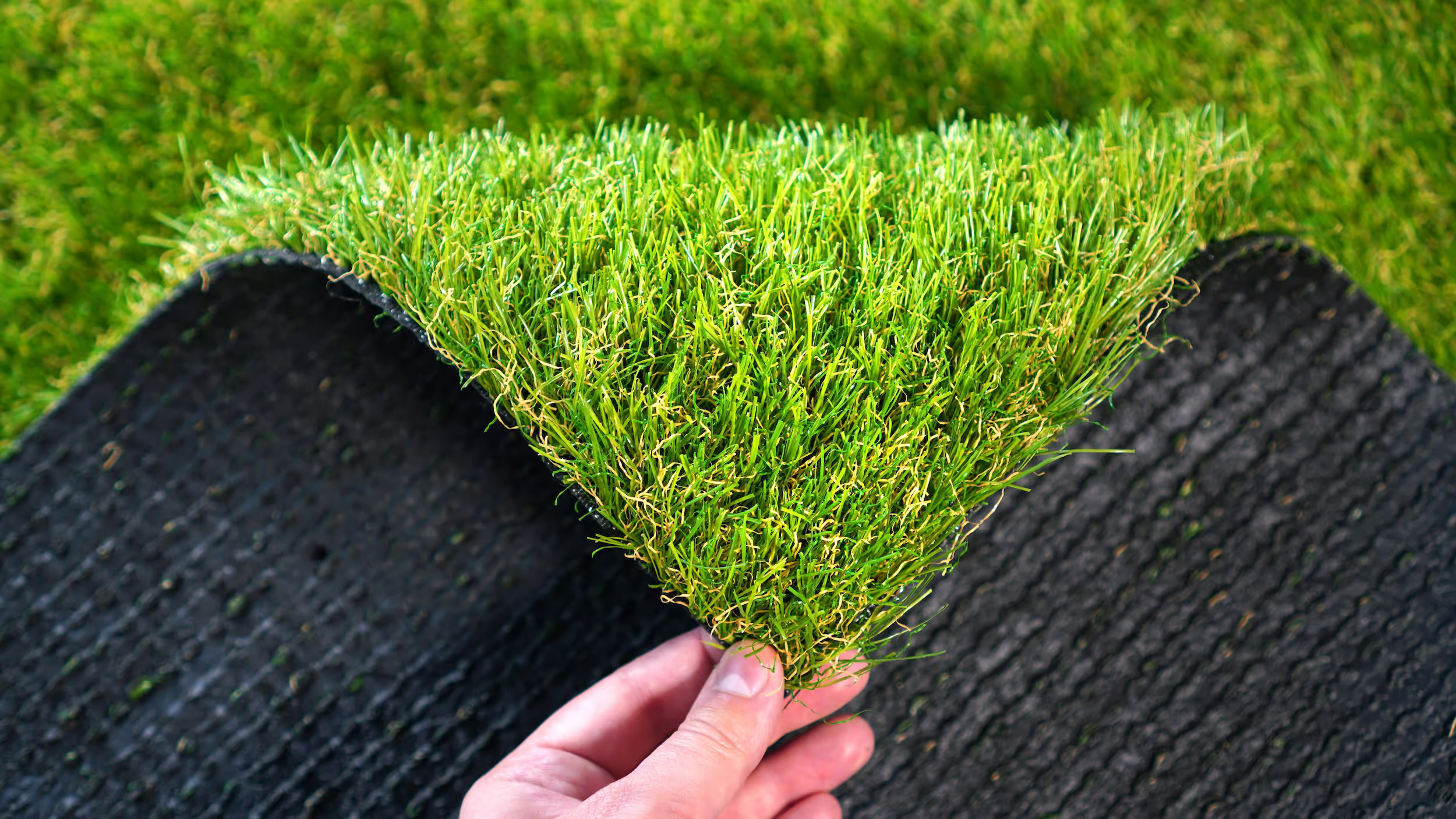
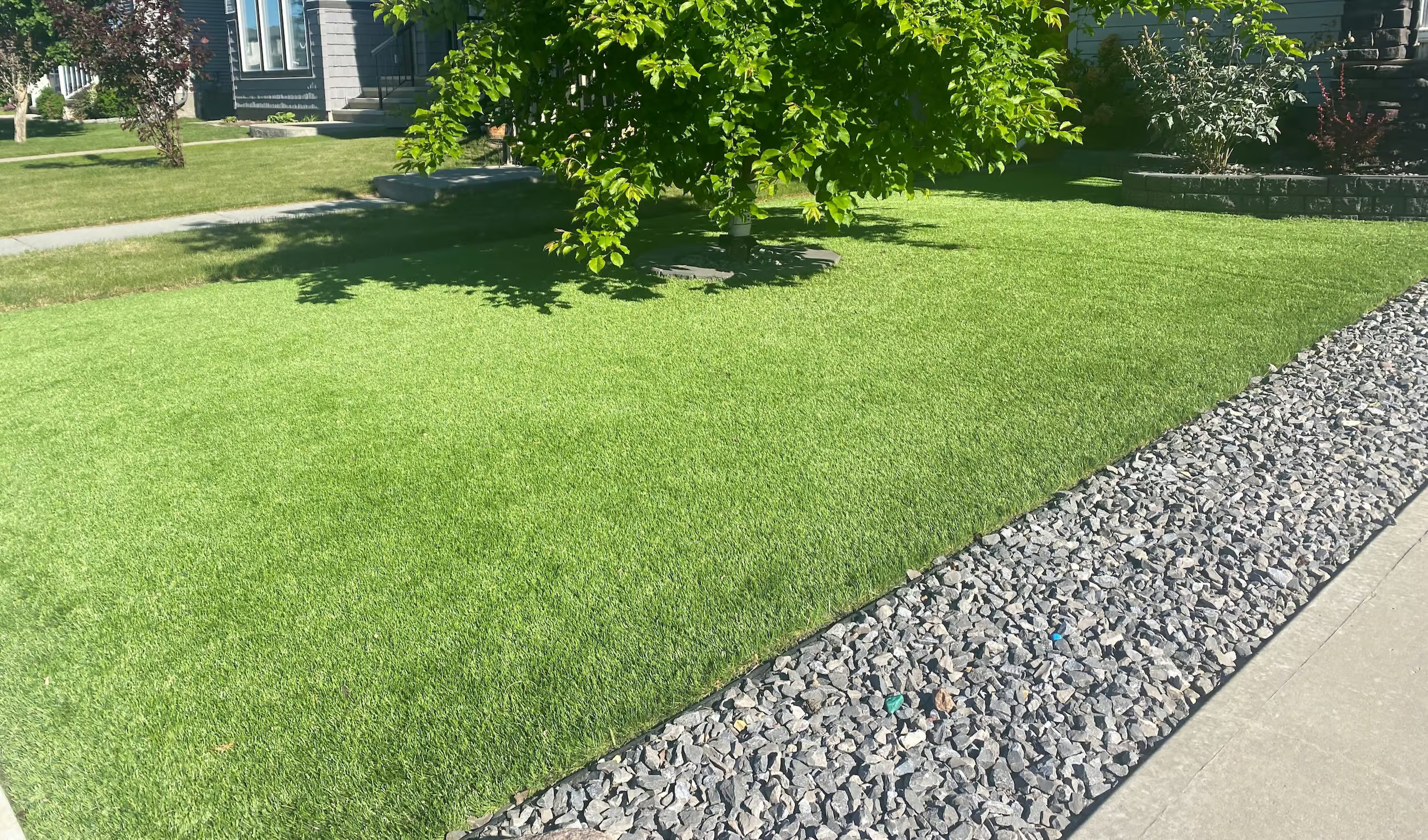
That is where synthetic turf makes sense. Not the shiny, plastic-looking stuff from the 1990s. Modern artificial grass looks and feels like a real Pacific Northwest lawn: multiple shades of green, a natural thatch layer, soft pile that kids and dogs can roll around on, and a surface that drains faster than natural soil ever could. No mowing. No moss. No mud. No watering. No seasonal die-off. Green and clean, 365 days a year.
At LandscapingFactory, we install synthetic turf across Seattle, Kirkland, Bellevue, and the Eastside. Pet areas, full lawn replacements, backyard putting greens, playground surfaces, and commercial applications. Every installation starts with a proper base system, engineered drainage, and safe, pet-friendly infill. We treat this like a construction project, not a carpet job.
Why Artificial Grass Makes Sense in Seattle
Natural grass fails in many Seattle yards for reasons that have nothing to do with how well you maintain it. The conditions are simply wrong: heavy shade from mature conifers, acidic soil that promotes moss over grass, clay subsoil that holds water and compacts, and a 9-month wet season that keeps the ground saturated. You can fight all of that with aeration, lime, overseeding, and fertilizer, and in many yards that works. But in yards with 60%+ shade, heavy pet traffic, or chronic drainage problems, artificial grass solves the problem permanently instead of managing it annually.
What switching eliminates: Weekly mowing ($40–$80/visit, 30+ visits/year). Annual aeration and overseeding ($250–$700). Moss treatments ($75–$200/application, 2–3x/year). Summer irrigation ($100–$300/month July through September). Fertilization ($50–$150/application, 3–4x/year). Spring and fall cleanups ($300–$800). Total annual natural lawn cost for many Seattle homeowners: $2,000 to $4,000+. Synthetic turf eliminates all of it.
What switching provides: A surface that looks green year-round, drains faster than natural soil, produces zero mud, requires no chemicals, needs no mowing or watering, and lasts 15 to 20 years with minimal maintenance. For pet owners, it means no more muddy paws tracked inside for ten months of the year.
What Goes Under Artificial Grass? (Our Base System)
Can you lay artificial grass on dirt? No. Laying turf directly on soil leads to wrinkles, sinking, drainage failure, weed penetration, and a surface that feels spongy and uneven within months. A synthetic lawn is only as good as the base it sits on. We treat every installation as a construction project with engineered layers.
Excavation and Clearing
We remove the existing sod, topsoil, and organic matter to a depth of 3 to 4 inches. All organic material must be removed because it decomposes over time, causing settling and unevenness. Excavated material is hauled away.
Geotextile Weed Barrier
We install commercial-grade non-woven geotextile fabric across the entire area. This separates the native soil from the base material, prevents weed growth from below, and provides an additional drainage layer. This is not the flimsy landscape fabric from the hardware store. It is engineered for load-bearing applications.
Structural Sub-Base (5/8-inch Crushed Rock)
We lay approximately 3 inches of 5/8-inch clean crushed rock. This large aggregate provides a solid, non-shifting foundation and allows heavy water to flow through. In Seattle's wet climate, this layer is what prevents standing water under the turf.
Leveling Layer (3/8-inch Crushed Rock)
On top of the structural base, we apply a layer of 3/8-inch clean crushed rock. This finer aggregate allows us to grade the surface perfectly smooth, ensuring the turf lays flat without bumps, dips, or low spots that would collect water.
Mechanical Compaction
We compact both layers with a plate compactor to 95%+ density. This prevents settling over time and creates a surface as solid and stable as a patio base. Without proper compaction, the turf will develop depressions and wrinkles within the first year.
Turf Installation, Seaming, and Securing
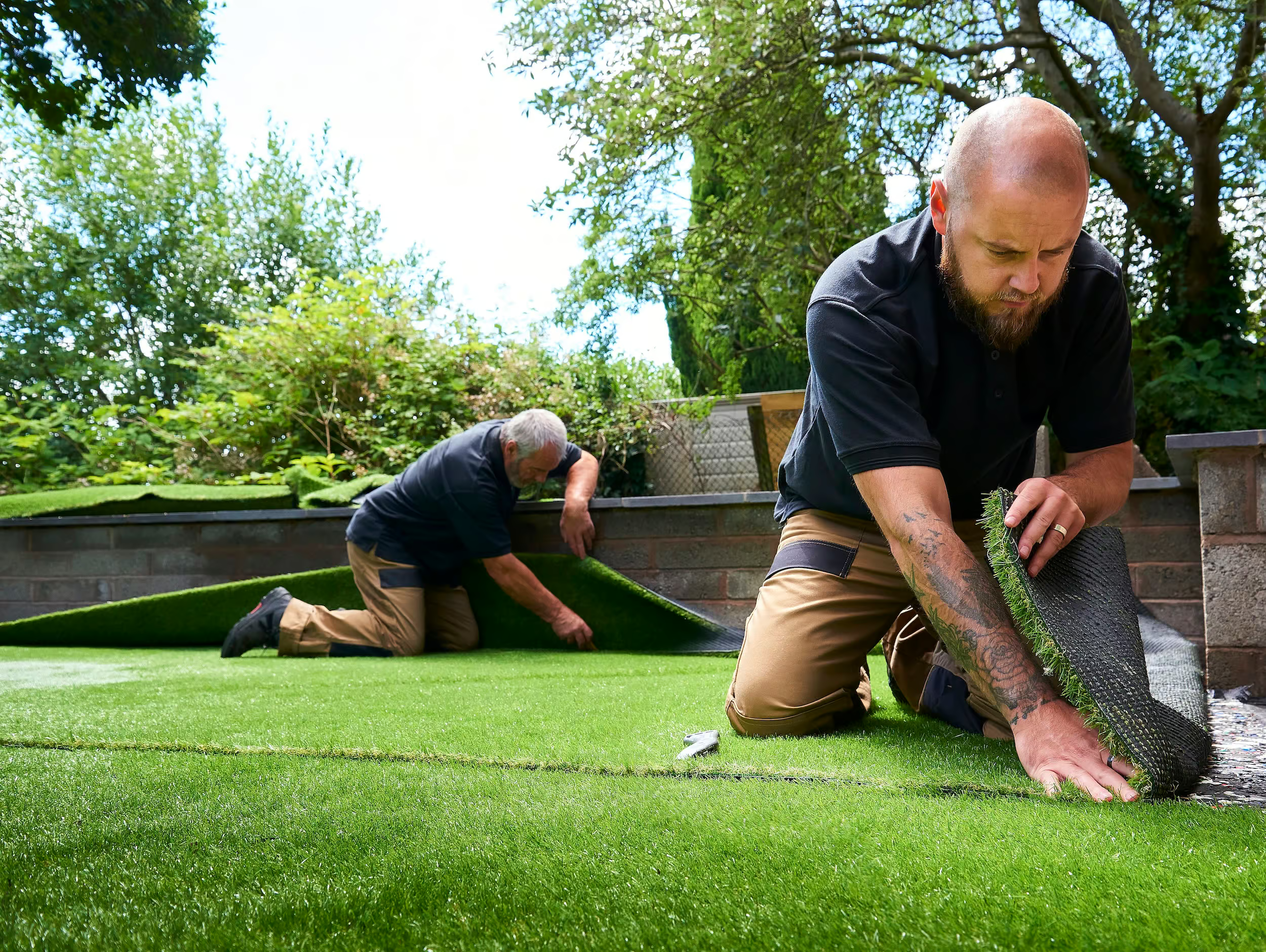
The synthetic turf is rolled out, cut to fit the exact shape of the area, seamed where multiple pieces meet (using seam tape and adhesive, never just overlapping), and secured at the perimeter with galvanized spikes or a bender board edge system. Infill is then applied and brushed into the fibers to weight the turf, support the blades, and provide cushion.
Want to see our base system in person?
We can show you completed installations near your neighborhood. Free on-site estimate.
Pet Turf: How We Engineer Drainage That Eliminates Odor
Roughly 80% of our artificial grass installations are for dog owners. The number one concern is always the same: will it smell? The honest answer is: it depends entirely on how the system is built. Cheap installations on sand or dirt bases trap urine and create unbearable odor within months. A properly engineered pet turf system flushes waste away and stays clean.
Here is what we do differently for pet installations:
Micro-perforated drainage pipe: We do not rely on gravity alone. We install high-efficiency micro-perforated drain pipes buried 4 inches below the primary gravel layer, running the length of the installation. These pipes capture liquids as they filter through the base and divert them to a drainage outlet. This means urine does not sit in the gravel. It leaves the system.
Clean crushed rock base (not sand): Sand and dirt hold moisture. They absorb urine, retain odor, and create a breeding ground for bacteria. Our clean crushed rock base allows liquids to flush through instantly and drain away. When it rains — which in Seattle is most of the time — the entire base gets a natural rinse cycle that sand simply cannot provide.
Permeable turf backing: Not all artificial grass has the same drainage rate. We use turf products with fully permeable backing that drains at 30+ inches per hour. Standard turf with hole-punched backing drains at 5 to 10 inches per hour. For pet areas, the higher drainage rate matters.
Antimicrobial infill: For pet installations, we use infill products with antimicrobial properties that inhibit bacteria growth between rinses. This is the layer that makes the biggest difference in long-term odor control.
Easy solid waste cleanup: We recommend shorter pile heights for primary pet areas (1 to 1.25 inches) because solid waste sits on top of the fibers and is easy to pick up. Taller, plusher turf looks more like a natural lawn but makes cleanup harder. We help you choose the right pile height based on how your dogs use the space.
If you have two or more dogs using the same area daily, we recommend adding a dedicated rinse-down schedule: a quick hose spray 2 to 3 times per week during dry weather. During the rainy season, nature handles it. For high-use areas, we can also install a dedicated hose bib near the turf for convenience. Enzymatic cleaner applied monthly breaks down any residual odor-causing bacteria.
Tired of muddy paws?
We design pet turf systems that drain, stay clean, and last. Free on-site quote.
Putting Greens: Custom Backyard Golf Installations
A backyard putting green is one of the most popular premium turf applications we install. Unlike lawn replacement turf, putting greens require a different product — shorter pile, firmer surface, consistent ball roll — and a different base engineering to create subtle contours and multiple pin positions.
We design the green layout with you, contour the base system for varied break and slope, and install short-pile putting turf (3/8 to 1/2 inch pile height) on a precision-graded base. Fringe areas and chipping zones use a slightly taller pile to replicate the experience of a real course. Hole cups are set into the surface with standard golf cup liners.
Putting greens can be any shape and size. Compact greens (200 to 400 square feet) fit easily in most Seattle backyards and provide more than enough variety for daily practice. Larger greens (600+ square feet) can accommodate multiple pin positions, fringe areas, and sand bunkers if desired.
Playground and Kids Turf: Safety, Cushion, and Fall Protection
For families with young children, artificial turf transforms a muddy or gravelly play area into a soft, clean surface that is usable year-round. But playground turf is not the same as lawn turf. It needs additional layers for impact absorption and fall protection.
Foam padding underlayment: Under playground turf, we install closed-cell foam padding between the compacted base and the turf surface. This padding provides impact absorption that can meet or exceed ASTM F1292 fall height requirements for residential play equipment. The thickness of the padding depends on the height of the equipment: swing sets, climbing structures, and play towers each have different requirements.
Non-toxic, non-abrasive infill: For playground installations, we use only infill products that are safe for direct skin contact and do not contain silica dust, crumb rubber, or materials that carry health warnings. Children play on the ground. They put their hands in their mouths. The infill must be safe for that level of contact.
Seamless, trip-free surface: We pay extra attention to seam placement and edge finishing on playground installations. Raised seams, curled edges, and uneven transitions are trip hazards for small children. Every seam is glued, taped, and inspected for flatness.
Need a safe, clean play surface for the kids?
We install playground turf with proper padding and safe infill. Free site assessment.
Turf Products: Face Weight, Pile Height, and How to Choose
Not all artificial grass looks or feels the same. The differences come down to a few measurable specifications, and choosing the right product for your application matters.
Pile height: This is how tall the grass blades are. Shorter pile (3/4 to 1.25 inches) is better for pet areas and high-traffic zones because it stays upright, drains faster, and is easier to clean. Taller pile (1.5 to 2.25 inches) looks more like a natural lawn and feels plusher underfoot, making it better for front yards and low-traffic landscape areas.
Face weight: This is the weight of fiber per square yard and indicates density. Higher face weight means more blades per area, a fuller look, and better durability. Premium landscape turf typically runs 60 to 80 ounces per square yard. Economy products are 40 to 50 ounces. You can feel the difference immediately.
Color blending: Modern turf uses multiple fiber colors in each product: field green, olive, lime, and brown thatch fibers blended together to replicate the natural color variation of a Pacific Northwest lawn. Single-color products look fake. Multi-tone products look real, especially from 10+ feet away.
UV stabilization: All quality turf products are treated with UV inhibitors that prevent fading from sun exposure. In Seattle, UV exposure is moderate, but cumulative. A properly UV-stabilized turf will hold its color for 15 to 20 years without significant fading.
We source from premium domestic manufacturers and select specific products for each application. We do not use a single one-size-fits-all turf. Pet areas get different products than front lawn replacements, and putting greens get entirely different material than either.
Infill and Safety: What We Use and What We Avoid
Infill is the material brushed into the turf fibers after installation. It serves three purposes: it weights the turf to keep it flat and stable, it supports the blades so they stand upright, and it provides cushion underfoot. The type of infill matters for health, safety, and long-term performance.
What we use: We use rounded silica-free sand and/or antimicrobial zeolite-based infill depending on the application. Zeolite is a natural mineral that absorbs ammonia from pet urine and inhibits bacterial growth. For playground applications, we use only infill products that are certified safe for direct skin contact and meet applicable safety standards.
What we avoid: We do not use crumb rubber (recycled tire material), which has been the subject of ongoing health concerns regarding chemical leaching and has been restricted in some jurisdictions. We do not use crystalline silica sand, which produces dust that is an inhalation concern. We do not use infill products that carry California Proposition 65 warnings.
Why this matters: Children and pets have direct, prolonged contact with artificial turf. They lie on it, roll in it, and put their hands (and paws) in their mouths. The infill is the material closest to that contact. Choosing safe, non-toxic infill is not a luxury. It is a requirement for any installation where kids or animals use the surface.
Every LandscapingFactory turf installation uses infill that is free of crumb rubber, free of crystalline silica dust, and free of Proposition 65 listed chemicals. We disclose exactly what infill we use on every project. If safety is your concern, ask us. We will tell you the product name, the manufacturer, and the safety data sheet.
Maintenance: How to Care for Synthetic Turf Long-Term
Synthetic turf is low maintenance, not zero maintenance. The base system and drainage do most of the work, but periodic care keeps the turf looking and performing its best over its 15 to 20 year lifespan.
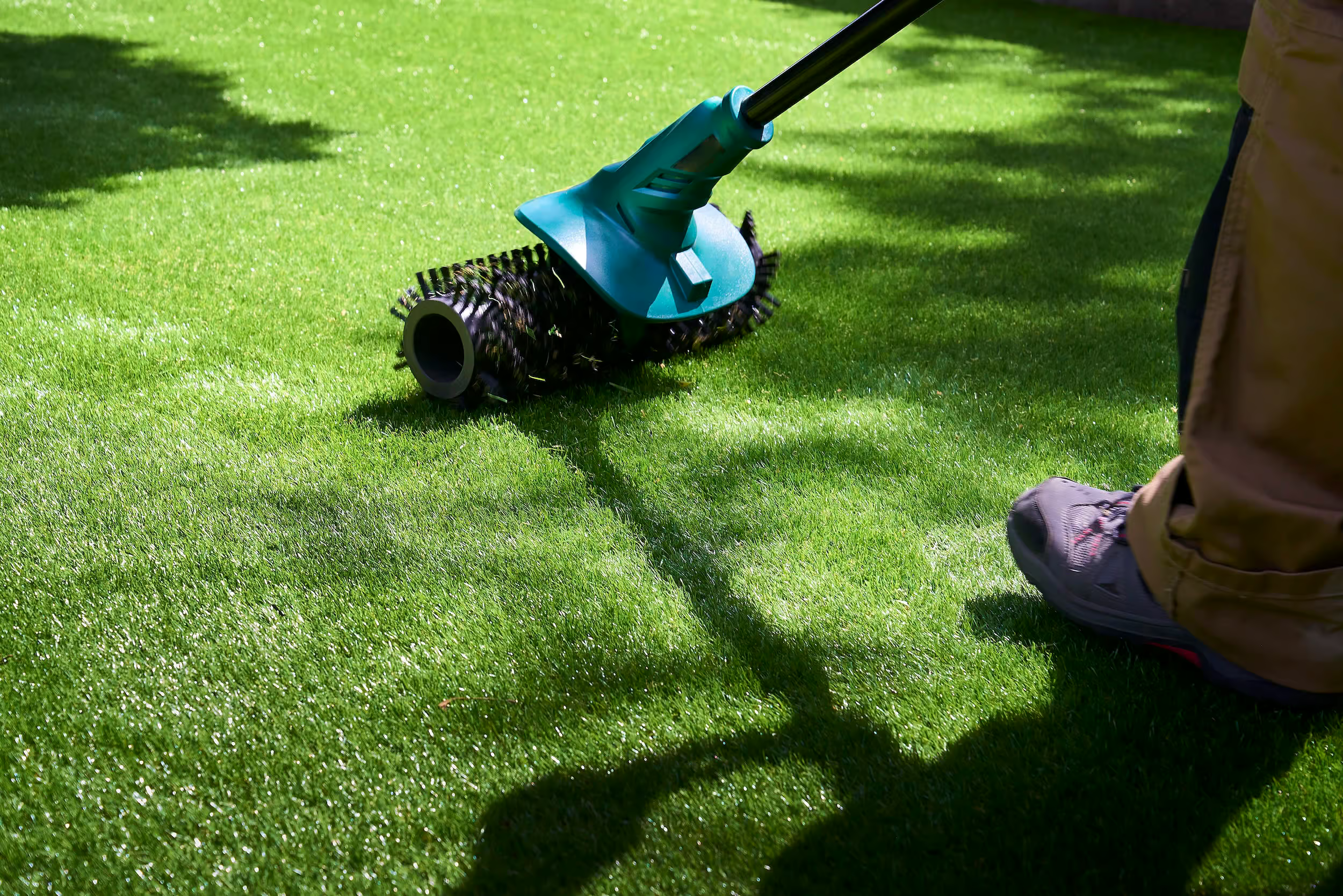
Brush the fibers: Over time, foot traffic and pet activity flatten the turf blades in high-use areas. Brushing with a stiff-bristle broom (not a metal rake) every few months restores the blade position and keeps the turf looking full.
Rinse pet areas: During dry spells, hose down pet areas 2 to 3 times per week to flush urine through the drainage system. During the rainy season, natural rainfall handles this.
Apply enzymatic cleaner monthly: For pet turf, a monthly application of enzymatic cleaner breaks down odor-causing bacteria that accumulate between rinses. Spray, let it sit for 15 minutes, rinse. This is the maintenance step that prevents long-term odor buildup.
Remove leaves and debris: Leaf litter, pine needles, and organic debris should be blown or raked off the surface regularly. Organic material sitting on the turf can decompose and create a thin layer that retains moisture and promotes weed seeds to sprout on the surface.
Top up infill: Infill can shift or compact over several years, especially in high-traffic areas. We recommend checking infill depth annually and adding a thin layer if needed. We offer infill top-up as a maintenance service.
Spot-treat surface weeds: Weeds cannot root through the base system, but wind-blown seeds can occasionally land on the turf surface and germinate in trapped debris. They pull out easily by hand because they have no deep root structure. A quick hand-pull once or twice a season is all that is needed.
Warning: Energy-Efficient Windows Can Melt Artificial Grass
This is something most turf installers will not tell you, but we believe in being upfront about potential problems before you invest.
Low-E (low-emissivity) energy-efficient windows, which are standard on most newer Seattle homes, can reflect and concentrate sunlight like a magnifying glass. If the reflected beam hits the same spot on your artificial turf consistently, it can generate enough heat to melt, warp, or permanently discolor the turf fibers. This is not a defect in the turf. It is a physics problem caused by the window coating.
How to prevent it: We assess window angles and sun exposure during the site visit. If reflective windows face the turf area, we recommend installing exterior window screens, window film, or awnings that diffuse the reflected light. This is a simple, inexpensive fix that protects a significant investment. We would rather tell you about this upfront than have you discover melted patches six months after installation.
If your home has double-pane Low-E windows (most homes built or remodeled after 2000 do), check the afternoon sun angle. Walk around the yard on a sunny afternoon and look for bright, concentrated light reflections on the ground. If you see them, those are the spots where turf can be damaged. We will identify these zones during our site assessment and recommend solutions before installation begins.
How Much Does Artificial Grass Cost in Seattle?
Pricing depends on the total square footage, the turf product selected, site access difficulty, excavation depth, slope complexity, and whether the project includes pet drainage engineering, putting green contouring, or playground padding. Here are honest ranges for the Seattle metro area.
| Application / Service | Typical Range | Notes |
|---|---|---|
| Full Installations | ||
| Standard landscape turf (lawn replacement) | $10–$18 /sqft installed | Includes excavation, base, turf, infill, and cleanup |
| Pet turf with engineered drainage | $12–$20 /sqft installed | Includes micro-perforated pipe system and antimicrobial infill |
| Putting green | $18–$28 /sqft installed | Precision grading, contoured base, short-pile putting turf |
| Playground turf with fall protection | $15–$25 /sqft installed | Includes foam padding and safety-rated infill |
| Commercial / large area turf | $8–$15 /sqft installed | Economies of scale; pricing decreases with larger projects |
| Materials & Extras | ||
| Turf material only (no install) | $3–$7 /sqft | Product cost only; quality and application dependent |
| Old lawn / sod removal | $1–$3 /sqft | Excavation and haul-away of existing organic material |
| Bender board / edge system | $5–$10 /linear ft | Aluminum or composite edging to secure turf perimeter |
| Infill top-up (maintenance) | $0.50–$1.50 /sqft | Annual or biannual service for high-traffic areas |
Prices are estimates for greater Seattle and the Eastside as of 2026. Square foot pricing includes all materials, labor, base system, infill, and cleanup. Site access, slope, and project complexity affect final cost. All quotes are free and on-site.
A 500 sqft pet turf installation at $14/sqft = $7,000 upfront. Annual natural lawn costs for the same area (mowing, moss, aeration, irrigation, fertilizer, cleanup) average $2,000 to $4,000 in Seattle. The turf pays for itself in 2 to 4 years and lasts 15 to 20 years with minimal maintenance. Over its lifetime, synthetic turf saves $20,000 to $50,000+ compared to natural lawn care for the same area.
Get your free artificial grass quote.
We measure, assess drainage, check windows, and quote every square foot.
Artificial Grass Installation Across Seattle and the Eastside
The yards that benefit most from synthetic turf in this metro area tend to share certain characteristics. Capitol Hill, Queen Anne, and Wallingford have small, heavily shaded yards under mature canopy where natural grass has never really worked. These tight urban lots are perfect for turf because the area is manageable, the shade problem is permanent, and the visual impact is immediate. Kirkland, Bellevue, and Sammamish have larger lots where pet areas and side yards are the primary turf zones while the rest of the lawn stays natural. Mercer Island has estate properties where putting greens and entertainment areas are popular applications. West Seattle and Beacon Hill have sloped lots that need drainage engineering built into the base system.
We also install turf in areas where moles, raccoons, and burrowing animals are a persistent problem. Synthetic turf on a crushed rock base is impenetrable to digging animals, which means no more torn-up lawns after overnight visits.
We serve: Seattle (all neighborhoods), Kirkland, Bellevue, Redmond, Sammamish, Issaquah, Renton, Bothell, Woodinville, Mercer Island, Shoreline, Lake Forest Park, and surrounding King County communities.
Frequently Asked Questions About Artificial Grass in Seattle
How much does artificial grass installation cost in Seattle? +
How long does artificial grass last? +
Does artificial grass smell with dogs? +
Does mold grow under artificial grass? +
Do weeds grow through artificial grass? +
Can artificial grass be installed on a slope? +
Is artificial grass safe for children? +
Can I install artificial grass myself? +
Does artificial grass get hot in summer? +
What happens to artificial grass in snow? +
How long does installation take? +
Can artificial grass be installed on concrete? +
Does artificial grass prevent moles and burrowing animals? +
Can energy-efficient windows damage artificial grass? +
Do you install artificial grass year-round in Seattle? +
Stop Fighting the Climate. Start Enjoying the Yard.
You have spent years trying to grow grass in conditions that do not support it. The moss keeps coming back. The mud never stops. The dog tracks it all inside. The lawn care bills add up to thousands every year for a yard that looks good for six weeks. At some point, the smartest move is to stop fighting and install a surface that was designed for how you actually use the space.
LandscapingFactory installs every type of synthetic turf Seattle properties need:
- Pet-friendly turf with engineered drainage and antimicrobial infill
- Full lawn replacement (front yard, back yard, side yard)
- Custom putting greens with contoured surfaces and fringe
- Playground turf with foam padding and fall protection
- Commercial and multi-family installations
- Turf on slopes, rooftops, and concrete surfaces
- Safe, non-toxic infill (no crumb rubber, no silica dust)
- Proper base systems with compacted crushed rock and weed barrier
- Window reflection assessment and prevention recommendations
- Old lawn removal and haul-away
Serving Seattle, Kirkland, Bellevue, Redmond, Sammamish, Issaquah, Renton, Bothell, Woodinville, Mercer Island, and all of King County.
Done with mud?
Request your free on-site estimate. We measure, assess drainage, check windows, and quote everything.
Get a Free Estimate
Let's chat about your needs and landscape dreams. Schedule a call below.
Other Services




Ready for a green lawn that never needs mowing?
Get the perfect solution for pets and rainy days. Don't settle for mud—upgrade to a professional synthetic surface.
Request a Free Synthetic Turf Quote