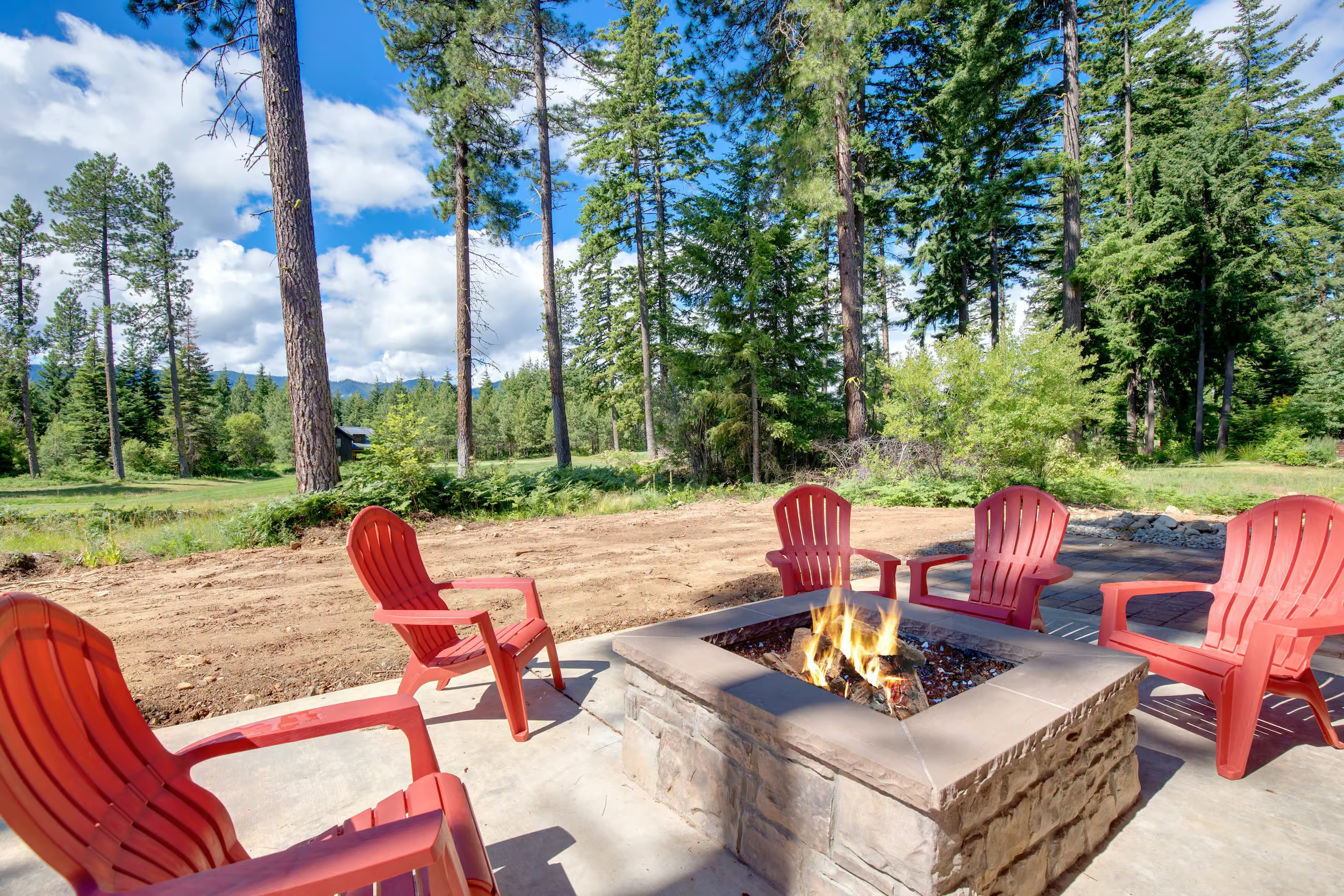
Seattle gets dark early and cold early. By October the sun sets before 6 PM. By December it sets before 4:30. The patio you used every weekend in July is empty now because nobody wants to sit outside in 42 degrees and darkness. So the outdoor living space you invested in sits dormant for five or six months until May.
A fire changes that equation. Not a portable steel bowl from the hardware store that rusts out in one season and tips over when someone bumps it. A permanent fire feature built into your patio: a stone fire pit with a wide sitting rim, a gas fire table that lights with a switch and works during burn bans, a smokeless insert that gives you the campfire experience without choking your neighbors, or a full outdoor fireplace with a chimney and mantel that turns the patio into a room.
The right fire feature extends your outdoor season by 3 to 4 months. You are not sitting outside in January (probably). But you are sitting outside in October, November, March, and April, which is four months of your patio that would otherwise go unused. A fire pit turns a 5-month outdoor season into an 8- or 9-month outdoor season.
At LandscapingFactory, we design and build every type of residential fire feature. Wood-burning stone fire pits, natural gas and propane fire pits, smokeless inserts with custom stone surrounds, outdoor fireplaces with masonry chimneys, and seating walls built around any of them. We handle the hardscape construction, coordinate licensed plumbing for gas lines, and manage permits when required.
Wood-Burning Fire Pits: The Campfire Experience, Built to Last
A wood-burning fire pit is the original outdoor gathering point. The sound of cracking wood, the smell of burning oak or cherry, and the radiant heat that warms your face on a cold night. Nothing replicates this. Gas comes close on heat but misses the sensory experience. Wood is the real thing.
We build permanent wood-burning fire pits using fire-rated materials designed to withstand the thermal shock of repeated high-temperature fires without cracking, spalling, or deteriorating. These are not stacked decorative stones from the garden center. The interior is lined with fire-rated brick or a steel fire ring that absorbs and radiates heat. The exterior is built from interlocking stone block, natural stone, or poured concrete that matches your patio and landscape.
Construction: Every fire pit we build starts with a compacted gravel base for drainage and stability. The fire-rated liner sits inside the stone structure with an air gap that allows the outer stone to stay cooler and prevents heat transfer from cracking the masonry. A steel fire ring protects the inner wall from direct flame contact.
Drainage: In Seattle, rain will fill any open fire pit. We install a gravel base under the pit floor so water drains down rather than pooling. This means you can light a fire the evening after a rainstorm instead of waiting two days for a flooded bowl to dry out.
The coping (rim): We build every fire pit with a wide, flat rim. The coping is functional: it acts as a footrest, an armrest, a place to set your drink, and a safety buffer between the flames and your chair. A narrow rim is a missed opportunity. We typically build the coping 12 to 18 inches wide — wide enough to sit on comfortably.
Pros: Highest radiant heat output. Full sensory experience (sound, smell, light). Less expensive to build than gas. No utility connection required. Cons: Produces smoke (neighbors may complain). Subject to air quality burn bans (cannot use during PSCAA burn bans). Requires wood supply and ash cleanup. Takes 15 to 20 minutes to build a full fire. Fire must be attended at all times. If you want the campfire experience and your neighbors are not close, wood-burning is the choice. If you are in a dense neighborhood or want hassle-free operation, see gas below.
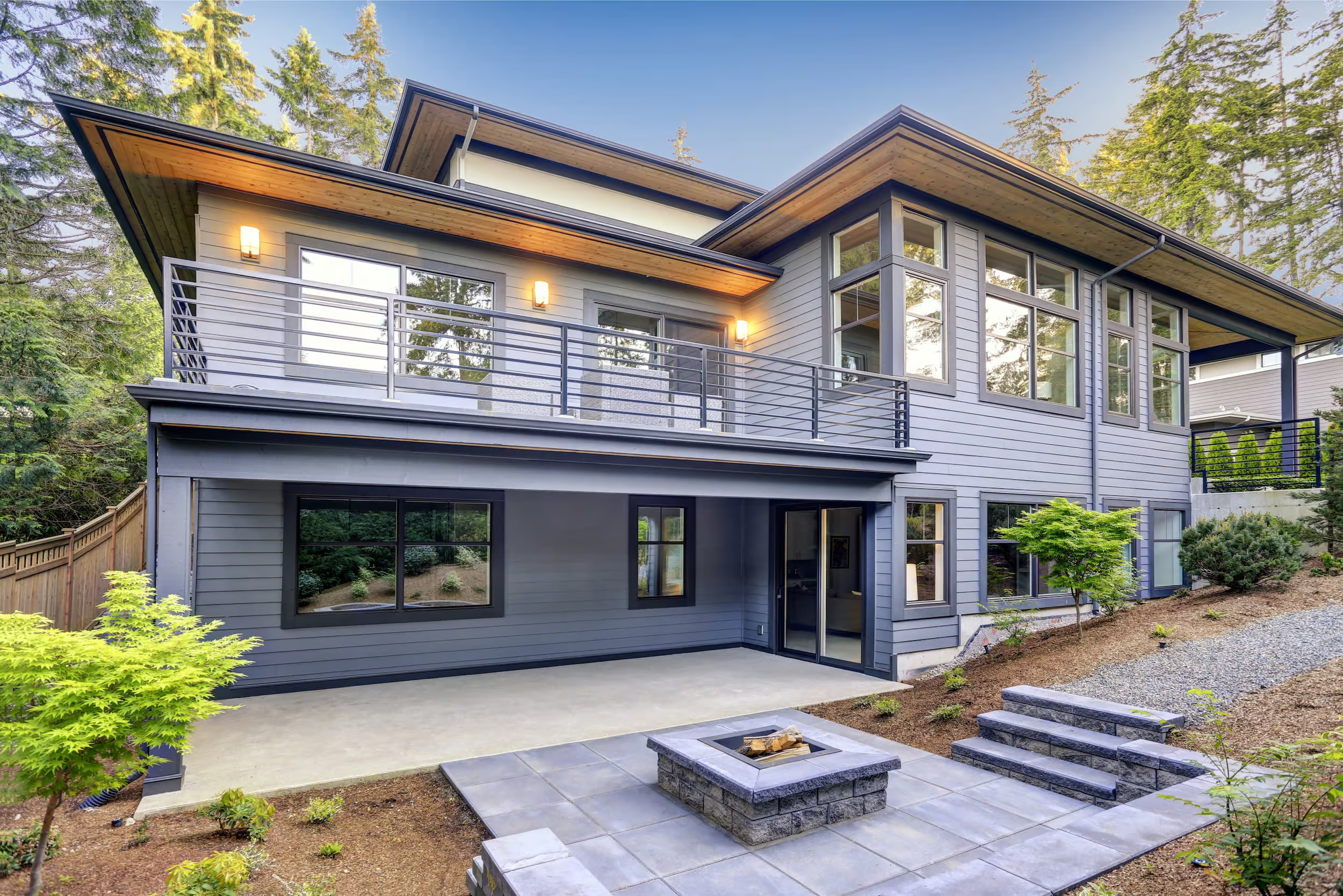
Want the real campfire?
We build permanent wood-burning fire pits with fire-rated liners and drainage for Seattle rain. Free design quote.
Gas Fire Pits and Fire Tables: Clean Heat, Burn-Ban Exempt
Gas fire pits are our top recommendation for residential neighborhoods in Seattle and the Eastside. The reason is simple: gas appliances are not classified as recreational fires under Puget Sound Clean Air Agency regulations, which means they are not subject to air quality burn bans. When the PSCAA calls a burn ban and every wood fire pit in the neighborhood goes dark, your gas fire pit still works.
Natural Gas vs. Propane
Natural gas (permanent line): A licensed plumber runs a gas line from your home's existing natural gas supply to the fire pit location. The line is buried underground (typically 18 to 24 inches deep) and connects to a shutoff valve at the pit. Once installed, you have unlimited fuel with no tanks to refill. Operating cost is approximately $0.50 to $1.50 per hour depending on BTU output and current gas rates.
Propane (tank): If running a gas line is not practical (too far from the house, no existing natural gas service, rental property), propane is the alternative. We design the fire pit or fire table with a concealed compartment that hides a standard 20-pound propane tank inside the base. The tank is invisible from the outside. A 20-pound tank provides approximately 8 to 10 hours of burn time at medium output. Operating cost is approximately $2 to $3 per hour.
Fire Pit vs. Fire Table
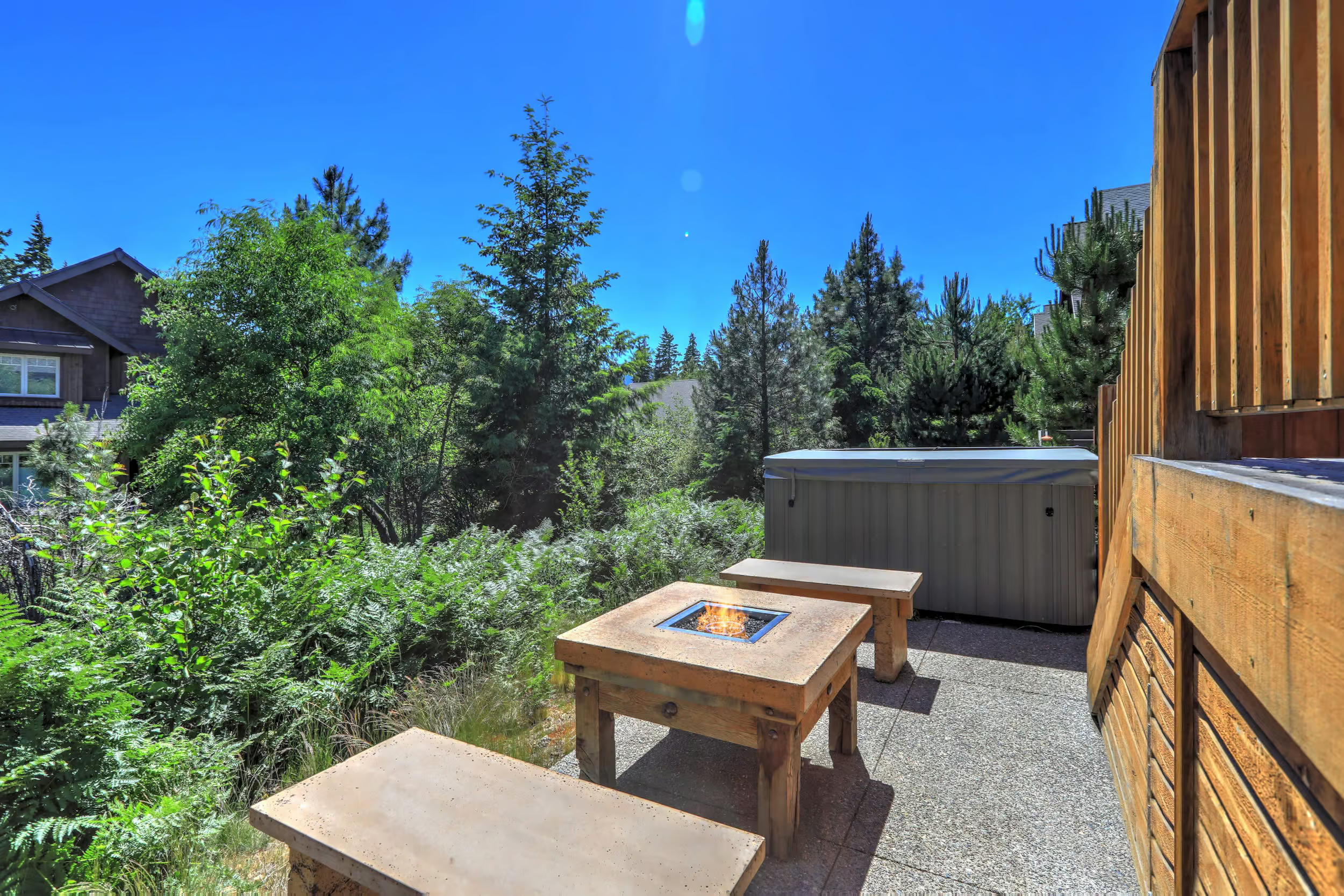
Fire pit: A round or square stone structure (typically 36 to 48 inches across) with a gas burner in the center, surrounded by fire glass, lava rock, or ceramic logs. Seating goes around all sides. Traditional gathering format.
Fire table: A rectangular structure (typically 48 to 72 inches long) with a linear burner running down the center. Seating goes along the long sides, like a dining table with fire in the middle. More contemporary look and works well with outdoor dining setups.
Ignition Types
Match light (manual): You turn a key valve and light the burner with a long lighter. Simple, reliable, no electricity needed. This is the most common residential option.
Electronic ignition: Push-button or remote-controlled spark ignition. More convenient but requires running an electrical line (low-voltage) to the fire pit, which adds to installation cost. Allows timer integration and remote control. Recommended for fire tables in outdoor kitchens or covered areas.
Gas fire pits work during burn bans when wood cannot.
Year-round heat, no smoke, no ash. Free design quote.
Smokeless Fire Pits: Real Wood, 70 Percent Less Smoke
Smokeless fire pits are the fastest-growing category in outdoor fire features. They use a double-wall airflow design that pulls air in through vents at the base, heats it between the inner and outer walls, and reintroduces hot air at the top of the burn chamber. This secondary combustion burns the smoke particles that a traditional fire pit would release into the air.
The result: you get a real wood fire (real flames, real cracking sound, real heat) with approximately 70 percent less smoke. Your clothes do not smell like a campfire. Your neighbors do not get smoked out. The fire burns hotter and more efficiently, which means less wood consumption and less ash.
How we build them: We install a commercial-grade stainless steel smokeless insert (such as Breeo or similar) and build a custom stone surround that matches your patio. The insert handles the combustion engineering. The surround provides the wide coping rim, the aesthetic integration with your hardscape, and a permanent, anchored structure that looks like a custom masonry fire pit from the outside.
Why not just buy a standalone smokeless pit? Standalone smokeless pits (Solo Stove, Breeo, etc.) are excellent products. But they sit on top of your patio, they are portable (meaning they can tip), they have no coping or rim for setting drinks or resting feet, and they look like a steel cylinder sitting on your stone patio. A custom surround gives you the smokeless performance inside a permanent structure that matches the rest of your outdoor space.
Smokeless fire pits still burn wood. They produce significantly less smoke but they are NOT exempt from air quality burn bans. Only gas appliances are exempt. If uninterrupted year-round use is your priority, gas is the only option. Smokeless is the best choice when you want the wood-fire experience with minimal smoke impact on neighbors.
Outdoor Fireplaces: The Vertical Statement Piece
An outdoor fireplace is a different category from a fire pit. It is a vertical masonry structure with a firebox, a chimney, and often a mantel, hearth, and flanking seating. It is the centerpiece of a fully developed outdoor living area.
Why choose a fireplace over a fire pit? Three reasons. First, the chimney directs smoke upward and away from the seating area rather than letting it drift into faces. Second, the masonry mass acts as a wind block that contains heat in the seating zone. Third, a fireplace is an architectural feature that defines the space visually, creating a focal wall the way an indoor fireplace defines a living room.
Foundation: Unlike a fire pit, an outdoor fireplace is heavy. Depending on size and material, a masonry fireplace can weigh 2,000 to 5,000+ pounds. It requires an engineered concrete footing poured below the frost line to prevent settling and shifting. In Seattle's soft, clay-heavy soil, this is critical.
Firebox: The interior of the firebox is lined with firebrick (refractory brick rated for direct flame contact). The firebox is sized for the type of fire: wood-burning boxes are larger to accommodate logs, gas fireboxes can be smaller because the burner is fixed.
Chimney and draft: The chimney must be tall enough to create proper draft. A general rule is that the chimney should be at least 2 feet taller than any structure within a 10-foot radius. We size and position the chimney so smoke drafts away from the house and neighboring properties.
Hearth: The hearth is the flat ledge extending from the base of the firebox. We build it wide enough (typically 18 to 24 inches deep) to serve as built-in seating for guests and as a safety buffer between the firebox opening and your patio furniture.
Mantel: A timber mantel above the firebox opening provides a shelf for decor, candles, or an outdoor-rated TV mount. We reinforce the masonry above the firebox with a steel lintel to support the mantel and the weight of whatever sits on it.
Gas or wood: Outdoor fireplaces can be built for either fuel. Gas-burning fireplaces with ceramic log sets provide the look of a wood fire without the smoke and ash. Wood-burning fireplaces deliver maximum heat output and the full sensory experience. We do not recommend building a fireplace for both fuels. Wood ash clogs gas burner ports and damages the ignition system.
An outdoor fireplace transforms your patio into a room.
Design consultation + foundation engineering + masonry construction. Free quote.
Seating Walls Around Fire Features
A seating wall is a low stone wall (typically 18 to 20 inches tall, 12 to 16 inches deep) built in a curve or semicircle around a fire pit. It eliminates the need for chairs, provides permanent seating for 6 to 12 people depending on length, and frames the fire feature as a defined gathering space.
Chairs around a fire pit create a cluttered, uneven circle. People scoot too close, trip over legs, knock chairs into each other. A seating wall creates a clean, consistent perimeter. Nobody's chair is in the wrong spot because there are no chairs. The wall doubles as a planter border or patio edge when the fire is not lit.
Construction: Seating walls are built from the same interlocking stone block, natural stone, or concrete used for retaining walls. We match the material and color to your fire pit and patio for a unified look. A cap stone on top provides a smooth, flat sitting surface. The wall sits on a compacted gravel base and is adhered with construction-grade masonry adhesive.
Integrated fire pit + seating wall + patio: The strongest project is one where the fire pit, seating wall, and patio are designed and built as a single integrated unit. The materials match, the elevation is coordinated, and the drainage works together. See our Paver Patios page and Retaining Walls page for more on how these elements combine.
Fire Feature on a Patio vs. a Deck: What Is Safe?
Paver or concrete patio (recommended): This is the safest and most versatile location for any fire feature. Pavers and concrete are non-combustible. You can build a wood-burning fire pit, a gas fire pit, a smokeless insert, or an outdoor fireplace directly on or integrated into a paver patio with no fire risk to the surface.
Wooden deck (caution required): Wood decks are combustible. We strongly recommend gas fire features only on wood decks. Gas produces no sparks, no embers, and no falling ash. A wood-burning fire pit on a deck throws sparks and embers that can ignite dry wood, and radiant heat from the base can char the decking underneath.
If a gas fire feature is placed on a deck, we install a non-combustible pad (stone, concrete, or metal) underneath and ensure manufacturer-specified clearances to railings, overhead structures, and combustible walls. If you have a composite deck, verify with the manufacturer that the material is rated for proximity to heat sources.
Use extreme caution with fire features under any overhead structure. A fire pit under a pergola or covered patio requires minimum overhead clearance (check manufacturer specs, typically 8 to 10+ feet). Gas fire features with controlled flame height are the safest option under a structure. Wood-burning fire features should generally NOT be placed under covered structures due to uncontrolled flame height and ember drift.
Seattle and King County Fire Pit Regulations
Getting the regulations right matters. Incorrect information about burn bans, clearances, and fire size limits circulates widely online. Here is what the Seattle Fire Code, King County Fire Marshal, and Puget Sound Clean Air Agency actually require.
Recreational Fire Rules (Wood-Burning Fire Pits)
Under Seattle Fire Code and King County regulations, a fire in a fire pit using charcoal, seasoned dry firewood, or manufactured firelogs is classified as a "recreational fire." Recreational fires are allowed on private residential property subject to the following rules:
Size limit: The fire must not exceed 3 feet in diameter and 2 feet in height.
Clearance from structures: The fire must be at least 25 feet from any structure (house, garage, fence, shed, deck) when built directly on the ground. Portable fire pits in approved containers may have reduced clearance requirements.
Vegetation clearance: The fire must be in a clear spot at least 10 feet from vegetation in all horizontal directions. Overhanging branches must be at least 20 feet above the flames.
Approved container: The fire must be in a metal or concrete fire pit. This includes professionally built masonry fire pits, manufactured steel fire bowls, and similar approved containers.
Fuel restrictions: Only seasoned dry firewood, charcoal briquets, or manufactured firelogs. It is illegal to burn trash, yard waste, construction lumber, painted wood, or any other material.
Attended at all times: An alert person capable of extinguishing the fire must be present at all times. Extinguishing equipment must be immediately available: a connected and charged garden hose, or a shovel and a 5-gallon bucket of water.
Neighbor nuisance clause: If smoke from your fire bothers your neighbors, damages their property, or otherwise causes a nuisance, you must extinguish the fire immediately. Violations can result in fines starting at $2,000 from the Seattle Fire Department.
Burn Bans: Two Different Systems
There are TWO separate burn ban systems in King County, issued by different agencies for different reasons:
1. Air quality burn bans (issued by Puget Sound Clean Air Agency): Called when air pollution levels rise to unhealthy levels, typically during cold, stagnant weather in fall and winter. Air quality burn bans prohibit ALL recreational wood fires, including fire pits. No exceptions.
2. Fire safety burn bans (issued by King County Fire Marshal): Called during dry conditions that heighten wildfire risk, typically in summer. Stage 1 fire safety burn bans restrict yard debris burning but generally still allow recreational fires in approved containers with the rules listed above. Stage 2 fire safety bans may further restrict recreational fires. Check with your local fire district.
Gas fire pits (natural gas and propane) are gas appliances, not recreational fires. They are not subject to air quality burn bans or fire safety burn bans because they do not produce the wood smoke or spark hazards that these bans target. This is the single strongest argument for gas: when every wood fire in the neighborhood is banned, your gas fire pit still works.
Permits
Gas line: Running a natural gas line from your house to a fire pit requires a mechanical permit and must be performed by a licensed plumber. We coordinate this permitting and subcontract to a licensed plumber.
Outdoor fireplace (masonry): If the structure exceeds a certain height (typically 6 feet) or includes a chimney, a structural or building permit may be required. We handle the permit application process.
Standard fire pit (no gas): A wood-burning fire pit built on a patio with no gas connection typically does not require a permit, but regulations vary by jurisdiction. We verify local requirements for every project.
Materials: What Your Fire Feature Should Be Made Of
The material you choose affects durability, appearance, cost, and how well the fire pit handles Seattle's freeze-thaw cycles and constant rain.
| Material | Pros | Cons | Lifespan |
|---|---|---|---|
| Interlocking concrete block | Affordable, consistent color/shape, easy to match to paver patio | Can crack in extreme freeze-thaw if not fire-rated; may discolor near firebox | 15–25+ years |
| Natural stone (basalt, granite, slate) | Beautiful unique appearance, extremely durable, handles heat well | Heavier, irregular shapes require skilled mason, higher cost | 25+ years |
| Firebrick (refractory) | Designed for direct flame contact, absorbs and radiates heat, withstands thermal shock | Used for interior lining only (not decorative exterior); needs exterior cladding | 20+ years |
| Poured concrete | Seamless modern look, can be colored/stamped/textured, strong | Requires forms, longer construction time, may crack if not reinforced | 20+ years |
| Stainless steel (insert/ring) | Corrosion resistant, lightweight, excellent for smokeless inserts | Industrial look if exposed (usually clad with stone surround) | 15–20+ years |
| Copper | Develops green patina, does not rust, handles moisture perfectly, premium look | Expensive, soft metal (dents), requires thicker gauge for durability | 25+ years |
Fire Media: What Goes Inside the Fire Pit
Lava rock: Traditional, rustic look. Lightweight volcanic stone that retains and radiates heat well. The most affordable option. Does not need cleaning. Replace every 2 to 3 years as it breaks down.
Fire glass (tempered): Modern, reflective look. Comes in many colors (clear, blue, copper, black). Creates a shimmering effect when flames dance through it. Wash with water and vinegar if it dulls.
Ceramic logs and shapes: Designed to look like real wood logs, embers, or geometric shapes. Gas-only. Provide a realistic fireplace appearance in a gas fire pit. Do not use with wood-burning pits.
River rocks, gravel, and landscape stones can contain trapped moisture inside their pores. When heated, the water turns to steam and expands rapidly. The rock explodes. This is not a theoretical risk. It happens. Always use fire-rated media: lava rock, tempered fire glass, or ceramic products specifically manufactured for fire pit use.
Size Guide: Dimensions, BTU, and Seating Clearance
Fire Pit Dimensions
| Size (Inner Diameter) | Seats | Best For | Notes |
|---|---|---|---|
| 24–30 inches | 2–4 | Small patio, intimate setting, couples | Compact; good for tight spaces |
| 36 inches (most popular) | 4–6 | Standard backyard gathering, family use | Most common residential size; fits a 12-foot patio diameter |
| 42–48 inches | 6–8 | Larger patios, entertaining | Needs 14–16 foot patio diameter minimum |
| 60+ inches | 8–12 | Large entertaining area, estate properties | Check local fire code: fire inside must not exceed 3 feet |
Standard fire pit height is 12 to 14 inches for seated use (chair height) or 18 to 20 inches for seating wall height (bench height). Allow at least 3 to 4 feet from the edge of the fire pit to the edge of chairs or seating wall.
BTU Output (Gas Fire Pits)
40,000 BTU: Small to medium fire pit. Adequate for ambiance and light warmth in a sheltered area. Standard 1/2-inch gas line is usually sufficient.
60,000–80,000 BTU: Medium to large fire pit. Good warmth for 4 to 8 people in an open area. May require 3/4-inch gas line depending on distance from source.
100,000+ BTU: Large fire table or high-heat feature. Serious warmth. Requires 3/4-inch or larger gas line and adequate gas meter capacity. Verify with your plumber.
Gas line sizing matters: If the gas line supplying the fire pit is undersized for the BTU rating of the burner, you get a weak flame, a whistling noise from the valve, and incomplete combustion. We size every gas line to deliver full rated BTU to the burner.
How Much Does a Fire Pit or Outdoor Fireplace Cost in Seattle?
Every fire feature is custom-built to fit your patio, your space, and your material preference. Here are honest price ranges for the Seattle metro area.
| Fire Feature / Service | Typical Range | What Is Included |
|---|---|---|
| Fire Pits | ||
| Wood-burning stone fire pit (36-inch) | $1,500–$3,500 | Gravel base, fire-rated liner, stone block exterior, coping/rim, drainage |
| Wood-burning fire pit (48-inch) | $2,500–$5,000 | Larger structure, wider coping, more material, same construction quality |
| Gas fire pit (natural gas, installed) | $3,500–$8,000 | Fire pit construction + gas line trenching + licensed plumber + burner + ignition + media |
| Gas fire table (rectangular, natural gas) | $4,000–$10,000 | Linear burner, concealed plumbing, fire glass, wider structure, more material |
| Propane fire pit (concealed tank) | $2,500–$5,500 | Fire pit construction + burner + ignition + concealed tank compartment |
| Smokeless insert + custom stone surround | $3,000–$6,000 | Breeo or similar insert + custom stone exterior + coping + base prep |
| Fireplaces | ||
| Outdoor fireplace (prefab insert + stone) | $5,000–$12,000 | Prefab firebox + stone/block surround + chimney + hearth |
| Outdoor fireplace (full custom masonry) | $8,000–$20,000+ | Engineered footing + firebrick firebox + masonry chimney + hearth + mantel |
| Add-Ons | ||
| Seating wall (per linear foot) | $40–$100/linear ft | Matching stone block, cap stone, gravel base, adhesive |
| Fire pit + seating wall package | $3,000–$8,000 | 36–48 inch fire pit + 10–15 linear feet of curved seating wall |
| Gas line (trenching + connection) | $500–$2,000 | Licensed plumber, trenching, pipe, shutoff valve, connection, permit |
| Electronic ignition upgrade | $400–$1,200 | Ignition module, wiring, switch or remote, installation |
| Fire glass media | $10–$25/pound | Tempered fire glass; typical pit needs 20–40 pounds |
| Lava rock media | $3–$8/pound | Volcanic lava rock; typical pit needs 15–30 pounds |
| Wind guard (glass) | $100–$400 | Tempered glass panel; sized to fit pit opening |
Prices are estimates for greater Seattle and the Eastside as of 2026. Material choice, site conditions, gas line distance, and design complexity affect final cost. Gas fire pit pricing includes licensed plumber coordination. All quotes are free and on-site.
The most common fire feature project is a 36-inch gas fire pit built into a new paver patio with a curved seating wall. Typical total cost for the complete project (patio + fire pit + seating wall + gas line): $8,000 to $18,000 depending on patio size and material. Building the fire pit at the same time as the patio is significantly more cost-effective than adding one later because the base prep, drainage, and material matching happen in one mobilization.
Get your fire feature quote.
We design it, build it, run the gas line, and handle permits. Free on-site consultation.
Fire Features Across Seattle and the Eastside
Capitol Hill, Queen Anne, and Wallingford have older homes on tighter lots where the 25-foot clearance rule for wood-burning fire pits can be difficult to meet. Many of these properties are better suited for gas fire pits, which have reduced clearance requirements based on manufacturer specs. The compact patios and courtyards in these neighborhoods are ideal for 30 to 36 inch gas fire pits with fire glass.
West Seattle and Magnolia have hillside properties with view decks and elevated patios. Fire features on these properties enhance the sunset-watching experience. We recommend gas fire tables on decks (with non-combustible pads) and stone fire pits on ground-level patios where clearance is available.
Kirkland, Bellevue, Redmond, and Sammamish have larger lots with more space for full-scale fire features. These are our most common locations for outdoor fireplaces with seating walls and integrated paver patios. The larger lots meet the 25-foot clearance for wood-burning easily, giving homeowners the full range of fuel options.
Ballard, Fremont, and Greenwood have neighborly density that makes smoke a real consideration. Smokeless inserts and gas fire pits are the best choices for these neighborhoods. A gas fire pit that produces zero smoke and works during burn bans is the neighborhood-friendly option.
We serve: Seattle (all neighborhoods), Kirkland, Bellevue, Redmond, Sammamish, Issaquah, Renton, Bothell, Woodinville, Mercer Island, Shoreline, Lake Forest Park, and surrounding King County communities.
Frequently Asked Questions About Fire Pits and Outdoor Fireplaces in Seattle
How much does it cost to build a fire pit? +
How far does a fire pit need to be from a house in Seattle? +
Can I use my fire pit during a burn ban? +
Is a gas or wood fire pit better? +
What is a smokeless fire pit? +
Do fire pits add value to a home? +
Can I put a fire pit on my wood deck? +
What size fire pit do I need? +
How much does it cost to run a gas fire pit? +
Do I need a permit for a fire pit in Seattle? +
Can I use regular rocks in my fire pit? +
Why does my gas fire pit whistle? +
What is the best material for a fire pit in Seattle? +
How long does it take to build a fire pit? +
Do I need a glass wind guard on my fire pit? +
The Patio Is Already There. The Fire Feature Makes It a Destination.
Without fire, the patio is a surface. With fire, it is the place where everyone gathers. October does not mean going inside. It means lighting the fire pit, pulling up a chair, and staying outside for another three months. That is what a fire feature actually does: it converts a seasonal patio into a year-round room.
LandscapingFactory builds every type of residential fire feature for Seattle homes:
- Wood-burning stone fire pits with fire-rated liners and drainage
- Natural gas fire pits with buried gas line and licensed plumber
- Propane fire pits with concealed tank compartments
- Gas fire tables (rectangular, linear burner) for outdoor dining
- Smokeless fire pits (Breeo inserts with custom stone surrounds)
- Outdoor fireplaces with engineered foundations, firebrick, and chimneys
- Seating walls in matching stone (curved, straight, or L-shaped)
- Fire glass, lava rock, ceramic logs, and wind guards
- Electronic ignition, remote control, and smart timer integration
- Permit coordination and licensed plumber for gas work
Serving Seattle, Kirkland, Bellevue, Redmond, Sammamish, Issaquah, Renton, Bothell, Woodinville, Mercer Island, and all of King County.
Design your fire feature.
Free on-site consultation. We build it, run the gas, handle the permits.
Get a Free Estimate
Let's chat about your needs and landscape dreams. Schedule a call below.
Other Services











Bring the warmth of a lodge to your own backyard.
From modern gas tables to majestic stone fireplaces, we build the gathering spot your family needs.
Request a Fire Feature Design Consultation