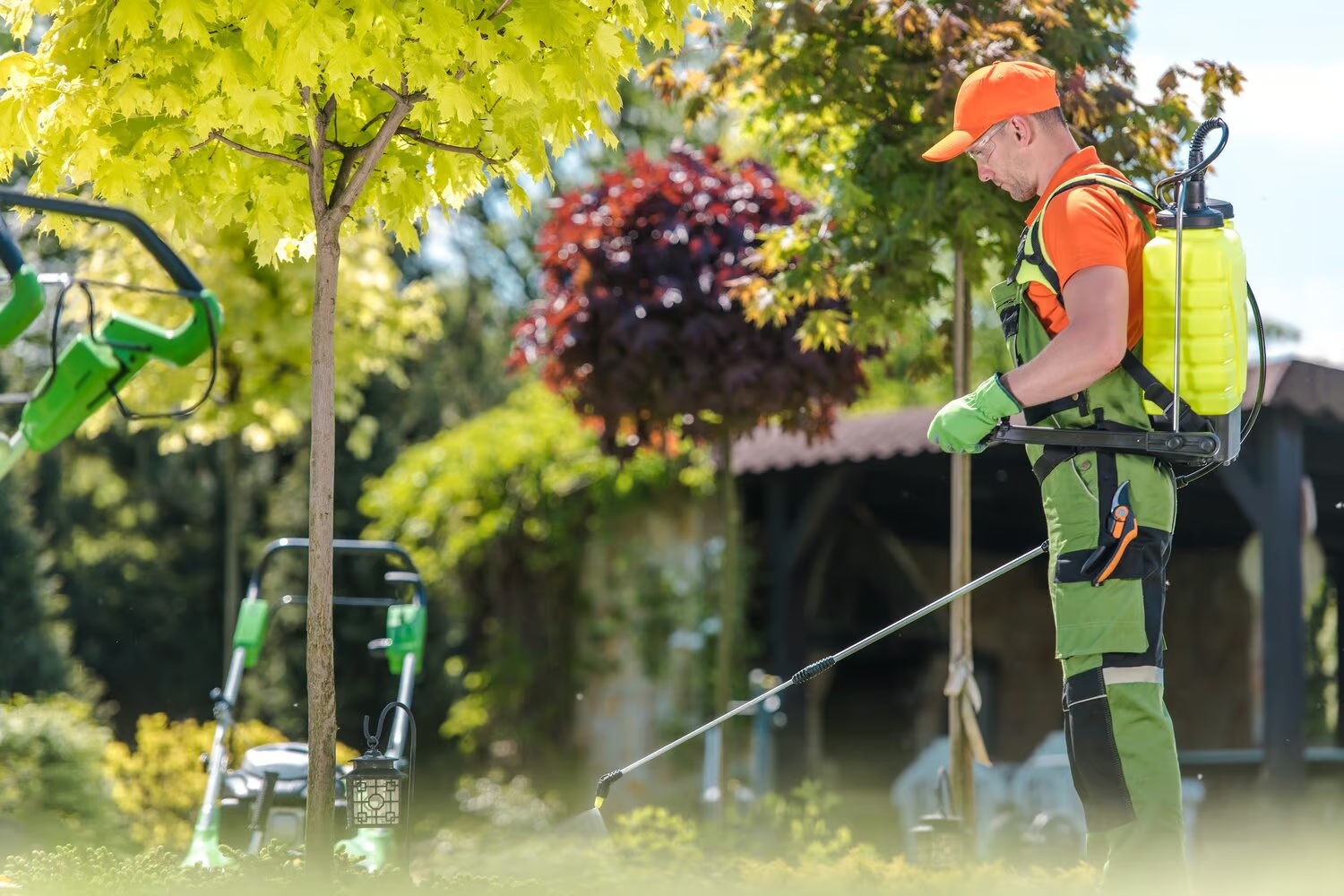
You have seen the "mow and blow" crews. They show up on a random day, scalp the lawn to two inches, skip the edges, leave clippings on the driveway, and forget to close the gate. Your dog gets out. Your lawn turns brown. And next week they might not show up at all.
That is not lawn care. That is lawn damage on a schedule.
At LandscapingFactory, weekly maintenance is a property management system with protocols. Every visit follows the same checklist. Mowing height is adjusted for the season. Edges are cut with a metal blade, not a string trimmer. Hard surfaces are blown clean. And every gate is checked twice before we leave, because your dog's safety is not something we take casually.
Beyond weekly visits, we manage the health of your lawn through the year: aeration in spring or fall to break up Seattle's compacted clay soil, dethatching to remove the dead layer that smothers new growth, overseeding to fill in bare and thin patches, fertilization to feed the turf through our long growing season, and weed control to keep everything looking sharp.
What Every Weekly Visit Includes
Our weekly maintenance is not a basic mow. Every visit follows a full property checklist, every week, regardless of conditions.
Precision mowing: We use commercial-grade mowers with freshly sharpened blades. Dull blades tear grass instead of cutting it, creating ragged brown tips and opening the plant to disease. We sharpen blades on a regular rotation to ensure a clean cut every visit.
Hard edging: We cut a vertical trench along sidewalks, driveways, and patio borders using a metal blade edger. This creates a crisp, defined line between grass and hardscape that string trimmers cannot replicate. String trimmers round the edge and create a sloped transition. Metal blade edging creates a 90-degree vertical separation that looks manicured and stays sharp between visits.
Bed maintenance: We edge along garden bed borders to keep grass from creeping into the mulch. We pull visible weeds from bed edges during each visit. This prevents beds from looking neglected between visits.
String trimming: We trim around every obstacle the mower cannot reach: fence lines, tree bases, mailbox posts, utility boxes, planting beds, retaining walls. No tufts left behind.
Hard surface blow-off: Before we leave, every hard surface (driveway, sidewalk, patio, deck, front steps) is blown clean of clippings and debris. We do not leave grass on your concrete.
Clipping management: In normal conditions, we mulch clippings back into the lawn. Mulched clippings decompose and return nitrogen to the soil, reducing fertilizer needs. If the grass is tall or wet and mulching would leave clumps, we bag and remove the clippings to prevent them from smothering the turf.
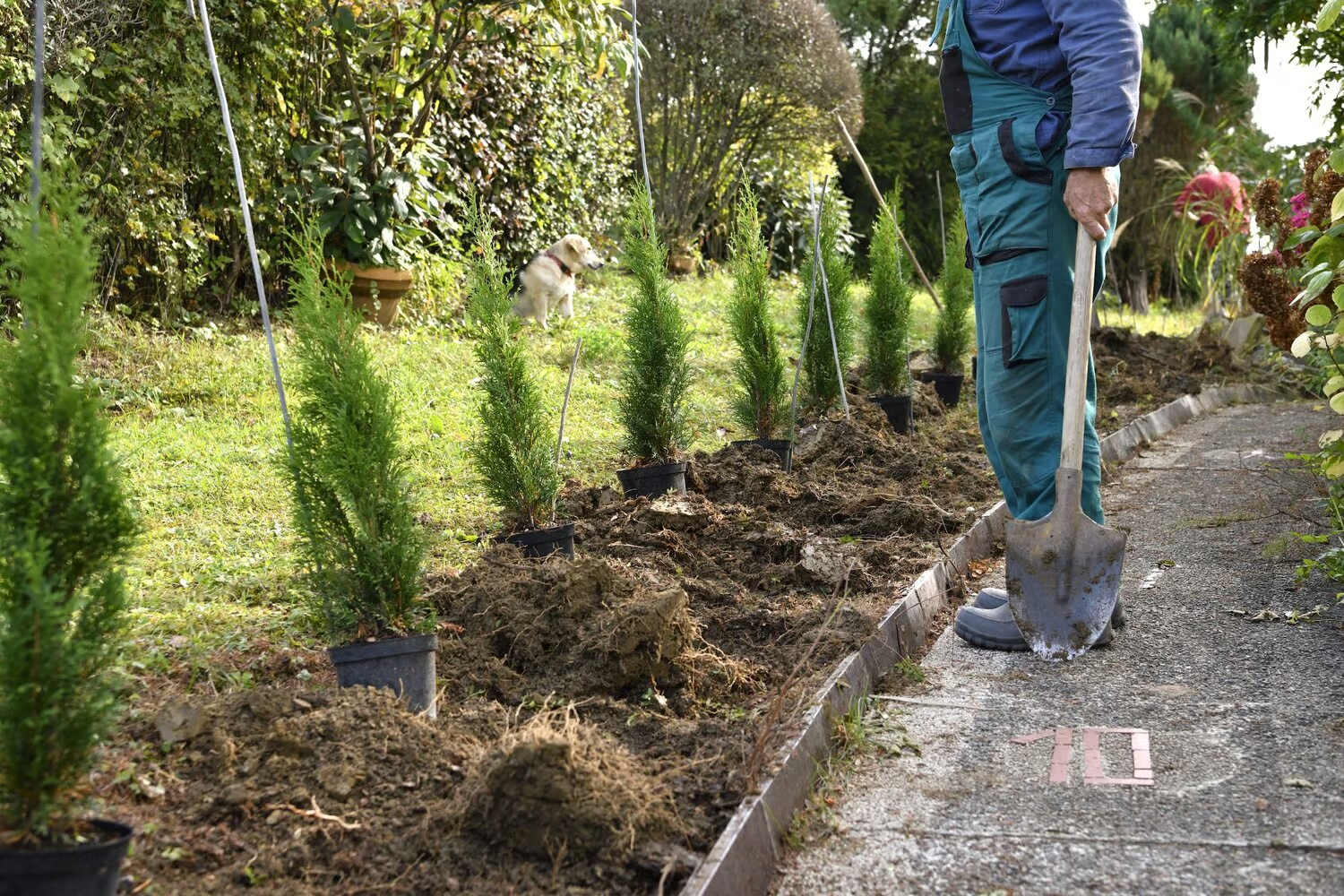
Same crew. Same day. Same checklist. Every week.
Free lawn care estimate.
The Gate Protocol: Pet and Child Safety
"If we open it, we close it." This is non-negotiable.
We know your backyard is your dog's world. A gate left open for 30 seconds is all it takes for a dog to reach the street. This happens more often than homeowners realize, and it happens because lawn crews are moving fast and not thinking about perimeter security.
Before entering: The crew member opening any gate checks for animals near the gate before opening.
During service: Gates are closed behind the crew when passing through. No gate is left standing open while equipment is running.
Before leaving: Every gate latch on the property is physically checked by the last crew member to leave. This is a manual, deliberate check, not a glance from the truck.
Communication: If we find a gate that was already open when we arrived, we close it and notify you. If a gate latch is broken or unreliable, we tell you so you can fix it before your pet finds out the hard way.
We have dogs too. The Gate Protocol is not a marketing line. It is a crew training requirement. Every new crew member is trained on gate procedure before their first solo property. If a gate is opened, it is closed. If a latch is checked, it is checked with a hand, not a glance. Every time. No exceptions.
Seasonal Mowing Heights for Seattle Lawns
Mowing height is not a preference. It is a horticultural decision that changes with the season. Cutting too short weakens the root system. Cutting too tall encourages thatch buildup and fungal disease in our wet climate. We adjust the mower deck height based on the time of year.
| Season | Mowing Height | Why |
|---|---|---|
| Early spring (March–April) | 2.5 inches | Remove winter-damaged tips. Encourage density. Lower cut stimulates lateral growth as grass breaks dormancy. |
| Late spring (May–June) | 3 inches | Transition to taller height as growth accelerates. Taller blades shade the soil, suppressing weed germination. |
| Summer (July–August) | 3–3.5 inches | Tallest setting. Longer grass shades soil, retains moisture, prevents heat stress during Seattle's dry period. |
| Early fall (Sept–Oct) | 3 inches | Moderate height while growth remains active. Fall is the strongest growing period for cool-season grasses. |
| Late fall (November) | 2.5 inches | Final mows of season. Gradually lower to reduce snow mold risk over winter. Do not scalp. |
| Winter (December–February) | No mowing | Grass is dormant. No mowing needed. One light mow at 3 inches if warm spell triggers growth. |
The one-third rule: We never remove more than one-third of the grass blade height in a single mow. If the lawn has grown from 3 inches to 5 inches between visits, cutting to 3 inches removes 40 percent of the blade, which stresses the plant. In that case, we mow to 3.5 inches and bring it down gradually. This is why weekly mowing produces better results than bi-weekly: with weekly visits, we only need to remove a fraction of an inch each time.
Best Grass Types for Seattle Lawns (USDA Zone 8b)
Seattle's climate (mild wet winters, warm dry summers) is ideal for cool-season grasses. The best lawns in our area use a blend of two or three grass types, not a single species. Blending provides resilience: one species covers the weaknesses of another.
| Grass Type | Characteristics | Best For |
|---|---|---|
| Perennial ryegrass | The backbone of most Seattle lawns. Germinates in 5 to 7 days (fastest cool-season grass). Dark green, fine texture, excellent wear tolerance. Handles foot traffic. Needs full to partial sun (6+ hours). Higher water and fertilizer needs than fescue. | High traffic, full sun, primary lawn |
| Fine fescue (creeping red, chewings, hard) | Low-maintenance, shade-tolerant, drought-resistant. Fine texture. Lower foot traffic tolerance than ryegrass. Excellent under trees and north-facing slopes. Lower fertilizer needs. | Shade, low-traffic, low-maintenance |
| Tall fescue (turf-type) | Deep root system, very drought-tolerant, adapts to poor soil. Coarser texture. Good disease resistance. Bunch-type (does not spread), so bare spots need overseeding. | Drought-prone areas, south slopes, low-water |
| Kentucky bluegrass | Dense, self-repairing (spreads by rhizomes), deep green. Slower to establish. Higher maintenance. In western WA, best as minor component (under 30%) in blend with ryegrass or fescue. | Mixed into blends for self-repair, high-visibility |
A blend of 60 to 70 percent perennial ryegrass and 30 to 40 percent fine fescue (creeping red or chewings). The ryegrass establishes fast, handles foot traffic, and provides the dark green color homeowners want. The fine fescue fills in shaded areas, reduces water needs, and adds drought resilience. For lawns with significant shade (under large trees), increase the fescue ratio to 50 percent or more. We use this blend for all overseeding unless specific conditions call for a different mix.
Aeration, Dethatching, and Overseeding
Weekly mowing keeps the lawn looking good. Aeration, dethatching, and overseeding keep the lawn healthy at the root level. These are the three services that transform a struggling lawn into a dense, resilient one.
Core Aeration
Seattle's native soil is heavy clay and glacial till. Foot traffic, rain compaction, and years of settling compress the soil until water, air, and nutrients cannot reach the root zone. The grass thins, weeds move in, and the lawn stops responding to fertilizer because the roots cannot absorb it.
A core aerator pulls small plugs of soil (about 2 to 3 inches deep and half an inch wide) from the lawn, leaving thousands of small holes. These holes allow water, air, and fertilizer to penetrate directly into the root zone. The plugs break down on the surface over 1 to 2 weeks and do not need to be raked up.
When: Early fall (September to October) is ideal in Seattle. The soil is still warm, rain is returning, and cool-season grasses are entering their strongest growth period. Spring (March to April) is the second-best window. Frequency: Once per year for most residential lawns. Twice per year for lawns with heavy clay, high foot traffic, or visible compaction.
Dethatching (Power Raking)
Thatch is the layer of dead grass stems, roots, and organic debris between the green blades and the soil surface. A thin layer (under half an inch) is normal and even beneficial. But when thatch exceeds half an inch, it acts like a waterproof mat: rain runs off instead of soaking in, and roots grow into the thatch instead of soil. The lawn becomes spongy, shallow-rooted, and vulnerable.
A power rake uses spinning vertical blades to cut through and pull up the thatch layer. The lawn looks rough immediately after. Within 2 to 3 weeks, the lawn responds with dense new growth because water and nutrients finally reach the soil. How to know you need it: Push a screwdriver into the lawn. If you feel a spongy, compressed layer before hitting soil, that is thatch. If it is thicker than half an inch, dethatching is overdue.
Overseeding
Overseeding is spreading new grass seed directly over an existing lawn to fill in thin spots, bare patches, and weak areas. It is renewal, not replacement.
Why it works best after aeration: The holes left by the aerator create perfect pockets for seed-to-soil contact. Seed in an aeration hole has a dramatically higher germination rate than seed sitting on thatch or compacted soil. We almost always pair overseeding with aeration.
Seed selection: We use a PNW-specific cool-season blend (typically 60 to 70 percent perennial ryegrass, 30 to 40 percent fine fescue) matched to your lawn's sun and shade conditions.
Post-seeding care: New seed needs consistent moisture for 3 to 4 weeks. We provide watering instructions (or coordinate with your irrigation system). Seed germinates in 5 to 10 days and is mowable within 3 to 4 weeks.
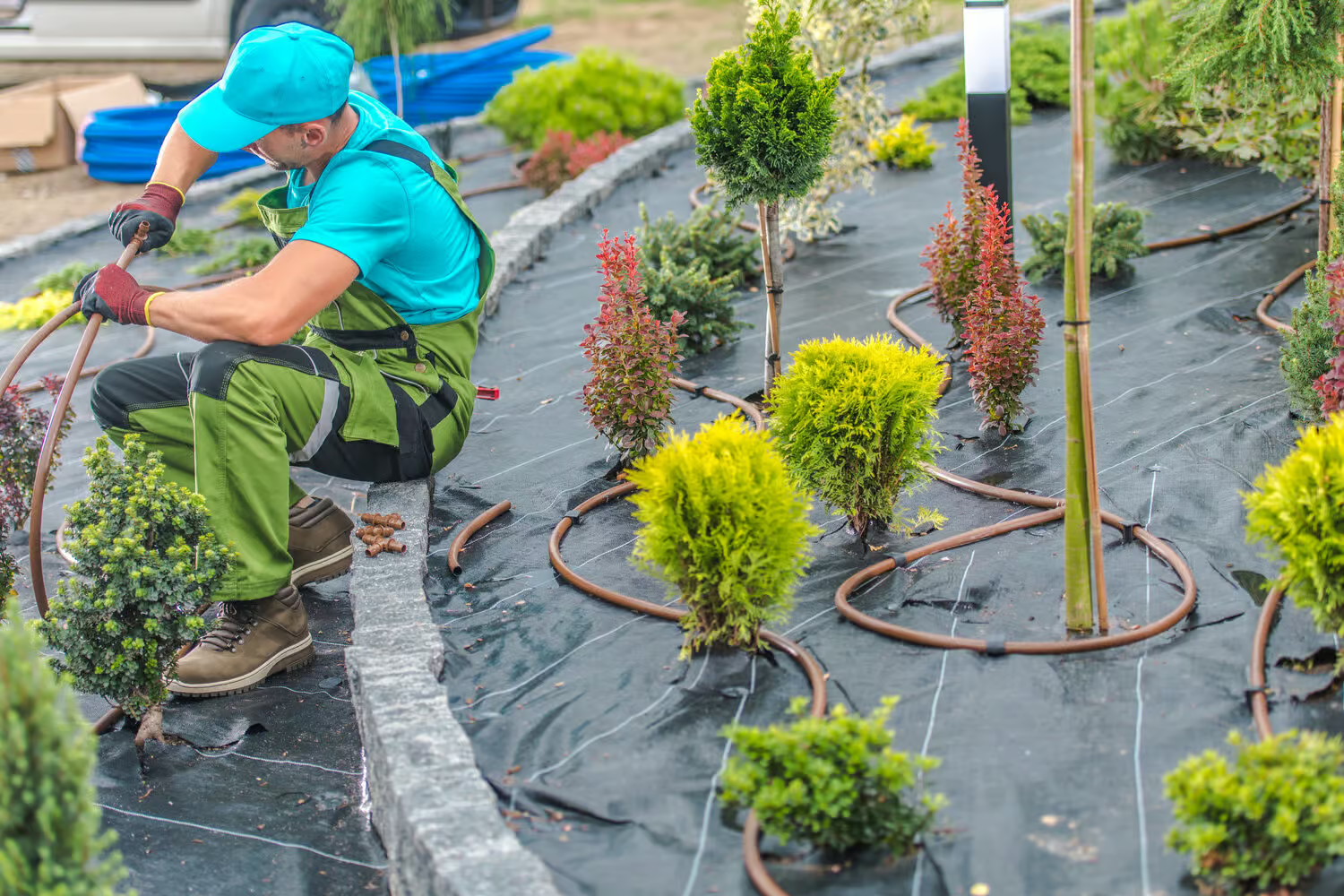
Aeration + overseeding: the combo that transforms thin lawns.
Book for fall. Free quote.
Fertilization Program
Grass is a crop. It needs feeding. In Seattle's climate, cool-season grasses benefit from a structured schedule timed to growth cycles. The biggest mistake homeowners make is either never fertilizing (the lawn slowly starves) or dumping fertilizer in summer (when the grass is dormant and nutrients wash into the storm drain).
| Timing | What and Why |
|---|---|
| Early spring (March–April) | Balanced fertilizer with moderate nitrogen. Wakes the lawn from winter dormancy. Encourages green-up and early density. |
| Late spring (May–June) | Slow-release nitrogen. Sustains growth through the transition into summer without pushing too-fast top growth. |
| Early fall (September–October) | The most important application. Grass roots grow aggressively in fall. Feeds root development that carries the lawn through winter. Pair with aeration. |
| Late fall (November) | Winterizer application. Potassium-heavy to strengthen cell walls for freeze resistance. Low nitrogen to avoid stimulating top growth before dormancy. |
What we do not do: We do not fertilize in July or August. Seattle's cool-season grasses are semi-dormant in summer heat. Fertilizer applied during dormancy is not absorbed, sits on the surface, and washes into storm drains during the first fall rain. Wasteful, environmentally irresponsible, and pointless.
Washington State has specific regulations around commercial fertilizer application, including phosphorus restrictions near waterways and licensing requirements through WSDA. We follow all state and local guidelines for responsible nutrient management.
Weed Control
The best weed control is a thick, healthy lawn. Dense turf crowds out weeds by shading the soil so weed seeds cannot germinate. Every service we provide (proper mowing height, aeration, overseeding, fertilization) contributes to weed suppression by making the grass the primary defense.
Manual weed control: During weekly visits, we pull visible weeds from lawn edges and bed borders. For larger infestations, we schedule dedicated weeding sessions.
Targeted spot treatment: For persistent broadleaf weeds (dandelions, clover, plantain, creeping buttercup) that manual pulling cannot control, we apply targeted spot treatments to individual weeds. Spot treatment is more effective, uses less product, and reduces environmental impact compared to broadcast spraying.
Pre-emergent strategy: For lawns with recurring crabgrass or annual weed problems, a pre-emergent application in early spring (before soil temperatures reach 55 degrees) prevents weed seeds from germinating. Note: pre-emergent cannot be used within 6 to 8 weeks of overseeding, as it also prevents grass seed from sprouting.
Common Seattle lawn weeds we manage: Dandelion, clover (white and red), creeping buttercup, plantain (broadleaf and narrow), chickweed, crabgrass (prevented with pre-emergent), and English daisy. For moss: we physically remove moss buildup but do not currently offer chemical moss treatment.
Fall Leaf Removal
In Seattle, leaf season runs from late October through December. Bigleaf maples, alders, birches, and ornamental trees drop massive volumes of leaves that blanket lawns, fill gutters, and pile on walkways. A thick layer of wet leaves left on the lawn for even two weeks will smother grass, promote fungal disease, and create dead patches that take months to recover.
What we do: Complete leaf removal from all lawn areas, garden beds, walkways, driveways, and hard surfaces. We use commercial backpack blowers and rakes to move leaves into piles, then bag and haul everything offsite. Nothing is left on the property.
Frequency: During peak leaf fall (November), most properties need weekly leaf removal. Some heavily treed properties need visits every 5 days. We adjust the schedule to match your property's tree canopy.
Why it matters beyond aesthetics: Wet leaves on lawns create the perfect environment for snow mold and fungal diseases that attack grass crowns. Leaf removal before matting is one of the most important things you can do heading into winter.
Seattle Lawn Care Calendar (Month by Month)
This covers what should happen on a residential lawn in Seattle (Zone 8b) each month. Not every lawn needs every service every year, but this is the framework we follow.
| Month | What to Do |
|---|---|
| January | Dormant. Stay off frozen or waterlogged turf. Plan spring aeration. Sharpen mower blades. |
| February | Dormant. Apply lime if soil test shows pH below 6.0. One light mow at 3 inches only if warm spell triggers growth. |
| March | First mows begin (2.5 inches). Early spring fertilizer. Begin weekly service. Pre-emergent for crabgrass-prone lawns. Spring aeration window opens. |
| April | Weekly mowing. Raise to 3 inches by late month. Overseeding window (if no pre-emergent). Weed pulling begins. |
| May | Peak growth. Mow weekly at 3 inches. Late spring slow-release fertilizer. Spot-treat broadleaf weeds. |
| June | Continue weekly at 3 inches. May need twice-weekly mowing in rainy years. Transition to summer watering if dry. |
| July | Raise to 3 to 3.5 inches. No fertilizer. Water deeply 1 to 2 times per week if no rain. Growth slows in heat. |
| August | Continue summer height. Deep watering continues. Do not aerate or overseed. Plan fall service. |
| September | Most important month. Fall aeration + overseeding. Early fall fertilizer. Growth accelerates as rain returns. |
| October | Weekly mowing at 3 inches. Fertilizer working. Overseeded areas filling in. Leaf removal begins late month. |
| November | Lower to 2.5 inches for final mows. Winterizer fertilizer. Peak leaf removal. Last mow mid-to-late month. |
| December | Dormant. Leaf removal if needed. Stay off frozen turf. Season complete. |
Calendar is calibrated for the greater Seattle metro area (USDA Zone 8b). Microclimates and elevation may shift timing by 1 to 2 weeks.
Want the full annual plan handled?
Our maintenance clients get every service on this calendar without thinking about it.
How Much Does Lawn Care Cost in Seattle?
Pricing depends on lawn size, frequency, and services included. Below are typical ranges for Seattle residential properties.
| Service | Typical Range | Details |
|---|---|---|
| Weekly Mowing | ||
| Weekly mowing (under 3,000 sq ft) | $40–$65/visit | Mow, hard edge, string trim, bed edge, blow-off. Standard lot. |
| Weekly mowing (3,000–6,000 sq ft) | $55–$90/visit | Larger residential lots. Typical Eastside properties. |
| Weekly mowing (6,000–10,000 sq ft) | $80–$130/visit | Large lots with front, back, and side yards. |
| Weekly mowing (10,000+ sq ft) | $120–$200+/visit | Estate properties. Priced by scope. |
| Turf Health | ||
| Core aeration | $100–$250 | Annual service. Lawn size and access dependent. |
| Dethatching / power raking | $150–$350 | Based on lawn size and thatch severity. Debris removal included. |
| Overseeding (add-on to aeration) | $75–$175 | PNW-blend seed applied after aeration. |
| Aeration + overseeding combo | $175–$400 | Most popular fall service. Aeration + seed + starter fertilizer. |
| Treatments | ||
| Fertilization (per application) | $65–$125 | 3 to 4 applications/year. Size dependent. |
| Annual fertilization (4 apps) | $225–$450/year | All seasonal applications bundled. 10–15% savings. |
| Weed control (spot treatment) | $50–$100/visit | Targeted broadleaf weed treatment. |
| Fall Services | ||
| Fall leaf removal (per visit) | $75–$250/visit | Tree canopy and volume dependent. Full haul-away. |
| Plans | ||
| Full-service annual plan | Custom quote | Weekly mowing + all seasonal services. Flat monthly billing. |
Prices are estimates for greater Seattle and the Eastside as of 2026. Lawn size, access (slopes, stairs, narrow gates), and condition affect final cost. All estimates are free and on-site.
Full-service annual clients pay a consistent monthly amount covering everything: weekly mowing April through November, all 4 fertilizer applications, fall aeration and overseeding, and fall leaf removal. The monthly bill does not change even though service intensity varies by season. One flat payment. We handle the calendar.
Get your lawn care quote.
Weekly mowing + annual plan options. Free on-site estimate.
Lawn Care Across Seattle and the Eastside
Capitol Hill, Queen Anne, and Wallingford have older residential lots with established lawns shaded by mature trees (bigleaf maples, Douglas firs, ornamental cherries). Shade reduces grass vigor and promotes moss. These lawns benefit from shade-tolerant fine fescue overseeding and aggressive fall leaf removal due to heavy canopy drop.
Kirkland, Bellevue, Redmond, and Sammamish have larger lots (6,000 to 15,000+ square feet) with full-sun exposure and heavy clay soil. Compaction is the primary issue. Annual fall aeration is essential on Eastside properties, and the larger sizes make weekly mowing a significant commitment most homeowners prefer to hand off.
West Seattle, Beacon Hill, and Renton have a mix of flat and sloped properties. Sloped lawns require careful mowing technique (traversing, not straight up and down) and often have drainage contributing to soggy turf. Fall leaf removal is heavy due to mature deciduous trees.
Ballard, Fremont, and Greenwood have compact lots where the lawn is small but visible from the street. Hard edging, clean blow-off, and consistent weekly visits make a disproportionate visual impact on smaller properties. Also neighborhoods where the Gate Protocol matters most: small yards with dogs and close-set houses.
We serve: Seattle (all neighborhoods), Kirkland, Bellevue, Redmond, Sammamish, Issaquah, Renton, Bothell, Woodinville, Mercer Island, Shoreline, Lake Forest Park, and surrounding King County communities.
Frequently Asked Questions About Lawn Care in Seattle
How much does weekly lawn mowing cost in Seattle? +
What is the best grass type for Seattle lawns? +
When should I aerate my lawn in Seattle? +
What is dethatching and does my lawn need it? +
How often should I mow my lawn in Seattle? +
Do you mow in the rain? +
What is included in a weekly mowing visit? +
What is the Gate Protocol? +
Should I bag or mulch grass clippings? +
How much does aeration and overseeding cost? +
When should I fertilize my lawn in Seattle? +
How tall should grass be in summer? +
Do you offer bi-weekly mowing? +
What happens in winter? +
Do you handle pet waste before mowing? +
Your Lawn. Our System. Every Week.
A lawn is not a one-time project. It is a living system that needs consistent, knowledgeable management. The right mowing height, the right fertilizer timing, the right aeration window, and the right grass type for your conditions. Get those right, and the lawn takes care of itself. Get them wrong, and you are fighting weeds, thatch, compaction, and brown patches all season.
We have the system. We follow it every week. And we close every gate.
- Weekly mowing with hard edging, string trimming, bed maintenance, and complete blow-off
- Gate Protocol: all gates checked and secured every visit (pet and child safety)
- Seasonal mowing height adjustment (2.5 to 3.5 inches based on time of year)
- Core aeration (spring and fall, breaking up Seattle's clay soil)
- Dethatching / power raking (removing thatch for healthy root growth)
- Overseeding with PNW-blend seed (perennial ryegrass + fine fescue)
- Fertilization program (3 to 4 applications per year, timed to growth cycles)
- Targeted weed control (manual pulling + spot treatment for broadleaf weeds)
- Fall leaf removal (complete haul-away, weekly during peak season)
- Same crew, same day, every week (schedule consistency guaranteed)
- Flat monthly billing for annual plan clients
Serving Seattle, Kirkland, Bellevue, Redmond, Sammamish, Issaquah, Renton, Bothell, Woodinville, Mercer Island, and all of King County.
Professional lawn care. Weekly visits. Annual plans.
Free on-site estimate.
Get a Free Estimate
Let's chat about your needs and landscape dreams. Schedule a call below.
Other Services












From the first hole dug to the weekly mow.
Trust the team that understands the science of your garden.
Request a Planting or Maintenance Quote