July 26, 2026
How Your Landscape Attracts Pests in Seattle (and What to Do About It)
Growing up in Kirkland taught us the soil, the seasons, and what holds. We build what lasts here because we live here. That matters.
Most homeowners think of pest control as something you call for when ants are in the kitchen or wasps are under the eaves. By that point, you are treating symptoms. The real question is: why did the pests choose your property in the first place?
In Seattle's climate, the answer is almost always the landscape. Overgrown ivy provides nesting habitat for rats. Dense, unpruned shrub canopies trap moisture that breeds fungal disease and shelters insects. Compacted, poorly drained soil invites moss, crane fly larvae, and root rot. Fallen fruit attracts rodents. Thick blackberry thickets create harborage where pests breed undisturbed.
The pests are not random. They are responding to conditions your landscape is creating.
This article covers the most common landscape-related pest problems in Seattle, how to identify them, what physical maintenance prevents them, and when to call a licensed pest management professional for treatment that goes beyond what maintenance alone can solve.
LandscapingFactory is a landscaping company, not a pest control company. We do not apply pesticides, herbicides, insecticides, or chemical treatments. What we do is remove the physical conditions that attract and harbor pests: invasive plant removal, pruning for airflow, mulching, debris cleanup, drainage improvement, and habitat modification. When chemical or biological treatment is needed, we refer you to a licensed pest management company. This is Integrated Pest Management (IPM) in practice: address the environment first, treat chemically only when necessary.
Invasive Plants: The Pest Problems That Look Like Landscaping Problems
In Seattle, some of the most destructive 'pests' are plants. Our mild, wet winters allow invasive species to grow year-round, smothering native and ornamental plantings. These are not weeds you pull once and forget.
English Ivy (Hedera helix)
The problem: English ivy creates a dense ground mat that smothers native ground cover, prevents other plants from establishing, and climbs trees. On trees, ivy adds significant weight to the canopy and trunk, making the tree more vulnerable to windthrow during Seattle's winter storms. Ivy also creates ideal nesting habitat for rats.
What maintenance does: Manual removal. Cut the ivy vines at the base of the tree ('lifesaver cut') at waist height, then pull the ground-level ivy and extract the root network. The ivy above the cut on the tree will die and can be left to decompose — pulling dead ivy off a tree trunk can damage bark. Ground ivy must be grubbed (root crowns dug out), not just trimmed at the surface. Surface trimming stimulates denser regrowth.
What maintenance cannot do: For large infestations where ivy has established over hundreds of square feet, manual removal may need to be followed by targeted herbicide application to prevent regrowth. Herbicide application requires a licensed applicator.
Himalayan Blackberry (Rubus armeniacus)
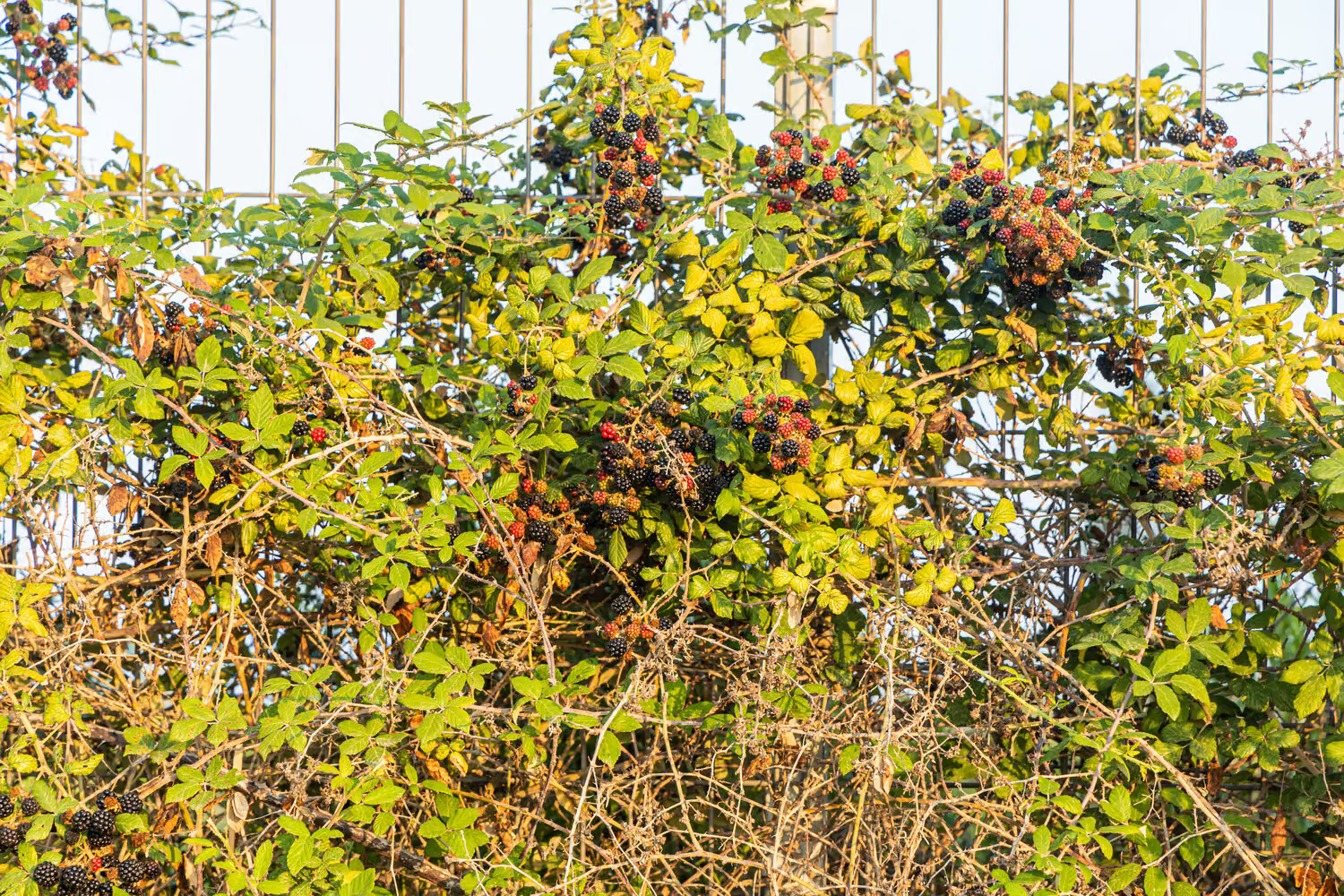
The problem: Himalayan blackberry forms impenetrable thorny thickets that steal water and nutrients from ornamental plants. The canes grow up to 15 feet per season and root wherever they touch the ground. Left unmanaged, blackberry can consume an entire yard in 2 to 3 seasons. The thickets also provide harborage for rats and other wildlife.
What maintenance does: Cut the canes to ground level, then dig out the root crowns — the thick, knotted root mass at the base of the plant. Root crown removal is the key. If you only cut the canes, the root crown regenerates faster than before. For large patches, repeated cutting to exhaust the root system over 2 to 3 seasons may be necessary.
What maintenance cannot do: On steep slopes or where blackberry has spread over large areas, chemical stump treatment is the most effective approach. This requires a licensed applicator.
Morning Glory / Bindweed (Convolvulus arvensis)
The problem: Bindweed wraps around the stems of other plants and physically strangles them. It looks like a pretty vine with white or pink flowers, but its root system can extend 10 feet deep and pulling the vine often breaks roots, stimulating multiple new shoots from each fragment.
What maintenance does: Continuous, repeated manual removal throughout the growing season to exhaust the root's energy reserves. Pull before the plant flowers and sets seed. Mulching heavily (4+ inches of wood chip mulch) after removal suppresses regrowth by blocking light.
Horsetail (Equisetum)
The problem: Horsetail is a prehistoric plant that thrives in wet, compacted, poorly drained soil. Its presence is a reliable indicator that your soil has a drainage problem. The root system (rhizomes) can extend several feet deep, making manual removal extremely difficult.
What maintenance does: Improve the conditions that favor horsetail. Core aeration to reduce compaction. Drainage improvement to reduce standing water. Amending soil with organic compost to improve structure. Manual removal of above-ground growth reduces the plant's ability to photosynthesize, gradually weakening the root system over multiple seasons.
Invasive plant removal: manual grubbing, root crown extraction, site restoration.
We clear the ivy, blackberry, and debris. Free estimate.
Lawn Pests: What Is Killing Your Grass (and How Maintenance Prevents It)
European Crane Fly Larvae (Leatherjackets)
Identification: If you see brown patches in your lawn in March through May, and birds are frantically pecking at the turf, you likely have leatherjackets — the larvae of the European crane fly. The larvae live in the soil and eat grass roots, killing the turf from below.
How to confirm: Soak a 1-square-foot section of damaged lawn with water, then cover it with a piece of cardboard or plywood overnight. In the morning, lift the cover. If you see gray-brown, legless larvae (about 1 inch long) on the surface, you have leatherjackets.
What lawn maintenance prevents: A healthy, thick lawn with strong root systems is more resistant to leatherjacket damage. Annual aeration breaks up compacted soil and promotes deeper rooting. Overseeding fills in bare spots before crane fly adults can lay eggs in exposed soil in September.
When to call a professional: If the infestation is severe, biological treatment with beneficial nematodes (Steinernema feltiae) is effective. This should be applied by a licensed pest management company for proper timing and application rates.
For lawn aeration, overseeding, and fertilization that builds pest resistance, see our Lawn Care and Maintenance page.
Moles
Identification: Volcano-shaped mounds of loose dirt pushed up from below the surface. Moles are insectivores — they eat earthworms, crane fly larvae, and other soil insects. Their tunneling destroys root systems, creates trip hazards, and ruins the level grade of lawns.
What lawn maintenance does: Healthy lawns with fewer soil-dwelling pest larvae are less attractive to moles because there is less food. Reducing the food source through lawn health management can reduce mole activity over time.
When to call a professional: Mole trapping requires a Washington State Wildlife Control Operator license from the WDFW. If mole damage is significant, contact a licensed wildlife control operator for professional trapping. DIY methods (vibrating stakes, castor oil repellents) are generally ineffective.
Shrub and Tree Pests: Identification and Prevention Through Pruning
Most insect and disease problems on shrubs and trees in Seattle are made worse by one thing: poor airflow. Dense, unpruned canopies trap moisture, creating the humid microclimate that fungal diseases and many insects need to thrive. Proper pruning is the single most effective physical prevention.
Root Weevils on Rhododendrons and Azaleas
Identification: If the leaf edges of your rhododendrons or azaleas look like someone took a hole punch to them (semi-circular notches along the margins), you have root weevils. The adults are nocturnal beetles that feed on leaves. The real damage is underground: the larvae eat the roots, weakening and eventually killing the plant.
What pruning does: Opening the canopy reduces the humid conditions that weevils prefer. Clearing dead leaves and debris from the base of rhododendrons removes daytime hiding spots for the adult beetles.
When to call a professional: For established infestations, biological control with beneficial nematodes is the most effective treatment. This should be applied by a licensed pest management company in spring or early fall when soil temperatures are above 55°F.
Aphids and Lace Bugs
Identification: Aphids are tiny soft-bodied insects that cluster on new growth, particularly on roses, maples, and pieris. They suck sap and excrete a sticky residue (honeydew) that develops a black coating (sooty mold). Lace bugs cause stippled, pale leaves with dark speckling on the undersides.
What pruning does: Dense canopies protect aphid colonies from rain (which physically knocks them off) and from natural predators like ladybugs and lacewings. Opening the canopy through proper pruning exposes aphids to weather and predators, naturally reducing populations.
Fungal Disease Prevention Through Pruning
Powdery mildew, black spot, and anthracnose all thrive in the same conditions: cool temperatures, high humidity, and stagnant air trapped inside dense plant canopies. These are the default conditions of a Seattle spring. Opening the canopy allows wind to circulate through the plant, drying leaves between rain events. This disrupts the moisture conditions fungi need to germinate and spread.
Key targets: Roses (open the center to a vase shape), fruit trees (open center pruning for sunlight and airflow), dense shrubs like photinia and laurel (thin interior branches), and any plant where leaves stay wet for hours after rain stops.
For professional pruning that reduces pest and disease pressure, see our Pruning and Shrub Trimming Services page.
Professional pruning for pest and disease prevention.
We open the canopy, remove dead wood, and reduce the conditions that attract insects and fungal disease. Free estimate.
Rodent Habitat: How Your Yard Becomes a Rat Highway
Seattle has a well-documented rat problem. The city's mild climate, abundant food sources, and dense vegetation create ideal conditions for Norway rats and roof rats. But here is what most homeowners do not realize: your landscape choices directly determine whether rats establish on your property.
English Ivy = Rat Habitat
Dense ground covers, especially English ivy, provide the perfect nesting and travel environment for rats. The ivy creates a dry, protected 'roof' at ground level that shields rats from rain and from predators like hawks and owls. Rats travel under ivy ground cover the way we travel on roads: it is their infrastructure. What to do: Remove English ivy. Not trim it. Remove it. This is one of the single most effective rodent prevention measures a Seattle homeowner can take.
Blackberry Thickets = Harborage
Himalayan blackberry thickets along property lines and in neglected corners provide dense, impenetrable harborage for rats, mice, and other wildlife. The thorny canes protect rodents from predators, and the berries provide a food source. What to do: Clear the blackberry. Cut the canes, grub the root crowns, and open the area to light and air. Rats do not establish in open, exposed areas where predators can see them.
Fallen Fruit = Food Source
If you have fruit trees, fallen fruit on the ground is a food source for rats. A single mature apple tree can drop hundreds of pounds of fruit in a season. If that fruit sits on the ground rotting, you are feeding every rat in the neighborhood. What to do: Pick up fallen fruit regularly during the harvest season. If you cannot harvest the tree, schedule fall cleanups to remove dropped fruit before it accumulates.
Other Habitat Factors
Woodpiles, stacked lumber, old compost piles, unused sheds, and dense ground-level shrub plantings all provide potential rat nesting sites. Store firewood on a raised rack, not on the ground. Keep compost in enclosed bins. Clear debris piles. Trim ground-level shrub branches so there is a gap between the foliage and the ground — a 6-inch clearance makes the understory visible and less attractive to nesting rodents.
Before calling an exterminator, address the habitat. If you bait or trap rats but leave the ivy, the blackberry thickets, and the fallen fruit, new rats will move into the same habitat as soon as the old ones are gone. The environment is the magnet. Physical habitat modification + professional rodent control (if needed) = long-term results.
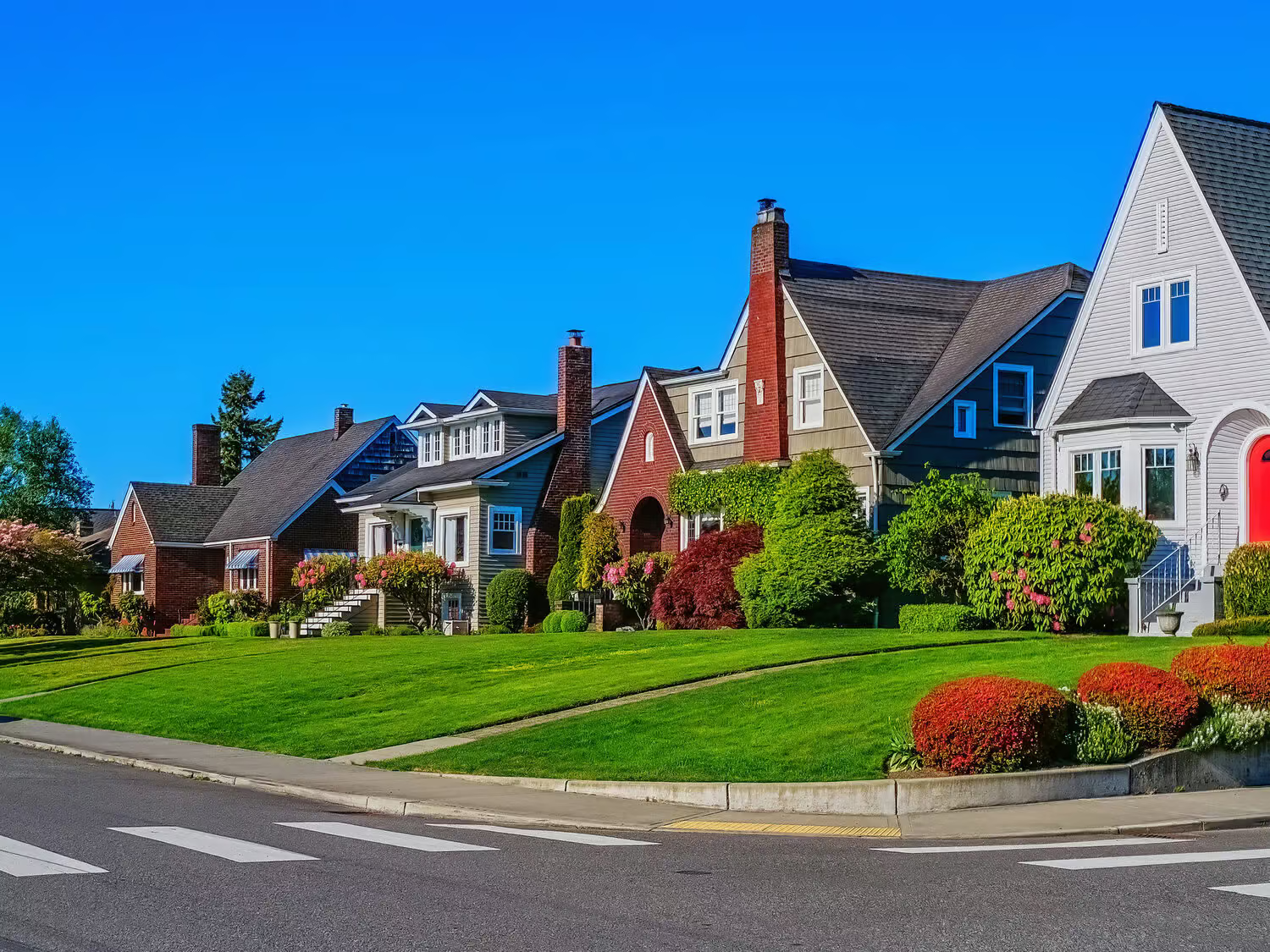
Invasive plant removal and habitat cleanup.
We clear the ivy, blackberry, and debris. Free estimate.
Structural Pest Prevention: Ants, Wasps, and Spiders Start Outside
Ants in the kitchen, wasps under the eaves, and spiders in the basement all have one thing in common: they came from outside. Your landscape is the bridge between the outdoor pest population and the interior of your home.
Carpenter Ants and Moisture Ants
The landscape connection: Carpenter ants do not eat wood. They excavate wet, decaying wood to build nests. Colonies often originate outside — in dead tree stumps, in landscape timbers, in retaining walls, or in wood mulch piled against the foundation.
What maintenance does: Remove dead stumps. Replace rotting landscape timbers. Keep mulch at least 6 inches away from the foundation. Trim shrub branches so they do not touch the siding — branches touching the house are literal bridges for ants. Ensure gutters are draining properly so water is not saturating the soil next to the foundation.
When to call a professional: If you see large black ants (1/4 to 1/2 inch) inside your home, particularly in bathrooms or kitchens, call a licensed pest control company. Carpenter ant colonies require professional treatment with non-repellent products. Do not use store-bought repellent sprays — they cause the colony to split ('budding'), making the problem worse.
Wasps and Yellowjackets
The landscape connection: Paper wasps build exposed nests under eaves and in tree canopies. Yellowjackets build hidden nests underground (often in abandoned rodent burrows in your lawn) or inside wall cavities. Overgrown vegetation near the house conceals nesting activity.
What maintenance does: Keep vegetation trimmed away from the house perimeter (at least 12 inches of clearance between shrubs and siding). Regularly inspect eaves and overhangs during summer. In fall, after the first freeze kills the colony, remove old nests to prevent reuse the following spring.
When to call a professional: Never attempt to spray a yellowjacket nest hidden in a wall void or underground. Spraying the entrance blocks their exit, and they will chew through drywall to find another way out. Professional wasp removal ensures the queen is eliminated and the nest is safely removed.
Seattle's Spider Season
The landscape connection: In late August through October, giant house spiders enter homes looking for mates. They enter through gaps in foundations, under doors, and through shrub branches touching the house.
What maintenance does: Trim all vegetation away from the foundation and siding. Remove leaf litter and debris from the perimeter of the house. De-webbing eaves and corners in late summer removes established webs and discourages new ones.
Moss and Algae: The Moisture Indicators
Moss in lawns: Moss thrives in acidic soil (pH below 6.0), compacted soil with poor drainage, and heavy shade. Moss does not kill grass — it fills in where grass is already failing because conditions favor moss over turf. Core aeration reduces compaction. Overseeding with shade-tolerant grass varieties fills bare spots before moss colonizes. If soil pH tests below 6.0, lime application raises the pH to a range that favors grass over moss. For lawn aeration, overseeding, and soil health services, see our Lawn Care page.
For moss on roofs and hardscapes: See our Roof Cleaning and Moss Removal page.
Slugs and Snails
The landscape connection: Slugs thrive in moist, shaded areas with abundant organic debris. Dense mulch, leaf litter, ground-level ivy, and overwatered beds create ideal slug habitat. Slug damage appears as irregular holes in leaves and shiny slime trails.
What maintenance does: Reduce slug habitat by cleaning up leaf litter, keeping mulch to 2 to 3 inches (not thicker), improving drainage, and watering in the morning so the soil surface dries by evening when slugs are active.
For treatment: Iron phosphate baits are effective and safe for pets and wildlife (unlike older metaldehyde baits, which are toxic to dogs). These are available at garden centers for homeowner application. Follow label directions.
The Seattle Pest Calendar (What to Watch for by Season)
| Season | Pest Activity | Prevention Maintenance |
|---|---|---|
| Spring (Mar–May) | Crane fly larvae damage lawns. Slugs emerge. Aphids appear on new growth. Wasp queens start new nests. Root weevil adults begin feeding on rhododendron leaves. | Aerate and overseed lawns. Clean up debris around shrub bases. Inspect eaves for new wasp nests. Prune for airflow on shrubs showing dense growth. |
| Summer (Jun–Aug) | Wasp colonies reach peak size by August. Slug damage on hostas and leafy vegetables. Aphid populations peak in dry weather. Spider mites on conifers and broadleaf evergreens in hot, dry periods. | Water deeply and infrequently (morning watering). Maintain mulch. Pick up fallen fruit. Trim vegetation away from house siding. |
| Fall (Sep–Nov) | Giant house spiders enter homes (Sept–Oct). Rodents seek indoor shelter as temperatures drop. Crane fly adults lay eggs in lawns. Leaf debris accumulates (slug and rodent habitat). | Fall cleanup: remove leaf debris, clear ivy, remove fallen fruit. Inspect foundation for gaps. De-web eaves. Overseed bare lawn spots. |
| Winter (Dec–Feb) | Moss growth peaks in lawns and on roofs. Dormant insect eggs in bark crevices. Rat activity continues (they do not hibernate). Fungal diseases dormant but spores present on bark. | Structural pruning for airflow. Remove dead wood (pest hiding spots). Clear blackberry and ivy. Improve drainage. Dormant sprays on fruit trees (homeowner or licensed applicator). |
What LandscapingFactory Does vs. What a Pest Control Company Does
We believe in being transparent about our scope. We are experts at landscape maintenance. We are not licensed pest control applicators. Here is the division of work:
| Service | LandscapingFactory | Licensed Pest Company |
|---|---|---|
| Invasive plant removal (ivy, blackberry, bindweed) | Yes — manual grubbing, root crown extraction | Herbicide application on stumps/regrowth |
| Pruning for airflow and disease prevention | Yes — shrubs, hedges, small fruit trees | N/A |
| Mulching and debris removal | Yes — all properties | N/A |
| Lawn aeration, overseeding, fertilization | Yes — full lawn program | N/A |
| Habitat modification (rodent prevention) | Yes — ivy removal, fruit cleanup, debris clearing | Baiting, trapping, exclusion sealing |
| Gutter cleaning and drainage | Yes — gutter flush, downspout clearing | N/A |
| Insect treatment (aphids, root weevils, crane fly) | No | Yes — licensed pest company |
| Ant, wasp, spider treatment | No | Yes — licensed pest company |
| Rodent trapping | No | Yes — licensed wildlife control operator |
| Chemical moss killer (lawns) | No | Yes — licensed applicator |
| Dormant spray application (fruit trees) | No | Yes — licensed applicator or homeowner-applied |
The ideal approach: LandscapingFactory handles the landscape maintenance that prevents pest problems and creates an environment where pests cannot thrive. When chemical or biological treatment is needed, a licensed pest management company provides the targeted application. This is Integrated Pest Management in practice.
Landscape Maintenance for Pest Prevention. Invasive Removal. Pruning. Habitat Cleanup.
LandscapingFactory handles the physical conditions. Licensed pest companies handle the chemistry. Free estimate.
Frequently Asked Questions About Landscape Pests in Seattle
Does English ivy attract rats? +
What is eating the edges of my rhododendron leaves? +
Why does my lawn have brown patches in spring? +
Can I just cut blackberry canes to kill them? +
Why do ants keep coming back after I spray them? +
Are giant house spiders dangerous? +
Do moles eat garden plants? +
How do I stop slugs without poisoning my dog? +
Does moss kill my lawn? +
What is Integrated Pest Management (IPM)? +
How do I get rid of horsetail weed? +
Can ants damage my patio pavers? +
Should I spray a wasp nest under my eaves? +
How often should I inspect my landscape for pests? +
Does LandscapingFactory apply pesticides or herbicides? +
A Healthy Landscape Is the Best Pest Control
Every pest problem has an environmental cause. Rats do not infest yards without habitat. Fungi do not attack plants with good airflow. Crane fly larvae do not destroy thick, healthy lawns. Moss does not outcompete vigorous grass on well-drained soil. The most effective pest control is a well-maintained landscape where pests cannot find food, shelter, moisture, or opportunity. That is what landscape maintenance provides.
Similar Posts
Contact Us Today For A Free Consultation
Let's get started.
Tell us what you'd like to tackle when you request a quote and we'll do the rest.