July 26, 2026
The Seattle Homeowner’s Guide to Winter Pruning: Protect Your Landscape Before Spring
Growing up in Kirkland taught us the soil, the seasons, and what holds. We build what lasts here because we live here. That matters.
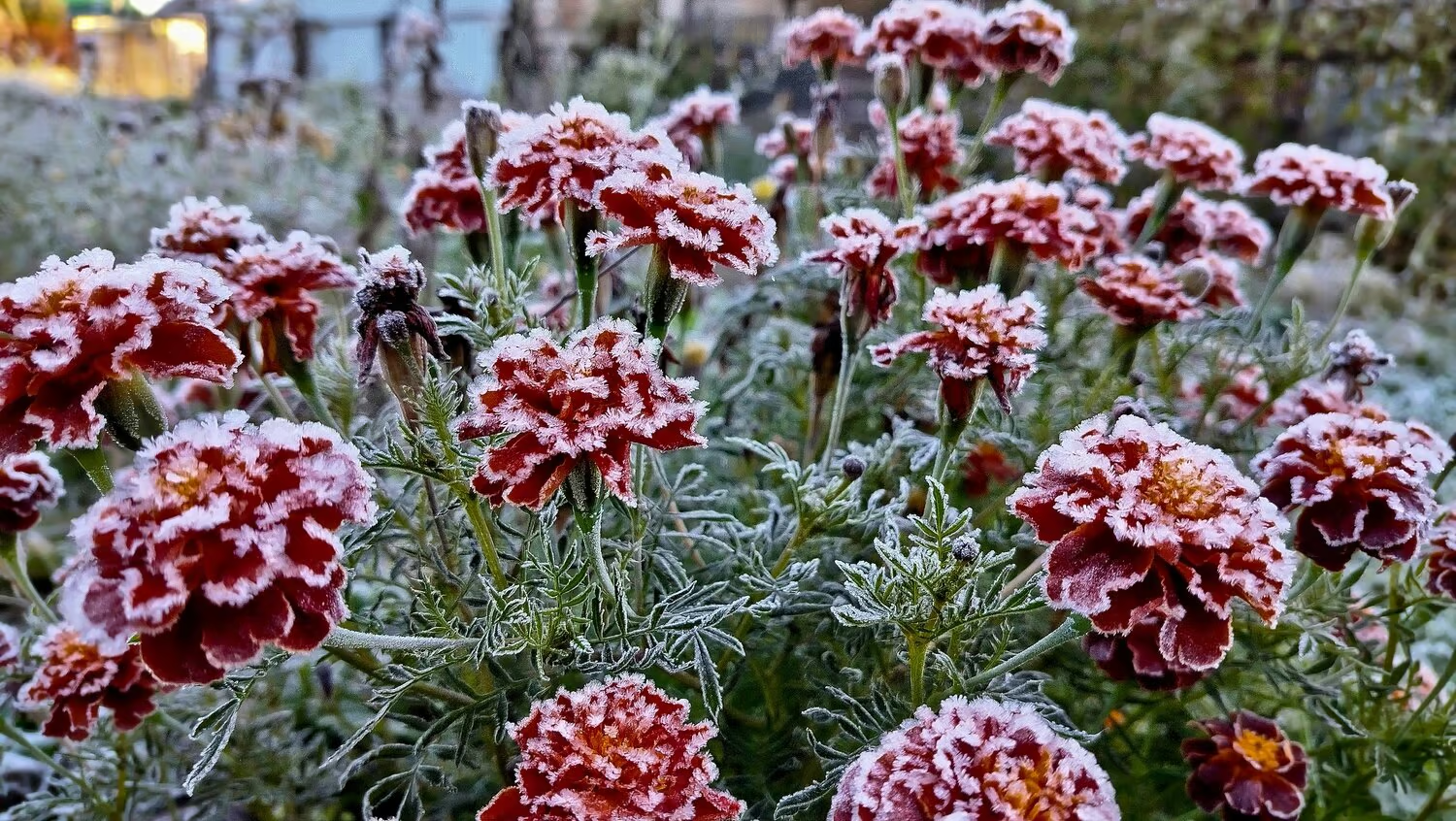
In the Pacific Northwest, winter is not downtime for your landscape. It is the season when the most consequential pruning decisions happen. While the leaves are down and the plants are dormant, every cut you make (or do not make) determines what blooms in spring, what fruits in summer, and what survives next year.
The problem is that most winter pruning advice online is written for the Midwest or the Southeast. Seattle's Zone 8b climate — mild wet winters, cool springs, dry summers — has different timing, different disease pressures, and different plants than a garden in Ohio. Pruning your hydrangeas based on a generic article can cost you an entire season of blooms.
This is a Seattle-specific winter pruning calendar. It covers the plants most common in residential gardens from Capitol Hill to Kirkland, tells you exactly when and how to prune each one, and tells you what to leave alone until spring. It also covers winter raised bed preparation, tool hygiene, and when to call a professional instead of reaching for the shears.
Tool Hygiene: The Step Most Homeowners Skip
Before you touch a single branch, check your tools. Dull blades and contaminated shears cause more damage than bad timing.
Bypass pruning shears for stems up to 3/4 inch. Bypass shears cut like scissors — two blades passing each other. Anvil shears crush the stem against a flat surface. Use bypass for live wood. Anvil shears are fine for dead wood only.
Loppers for branches 3/4 inch to 1.5 inches. The extended handles give leverage without forcing the cut.
Pruning saw for branches thicker than 1.5 inches. Do not force loppers through thick branches. It damages the tool and tears the bark.
Sterilization Between Cuts
In Seattle's damp climate, fungal diseases and bacterial infections transfer easily between plants on contaminated blades. Diseases like fire blight (common in pears and apples) and verticillium wilt (affecting maples) adhere to the microscopic ridges of your blade. If you prune an infected branch and move to a healthy plant without cleaning, you are inoculating the healthy plant with the disease.
Our protocol: 70% isopropyl alcohol. Keep a spray bottle nearby. Spray blades between different plants and after cutting any wood that looks diseased. Let the alcohol evaporate for 10 to 15 seconds before the next cut.
Why not bleach? Older guides recommend 10% bleach solution. We do not. Bleach corrodes metal blades over time, pits the cutting edge, and creates jagged cuts that heal poorly. Isopropyl alcohol is the ISA (International Society of Arboriculture) recognized standard for field sterilization. It evaporates cleanly and does not corrode tools.
After each session: Wipe blades dry. Apply a thin layer of mineral oil or camellia oil to the blade. This prevents rust, which dulls the cutting edge and creates rough cuts that invite infection.
Hydrangeas: The Old Wood vs New Wood Decision
More hydrangeas are ruined by incorrect winter pruning than by any pest or disease. The mistake is always the same: cutting off next year's flower buds because you did not know which type you had.
Old Wood Hydrangeas (Do Not Prune in Winter)
Bigleaf hydrangeas (Hydrangea macrophylla) are the classic blue or pink mophead and lacecap varieties — the most common hydrangea in Seattle gardens. They bloom on 'old wood,' meaning the buds for next summer's flowers were formed on last year's growth. If you cut back these stems in winter, you are removing every flower bud on the plant. Oakleaf hydrangeas (Hydrangea quercifolia) also bloom on old wood. Same rule applies.
What to do in winter: Remove only dead stems (black, brittle, no green under the bark when scratched) and spent flower heads from last summer. Leave all healthy stems with visible buds intact. If you are unsure whether a stem is dead, scratch the bark with your thumbnail. Green underneath = alive. Brown or dry = dead.
New Wood Hydrangeas (Prune in Late Winter)
Panicle hydrangeas (Hydrangea paniculata), including the popular 'Limelight' and 'Little Lime,' bloom on new growth that emerges in spring. You can cut these back in late February without losing a single flower. Smooth hydrangeas (Hydrangea arborescens), including 'Annabelle' and 'Incrediball,' also bloom on new wood.
What to do: In late February, cut panicle and smooth hydrangeas back to 12 to 18 inches from the ground. This encourages vigorous new growth and larger flower heads. Leaving them tall results in weak, floppy stems.
Look at the flower shape. Mophead = round ball of flowers (old wood, do NOT prune). Lacecap = flat flower with ring of blooms around the edge (old wood, do NOT prune). Panicle = cone-shaped flower cluster, usually white turning pink (new wood, safe to prune in late winter). Smooth = large round flower, usually white (new wood, safe to prune).
Professional pruning for shrubs, hedges, and small trees.
Our full species-specific pruning calendar covers 23+ plants with exact timing for Zone 8b. See our Pruning and Shrub Trimming Services.
Roses: The 3 Ds and the Forsythia Rule
Seattle's wet springs promote black spot and powdery mildew on roses. The goal of winter rose pruning is to open up the center of the plant so air can circulate and leaves dry quickly after rain.
January Through Mid-February: Cleanup Phase
Start with the 3 Ds. Walk through your rose beds and remove anything that is:
Dead: Black, shriveled, or brittle wood. Scratch the bark — no green underneath means it is dead. Cut it out at the base.
Damaged: Broken branches, stems rubbing against each other (crossing branches create wounds that invite infection), and canes showing frost damage.
Diseased: Canes with canker (sunken, discolored patches), swollen galls, or black spots. Cut at least 6 inches below the visible disease into healthy wood. Sterilize your shears after every diseased cut.
Late February to Early March: Structural Pruning
The forsythia rule: In Seattle, the traditional timing cue for major rose pruning is when the forsythia blooms — typically late February to early March in Zone 8b. When you see those yellow flowers, it is time to do the structural cuts.
How to cut: Prune remaining healthy canes to an outward-facing bud. Cut at a 45-degree angle, sloping away from the bud, about 1/4 inch above the bud. This sheds water away from the bud and prevents rot.
How much to remove: For hybrid tea roses, cut back to 12 to 18 inches. For shrub roses and David Austin types, remove about one-third of the overall height. For climbing roses, remove only dead wood and weak laterals — do not cut the main structural canes.
Fruit Trees: Open Center Pruning (and When to Call an Arborist)
If you have apple, pear, cherry, or plum trees, winter pruning is not optional. An unpruned fruit tree puts energy into growing wood instead of fruit. The canopy gets dense, sunlight cannot reach the interior, and the fruit that does form is small, poorly colored, and prone to disease.
Timing: January through February, while the tree is fully dormant. Finish before bud break, typically mid-March in Seattle.
Goal: An open center ('vase') shape that lets sunlight reach the interior branches.
What to remove: Water sprouts (vertical shoots growing straight up from horizontal branches). Inward-growing branches heading toward the center. Crossing branches that rub against each other. Dead and diseased wood.
Cherry tree note: Cherry trees are particularly susceptible to bacterial canker in Seattle's wet climate. Prune on a dry day and avoid pruning when rain is forecast within 48 hours.
If the fruit tree requires a ladder, if branches are thicker than 4 inches in diameter, or if the tree is taller than 15 feet, this is no longer a homeowner pruning project. Since August 2024, Seattle requires tree work to be performed by a Registered Tree Service Provider (RTSP). For large tree pruning, contact an ISA Certified Arborist at treesaregood.org/findanarborist. LandscapingFactory handles shrub, hedge, small ornamental, and small fruit tree pruning. For large tree work, we refer to ISA Certified Arborists.
Lavender: Where to Cut and Where to Stop
Lavender is one of the most commonly damaged plants in Seattle gardens because homeowners try to 'rejuvenate' it by cutting hard in winter. Lavender does not work that way.
The rule: Lavender does not regenerate from old, bare, woody stems. If you cut below the green growth into brown wood where there are no leaves, those stems will not regrow. The plant develops a dead zone, splits open, and looks worse than before you pruned.
What to do in late winter (late February to early March): Give the plant a 'haircut' — trim back the green growth by about one-third, shaping it into a rounded mound. Make sure every cut leaves some green leaves on the remaining stem.
What NOT to do: Do not cut lavender to the ground. Do not cut into brown, woody stems with no foliage. Do not prune lavender in December or January when it cannot recover from the stress. Wait for late February at the earliest.
Prevention: The best way to keep lavender from getting woody and bare at the base is to prune it every year after it finishes blooming (typically July in Seattle). An annual post-bloom trim keeps it compact and prevents the woody buildup that makes homeowners want to hard-prune in winter.
Ornamental Grasses: The February Cutback
Ornamental grasses are everywhere in Seattle landscaping: Karl Foerster feather reed grass, Japanese silver grass (Miscanthus), blue oat grass, and fountain grass. They are low-maintenance for most of the year, but they need one major pruning event each winter.
Timing: Late February to early March, just before new green growth emerges from the crown. If you wait too long and new shoots are already appearing, you risk cutting the fresh growth.
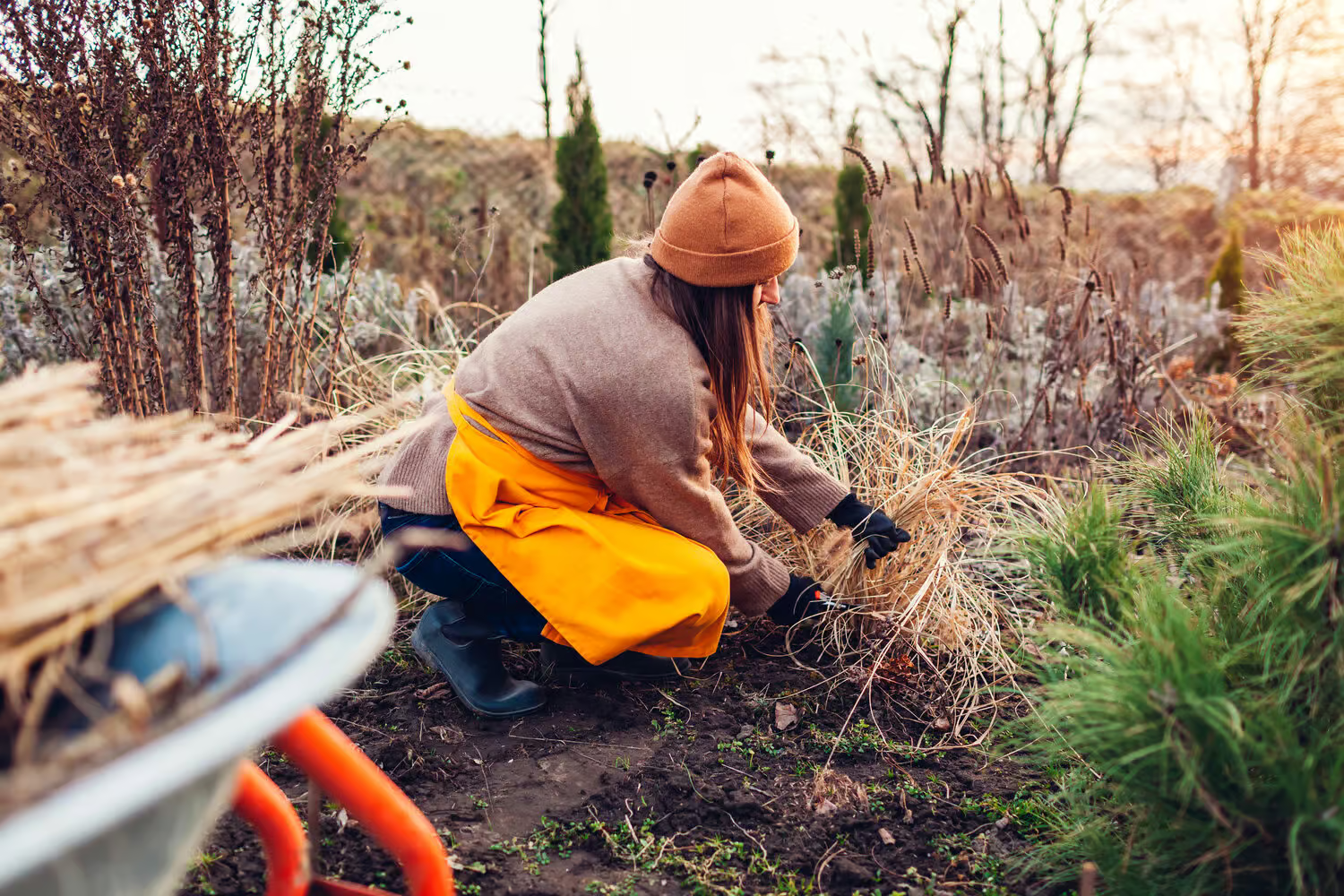
How to cut: Bundle the grass blades together with a bungee cord or rope, then cut the entire plant to 4 to 6 inches above the ground with hedge shears or a string trimmer. The new growth emerges from the crown at ground level and will quickly cover the stubble.
Why not cut in fall? Leaving the dried grass standing through winter provides habitat for overwintering beneficial insects, adds visual interest to the garden, and insulates the crown of the plant against freeze damage. Cutting in fall removes all of these benefits. Wait for late February.
More Plants for Your Winter Pruning Checklist
Butterfly Bush (Buddleja davidii)
Butterfly bush blooms on new wood. In late February, cut it back hard: to 12 to 18 inches from the ground. It will regrow 4 to 6 feet by summer and bloom prolifically. Leaving it unpruned results in a leggy, woody plant with small flowers at the tips of 8-foot canes.
Clematis (Depends on the Group)
Group 1 (early-flowering): Blooms on old wood (February to April). Varieties include Clematis montana and Clematis armandii. Do NOT prune in winter. Prune lightly after flowering only if needed to control size.
Group 2 (large-flowered): Blooms on old and new wood (May to June). Varieties include 'Nelly Moser' and 'The President.' In February, remove dead stems and cut remaining stems back to the highest pair of strong buds.
Group 3 (late-flowering): Blooms on new wood (July to October). Varieties include 'Jackmanii,' 'Sweet Autumn,' and Clematis viticella. In February, cut everything back to 12 to 18 inches from the ground.
Leave it alone this winter and observe when it blooms. That tells you the group. Then prune accordingly next year.
Blueberries
Blueberries thrive in Seattle's acidic soil and produce best with annual winter pruning. Timing: January through February while dormant. Remove dead and damaged wood, weak thin canes (thinner than a pencil), any cane older than 6 years (identified by their thick, gray bark), and canes that cross or crowd the center. Goal: an open bush with 5 to 8 strong, productive canes of varying ages.
Red-Twig Dogwood (Cornus sericea)
Red-twig dogwood is grown for its bright red winter stems. The color is most vivid on young, one-year-old stems. Older stems fade to gray-brown. Timing: late February to early March. Method: each year, cut the oldest one-third of stems to the ground. This stimulates new growth from the base that will be bright red next winter.
Wisteria
Wisteria requires two pruning events per year (summer and winter) to bloom well. Timing: January through February. Cut back the long, wispy side shoots produced last summer to 2 to 3 buds from the main structural framework (about 6 inches from the main branch). Do not cut the main structural branches — only the side shoots. This concentrates energy into flower buds.
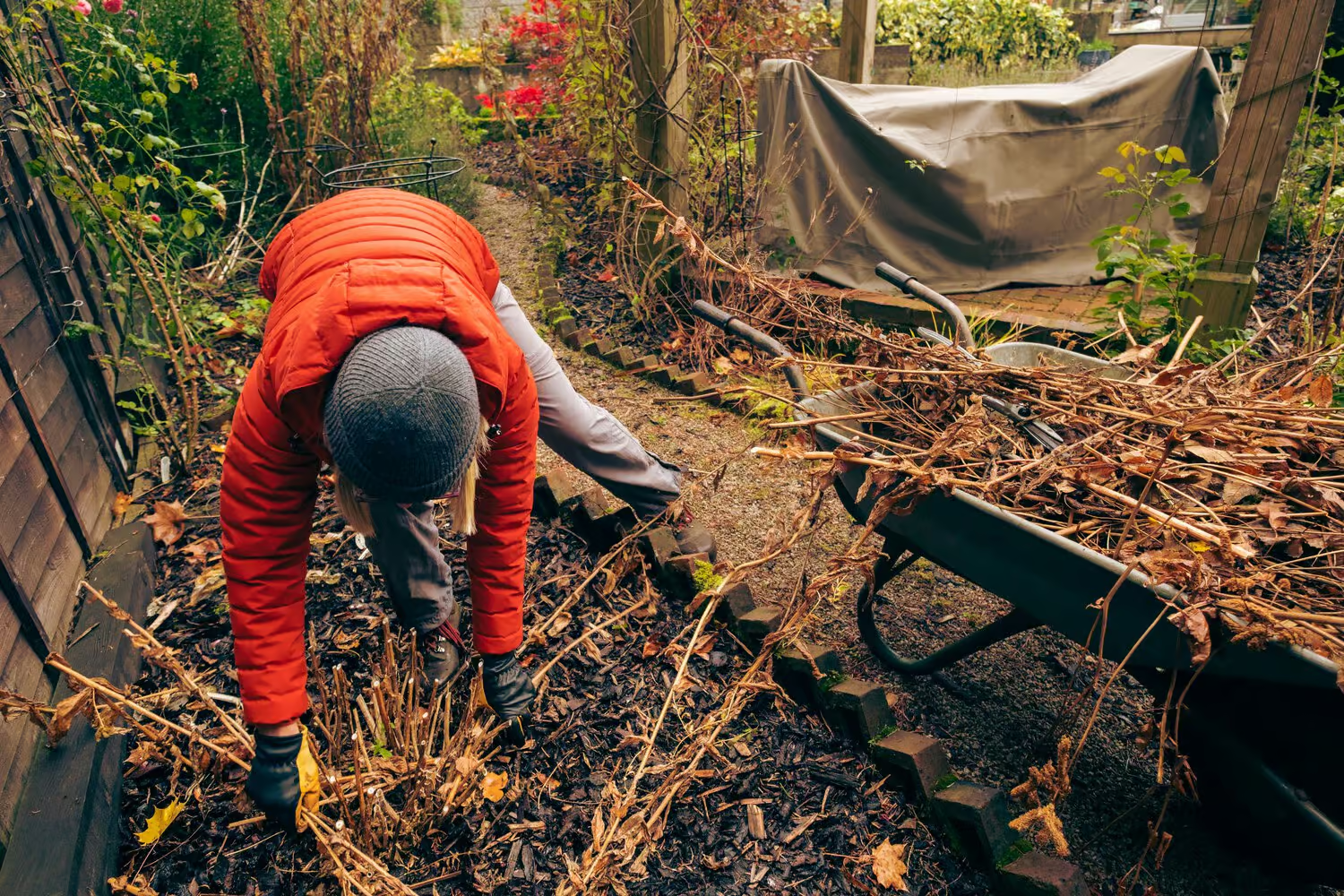
Raised Beds and Winter Garden Preparation
Seattle has seen a significant increase in homeowners growing food in raised beds. Whether you grow vegetables for food independence or because it connects you to the land, winter is when you prepare the soil for the next growing season.
Remove all dead plant material: If you grew tomatoes, peppers, squash, or beans, the dead plants need to come out completely. Late blight spores (Phytophthora infestans) overwinter in dead tomato and potato tissue. If diseased plant debris stays in the bed, the spores will reinfect next year's crop. Do not compost diseased material — bag it for yard waste.
Prune perennial herbs: Rosemary, thyme, oregano, and sage can be lightly shaped — remove dead flower stalks and frost-damaged growth. Do not hard-prune rosemary or thyme into old wood. Same rule as lavender: they do not regenerate from bare stems.
Amend the soil: Top-dress the bed with 2 to 3 inches of finished compost. This is not the time for fresh manure. Finished compost adds organic matter, improves soil structure, and is ready for planting when spring arrives.
Cover crop option: If you are not planting winter crops, sow a cover crop (crimson clover, winter rye, or Austrian winter peas) in October or November. The cover crop protects the soil from erosion, suppresses weeds, and fixes nitrogen. Cut it down in March and turn it into the soil 2 to 3 weeks before spring planting.
LandscapingFactory builds and installs custom raised beds as part of our landscaping services. See our Landscaping Services page for details.
Raised bed installation, soil amendment, and irrigation.
We design and build raised beds that drain properly and produce well in Seattle's climate. Free estimate.
What Happens When You Skip Winter Pruning
Fungal disease pressure. Seattle springs are cool and wet, which is ideal for fungal spores. An unpruned plant has a dense canopy that traps humidity. Leaves never fully dry. Powdery mildew, black spot, and anthracnose thrive in stagnant, damp air. Proper winter pruning opens the canopy so wind can circulate and leaves dry between rains.
Pest habitat. Overgrown crossing branches and deadwood create dark, sheltered spaces where scale insects, aphids, and mites overwinter. Clearing out dead wood and crossing branches in winter removes these shelters before the spring explosion.
Reduced bloom and fruit. Unpruned fruit trees produce smaller, lower-quality fruit because the canopy is too dense for sunlight to reach interior branches. Unpruned roses bloom poorly because energy goes into maintaining weak, tangled growth instead of producing flowers.
Post-Pruning Care: Dormant Sprays, Mulch, and Debris Removal
Debris Removal
Never leave pruned branches at the base of the plant. If the wood was diseased, the spores will wash into the soil and reinfect the plant next year. Collect all pruned material and either compost it (if healthy) in a hot compost system where temperatures reach 140°F or above, or bag it for yard waste collection if diseased.
Dormant Sprays (Homeowner Application)
Immediately after winter pruning is the ideal time to apply dormant sprays to fruit trees and roses. These treatments target overwintering pests and fungal spores while the plant has no leaves to protect.
Horticultural oil: Suffocates overwintering insect eggs (mites, scale) hiding in bark crevices. Apply when temperatures are between 40°F and 70°F, and no rain is expected for 24 hours.
Copper fungicide: Kills fungal spores on bark before buds open. Critical for fruit trees and roses in Seattle. Apply before the 'green tip' stage — before buds start showing green. Applying after buds open can burn new tissue.
The dormant spray recommendations above are for homeowner application. These products are available at garden centers. Commercial application of pesticides (including horticultural oil and copper fungicide) on client properties in Washington State requires a WSDA Commercial Pesticide Applicator license. LandscapingFactory does not hold this license. If you want these treatments applied professionally, contact a licensed pest management company.
Mulch
After pruning and cleanup, apply or refresh a 2 to 3 inch layer of organic mulch (arborist wood chips or aged compost) around the base of pruned plants. Keep mulch 3 to 4 inches away from the trunk or crown. Mulch insulates roots against late-season freezes, retains soil moisture, and suppresses spring weed germination.
We include mulch application and debris haul-away with every pruning service.
When to Call a Professional
Pruning roses, small shrubs, hydrangeas, ornamental grasses, and small fruit trees is a reasonable homeowner project if you have the right tools, understand the timing, and are comfortable with the techniques described above. But there are situations where hiring a professional is the safer and smarter choice.
You should hire a professional when: The shrubs are tall and overgrown (above head height). There are many plants requiring species-specific timing (a full property with dozens of varieties). The fruit trees have not been pruned in years and need a structural overhaul. You have specimen plants (mature Japanese maple, espaliered fruit trees, formal hedges) where bad pruning permanently damages the aesthetic value.
You should hire an ISA Certified Arborist when: The work requires a ladder. Branches are larger than 4 inches in diameter. The tree is near power lines. The tree is a large specimen. Since August 2024, Seattle requires tree work to be performed by a Registered Tree Service Provider (RTSP). Verify RTSP registration and find ISA Certified Arborists at treesaregood.org.
| Scope | Typical Range | Notes |
|---|---|---|
| Shrubs and hedges (under 6 feet) | $10–$25 per shrub | |
| Shrubs and hedges (over 6 feet) | $25–$75 per shrub | |
| Hedges up to 50 linear feet | $100–$300 | |
| Fruit tree pruning (small, under 15 feet) | $75–$300 per tree | Depends on size and condition |
| Full property pruning | $300–$1,500+ | Number of plants, species complexity, property size |
| Recurring maintenance discount | 10–15% | For annual pruning schedules |
Pricing is for LandscapingFactory's shrub, hedge, and small fruit tree pruning scope. Large tree work pricing varies by arborist. Includes mulch application and debris haul-away.
Need Professional Pruning This Winter?
We provide pruning for shrubs, hedges, small ornamental trees, and small fruit trees across Seattle, Kirkland, Bellevue, and the Eastside. Free on-site estimate.
Seattle Winter Pruning Calendar (Month by Month, Zone 8b)
This calendar covers the winter pruning window (December through March) for the most common plants in Seattle residential gardens.
| Month | What to Prune / Do |
|---|---|
| December | Remove dead wood from roses (3 Ds). Prune wisteria side shoots to 2–3 buds. Deadhead old flower heads on old-wood hydrangeas. Remove dead vegetable plants from raised beds. Do not prune lavender, ornamental grasses, or butterfly bush yet. |
| January | Prune small fruit trees (apple, pear, cherry, plum): open center, remove water sprouts and crossing branches. Prune blueberries: remove old canes, thin weak growth. Continue wisteria winter prune. Begin dormant spray applications on mild, dry days (40–70°F). Leave ornamental grasses standing. |
| February | Prune panicle and smooth hydrangeas (new wood) in late February. Begin structural rose pruning when forsythia blooms. Cut back ornamental grasses to 4–6 inches. Cut back butterfly bush to 12–18 inches. Prune red-twig dogwood (oldest 1/3 of stems). Prune Group 3 clematis to 12–18 inches. Lavender haircut (trim green growth by 1/3, late February at earliest). |
| March (Early) | Finish all structural pruning before bud break (typically mid-March). Apply dormant sprays before green tip stage. Last chance for rose pruning. Top-dress raised beds with compost. Turn under cover crops 2–3 weeks before spring planting. Do NOT prune old-wood hydrangeas, rhododendrons, or Group 1 clematis. |
Rhododendrons and azaleas: prune immediately after bloom (May–June). Bigleaf and oakleaf hydrangeas: deadhead only, no structural pruning until after bloom. Lilac: prune immediately after bloom (June). Forsythia: prune immediately after bloom (March–April). Camellia: prune immediately after bloom (varies by variety). All of these bloom on old wood. Winter pruning removes the flower buds.
Frequently Asked Questions About Winter Pruning in Seattle
Can I prune while it is raining? +
What happens if I prune my hydrangeas in January? +
Should I use wound sealer or paint on pruning cuts? +
When is the latest I can prune before spring? +
Can I prune rhododendrons in winter? +
How much of a plant can I remove at once? +
Why do you use alcohol instead of bleach for tool sterilization? +
Do fruit trees need to be pruned every year? +
Can I prune Japanese maples in winter? +
Is topping a tree a good way to reduce height? +
Does pruning help with moss on trees? +
Is it okay to prune during a freeze? +
Why is my lavender woody and bare at the bottom? +
What is the difference between deadheading and pruning? +
Do I need a professional for pruning? +
Winter Is Preparation Season. The Buds Are Already Forming.
Every plant in your garden is already preparing for spring. Hydrangea buds are set. Rose canes are storing energy. Fruit tree spurs are developing. The decisions you make with your pruning shears in January, February, and March determine what blooms, what fruits, and what thrives through summer.
The timing matters. The technique matters. And knowing what to leave alone matters as much as knowing what to cut.
LandscapingFactory provides professional pruning.
LandscapingFactory provides professional pruning for shrubs, hedges, small ornamental trees, and small fruit trees in Seattle, Kirkland, Bellevue, and the Eastside. For large tree work, we refer to ISA Certified Arborists. Free on-site estimate.
Similar Posts
Contact Us Today For A Free Consultation
Let's get started.
Tell us what you'd like to tackle when you request a quote and we'll do the rest.