July 26, 2026
The Great Awakening: The Definitive Guide to Preparing Your Seattle Garden for Spring
Growing up in Kirkland taught us the soil, the seasons, and what holds. We build what lasts here because we live here. That matters.
In Seattle, the window between January and March is the season that determines what your landscape looks like in May. Every cleanup task you skip, every soil problem you ignore, and every pruning cut you miss during this window shows up as a problem once the growing season starts.
The challenge is knowing what to do when. Some tasks (like pruning hydrangeas) have exact timing windows. Others (like soil amendment) need months of lead time to take effect. And some tasks (like pre-emergent weed prevention) are worthless if you miss the temperature threshold by two weeks.
This is a month-by-month checklist for Seattle homeowners. Each section tells you what to do, when to do it, why it matters for our climate specifically, and where to find the detailed instructions if you want to go deeper on any topic.
The Month-by-Month Timeline (Quick Reference)
| Month | Tasks |
|---|---|
| January | Remove winter storm debris from beds and walkways. Prune wisteria side shoots. Prune small fruit trees (apple, pear, cherry). Prune blueberries. Begin hardscape inspection (freeze-thaw damage). Check landscape lighting fixtures. Plan hardscape and planting projects for spring. Move frost-sensitive containers under cover. |
| February | Prune panicle and smooth hydrangeas (late Feb). Structural rose pruning when forsythia blooms. Cut back ornamental grasses to 4–6 inches. Cut back butterfly bush to 12–18 inches. Prune red-twig dogwood (oldest 1/3 of stems). Apply lime if soil test shows pH below 6.0. Top-dress beds with 2–3 inches compost. Service irrigation system (backflow preventer check, head audit). Clean gutter systems. Sharpen tools. Apply pre-emergent weed preventer (late Feb, soil temp dependent). |
| March (Early) | Finish all pruning before bud break (mid-March). Edge beds and apply mulch. Overseed bare lawn patches (perennial ryegrass/fine fescue blend). Aerate compacted lawns. Fertilize lawn (first spring application). Clean landscape lighting lenses. Plant bare-root trees and shrubs. Plant cool-season vegetables (kale, peas, spinach). Final pre-emergent window if not done in February. |
Debris Cleanup and Garden Sanitation
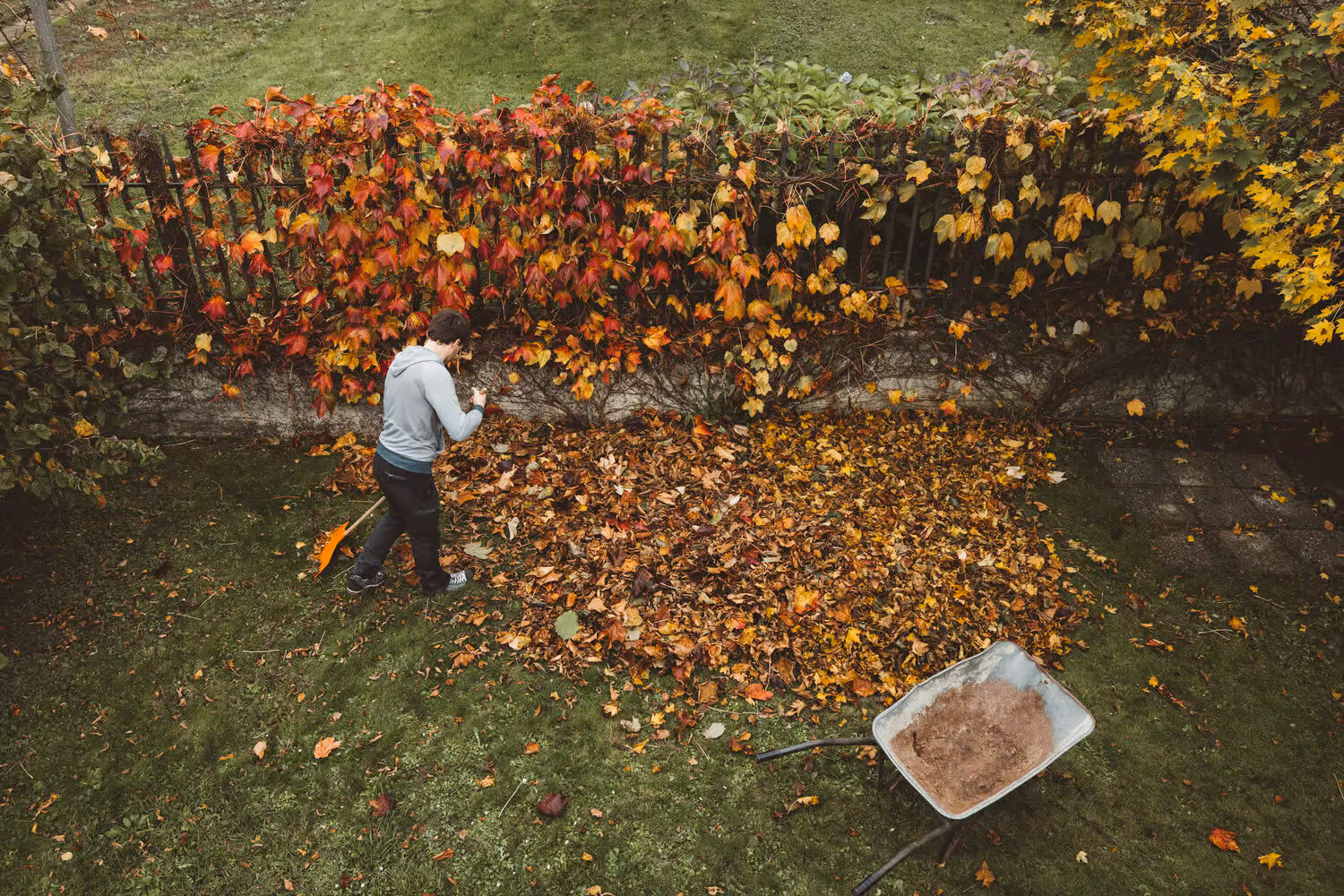
Winter storms in the Puget Sound deposit branches, matted leaves, and organic debris in beds, on walkways, and against foundations. In drier climates, leaving leaf litter in beds is often recommended as insulation. In Seattle, the opposite is true. Wet, matted leaves that sit on perennials through winter trap moisture against crowns, creating conditions for crown rot, slug habitat, and fungal disease.
What to remove: Heavy, matted leaf layers from the base of roses, hydrangeas, and perennials. Fallen branches. Accumulated debris in bed corners and against foundations. Dead annual and vegetable plants from last season (pull entire plants including roots, especially tomatoes and squash that may carry disease spores).
What to keep: A thin layer of decomposing leaves on bare soil is fine. The goal is removing the thick, wet mats that smother plants, not stripping the soil bare (which causes erosion and exposes soil to weed seeds).
Diseased material: Anything showing black spot, powdery mildew, or late blight goes in the yard waste bin, not the home compost pile. Home compost does not reach the temperatures needed to kill fungal spores.
For how debris and organic matter create pest habitat (slugs, rodents, overwintering insects), see our Landscape Health and Pest Prevention guide.
Soil Health: Test, Amend, Do Not Till
Soil is the foundation of everything in your landscape. In Seattle, winter rain leaches calcium and magnesium from the soil, gradually lowering pH and making soil more acidic each year. Acidic soil (below pH 6.0) limits nutrient availability to plants regardless of how much fertilizer you apply.
Test Before You Amend
A soil test from WSU Extension (mail-in kits available at soiltest.wsu.edu) tells you your exact pH, nutrient levels, and organic matter percentage. This costs approximately $25 to $30 and eliminates guessing. If pH is below 6.0, apply granular lime (calcium carbonate) in January or February. Lime takes 2 to 3 months to measurably change pH, so winter application ensures the soil is in the right range by the time plants begin active growth in spring.
Do Not Till Wet Clay Soil
This is the most common soil mistake in the Pacific Northwest. Tilling wet, clay-heavy soil destroys soil structure. Wet clay, when mechanically churned, compresses into dense clumps that dry into something resembling concrete. Tilling also destroys the mycorrhizal fungal networks that healthy plants depend on for nutrient uptake and kills earthworms that provide natural aeration.
Instead: Use a broadfork or digging fork to gently open compacted areas without inverting the soil layers. For beds, the best approach is no-till: spread 2 to 3 inches of finished compost on top and let rain, worms, and soil biology incorporate it naturally. By spring, the top 4 to 6 inches will be noticeably improved in structure and fertility.
Pick up a handful of soil and squeeze it. If it forms a sticky ball that does not break apart when you poke it, it is too wet. Wait. If it holds a loose shape but crumbles easily when poked, it is ready to work. Working soil that is too wet compacts it and causes more damage than doing nothing.
For lawn-specific soil health (aeration, overseeding, fertilization programs), see our Lawn Care and Maintenance page.
Pruning and Cutbacks
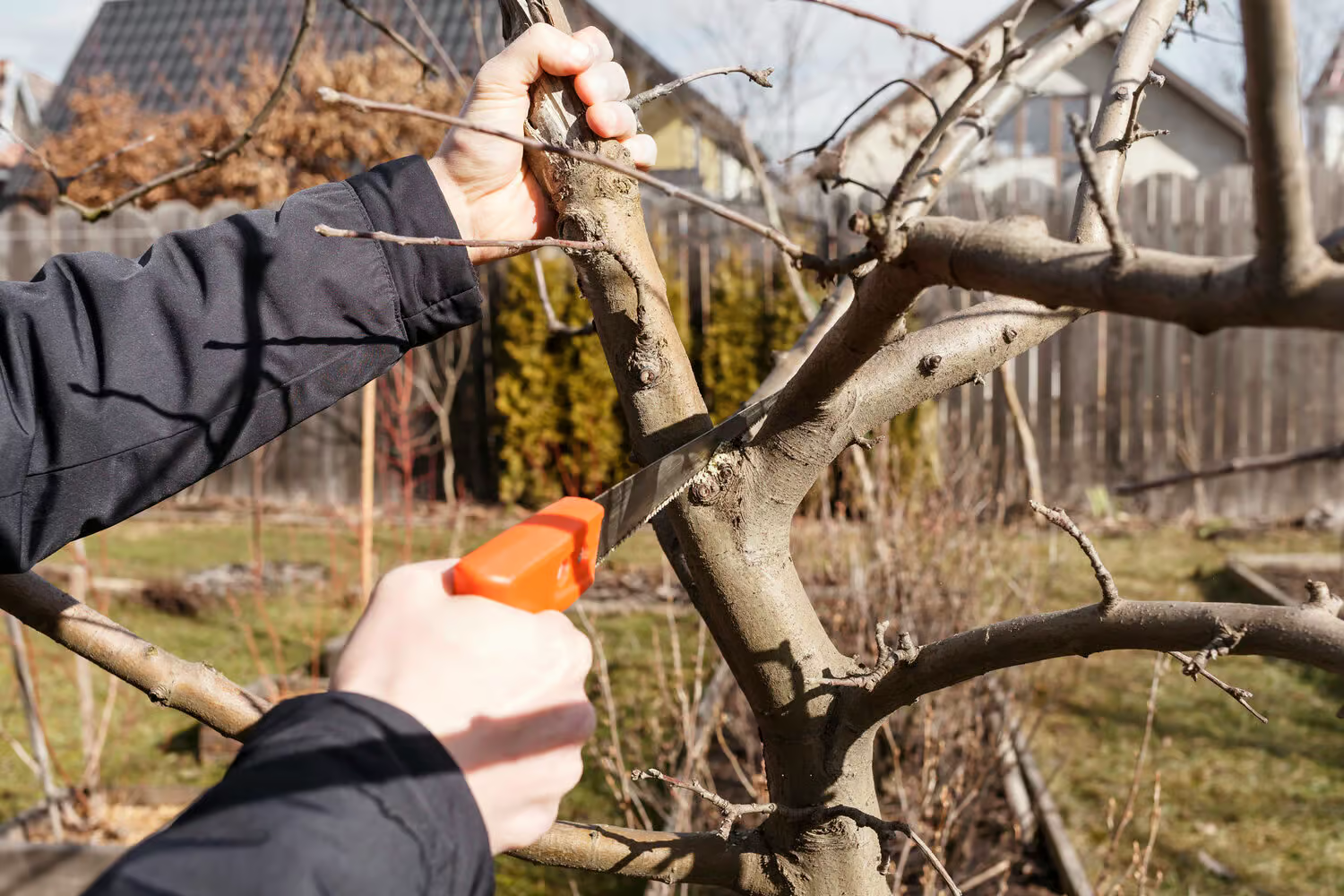
Winter pruning is a large enough topic that we have written a full guide dedicated to it. This section covers the timing essentials. For species-specific instructions (hydrangeas old wood vs new wood, roses 3 Ds strategy, fruit tree open center pruning, lavender safety zone, clematis groups, blueberry cane management), read our full Winter Pruning Guide.
January: Prune small fruit trees (apple, pear, cherry, plum). Prune wisteria side shoots to 2–3 buds. Prune blueberries (remove old canes, thin weak growth). Deadhead old-wood hydrangeas (remove dead stems only — do NOT cut healthy canes).
Late February: Cut back ornamental grasses to 4–6 inches. Cut back butterfly bush to 12–18 inches. Prune panicle and smooth hydrangeas. Begin structural rose pruning when forsythia blooms. Prune red-twig dogwood (oldest third of stems to ground). Prune Group 3 clematis to 12–18 inches. Lavender haircut (trim green growth by one-third).
Early March: Finish all structural pruning before bud break (typically mid-March in Zone 8b). Last chance for rose pruning.
Rhododendrons, azaleas, lilac, forsythia, camellia, bigleaf hydrangeas, oakleaf hydrangeas, Group 1 clematis. All of these bloom on old wood. Pruning now removes this year's flowers. Wait until after they bloom.
Perennial Cutbacks
Hostas, peonies, and daylilies should have their old foliage removed to ground level. Dead stems harbor overwintering pests and disease spores. Ferns benefit from removing last year's tattered fronds before new fiddleheads emerge in spring. Hellebores (Lenten roses): cut off the old, tattered leaves to reveal new flowers emerging from the center — hellebores bloom in winter, so the new flowers are already forming beneath the old foliage.
Full pruning guide: See our Winter Pruning in Seattle article. Professional pruning services: See our Pruning and Shrub Trimming Services page.
Lawn Prep: Aeration, Moss, and Overseeding
Seattle lawns take more abuse in winter than most homeowners realize. Months of rain compact the soil, shade from cloud cover weakens grass, and moss colonizes every bare spot. The window from late February through early April is when you set the lawn up to outcompete moss and weeds for the rest of the year.
Core aeration (February to March): Relieves compaction, improves drainage, and allows air to reach grass roots. This is the single most important lawn maintenance task for Seattle soil. Aeration before overseeding gives new grass seed direct soil contact for better germination.
Moss management: If your lawn has significant moss, the moss is telling you something about the soil: pH is too low, drainage is poor, or shade is too heavy. Killing moss without fixing the underlying conditions is a temporary fix. See our full Moss Control Guide for the step-by-step process.
Overseeding (March): Fill bare spots with a perennial ryegrass and fine fescue blend (70/30 for most Seattle yards). Ryegrass germinates fast (5–7 days) and handles traffic. Fine fescue tolerates shade. Seed onto aerated soil, top-dress lightly with compost, and keep moist for 2 weeks.
Fertilization (early March): The first spring application feeds grass as it exits winter dormancy. A slow-release organic fertilizer gives sustained nutrition without the burn risk of synthetic quick-release products.
Full lawn care programs (aeration, overseeding, fertilization, seasonal schedules): See our Lawn Care and Maintenance Services page. Why moss grows in lawns and what to do about it: See our Moss Control Guide.
Irrigation System Audit and Drainage Check
Winter reveals drainage problems that are invisible in summer. If you see standing water in beds, pooling on walkways, or soggy areas near the foundation, your drainage needs attention before spring planting.
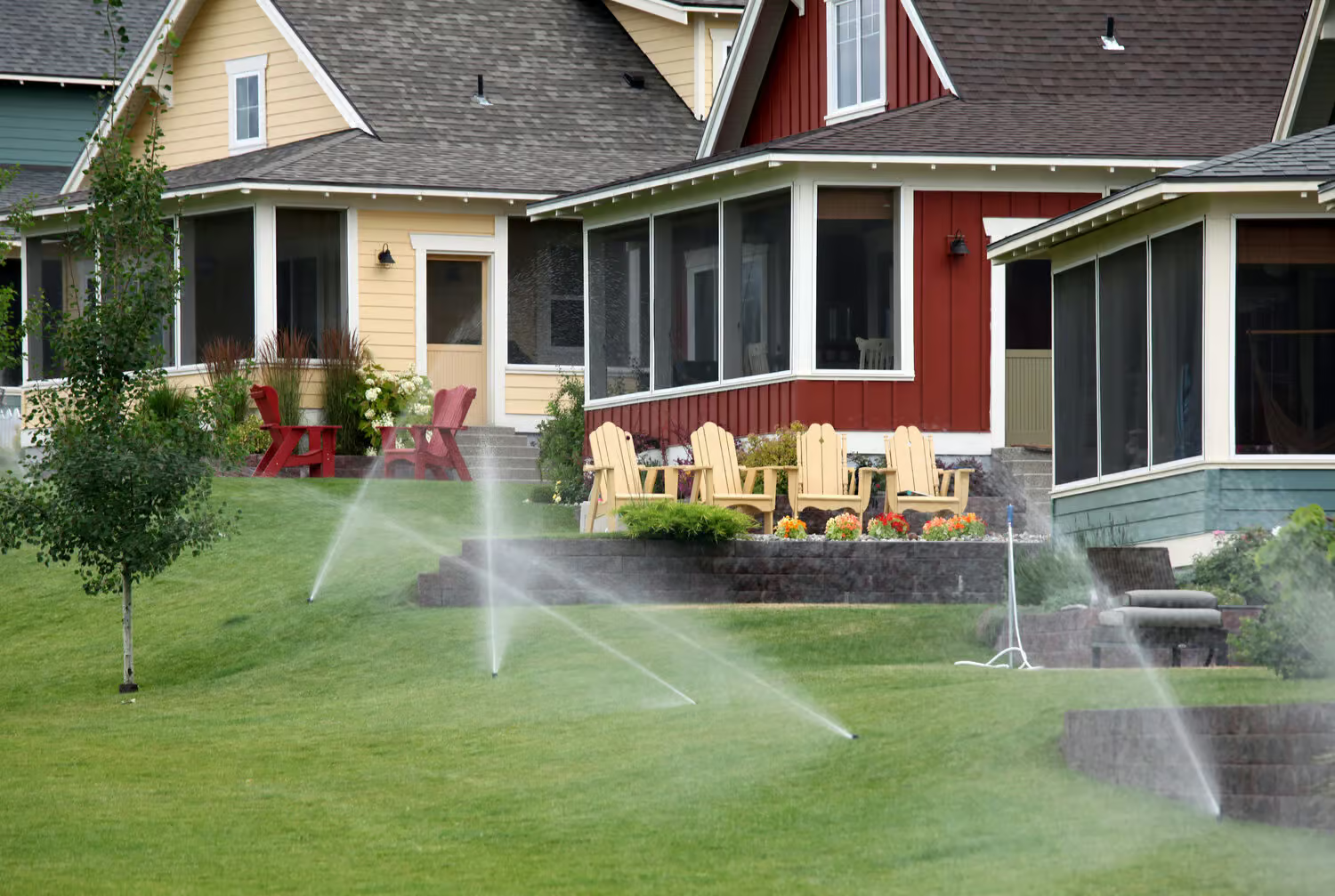
Irrigation system (February): If you winterized your system in fall, schedule a spring activation and audit. Check the backflow preventer for freeze cracks. Walk every zone and identify buried, broken, or misaligned sprinkler heads. Adjust head spray patterns to avoid watering hardscapes and siding.
Drainage (January to February): Clear catch basin grates of leaves and sludge. Ensure downspouts are directing roof runoff away from beds and foundations. Check French drains for clogs. If you are planning new beds or hardscape, use this wet season to observe where water collects and where it flows. This information is critical for designing beds that drain properly and patios that stay dry.
Gutters (January): Winter storms deposit leaves and debris in gutters. Clogged gutters overflow onto beds, foundations, walkways, and decks, feeding moss growth, eroding soil, and creating slip hazards. A gutter flush in January or February clears the system before spring rain.
Irrigation system maintenance, activation, and repair: See our Irrigation Maintenance Services. Gutter cleaning and downspout clearing: See our Gutter Services.
Weed Prevention (Pre-Emergent Timing)
In Seattle, weeds do not go fully dormant. Shotweed (hairy bittercress) germinates all winter. Annual bluegrass sprouts in cool, wet soil. Chickweed and clover establish before most gardeners notice. By the time you see spring weeds, they are already seeding the next generation.
Pre-Emergent Herbicide (Homeowner Application)
Pre-emergent herbicides create a barrier on the soil surface that prevents weed seeds from germinating. They do not kill existing weeds or established plants. They prevent new weeds from sprouting.
Timing is everything: Pre-emergent must be applied before soil temperatures consistently reach 50 to 55°F. In Seattle, this is typically late February to early March. If you apply too late (after weed seeds have already germinated), the product is ineffective. A soil thermometer (available at garden centers for $5 to $10) is the most reliable way to time the application.
Organic option: Corn gluten meal is a natural pre-emergent that also provides a mild nitrogen boost. It is less effective than synthetic pre-emergents but offers a non-chemical alternative. It must be applied at a higher rate and reapplied after heavy rain.
Pre-emergent herbicides (including corn gluten meal) are pesticides under Washington State law when applied commercially. Commercial application requires a WSDA license. The information above is for homeowner self-application. Products are available at garden centers with application instructions on the label. If you want professional application, contact a licensed pest management company.
What LandscapingFactory does for weed control: We control weeds through physical methods: manual pulling, mulching (3 inches of organic mulch blocks light from reaching weed seeds), and maintaining thick turf that outcompetes weeds. Mulch and healthy grass are the two most effective long-term weed suppression strategies and require no chemical application.
Edging and Mulching
After winter cleanup, soil amendment, and pruning are done, edging and mulching are the finishing step that ties everything together visually and functionally.
Edging (late February to March): Over winter, lawn grass creeps into garden beds. A clean edge re-establishes the boundary. We use a flat spade or mechanical bed edger to cut a vertical trench (3 to 4 inches deep) where lawn meets bed. This physical separation holds mulch in place, prevents grass roots from jumping into beds, and creates the clean line that defines a maintained property.
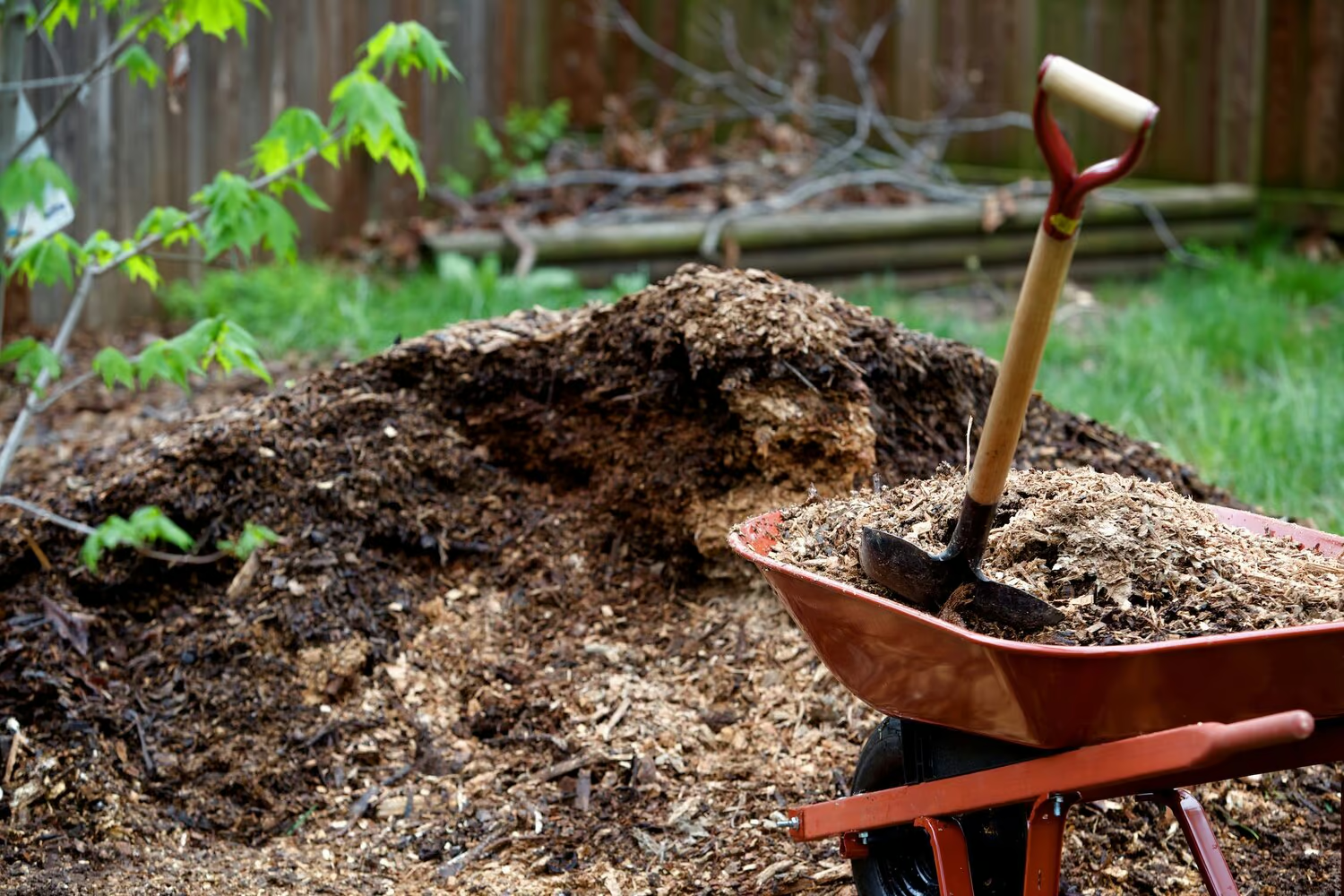
Mulching: Apply 2 to 3 inches of organic mulch (arborist wood chips or compost mulch) to all garden beds. Keep mulch 3 to 4 inches away from trunks and plant crowns (mulch touching wood promotes rot). Mulch retains soil moisture during summer dry months, suppresses weed germination by blocking light, insulates roots against late-season frost, and feeds the soil biology as it decomposes.
Never pile mulch against tree trunks in a cone shape ('mulch volcano'). This traps moisture against the bark, promotes rot and disease at the root flare, and attracts pests. Mulch should be spread in a flat donut around the base with a gap at the trunk.
Mulching and bed maintenance are included in our landscaping services.
Landscape Lighting Check
Seattle winters are dark. From November through February, sunset is before 5 PM. Your landscape lighting system is a safety feature as much as an aesthetic one. Winter is the time to check it before the spring entertaining season.
Fixture alignment: Frost heave shifts ground-mounted fixture stakes. Walk every fixture after dark and check that lights illuminate paths and steps, not the sky. Re-level any fixtures that have tilted.
Lens cleaning: In Seattle's damp climate, algae and mineral deposits build up on glass and polycarbonate lenses, dimming output. A damp cloth with mild soap restores brightness.
Bulb replacement: Replace burnt-out bulbs. If you are still running halogen fixtures, this is the window to convert to LED. LED path lights and spotlights use 75% less energy and last 25,000+ hours versus 2,000 to 5,000 for halogen.
Timer adjustment: As days lengthen from January into March, adjust timers so lights turn on at dusk and off at a reasonable hour.
For landscape lighting installation, repair, and holiday lighting, see our Landscape Lighting Services.
Design and Planning: Use the Dormant Season
Winter is the best time for landscape design assessment because the 'bones' of your property are visible. Without the distraction of foliage and flowers, you can see the structure: sight lines, grade changes, drainage patterns, privacy gaps, and traffic flow.
Privacy audit: With deciduous leaves down, you can see exactly where you are visible to neighbors. Identify gaps where year-round screening is needed. Evergreen hedges (Portuguese laurel, Western red cedar, emerald arborvitae) planted in late winter or early spring establish roots before summer stress.
Hardscape planning: If you are considering a patio, walkway, fire pit, or retaining wall, planning in January and February puts you first in line for installation when the ground dries. Use the wet season to observe where water pools and where it drains.
Planting design: Late winter is the window for planting bare-root trees and shrubs — significantly less expensive than container-grown. Hardy PNW natives (sword fern, Oregon grape, red flowering currant, salal) establish roots in wet winter soil and thrive with minimal irrigation once established.
For landscape design, installation, and planting, see our Landscaping Services page.
Hardscape Inspection
Seattle's freeze-thaw cycles (typically 10 to 20 freezing nights per winter) cause physical damage to hardscapes. January and February are the time to inspect before the damage compounds.
Pavers: Check for shifting, sinking, or wobbling. Moss in joints displaces locking sand. Heaved pavers from frost need re-leveling before they become trip hazards.
Concrete: Look for new cracks, spalling (flaking surface), or settling. Small cracks sealed now prevent water intrusion that causes larger cracks next winter.
Retaining walls: Check for leaning, bulging, or water seeping through joints. Drainage behind the wall may be clogged, causing hydrostatic pressure that pushes the wall forward.
Walkways and steps: Check for algae and moss buildup. These create slip hazards during the rainy season. A soft-wash cleaning before spring restores safety and appearance.
Containers, Tools, and Equipment
Container Protection
Seattle winters hover around freezing, creating repeated freeze-thaw cycles that crack porous ceramics. Terracotta and unglazed pottery are the most vulnerable. Move them under cover (garage, covered porch) or elevate them on pot feet so water drains freely. If water collects in the bottom of a pot and freezes, the expansion cracks the pot from the inside. Glazed pots and fiberglass containers are more freeze-resistant but should still be elevated for drainage.
Tool Maintenance
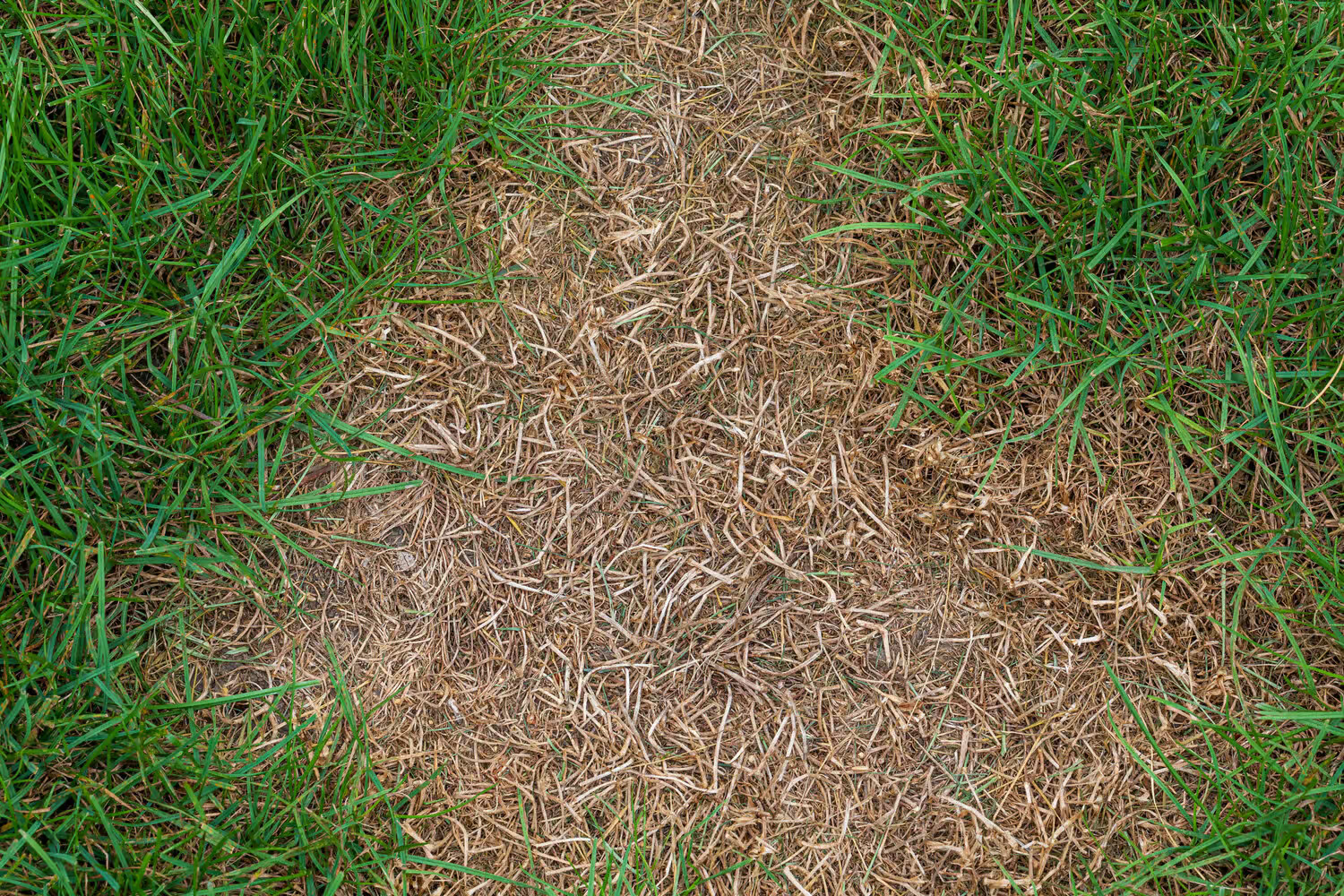
Winter downtime is the window for tool maintenance. Sharpen pruning shears, loppers, and mower blades. A sharp mower blade cuts grass cleanly. A dull blade tears and shreds the tips, causing a brown haze over the lawn and creating open wounds that invite fungal spores. Wipe metal tools with mineral oil after sharpening to prevent rust. Replace worn handles and tighten loose bolts.
Outdoor Spigots
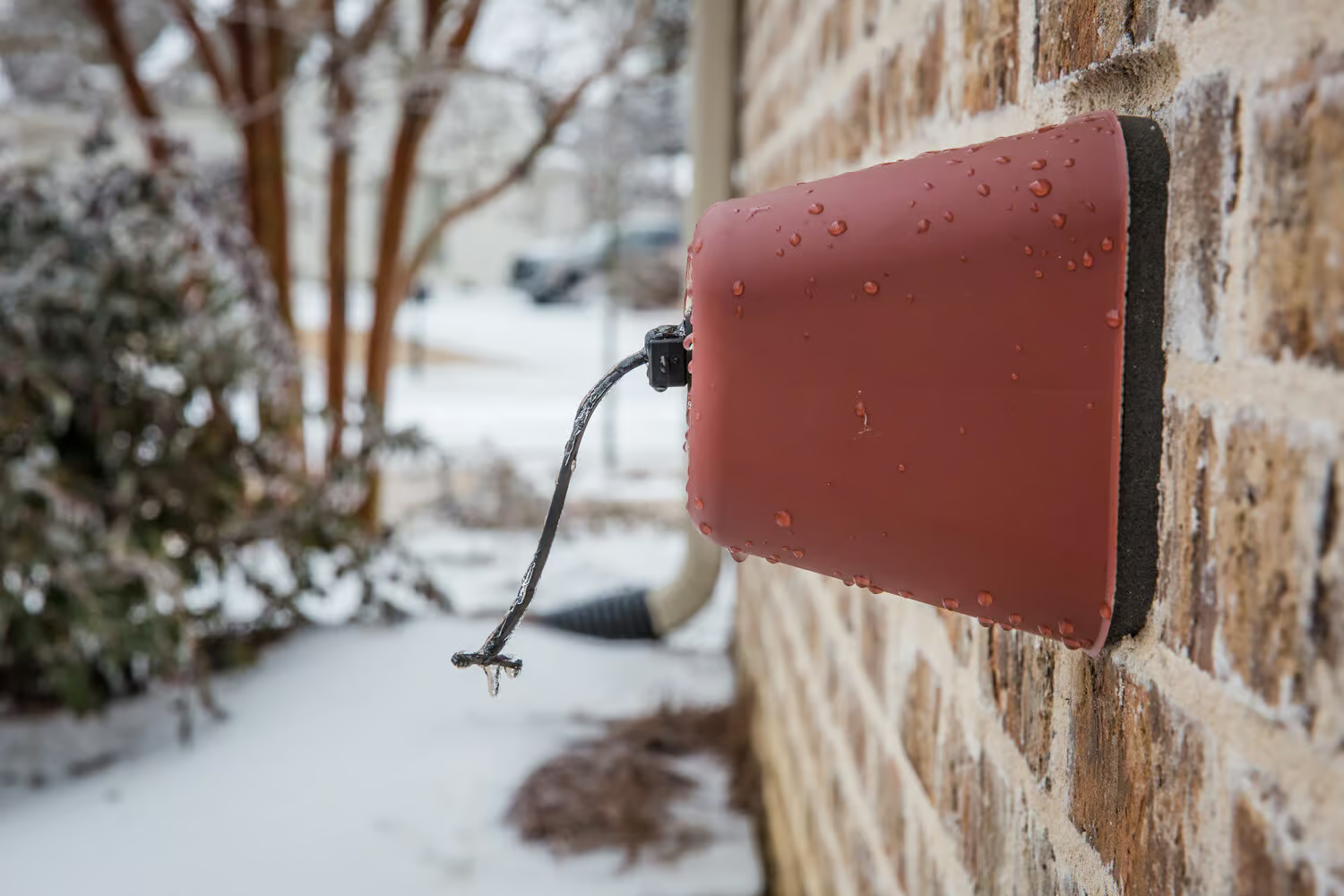
Even in Seattle's mild winters, a sudden drop to 20°F can burst unprotected outdoor pipes. Disconnect and drain all hoses. Install insulated spigot covers. If your home has a shut-off valve for outdoor water lines, close it and drain the line. This is a $5 to $10 prevention step that avoids thousands of dollars in plumbing repairs.
Full Winter Garden Prep: Cleanup, Pruning, Aeration, Mulching, Irrigation Audit.
We handle the entire seasonal sequence so every task happens at the right time. Free estimate for full property prep.
Frequently Asked Questions About Winter Garden Prep in Seattle
When should I start prepping my garden in Seattle? +
Should I till my garden beds in winter? +
What is the best mulch for Seattle? +
Can I plant anything in February? +
How do I get rid of shotweed? +
Do I need to water my garden in winter? +
When should I fertilize? +
Is it too late to plant bulbs? +
When should I apply moss killer to my lawn? +
Why are my hellebores looking tattered? +
Can I transplant shrubs in winter? +
How do I know if my soil is ready to work? +
What do I do with fireplace ash in the garden? +
Should I clean bird feeders in winter? +
Is winter garden prep worth hiring a professional for? +
January Through March Is When Spring Gardens Are Built
Everything you do (or do not do) between January and March shows up in May. A lawn that was aerated and overseeded in February is thick by April. Hydrangeas pruned at the right time bloom on schedule. Mulched beds suppress weeds without chemicals. Irrigation systems audited in February work flawlessly in July. And problems caught during the dormant season — drainage, frost damage, pest habitat — are fixed before they cost real money.
This is the season of preparation. The checklist is long, but each item takes your landscape one step closer to a spring that runs itself instead of running you.
Similar Posts
Contact Us Today For A Free Consultation
Let's get started.
Tell us what you'd like to tackle when you request a quote and we'll do the rest.