The pile has been sitting there long enough that you have stopped seeing it. Then one Saturday you decide: today is the day. You will borrow a truck, load it up, drive it to the dump, and be done by lunch.
Here is what actually happens. You spend an hour figuring out where the dump even is — Seattle calls them transfer stations, and there are two. You spend another hour loading. You get there and discover there is a line of trucks ahead of you, a scale, a minimum fee, separate charges for the mattress and the old dryer, and a fine waiting for you if your load is not covered. You are not done by lunch. You are done by 4 pm, sore, out $150-plus, and the truck still needs to be swept out and returned.
We are a landscaping and junk removal company, so yes, we have an interest here. But we are also at these transfer stations every week, and this guide is the honest version of what a DIY dump run costs in Seattle in 2026: the real fees, the rules nobody tells you, and the actual math on when doing it yourself wins and when it does not.
Where Is the Dump in Seattle? North and South Transfer Stations
Seattle Public Utilities operates two self-haul facilities. There is no landfill inside the city; both stations transfer waste to rail for disposal out of state.
North Transfer Station: 1350 N 34th St, in Wallingford, just north of Gas Works Park. Rebuilt in 2016. Serves everyone north of the Ship Canal and is the busy one on weekends.
South Transfer Station: 130 S Kenyon St, in South Park, just west of Boeing Field. Serves everything south of downtown. Usually the shorter line of the two.
Both stations are generally open daily from 8:00 am to 5:30 pm. Payment is by card. Check seattle.gov/utilities before you go — hours shift on some holidays and the first Wednesday of each month.
If you are outside Seattle proper — Bellevue, Kirkland, Redmond, Renton — you will use King County facilities instead, such as Factoria, Houghton, or Shoreline. Different agency, similar structure, slightly different rates.
Weekends Are Rough
Saturday and Sunday mornings, especially in spring, the line at the North Transfer Station can stretch 30 to 60 minutes before you reach the scale. If you are going to self-haul, a weekday afternoon is a different experience entirely. Fridays before a holiday weekend are the worst of all.
Seattle Transfer Station Fees in 2026: What You Pay at the Scale
Transfer stations charge by weight. You drive onto a scale loaded, you drive onto a scale empty, and you pay for the difference — with minimum charges that apply even for small loads.
Item / Load Type
Fee (2026)
Notes
Garbage minimum charge
~$35 per trip
Covers up to roughly 420 lbs
Garbage over minimum
~$165 per ton
A loaded pickup bed often exceeds the minimum weight
Clean yard waste minimum
~$24 per trip
Covers up to roughly 380 lbs — must be fully separated
Clean yard waste over minimum
~$125 per ton
Cheaper than garbage; mixing trash voids the rate
Appliances
~$32 each
Limit applies per load; refrigerant units handled separately
Mattress or box spring
Charged with your load
Weight-based; no free curbside pickup exists in Seattle
Tires
~$15 per load (max 4)
Passenger tires only
Unsecured load fee
$5–$10 added
Charged at the scale if your load is not covered
Rates are approximate for 2026 and change over time; confirm current pricing at seattle.gov/utilities before your trip.
The Yard Waste Discount Is Real — If Your Load Is Clean
Separated yard waste is billed at roughly $125 per ton versus $165 for garbage, with a lower minimum too. But clean means clean: one garbage bag, one broken planter, one scrap of treated lumber mixed into the pile and the whole load gets billed at the garbage rate. Sort before you load, not on the tipping floor.
The Hidden Costs of a DIY Dump Run
The scale fee is the visible cost. Here is the rest of the invoice nobody writes down:
The truck. No pickup? A rental runs $20 to $40 for the day base rate, plus about $1 per mile, plus fuel, plus insurance. Realistic total: $60 to $120. Borrowing a friend's truck is cheaper but now you owe a favor, and favors compound.
The muscle. A couch does not load itself. If you do not have a second person, you are either paying one or improvising with ramps and physics. This is where backs get hurt, and an ER copay makes this the most expensive dump run in history.
The time. Loading: 1 to 2 hours. Driving both ways: 1 hour. The line and the tipping floor: 30 to 90 minutes. Unloading your own truck at the station — you do that part too, by hand. Sweeping out the truck after: 20 minutes. That is 4 to 5 hours of a weekend day, minimum.
The second trip. The classic DIY miscalculation. A pickup bed holds about 2 cubic yards loaded level. The average garage cleanout produces 6 to 10. People consistently underestimate their pile by half, and the second trip doubles the mileage, the line, and another minimum charge.
The rain. This is Seattle. From October to May, there is a real chance you are loading wet furniture, which is heavier (you pay by weight) and considerably less fun.
The Real DIY Total
A typical one-pickup-load dump run in Seattle: $35 to $70 at the scale + $60 to $120 truck rental + fuel + 4 to 5 hours of your day. Call it $100 to $200 in cash and half a weekend, for one load. That is the honest baseline to compare against a professional quote — not just the scale fee.
The DIY Dump Run, Step by Step
If you are doing it yourself, do it right and do it once:
1
Sort Before You Load
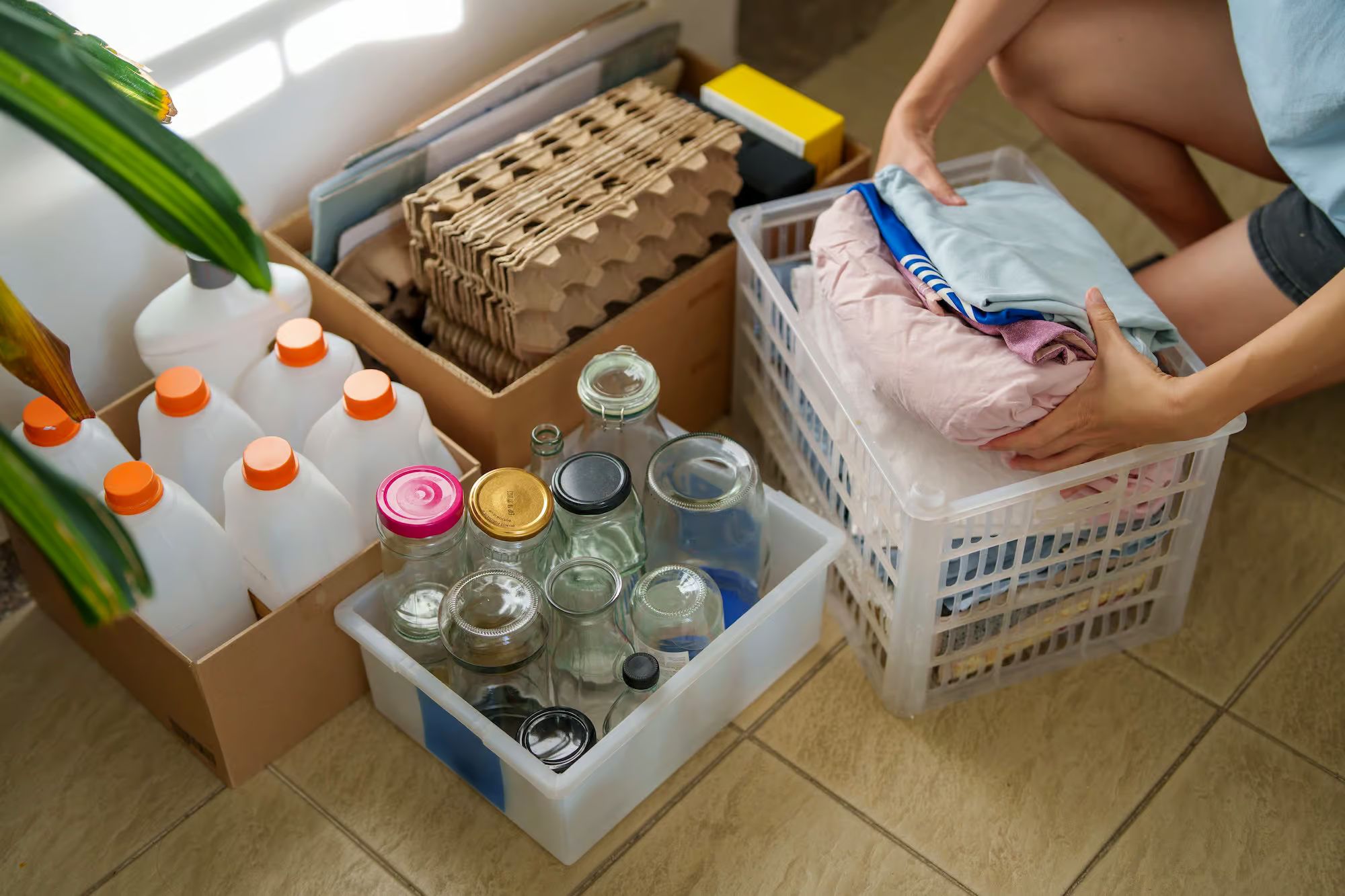
Separate yard waste from garbage from metal from anything with special handling (appliances, tires, electronics). Load the truck in reverse order of drop-off so you are not excavating your own load at the station. Weigh your mattress and appliance decisions now — per-item fees can change the math on what is worth hauling versus donating.
2
Cover and Secure the Load
A tarp and two ratchet straps. This is not just about the $5 to $10 unsecured load fee at the scale — Washington State can ticket you on the road for debris risk. Every experienced hauler tarps every load, every time.
3
Time Your Arrival
Weekday afternoons are fastest. Arrive at least 45 minutes before close — if the line is long at closing time, you can be turned away with a full truck. Bring a card for payment, know your load categories before you reach the scale house, and follow the spotter's directions on the tipping floor.
Transfer Station Rules That Catch First-Timers
You unload it yourself. Station staff direct traffic; they do not touch your junk. Whatever you loaded at home, you unload again onto the tipping floor, by hand, with the clock running and trucks waiting.
Some items get rejected at the scale. Hazardous waste — paint, motor oil, pesticides, propane tanks, asbestos — is turned away and redirected to King County hazardous waste facilities. Electronics like TVs and monitors are banned from Washington landfills and belong at E-Cycle Washington drop-off sites.
Refrigerators and freezers have special handling. Refrigerant must be recovered by law before disposal, which is why CFC appliances carry their own fee and process.
Load categories are your problem. Declare garbage as yard waste and get caught, and the whole load is re-billed at the higher rate. The scale house has seen every trick.
The $0 Option Most People Skip
Before anything goes in the truck, ask: is any of this actually still usable? Donation pickups from charities cost nothing, remove furniture for free, and skip the scale entirely. A dump run where half the load could have been donated is a dump run you paid double for.
You already own a truck. The math changes completely when the rental line item disappears. If you have a pickup and a free afternoon, a single small load is cheap to self-haul.
The load is small and clean. One category, no per-item fees, under the minimum weight. A bed-load of branches after a windstorm, billed at the yard waste minimum of about $24, is a perfectly efficient errand.
You are already going. Combining a dump run with another South Park or Wallingford errand kills the mileage cost.
When Hiring a Hauler Beats DIY: The Break-Even Math
Scenario
DIY Real Cost
Professional Cost
Winner
Small clean yard waste load, own truck
~$24–$35 + 2–3 hrs
$150–$275
DIY
One pickup load, mixed junk, rented truck
$100–$200 + 4–5 hrs
$150–$275 (1/4 truck)
Close — pro if your time is worth anything
Garage cleanout (2–3 pickup loads)
$250–$450 + full weekend
$300–$600 (1/2–3/4)
Professional
Furniture + mattress + appliance
$150–$250 + per-item fees + 2 people
$250–$400
Professional
Estate or whole-house volume
Multiple weekends, multiple trips
Firm quote, 1–2 days
Professional
The pattern: DIY wins on small, clean, single-category loads when you already own the truck. The professional wins the moment there is a second trip, a rental, or per-item fees involved — because a crew loads in 30 minutes what takes you 2 hours, the truck holds 13 to 15 cubic yards instead of 2, and the quote already includes every fee above.
Frequently Asked Questions About Seattle Dump Runs
Where is the closest dump in Seattle? +
Seattle has two self-haul facilities: the North Transfer Station at 1350 N 34th St in Wallingford, and the South Transfer Station at 130 S Kenyon St in South Park. If you live on the Eastside — Bellevue, Kirkland, Redmond — you will use King County facilities like Factoria or Houghton instead.
How much does it cost to dump a pickup truck load in Seattle? +
For garbage, expect the $35 minimum if your load is under roughly 420 pounds, and about $165 per ton beyond that. A typically loaded pickup bed of mixed junk usually lands between $35 and $70 at the scale, before any per-item fees for appliances or tires.
What are the Seattle transfer station hours? +
Both stations generally operate daily from 8:00 am to 5:30 pm, with a late opening the first Wednesday of each month. Hours can shift on holidays, so check seattle.gov/utilities before loading the truck. Arrive at least 45 minutes before close or you risk being turned away.
Is yard waste cheaper than garbage at the dump? +
Yes, meaningfully. Clean, separated yard waste runs about $125 per ton with a ~$24 minimum, versus $165 per ton and a ~$35 minimum for garbage. The catch: the load must be completely clean. Any trash mixed in and the entire load is billed at the garbage rate.
Do Seattle transfer stations take cash? +
Payment at the scale house is by card. Cash policies have changed over the years, so if you only carry cash, verify current payment options with Seattle Public Utilities before making the trip.
What is the unsecured load fee? +
If you arrive with an uncovered or unsecured load, an extra $5 to $10 is added at the scale. Beyond the fee, Washington State can ticket unsecured loads on the road. A tarp and two ratchet straps solve both problems.
Do I have to unload my own truck at the transfer station? +
Yes. Staff direct traffic and answer questions, but the unloading is entirely yours — by hand, onto the tipping floor, with vehicles waiting behind you. Loading the truck at home is only half the labor of a DIY dump run.
Can I take a mattress to a Seattle transfer station? +
Yes, mattresses are accepted and billed with your load by weight. Since Seattle has no free curbside mattress collection, the transfer station is the DIY route — though weigh the total trip cost against a pickup service before deciding it is the cheap option.
Can I take a refrigerator or freezer to the dump? +
Yes, but refrigerant-containing appliances have special handling and their own fees, because the refrigerant must be recovered by law before disposal. Standard appliances run about $32 each with per-load limits. Call ahead if you are hauling more than two.
What will the transfer station reject? +
Hazardous materials: paint, motor oil, gasoline, pesticides, propane tanks, and asbestos are turned away and redirected to King County hazardous waste facilities, which accept them from residents free. TVs, monitors, and computers are banned from Washington landfills and go to E-Cycle Washington sites instead.
How long is the wait at Seattle transfer stations? +
Weekday afternoons: often under 15 minutes. Weekend mornings in spring and summer: 30 to 60 minutes in line is common, especially at the North station. Fridays before holiday weekends are the worst. If your schedule allows, go Tuesday through Thursday after 1 pm.
How much junk fits in a pickup truck versus a junk removal truck? +
A full-size pickup bed holds about 2 cubic yards loaded level, maybe 3 stacked carefully and tarped. A professional junk removal truck holds 13 to 15 cubic yards. That ratio is why a garage cleanout that takes one professional load takes a DIYer four to six trips.
Is it cheaper to rent a truck for a dump run or hire a junk removal service? +
Once you add rental ($60 to $120), fuel, scale fees, and per-item charges, a rented-truck dump run costs $100 to $200 for a single load — before valuing 4 to 5 hours of your time. A quarter-truck professional pickup runs $150 to $275 with zero labor and every fee included. With a rental involved, DIY rarely wins.
Can Seattle residents use King County transfer stations? +
King County stations like Factoria and Shoreline primarily serve county residents outside Seattle city limits. If you live in Seattle, the North and South stations are your facilities. Check each agency's website if you are near a boundary.
What vehicle do I need for a self-haul dump run? +
Any car, SUV, or pickup works — stations serve residential vehicles. But hauling junk in a sedan means multiple trips and a minimum charge each time, which is how a $35 errand becomes a $105 errand. If the pile will not fit in one pickup load, the DIY math usually stops working.
The Pile Does Not Care How It Leaves. You Might.
A dump run is a fine errand when the load is small, the truck is yours, and the sun is out. It is a lousy way to spend $150 and a Saturday when the pile is big, the forecast is Seattle, and the couch needs two people who both have other plans.
Now you have the real numbers for both routes. If the DIY math works for your pile, this guide told you everything the scale house will not. If it does not, our junk removal and hauling service picks up everything from a single mattress to a whole-house cleanout, with the dump fees, per-item charges, and sorting already handled. One photo. One quote. Zero trips to the scale.