July 26, 2026
Pressure Washing in Seattle: How to Stop Your Driveway From Being a Slip Hazard (And Make It Look Brand New)
Growing up in Kirkland taught us the soil, the seasons, and what holds. We build what lasts here because we live here. That matters.
You know the feeling. You step onto your patio to grab the mail, and your foot slides out from under you like you walked onto black ice. But it is not ice. It is March. It is 48 degrees. And your concrete is coated in something that has been breeding under grey skies for five straight months.
We call it the Seattle Slime: a thin, nearly invisible layer of living organisms that turns every hard surface on your property into a skating rink. It is on your driveway. It is on your walkway. It is on your deck stairs. And it has been getting worse every week since October.
Most homeowners look at their driveway in spring and see an eyesore. We look at it and see something worse: a liability hazard. Because that slippery film is not just ugly. It is dangerous. A delivery driver slips on your walkway and breaks an ankle? That is your homeowner's insurance taking the call.
At LandscapingFactory, we treat early spring pressure washing not as a cosmetic luxury but as a critical safety reset. We do not just spray water at your driveway and call it clean. We execute what we call the Grip Protocol: a systematic method for removing biological growth, restoring traction, protecting surfaces, and making your property look like new. Here is exactly how it works and why the timing matters.
Why March Is the Deadline for Cleaning Your Hardscapes
The slip risk is at its peak. After five months of constant moisture, the biological growth on your concrete is swollen, saturated, and at its most dangerous right now. Every day you wait is another day someone could fall.
Stains are setting permanently. Those brown marks from the Bigleaf Maple and Alder leaves that sat there since November? Those are tannin stains that penetrate deeper into the concrete pores every week. Cleaning them now is straightforward. Cleaning them in September may be impossible.
Surface prep for summer sealant. If you plan to seal your concrete or stain your deck this summer, the surface needs to be professionally cleaned months in advance so it can dry and cure completely. Clean now, seal in July. That is the correct sequence.
The schedule fills up fast. Once the sun comes out in May, everyone calls at once. Booking in March guarantees availability and means your property looks perfect for the first outdoor gathering of the year.
Why Is Your Driveway So Slippery? The Biology Growing on Your Concrete
That black and green film on your hardscapes is not mud. It is not just dirt. It is a complex, living ecosystem that has been quietly colonizing every porous surface on your property all winter.
The Black Streaks: Gloeocapsa Magma
Those dark streaks and stains are caused by Gloeocapsa Magma, an ancient type of cyanobacteria (related to algae) that feeds on the limestone filler used in concrete and pavers. It builds a dark, protective shell around itself to block UV light — which is what creates those stubborn black streaks that look like they have been painted on. When this bacteria gets wet, it secretes a gelatinous coating. That coating is what turns your driveway into a skating rink. The surface looks dry enough, but the moment moisture hits it, friction drops to almost nothing. It is genuinely more slippery than wet tile.
Moss on Concrete: The Sponge Effect
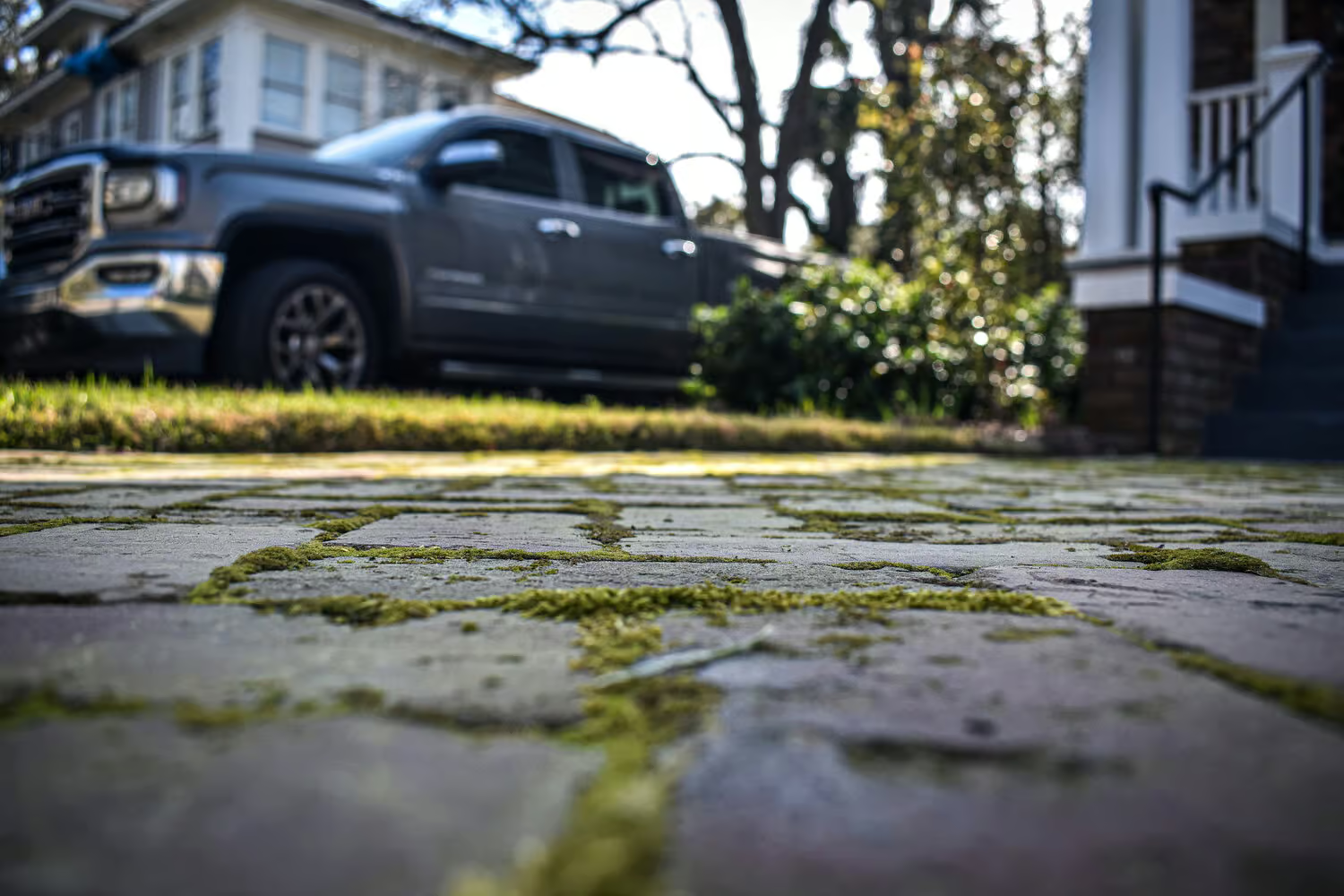
In Seattle's constant drizzle, moss colonizes every crack, joint, and textured surface it can find. The real problem is not the moss itself — it is the sponge effect. Moss holds moisture against the surface 24 hours a day, even on days when it does not rain. This constant saturation weakens concrete over time through a process called spalling, where the surface flakes and crumbles. And it accelerates rotting of wood decking.
Left untreated for several years, moss rhizoids actually penetrate the pores of the concrete, making it progressively harder to remove with each season you wait.
Brown Stains: Tannins from Fallen Leaves
Those Bigleaf Maple and Alder leaves that sat on your driveway all November released tannins as they decomposed — organic acids that dye concrete brown. The longer the leaves sat, the deeper the stain penetrated into the pores. Pressure washing alone often cannot remove deep tannin stains. We use a chemical neutralization process to bleach the stain out of the concrete pores from the inside.
How to Clean an Exposed Aggregate Driveway Without Damage
If you live in the Pacific Northwest, there is a good chance you have an Exposed Aggregate driveway — the bumpy, pebble-textured concrete that is extremely popular in Seattle neighborhoods. It looks beautiful when clean. It is a maintenance nightmare when it is not.
Why Aggregate Always Looks Dirty After DIY Cleaning
Aggregate surfaces are uneven by design. The valleys between the pebbles trap dirt, oil, algae spores, and organic debris in pockets that a standard pressure washer wand simply skips over. The wand blasts the tops of the stones clean, but the grime in the valleys stays put. Your driveway looks great while still wet, then dries and looks exactly the same as before. This is the number one frustration we hear from homeowners who have tried cleaning aggregate themselves.
The Rotary Surface Cleaner Solution
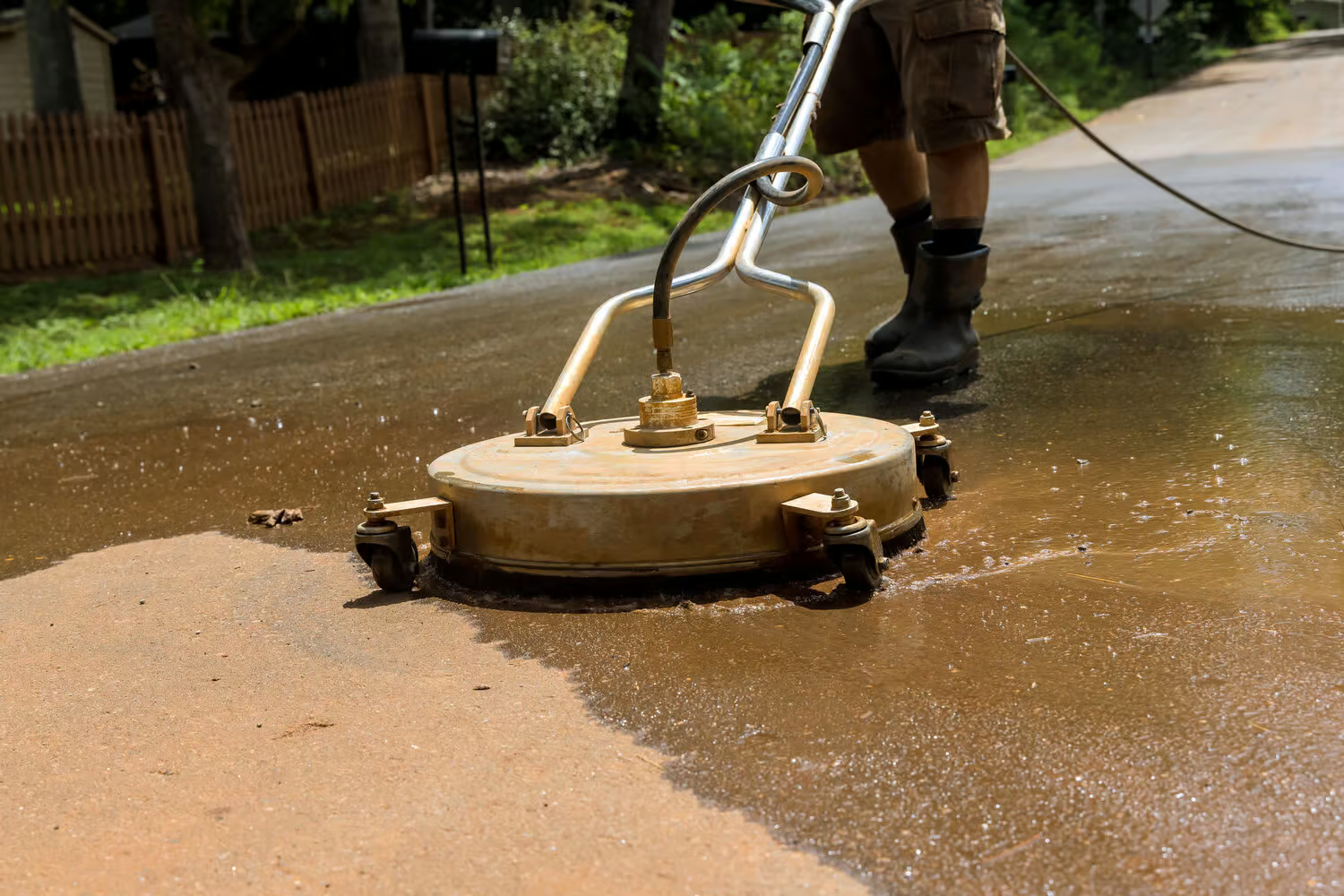
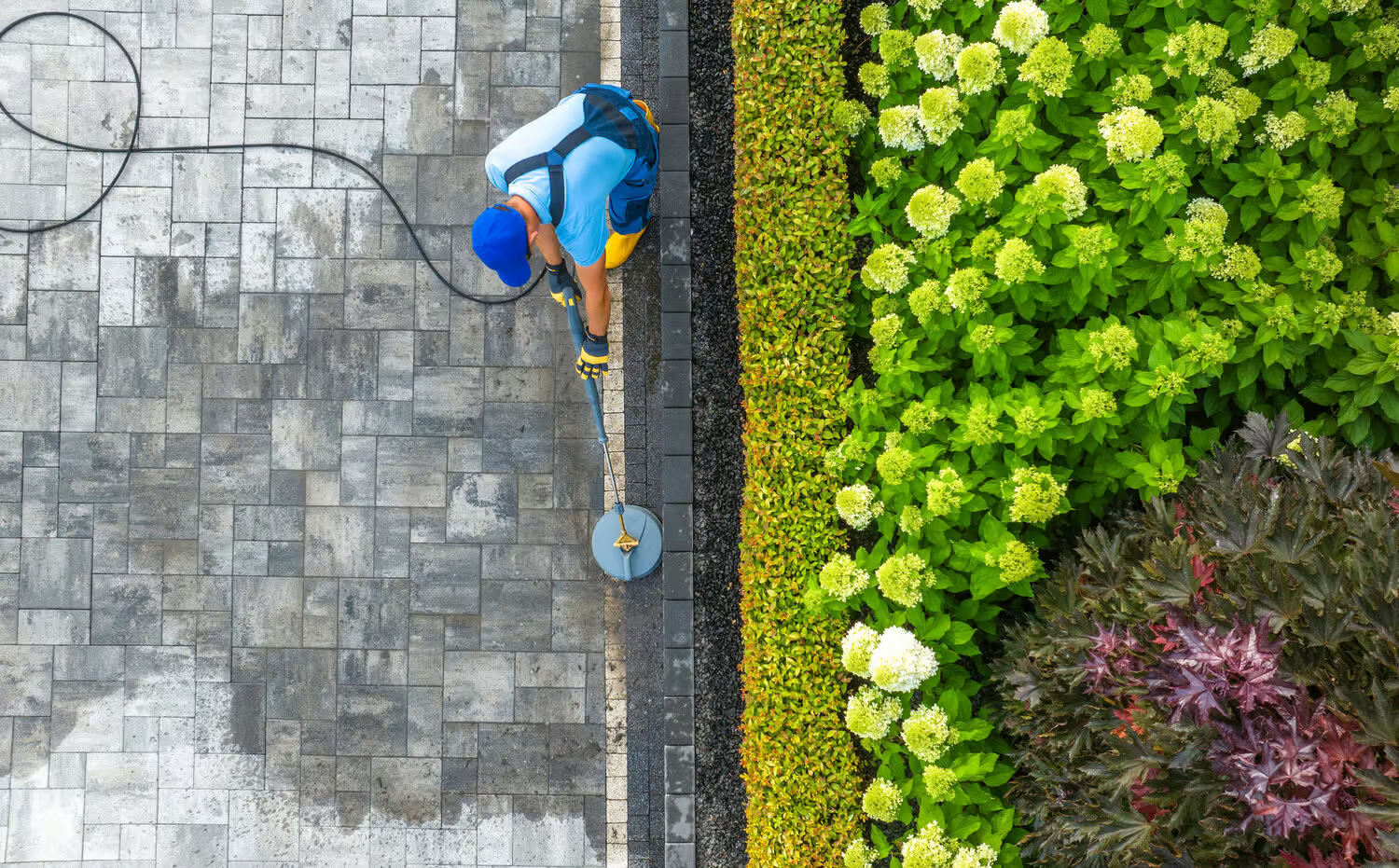
We use commercial rotary surface cleaners — machines that hover inches above the surface and spin dual high-pressure nozzles at approximately 2,000 RPM. Think of it like a hovercraft scrubbing your driveway from every angle simultaneously. The spinning action flushes grime out of the valleys from multiple directions, lifting deep-set buildup that a straight wand can never reach.
The result is what we call restoring the pop: the original color and contrast of the individual stones come back to life, and the driveway looks the way it did when it was first poured.
Can Pressure Washing Damage a Cedar Deck? Yes, If Done Wrong.
Your cedar deck has turned silvery grey. Many people think this is just natural aging. In reality, that grey color is UV photo-oxidation combined with fungal attack. The sun breaks down the lignin (the glue that holds wood fibers together), and fungi colonize the weakened surface. The deck is not aging gracefully. It is deteriorating.
Most damage happens when homeowners or inexperienced crews point a 4,000 PSI pressure washer straight at the wood and blast away.
What Furring Is and Why High Pressure Causes It
When high-pressure water hits wood, it shreds the lignin fibers on the surface, creating a fuzzy, splintery texture called furring. The deck feels rough to bare feet, catches dirt and moisture, and cannot hold stain properly. You have effectively destroyed the surface while trying to clean it.
Our Two-Step Wood Restoration Protocol
Soft Wash with Sodium Percarbonate
We apply an oxygen bleach cleaner at low pressure. This gently lifts the grey oxidized fibers and kills the algae without shredding the wood grain. No furring, no damage to the surface structure.
Oxalic Acid Brightening
After washing, the wood is alkaline and still looks dark. We apply an Oxalic Acid Brightener. This chemical reaction neutralizes the alkalinity, returns the wood to a warm, honey-gold color, and opens the pores so the wood can accept new stain evenly. The result: your deck looks like fresh lumber, with smooth grain and open pores ready for stain this summer.
Why Pavers Wobble After Cleaning (and How to Fix It)
Moss loves the joints between pavers. Its rhizoids burrow into the sand, displacing the fill material that holds the stones in place. The logical reaction is to blast the moss out with high pressure. And that is exactly where the damage starts.
The Loose Tooth Problem
When you aim a high-pressure wand directly into paver joints, it does not just remove the moss. It blows out all the joint sand with it. Now your pavers are sitting loose, rocking back and forth when you step on them. We call this the Loose Tooth effect, and it is one of the most common DIY pressure washing mistakes we see.
Polymeric Sand: The Solution
Our protocol removes moss from paver joints using specialized turbo-nozzles at controlled angles that clean the surface without excavating the sand. Then, once the patio is completely dry, we sweep in Polymeric Sand — an engineered mix that contains polymer binders activating with water, hardening into a flexible grout that locks your pavers firmly in place.
Polymeric Sand prevents weeds from growing through the joints, blocks ants from tunneling and displacing fill material, resists washout from rain and irrigation, and allows slight flex movement without cracking. This is one of the highest-value upgrades we offer for paver patios and walkways — and most homeowners never knew it existed.
For full paver patio installation and restoration, see our Paver Patio Installation and Restoration guide.
GPM vs PSI: The Physics of Cleaning Without Destroying
The Zebra Stripe Problem
A rental machine typically produces high pressure (3,000+ PSI) through a narrow fan tip. When you sweep that concentrated blast across concrete, it etches lines into the surface — Zebra Stripes. These are not surface marks that will fade. They are permanent damage. You have physically removed the smooth top layer of the concrete, exposing the rough aggregate underneath. Once the stripes are there, the only fix is resurfacing.
Why Volume Beats Pressure
Real cleaning power comes from Gallons Per Minute (GPM), not PSI. Volume is what flushes debris away. Pressure is what damages surfaces.
A rental machine: Approximately 2.5 GPM. It is like trying to clean a driveway with a garden hose on the jet setting. Lots of force, very little rinse volume. You end up moving the dirt around, not removing it.
Our commercial rig: Approximately 8.0 GPM. The volume lifts and carries debris away gently and efficiently, with zero surface damage. We can clean a 2,000 square foot driveway in a fraction of the time, with better results, and without leaving a single mark.
PSI cuts. GPM cleans. Professional equipment uses high volume at controlled pressure. Rental equipment uses high pressure at low volume. That is why rentals damage and professionals restore.
The Liability Risk You Are Ignoring: The Amazon Driver Problem
In the age of e-commerce, people walk up your driveway every single day. Mail carriers. Package delivery drivers. Food delivery. Guests. Your driveway is no longer private space. It is a public walkway.
If a delivery driver slips on your mossy, algae-covered walkway and breaks an ankle, their insurance company will file a claim against your homeowner's insurance. You are the property owner. You are responsible for maintaining safe walking surfaces. A documented pattern of neglect — visible moss, known slipperiness — weakens your defense significantly.
We are not lawyers, and this is not legal advice. But here is what we can tell you from experience: a documented professional cleaning is your strongest demonstration of Duty of Care. It shows that you actively maintained your property to a reasonable safety standard. We provide before-and-after documentation with every job for exactly this reason.
A standard pressure washing service costs $250 to $500. A slip-and-fall liability claim averages $20,000 to $50,000 and can reach six figures with serious injuries. The math is not complicated.
How We Keep Runoff Out of Puget Sound
In Seattle, everything that flows off your driveway enters the stormwater system and goes directly into Puget Sound. Unfiltered. Untreated. Washing oil, heavy metals, or chemical cleaners into a storm drain is illegal and carries real penalties.
Filtration: We place boom socks or filter fabric over nearby storm drain openings to catch sediment, debris, and heavy particles before they enter the system.
Bio-diversion: Whenever possible, we divert wash water onto your lawn or landscape beds. The soil acts as a natural bio-filter, breaking down contaminants before the water returns to the water table. This is the EPA-recommended best practice for residential wash operations.
Biodegradable chemistry: Our cleaning solutions are phosphate-free and break down into harmless salts within 24 to 48 hours. We never use products that persist in the environment.
How Much Does Pressure Washing Cost in Seattle?
Pricing depends on the surface type, total area, condition, and accessibility. Here are honest ranges for the Seattle metro area as of 2026:
| Service | Typical Range | Key Factors |
|---|---|---|
| Driveway + walkway (standard concrete) | $200 – $400 | Size, stain severity, access |
| Exposed aggregate driveway | $300 – $500 | Extra time for valley cleaning |
| Cedar / wood deck (soft wash + brightening) | $300 – $500 | Size, wood condition, brightener |
| Patio / deck cleaning (concrete) | $150 – $300 | Size, furniture moving |
| Paver patio with polymeric sand | $400 – $700 | Paver area, joint condition |
| Full property package (driveway + walkways + patio + deck) | $600 – $1,200 | Total area, surface mix |
| House wash (siding, soft wash) | $350 – $600 | Stories, siding type, access |
| Post-wash biocide treatment (add-on) | $75 – $150 | Coverage area |
Prices are estimates for greater Seattle as of 2026. Includes all chemical treatments, debris cleanup, and storm drain protection. All quotes are free, on-site, and written.
Your hardscapes have been under biological assault for five months.
LandscapingFactory provides professional pressure washing and exterior restoration across Seattle, Kirkland, Bellevue, and the Eastside. Free safety assessment, before-and-after documentation included.
Frequently Asked Questions About Pressure Washing in Seattle
Will pressure washing damage my concrete? +
How do I stop the green algae from coming back? +
Can you remove oil stains from my driveway? +
Is the cleaning solution safe for my dog? +
Do you move patio furniture before cleaning? +
Will the cleaning chemicals hurt my plants? +
Can you clean my second-story siding? +
What about my windows? +
Do you use my water or bring your own? +
Can you clean my brick chimney? +
What is the white powdery residue on my pavers? +
Does my deck need to be sanded after soft washing? +
Can you remove the orange rust dots from fertilizer spills? +
How long does the surface take to dry after cleaning? +
Why should I hire a professional instead of renting a pressure washer? +
The Slime Is at Its Worst Right Now. Let Us Take It From Here.
Every surface on your property has been under biological assault since October. The moss is swollen. The algae is breeding. The stains are setting. And every surface is slipperier today than it was yesterday.
Similar Posts


Contact Us Today For A Free Consultation
Let's get started.
Tell us what you'd like to tackle when you request a quote and we'll do the rest.