July 26, 2026
Seattle Spring Landscape Cleanup: Our Complete 8-Step Restoration Protocol
Growing up in Kirkland taught us the soil, the seasons, and what holds. We build what lasts here because we live here. That matters.
After months of grey skies, sideways rain, and windstorms that do not quit, nobody wants to look at their yard. We turn inward, close the blinds, and pretend the garden does not exist. Then one Saturday in late February, the sun breaks through and we finally step outside.
And there it is. The mess.
Fallen branches tangled in your ornamental grasses. A thick, slimy carpet of wet leaves smothering your garden beds. Weeds that somehow grew all winter while your grass did nothing. A driveway that looks like it belongs to an abandoned house. If this sounds familiar, you are not alone. This is what winter does to every property in the Pacific Northwest.
Most homeowners think a spring cleanup means mowing the lawn and raking some leaves. At LandscapingFactory, it means something entirely different. We treat it as a full Landscape Restoration Protocol: 8 expert phases designed to reverse winter damage, feed your soil, and set the stage for the explosive growth that April and May bring.
When Should You Schedule a Spring Cleanup in Seattle?
Short answer: February through mid-March. This is the window that makes everything else work.
Cool-season grasses and perennials begin their growth surge when soil temperatures reach 45 to 50°F, which happens in Seattle around late February. If your garden beds are still buried under debris when that growth signal fires, you lose the most productive weeks of the growing season.
The weed factor is equally urgent. Shotweed (Hairy Bittercress), Seattle's most aggressive winter annual, flowers and sets seed by mid-March. Every single weed you pull before it seeds saves you from hundreds of offspring in May and June. Wait two weeks too long and you have already lost that battle.
Every week you delay past mid-March, the cleanup takes longer (more weed growth), costs more (more labor and hauling), and delivers diminishing returns because the plants are already growing through the debris. Early scheduling is not just convenient — it is the smartest investment.
Phase 1: Deep Debris Removal (The Foundation of Every Cleanup)
The first step in every spring cleanup is excavation. Winter storms in the Puget Sound region drop enormous volumes of organic debris: branches, needles, cones, leaves, and windblown litter that accumulates in every corner of your property.
In drier climates, much of this blows away on its own. In Seattle, it gets wet, gets heavy, and stays.
What Wet Leaves Do to Your Garden Beds
When wet leaves form a dense mat over your garden beds, they create what we call the Slug Hotel. That mat traps moisture against the soil surface, blocks oxygen exchange, and creates the perfect breeding ground for slugs, snails, and fungal pathogens like Botrytis (grey mold). Your perennials are trying to push new growth through this suffocating blanket. The ones that make it are pale, weak, and stretched from the lack of light. The ones that do not rot under the surface without you ever seeing them.
We scour every inch of your property using high-velocity blowers and precision hand rakes. We clean the sludge from the base of shrubs, the forgotten corners behind fences, and the areas under decks where debris accumulates for years. We do not move the mess around. We haul it away completely.
Tannin Stains on Hardscapes
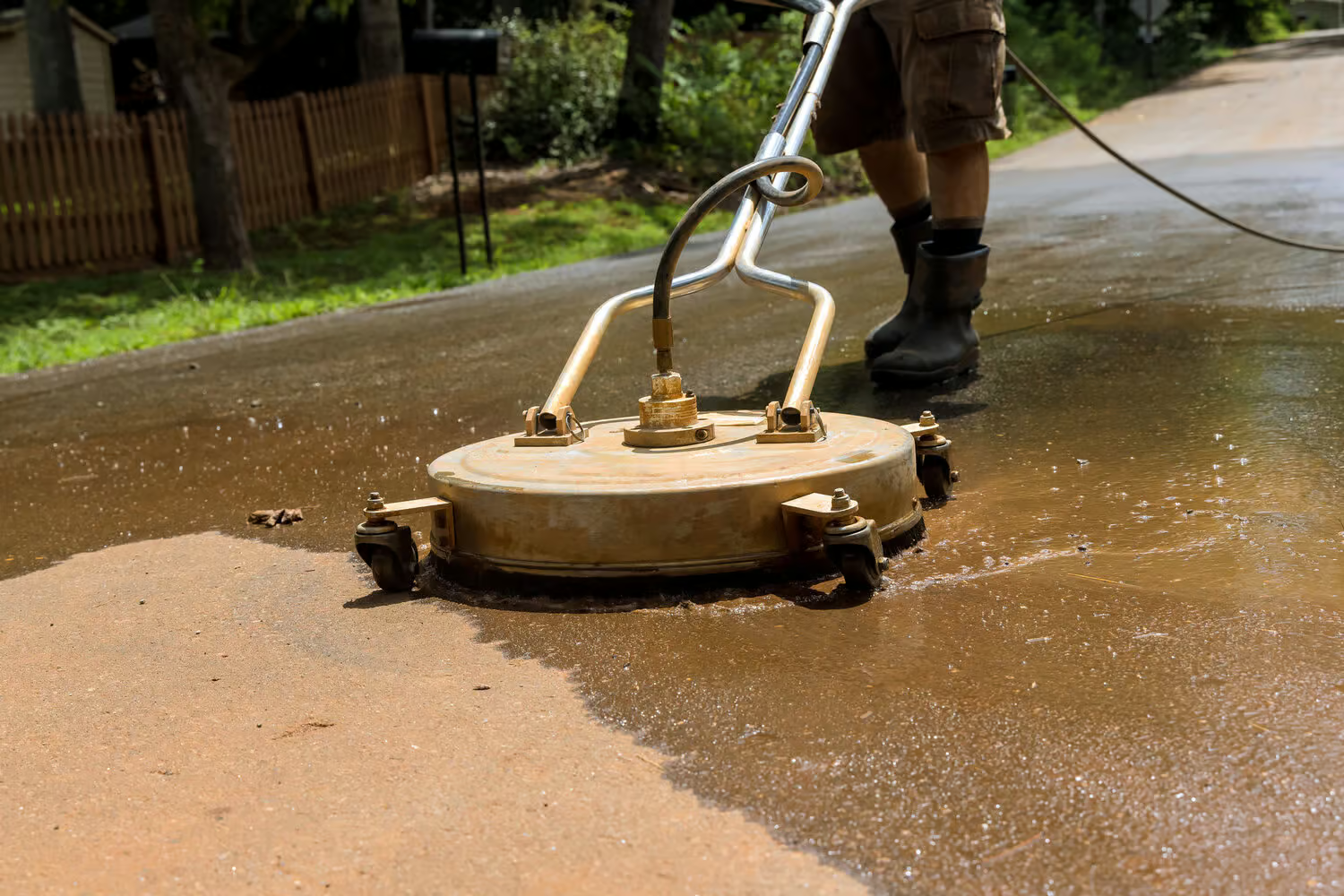
Decaying leaves on concrete and pavers release tannins — organic compounds that create yellowish-brown stains that are extremely difficult to remove once they set. The longer the leaves sit, the deeper the stain penetrates. We clear all organic debris from hardscape surfaces as part of Phase 1, and for existing stains, combine this cleanup with our pressure washing service.
Phase 2: Perennial Cutbacks — Where Plant Knowledge Separates Professionals from the Rest
This is where horticultural knowledge separates a professional cleanup from a well-intentioned Saturday with hedge clippers. Many plants need a precise hard reset in early spring to grow back properly, but cutting the wrong plant at the wrong time can eliminate an entire season of blooms.
Ornamental Grasses
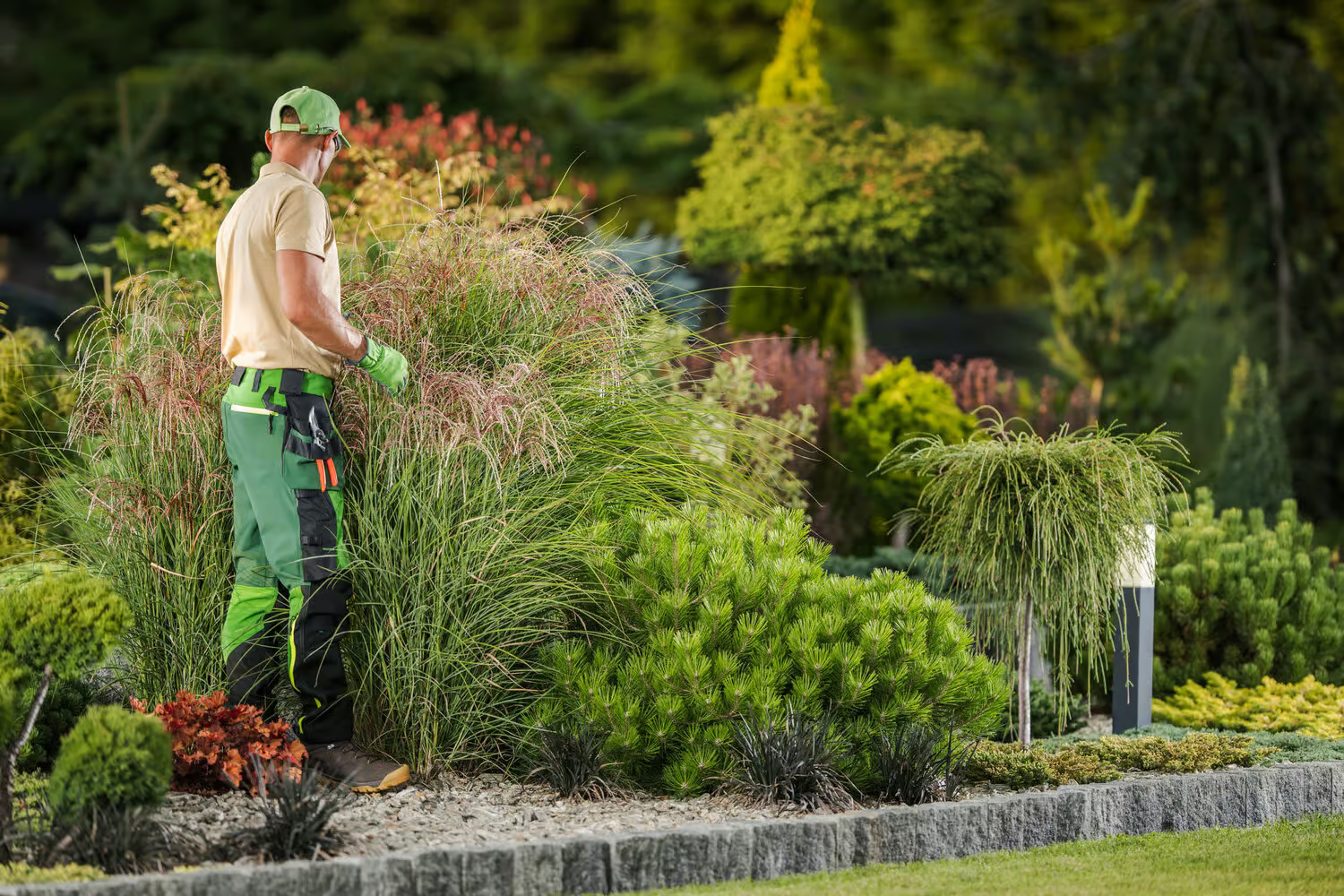
Plants like Miscanthus, Pennisetum, and Calamagrostis turn brown and dry in winter. They look dead. They are not. If you do not cut them back before the new green blades emerge, those fresh shoots grow up through the dead material, creating a tangled mess that is impossible to fix without damaging the crown. We bundle the dead foliage with twine and cut the entire clump down to 4 to 6 inches from the ground, giving new growth a clean, unobstructed path.
Ferns, Hellebores, and Hydrangeas
Sword Ferns: We prune off the old, damaged fronds to reveal the fiddleheads emerging from the crown. Leaving the old fronds in place blocks light and traps moisture against the new growth.
Hellebores: We remove the old, spotted leaves so the winter flowers can be seen and air circulates around the base to prevent fungal issues.
Hydrangeas — the critical warning: We deadhead old flower heads to tidy the shrub. However, we never hard-prune Bigleaf Hydrangeas (H. macrophylla) in spring. These bloom on old wood. Cut those stems now and you cut off every single flower bud for this summer. This is the most common mistake we see in DIY cleanups.
Bigleaf Hydrangeas (blue or pink mophead flowers) = bloom on old wood = DO NOT prune in spring. Panicle Hydrangeas (cone-shaped white flowers, including Limelight) = bloom on new wood = can be cut back hard in late February. If you are unsure which type you have, do not prune it. Call us and we will identify it.
Phase 3: Dividing and Transplanting Overgrown Perennials
This is a specialized service that most mow-and-blow crews skip entirely — and it is one of the highest-value things a gardener can do in spring.
Over time, perennials like Hostas, Daylilies, Shasta Daisies, and Astilbe grow into dense, overcrowded clumps. The center of the clump eventually dies out — a condition called die-back — and the plant stops flowering well because it is choking itself. You end up with a ring of weak growth around a dead center.
Spring is the ideal time to dig these clumps up, split them into 3 or 4 healthy divisions, and replant them to fill gaps in your garden. Each division becomes a vigorous new plant with better bloom performance and a fuller garden — essentially free plants from one service. The divisions can also be planted in new areas of your yard, given to neighbors, or potted up for your patio.
Phase 4: Weed Eradication and Soil Cultivation
The Shotweed Problem
If you have ever touched a small, low-growing weed in your garden bed and had it explode tiny seeds into your face, you have met Shotweed (Hairy Bittercress, Cardamine hirsuta). It is Seattle's number one winter annual weed, and it is devastatingly effective at reproducing. Each plant produces hundreds of seeds that fire up to three feet in every direction when the seed pods are disturbed. By mid-March, most Shotweed plants are fully loaded and ready to fire. Every plant we pull before it sets seed saves you from dealing with hundreds of offspring in June.
Hand-Weeding vs. Chemical Spray
We hand-weed every garden bed, removing Shotweed, Dandelions, creeping Buttercup, and Morning Glory root systems before they flower. Hand-pulling is more labor-intensive than spraying, but it is immediate, it is precise, and it removes the root system entirely. We discuss chemical preferences with every client before starting work.
Breaking Up Compacted Soil
Months of heavy rainfall pack the soil surface into a hard crust. This compacted layer blocks air and water from penetrating to the root zone. We use hand cultivators to gently scratch and turn the top inch of soil throughout your garden beds. This simple action breaks up the crust, restores oxygen exchange to the root zone, and gives your beds a fresh, cared-for appearance.
Pre-Emergent Weed Prevention
For clients who want to stay ahead of the weed cycle, we apply a granular pre-emergent after cultivation. This creates an invisible barrier in the top layer of soil that prevents new weed seeds from germinating for up to 3 months. It is not a substitute for hand-weeding, but as a follow-up to thorough manual removal, it is the most effective way to keep beds clean through the entire spring season.
Pre-emergent herbicides are pesticides under Washington State law when applied commercially. Commercial application requires a WSDA license. If you want professional chemical pre-emergent application, contact a licensed pest management company. LandscapingFactory provides physical weed removal and mulching for weed suppression — not chemical herbicide application.
Weed-free beds for the whole spring? It starts with the February cleanup.
See our full landscaping services for bed maintenance and seasonal care.
Phase 5: Soil Activation and Organic Fertilization
Your plants have been fasting for months. The soil microbiome has been dormant through the cold season. Spring is when everything wakes up hungry. Feeding the soil now sets the nutritional foundation for the entire growing year.
Why Organic Over Synthetic
We apply a balanced, organic slow-release fertilizer (typically a 5-5-5 or similar blend) across all garden beds. Synthetic fertilizers deliver a quick nitrogen surge that produces rapid, soft growth — structurally weak and a magnet for aphids and fungal disease. Organic fertilizers work differently: they feed the soil microbiome (bacteria, fungi, earthworms), which then feeds the plants steadily over 8 to 10 weeks. The result is robust, dense, disease-resistant growth that lasts.
Building soil biology is the single most effective long-term strategy for plant health in Pacific Northwest gardens, according to WSU Extension research on soil fertility for Western Washington.
Acid-Loving Plants Need Special Fertilizer
Rhododendrons, azaleas, and camellias are everywhere in Seattle gardens, and they have specific nutritional needs. We apply specialized acidifying fertilizers to keep their soil pH in the optimal range (4.5 to 5.5) and prevent chlorosis — the yellowing of leaves caused by iron deficiency in alkaline soil. If your rhododendrons have been looking pale and tired despite regular watering, pH imbalance is almost certainly the culprit.
Commercial application of fertilizer products on client properties in Washington State requires a WSDA license. LandscapingFactory applies compost mulch and organic soil amendments as part of our landscaping service. For fertilizer product application, we refer clients to licensed applicators or provide recommendations for homeowner self-application.
Phase 6: Garden Bed Edging — The Detail That Changes Everything
This is the single visual detail that most clearly separates a professionally maintained landscape from a DIY effort. It takes skill, the right tools, and a good eye. And the difference it makes is dramatic.
Over winter, your lawn creeps into your garden beds. The line between turf and soil gets blurry. Mulch migrates onto the grass. Grass invades the beds. Everything looks soft and undefined.
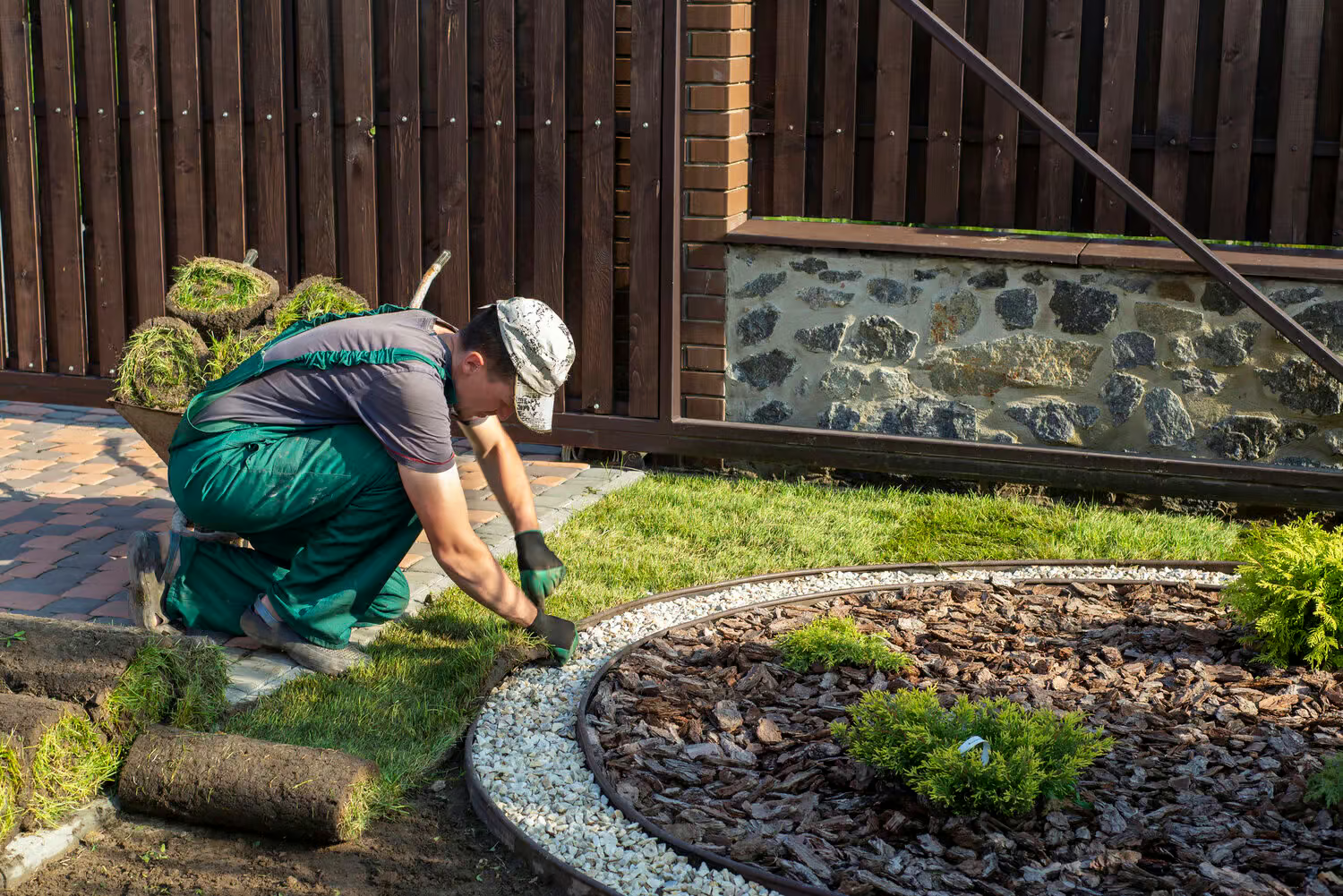
Using a steel half-moon edger or mechanical bed edger, we cut a sharp, vertical trench (2 to 3 inches deep) along the entire perimeter where turf meets garden bed. This creates a crisp, high-definition line that makes your lawn look immediately manicured, contains mulch inside the bed where it belongs, prevents grass from invading your flower beds, and creates the high-end estate look you see in professionally maintained gardens.
We call edging the eyeliner of the landscape. Without it, even a clean yard looks messy because the boundary between lawn and garden is undefined. With it, everything snaps into focus. Once you see the difference, you cannot unsee it.
Phase 7: Mulch Installation — The Finishing Touch That Works All Season
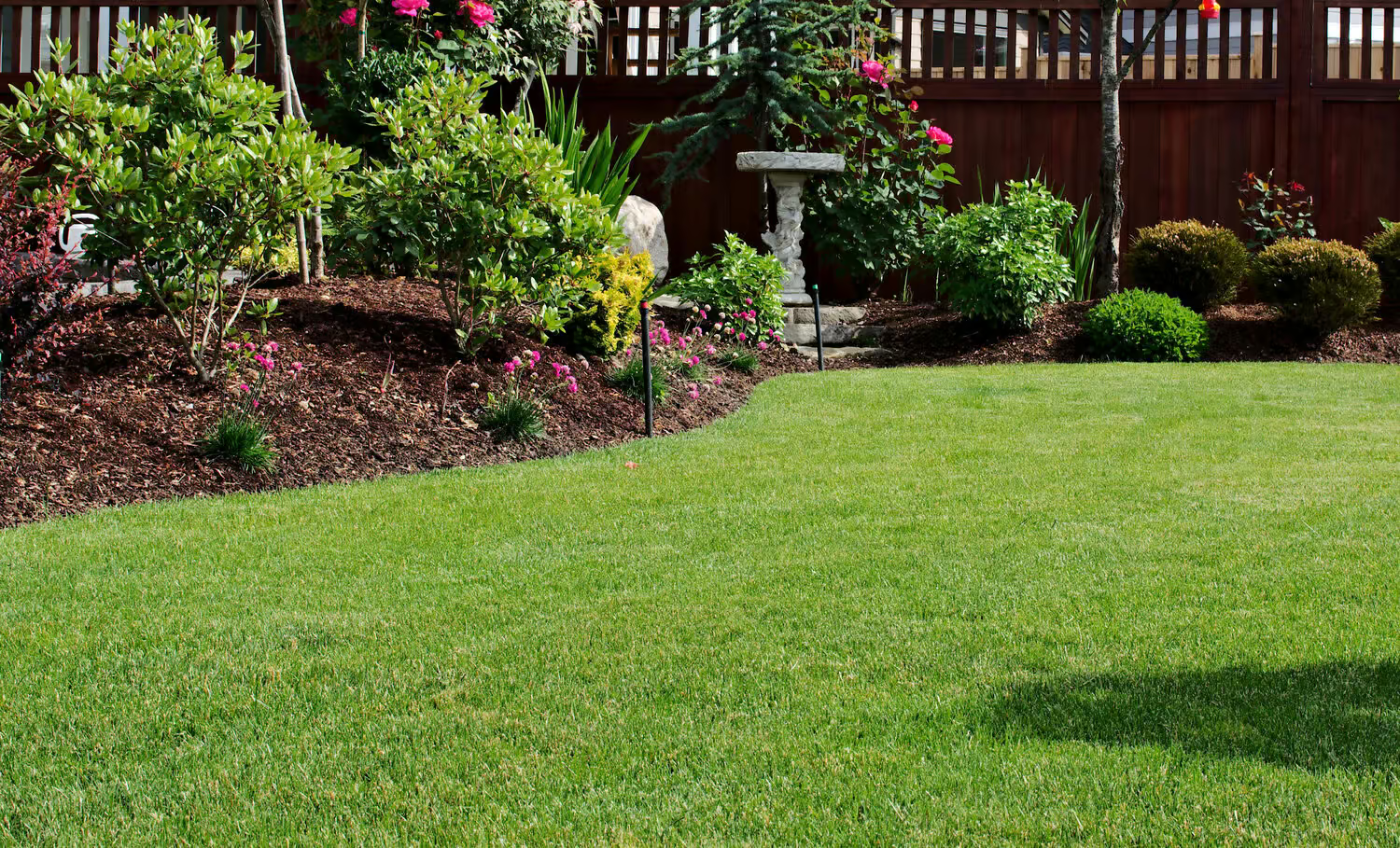
No spring cleanup is complete without fresh mulch. It is the finishing touch that makes everything look intentional, and it delivers four critical functional benefits at the same time.
What Mulch Actually Does
Moisture retention: A 2 to 3 inch layer of mulch acts as a sponge, holding soil moisture through Seattle's notoriously dry summers (July through September are genuinely dry). Mulched beds need significantly less irrigation.
Weed suppression: That same layer blocks sunlight from reaching the soil surface, preventing new weed seeds from germinating. Combined with the pre-emergent from Phase 4, mulch creates a formidable two-layer defense against weeds.
Temperature regulation: Mulch insulates the soil against late spring frosts (Seattle still gets cold snaps in April) and keeps root zones cooler during summer heat spikes.
Aesthetics: Fresh, dark mulch provides stunning contrast against green grass and colorful flowers. The visual transformation is immediate.
What Mulch We Recommend
We typically use Garden Compost Mulch (sometimes called gardener's mulch or soil builder). Unlike bark nuggets or dyed chip mulch that just sit on the surface, compost mulch breaks down slowly over the season, adding organic matter directly into your soil. We avoid dyed red or black mulches — they often contain recycled construction wood that can carry contaminants, and the dye fades to a muddy, unnatural tone within weeks.
Phase 8: Hardscape and Irrigation Inspection
The final phase of our protocol extends beyond plants and soil. Winter's freeze-thaw cycles and heavy rain cause real, measurable damage to your hardscapes and irrigation infrastructure. Catching these issues early prevents expensive emergencies later.
Frost Heave and Pavers
When water trapped under pavers or behind retaining walls freezes, it expands by approximately 9%. That expansion physically lifts or shifts stones, creating uneven surfaces, trip hazards, and compromised structural integrity. We inspect all hardscape areas for movement, settling, or cracking and flag anything that needs repair before it becomes a safety issue.
Preliminary Irrigation Check
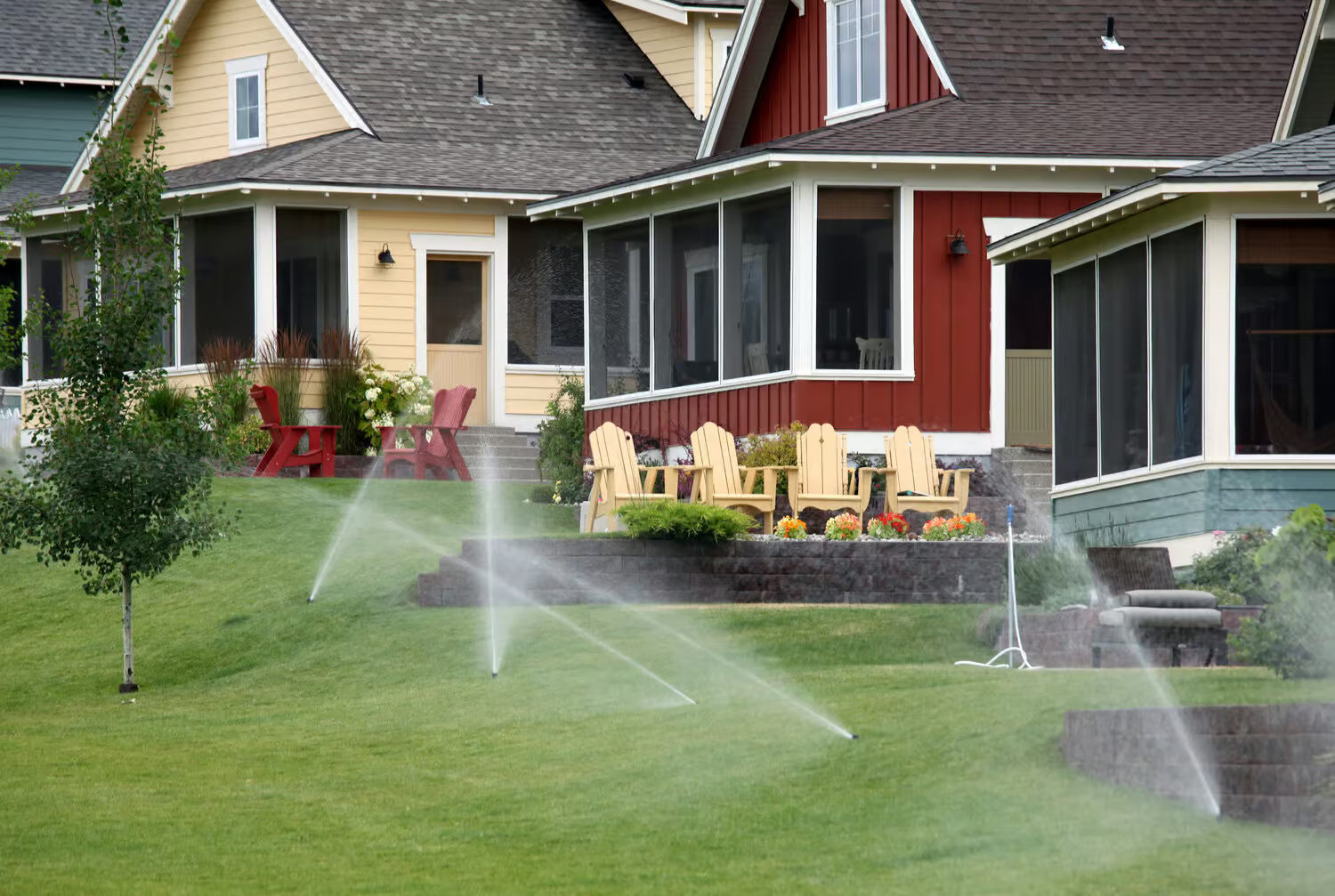
Full irrigation startup typically happens in April once overnight freeze risk is past. During the spring cleanup, we perform a preliminary inspection: checking valve boxes for standing water, examining exposed pipes for freeze cracks, and verifying that sprinkler heads have not been damaged by debris or foot traffic. A single cracked pipe that goes undetected until you turn the system on in April can waste thousands of gallons and flood your garden beds before you even notice. A 5-minute inspection now prevents that.
For full irrigation startup and system calibration, see our Irrigation Maintenance service.
Why DIY Spring Cleanups Fail in Seattle
The Disposal Problem
A standard Seattle residential yard waste bin holds about 96 gallons. A proper cleanup of a medium-sized Seattle yard generates 10 to 20 times that volume in debris, dead material, and old mulch. That means 8 weeks of slowly filling and refilling your green bin, with piles sitting in your driveway in the meantime. The project that was supposed to take one weekend drags through half the spring.
LandscapingFactory brings our own trucks and dump trailers. We haul everything away in one visit. When our crew leaves, your property is 100% debris-free.
The Knowledge Gap
The other reason DIY cleanups go sideways is plant knowledge. We see the damage every spring: Hydrangeas pruned to the ground (goodbye, summer flowers), ornamental grasses cut too late (tangled, ruined crowns), and Hellebore flowers accidentally removed along with the old leaves. Knowing what to cut, when to cut it, and how far to cut it back requires training and experience with PNW-specific plant species. That knowledge is what you are paying for when you hire a professional crew.
How Much Does a Spring Cleanup Cost in Seattle?
Pricing depends on property size, level of winter neglect, and which phases your garden actually needs. Here are honest ranges for the Seattle metro area:
| Service / Phase | Typical Range | Key Factors |
|---|---|---|
| Basic Cleanup (Phases 1–2: Debris + Cutbacks) | $300 – $600 | Yard size, debris volume |
| Standard Cleanup (Phases 1–6: Full protocol minus mulch) | $500 – $1,000 | Bed count, weed severity, perennial work |
| Complete Restoration (All 8 Phases including mulch) | $800 – $1,800 | Mulch volume, yard size, add-ons |
| Mulch Installation (standalone) | $3 – $5 per sqft installed | Mulch type, bed access, depth |
| Overgrown / Neglected Property Overhaul | $1,500 – $3,500+ | Severity, hauling volume, restoration scope |
Prices are estimates for the greater Seattle area as of 2026. We provide free, itemized written quotes based on an on-site walkthrough. No hidden fees, no surprises.
Your yard, transformed in a day.
LandscapingFactory provides complete spring cleanup and landscape restoration across Seattle, Kirkland, Bellevue, and the Eastside. Book before mid-March to secure your spot. Free assessment.
Frequently Asked Questions About Spring Cleanups in Seattle
How much does a spring cleanup cost? +
When should I schedule my spring cleanup? +
Does the cleanup include pruning large trees? +
Will you haul away all the debris? +
What kind of mulch do you use? +
Do I need to be home during the cleanup? +
Can you clean my gutters during the spring cleanup? +
Will mulch attract termites to my house? +
Do you pull weeds by hand or spray chemicals? +
Can you fix my lawn during the cleanup? +
What about my irrigation system? +
My yard hasn't been touched in over a year. Is it too far gone? +
How long does a spring cleanup take? +
Should I put landscape fabric under the mulch? +
Why is edging so important? It seems like a minor detail. +
The Schedule Is Filling Up. Secure Your Spot Today.
A spring cleanup is the most satisfying service we offer. The transformation is immediate and undeniable. You leave for work with a messy, winter-worn yard and come home to a crisp, clean, manicured landscape that smells like fresh earth and mulch.
Similar Posts

Contact Us Today For A Free Consultation
Let's get started.
Tell us what you'd like to tackle when you request a quote and we'll do the rest.