July 26, 2026
Moss on Your Roof, Lawn, Driveway, and Deck: What Seattle Homeowners Need to Know
Growing up in Kirkland taught us the soil, the seasons, and what holds. We build what lasts here because we live here. That matters.
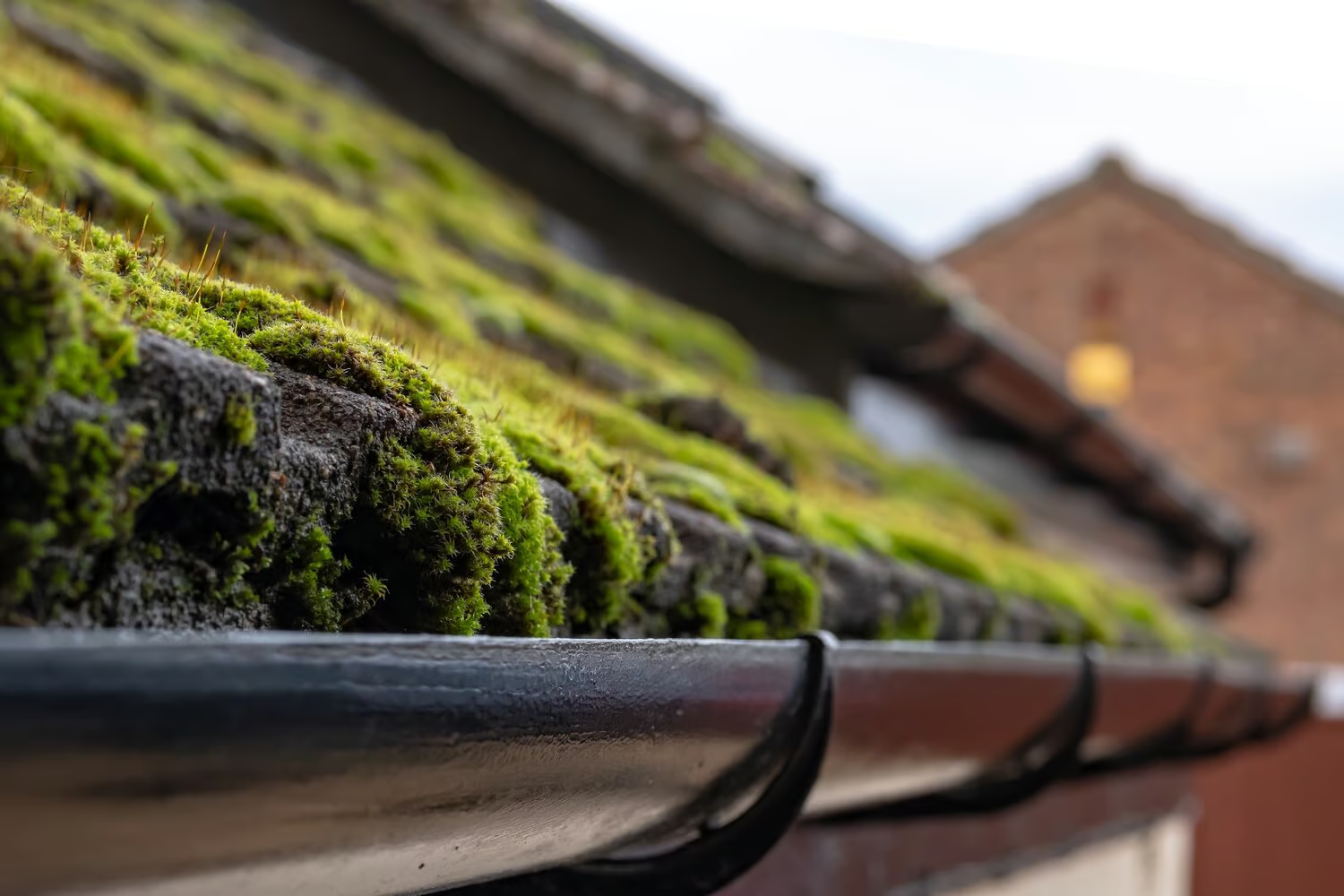
If you own property in the Seattle area, you have moss. It is on your roof. It is in the cracks of your driveway. It is creeping across your back deck. It is filling in the bare spots in your lawn. This is not a question of maintenance quality. It is a consequence of climate.
Seattle provides the three conditions moss needs to thrive: constant low-level moisture (our mist and drizzle keeps surfaces damp without washing spores away), shade (cloud cover and mature conifers block the UV light that kills moss), and acidic surfaces (our soil and rain tend toward low pH, which moss prefers and turf grass does not).
The question is not whether you will have moss. The question is whether it is causing damage that requires action, and if so, what works on each surface. Because the answer is different for a roof than for a lawn, and what works on concrete can destroy a wood deck.
This is a surface-by-surface guide to moss in Seattle: what it is doing to your property, what actually works, what does not, and when to call a professional.
Why Moss Thrives in Seattle (the Biology)
Moss is not a weed. It is a bryophyte, one of the oldest plant groups on Earth, predating flowering plants by hundreds of millions of years. Understanding how moss works explains why it is so persistent in the Pacific Northwest and why most DIY removal fails.
No true roots. Moss does not have a root system like grass or trees. It anchors itself with hair-like structures called rhizoids that grip the microscopic pores and textures of surfaces. On rough concrete, textured shingles, and weathered wood, rhizoids find endless attachment points. On smooth, sealed surfaces, they cannot grip. This is why sealing works as prevention.
Absorbs water through leaves. Moss absorbs water and nutrients directly through its leaf surfaces, not through roots. This means it does not need soil. It can grow on any surface that stays damp long enough: roofs, concrete, stone, wood, metal.
Reproduces by spores AND fragmentation. This is the critical fact for removal. If you scrape moss off a surface but leave microscopic fragments behind, each fragment can regenerate into a full colony when the moisture returns. This is why pressure washing alone fails: it removes the visible moss but blasts fragments into every crack and crevice, seeding the next generation. Effective moss control requires either killing the organism before removal or sterilizing the surface after removal.
Seattle's Three Conditions
Constant moisture. Seattle's average annual rainfall is 37 inches, but the real factor is not the total amount — it is the distribution. Seattle has light drizzle and mist spread across 150+ days per year. This keeps surfaces perpetually damp without heavy downpours that would wash spores away.
Low UV index. Ultraviolet light kills moss. Seattle's heavy cloud cover from October through May blocks UV radiation, giving moss a 7 to 8 month growing season with minimal natural suppression. Summer's dry, sunny months slow moss growth, but the organism does not die. It goes dormant and reactivates as soon as fall rain arrives.
Acidic environment. Pacific Northwest rainfall is slightly acidic (pH 5.0 to 5.5). Our native soils tend acidic as well, particularly under conifer canopy. Moss thrives at pH 5.0 to 6.0. Turf grass prefers 6.0 to 7.0. When soil pH favors moss over grass, moss wins.
Moss on Roofs: The Highest-Stakes Surface
Of all the surfaces where moss grows, your roof has the highest financial consequences. A mossy patio is a slip hazard. A mossy roof is a structural risk that can cost thousands of dollars if ignored.
How Moss Damages a Roof
Shingle lifting. Moss grows under the leading edges of shingles where moisture collects. As the moss thickens, it physically lifts the shingle tab, creating a gap. Wind-driven rain enters this gap and reaches the wood decking underneath. Over time, this causes deck rot and interior leaks. The damage is invisible from inside until water stains appear on ceilings, by which point the decking may need replacement.
Granule loss. Asphalt shingles are coated with ceramic granules that protect the asphalt layer from UV degradation. Moss rhizoids grip these granules. When moss is removed, the granules come with it. Each removal cycle strips more granules, accelerating shingle aging. A shingle that should last 30 years can be reduced to 15 to 20 years by repeated moss growth and removal cycles.
Weight and moisture retention. A thick moss layer holds water like a sponge directly against the roof surface. This constant moisture prevents the roof from drying between rain events, which accelerates deterioration of both the shingles and the deck underneath.
What Works on Roof Moss
Never pressure wash an asphalt roof. This is the most important rule. High-pressure water strips granules, damages shingles, and can force water under the shingle layer. It voids manufacturer warranties. Despite this, it remains the most common DIY mistake for roof moss.
Soft-wash cleaning. Professional roof cleaning uses low-pressure application of a cleaning solution that kills the moss organism, followed by gentle rinsing at low pressure. The dead moss is then removed by soft-bristle brushing or left for rain to wash away over time. This method preserves shingle integrity and granule adhesion.
Prevention: zinc or copper strips. Metal strips installed at the roof ridge release trace amounts of zinc or copper oxide when it rains. The metallic solution washes down the roof slope, creating an environment where moss cannot establish. Zinc strips do not remove existing moss — they prevent new growth after a professional cleaning.
Treatment frequency. In Seattle, roof moss treatment typically lasts 1 to 2 years depending on tree canopy coverage. Properties under heavy conifer canopy need annual treatment. Properties with moderate shade need treatment every 18 to 24 months.
LandscapingFactory provides professional roof cleaning and moss removal for asphalt, cedar shake, metal, tile, and flat roofs. Soft-wash method, gentle manual agitation, moss prevention treatment, and gutter flush included. See our Roof Cleaning and Moss Removal service page for full details, pricing, and process.
Moss on Concrete and Pavers: Slip Hazard and Structural Damage
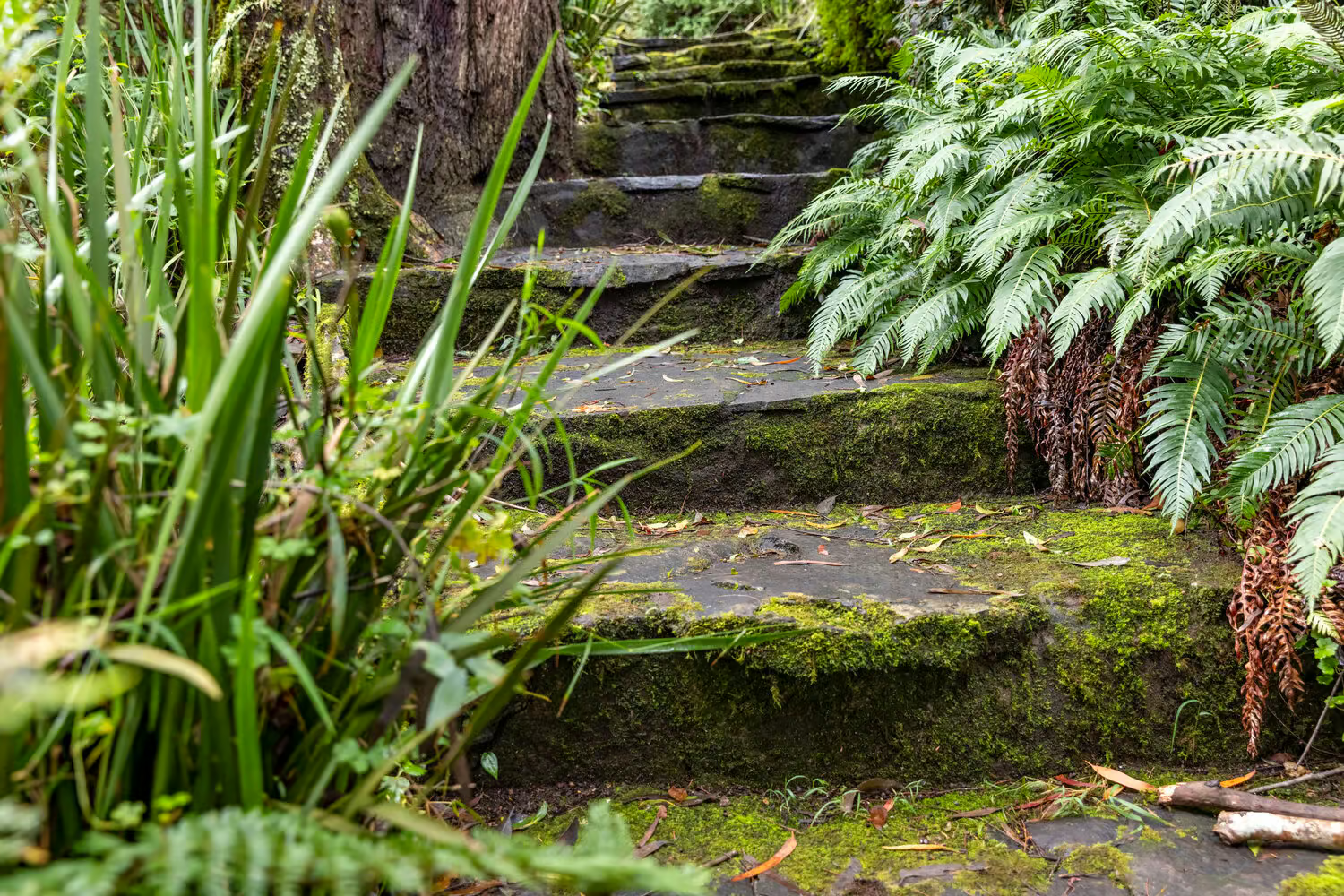
Moss on hardscapes is often dismissed as cosmetic. It is not. On walkways, driveways, and patios, moss creates two real problems.
The Slip Hazard
Wet moss on concrete or stone creates a biofilm that is nearly as slippery as ice. During Seattle's dark, rainy months (October through March), a moss-covered walkway is a serious fall risk for anyone walking on the property. If someone is injured on a mossy walkway, the property owner bears liability. Slip-and-fall claims on residential properties are common, and visible moss on a walking surface is evidence of negligent maintenance.
Freeze-Thaw Damage
Moss acts as a sponge, holding water against the concrete or stone surface. Seattle typically experiences 10 to 20 freezing nights per winter. Each time the temperature drops below 32°F, the water trapped in and under the moss expands as it freezes. This expansion creates micro-cracks in the concrete surface. Over repeated freeze-thaw cycles, these micro-cracks grow into visible surface spalling (flaking of the concrete finish), aggregate exposure, and eventual structural cracking.
Paver Joint Damage
On paver patios and walkways, moss targets the sand joints between pavers. Moss rhizoids displace the locking sand that holds pavers in position. As sand is displaced, pavers shift, wobble, and settle unevenly. Water enters the widened joints and destabilizes the gravel base below. What starts as green lines between pavers becomes an uneven, trip-hazard surface that may require re-leveling and re-sanding to repair.
What Works on Concrete and Pavers
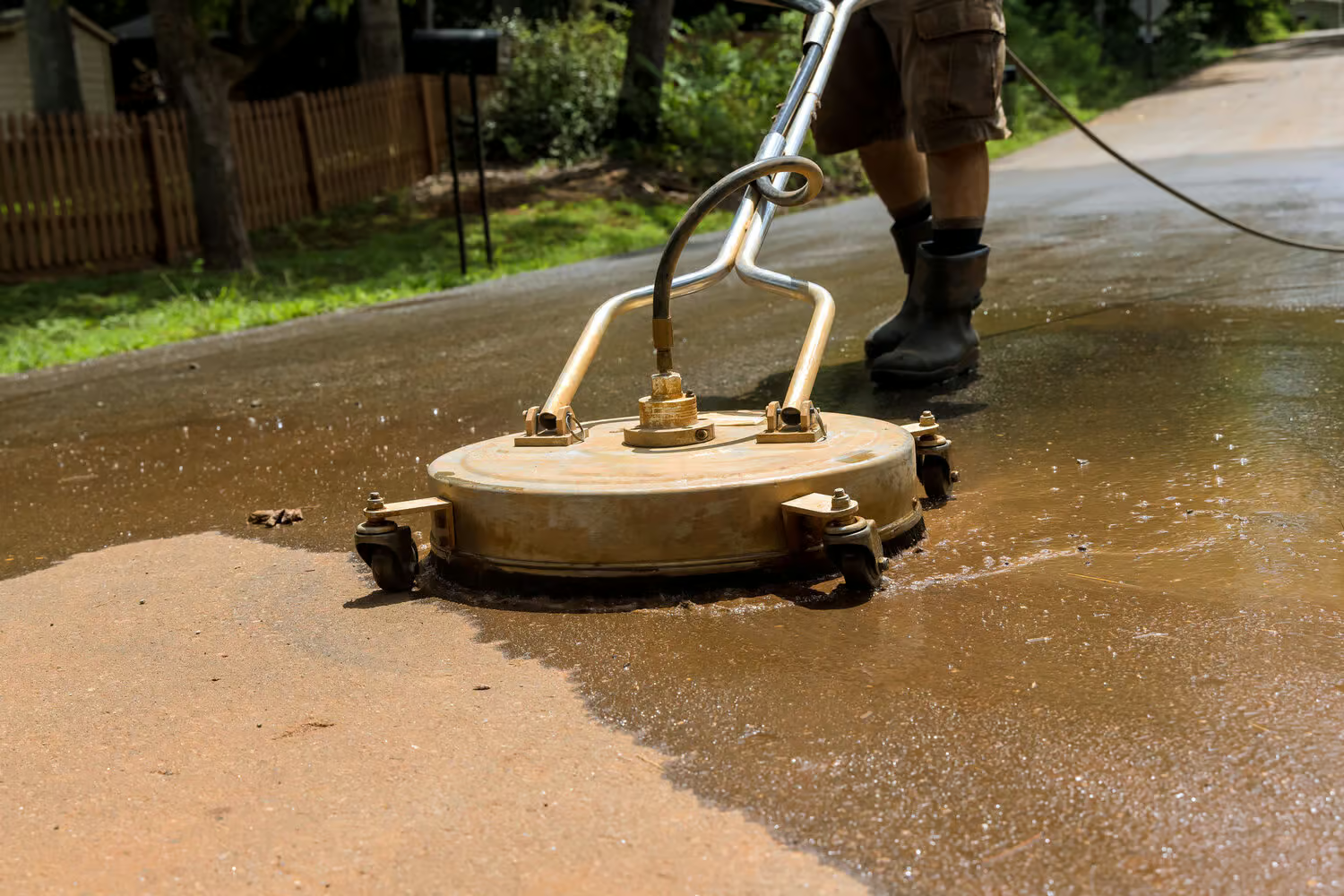
Soft-wash cleaning (not pressure washing). The same principle as roof cleaning applies. Soft-wash cleaning applies a solution that kills the moss organism in place, then rinses at low pressure. For pavers, the cleaning is followed by re-sanding with polymeric sand — a sand that hardens when wet, sealing joints against future moss and weed intrusion.
Sealing. After cleaning, applying a penetrating sealer to concrete or stone fills the surface pores. Non-porous surfaces give moss rhizoids nothing to grip. Sealed surfaces also dry faster after rain, reducing the moisture window that moss needs. A quality concrete sealer lasts 3 to 5 years.
Environmental controls. Trim tree branches that shade the hardscape. Even partial canopy reduction that allows 2 to 3 more hours of direct sunlight per day dramatically slows moss growth. Keep organic debris (leaves, pine needles) swept off surfaces regularly.
Canopy pruning to increase sunlight on hardscapes is part of our shrub and small tree pruning scope. See our Pruning Services page.
Moss on Wood and Composite Decks
Cedar and Pressure-Treated Wood Decks
Wood decks need to dry out between rain events to last. In Seattle, where it rains 6 to 8 months of the year, the drying window is already short. Moss acts as a wet blanket on the wood surface, holding moisture against the grain continuously. This moisture prevents drying, accelerates fungal decay (dry rot), and softens the wood fibers. If moss has been growing on your deck boards for more than a season, the wood underneath is likely already compromised.
What works: Careful soft-wash cleaning with a wood-safe solution. Do not use high-pressure water on wood decks — pressure strips the wood fibers, creates splintering, and drives water deep into the grain. After cleaning, allow the deck to dry for 2 to 3 days, then apply a penetrating wood preservative or stain.
What to avoid: Bleach (sodium hypochlorite) kills moss but also strips the natural color from cedar and can weaken wood fibers. Oxygen bleach (sodium percarbonate) is a gentler alternative for wood surfaces. Follow product directions for dilution and contact time.
Composite Decks (Trex, TimberTech, etc.)
Composite decking does not rot like wood, but moss and algae (the black or green slime film) can stain the surface finish permanently if left for extended periods. The bigger risk on composite is using the wrong cleaning method. Most composite manufacturers specify maximum PSI limits (typically 1,500 to 3,100 PSI depending on brand). Exceeding this strips the protective capping layer and voids the warranty. Use composite-deck-specific cleaner with a soft-bristle brush and a garden hose.
Prevention: Keep the deck clear of leaf debris and organic matter. Ensure gutters are not overflowing onto the deck surface. Trim overhanging branches to maximize sunlight exposure.
Moss in Lawns: The Soil Problem, Not the Moss Problem
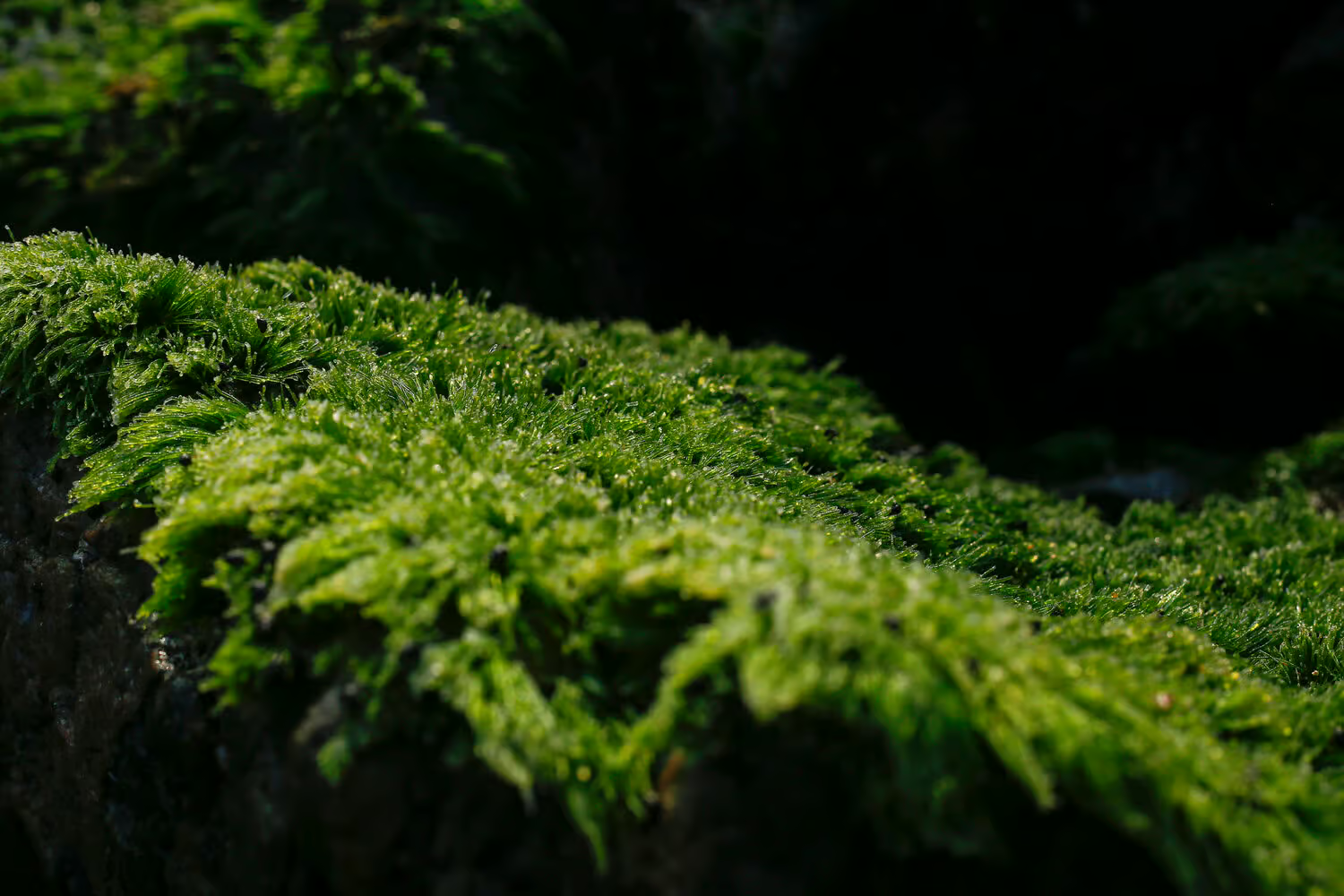
A mossy lawn is the most common moss complaint in Seattle. And it is the one most frequently misunderstood. Moss does not kill grass. It fills in where grass has already failed because the conditions favor moss over turf. If you kill the moss but do not fix the conditions, the moss returns within one season.
Moss is an indicator plant. Its presence tells you something specific about the soil and environment:
Acidic soil (pH below 6.0). Turf grass species used in Seattle perform best at pH 6.0 to 7.0. Moss thrives at pH 5.0 to 6.0. A soil test from WSU Extension (mail-in soil test kits, approximately $25–30) tells you your exact pH. If it is below 6.0, applying granular lime raises the pH over several months, tilting the environment back in favor of grass.
Compacted soil. When soil is compacted, water pools on the surface instead of draining. Grass roots need oxygen and drainage. Compacted, waterlogged soil suffocates grass roots while providing the constant surface moisture moss needs. Core aeration breaks up compaction, improves drainage, and allows air to reach grass roots.
Heavy shade. Grass needs a minimum of 4 hours of direct sunlight to maintain density. In areas receiving less than 3 hours, grass thins and moss takes over. If you cannot increase sunlight through tree pruning, consider replacing lawn in deep shade areas with shade-tolerant ground cover or mulched beds.
Nitrogen deficiency. Grass that is not fertilized lacks the vigor to compete with moss. A fall fertilization application (September to October) is the single most important feeding for Seattle lawns because it builds root reserves before winter dormancy.
The Lawn Moss Fix (Step by Step)
Kill existing moss
Iron sulfate (ferrous sulfate) is the standard homeowner product, sold at garden centers as moss killer or lawn moss control. Applied per label directions, it turns moss black within 48 hours. Warning: iron sulfate stains concrete and pavers orange. Do not apply near hardscapes.
Remove dead moss
After the moss turns black (2 to 3 days), physically remove it with a power rake or stiff garden rake. Do not skip this step — dead moss left in the lawn smothers the grass underneath.
Aerate
Core aeration immediately after dethatching opens the soil for seed and air penetration.
Overseed
Fill the bare spots left by the removed moss with grass seed. In Seattle, a blend of perennial ryegrass (70%) and fine fescue (30%) works for most residential lawns. Fine fescue provides shade tolerance; perennial ryegrass provides fast establishment.
Amend the soil
If a soil test shows pH below 6.0, apply lime. Lime takes 2 to 3 months to measurably change pH — not an instant fix.
Fertilize
Feed the new grass to help it establish quickly and outcompete any remaining moss spores.
We do not apply chemical moss killer (iron sulfate). What we do is the physical and cultural work that fixes the conditions causing the moss: core aeration, dethatching (mechanical removal of dead moss after homeowner-applied treatment), overseeding, fertilization, and soil amendment. We build the lawn that outcompetes moss. See our Lawn Care and Maintenance page.
Lawn aeration, overseeding, dethatching, and fertilization.
The moss fix starts with soil health. Free estimate.
Moss Prevention: Sunlight, Airflow, and Drainage
Removing moss from any surface is only half the job. If you do not address the environmental conditions that invited it, the moss returns as soon as fall rain arrives.
Increase sunlight. Sunlight is the single most effective natural moss deterrent. UV radiation kills moss directly, and dry surfaces from sun exposure eliminate the moisture moss needs. Pruning tree branches that overhang roofs, patios, driveways, and lawns increases sunlight hours on those surfaces. Even a partial canopy reduction that adds 2 to 3 hours of direct sun per day makes a measurable difference. For canopy pruning on shrubs and small trees, see our Pruning Services page. For large tree pruning, we refer to ISA Certified Arborists.
Improve drainage. Standing water and persistently damp soil are moss fuel. On lawns: core aeration reduces compaction and improves water infiltration. On hardscapes: ensure slope directs water away from the surface (minimum 1% slope). Check that downspouts are not depositing roof runoff onto patio or driveway surfaces. For gutter maintenance that prevents water from pooling on surfaces, see our Gutter Services page. For irrigation and drainage system maintenance, see our Irrigation Services page.
Remove organic debris. Fallen leaves, pine needles, and organic matter hold moisture against surfaces and provide nutrients for moss. Regular sweeping of hardscapes, seasonal gutter cleaning, and fall leaf removal from lawns reduce the conditions that feed moss growth.
The Economics of Moss: Home Value, Insurance, and Inspections
Home inspections. In the Seattle real estate market, home inspectors flag mossy roofs as 'deferred maintenance' or 'recommend further evaluation by a roofing contractor.' This gives buyers leverage to negotiate price reductions or demand roof replacement as a condition of sale. A roof cleaning before listing costs $300 to $800. A new roof costs $10,000 to $30,000. The math is straightforward.
Insurance. Some insurance companies are using aerial and drone imagery to assess roof condition. Significant moss coverage can trigger a maintenance notice requiring cleaning within a specified timeframe, or in some cases, a non-renewal of the homeowner's policy. A proactively maintained roof avoids this risk entirely.
Curb appeal. A mossy driveway, walkway, and roof signals deferred maintenance to anyone visiting or viewing the property. In a competitive market, first impressions determine whether a buyer schedules a showing. A clean, well-maintained exterior signals that the interior has been maintained with equal care.
When to Treat Moss in Seattle (Timing by Surface)
Timing matters. Treating moss at the wrong time of year reduces effectiveness and wastes money.
| Surface | Best Treatment Window | Frequency |
|---|---|---|
| Roof | February to April (moss at peak moisture, treatment bonds during dry summer). Second window: September to October. | Annual for heavy canopy. Every 18–24 months for moderate shade. Every 2–3 years for open exposure. |
| Concrete / Pavers | March to May (before summer use season). October for prevention before rainy season. | Every 1–2 years depending on shade. Sealed surfaces: 3–5 years. |
| Wood Deck | April to May (dry enough for cleaning and preservative application before summer use). | Annual cleaning for shaded decks. Every 2 years for partially shaded. |
| Lawn | March to April (kill moss, then aerate/overseed as grass begins active growth). September to October for fall overseeding. | Iron sulfate: 1–2 applications per year in spring. Lime: once per year until pH reaches 6.0–7.0. Aeration: annually. |
Roof Cleaning. Lawn Aeration. Pruning for Sunlight. Free Property Assessment.
LandscapingFactory provides professional roof cleaning and moss removal, plus the lawn care and pruning that prevents moss from coming back. Free estimate.
Frequently Asked Questions About Moss in Seattle
Will moss come back after professional removal? +
Is pressure washing safe for my roof? +
Can I use grocery store bleach to kill moss? +
When is the best time to treat moss in Seattle? +
Does lime kill moss in lawns? +
Does moss damage concrete? +
Are moss treatments safe for pets? +
Why are my pavers uneven? +
What do zinc strips on roofs do? +
Can I paint or stain over moss on a fence or deck? +
Why does moss grow faster in some parts of my yard? +
Does cutting down trees eliminate moss? +
What is the difference between moss and algae? +
How often should my roof be treated for moss? +
Does LandscapingFactory remove moss from all surfaces? +
Every Surface Has a Solution. The Key Is Matching the Method to the Material.
Moss is not going away in Seattle. The climate guarantees it. But the damage moss causes is entirely preventable with the right approach for each surface: soft-wash cleaning for roofs and hardscapes, soil health management for lawns, and environmental controls (sunlight, airflow, drainage) everywhere.
The most cost-effective approach is maintenance before the moss becomes a problem. A roof treatment every 1 to 2 years, a sealed driveway, an aerated lawn, and pruned tree canopy keep moss at bay for a fraction of what emergency remediation costs after years of neglect.
Similar Posts

Contact Us Today For A Free Consultation
Let's get started.
Tell us what you'd like to tackle when you request a quote and we'll do the rest.