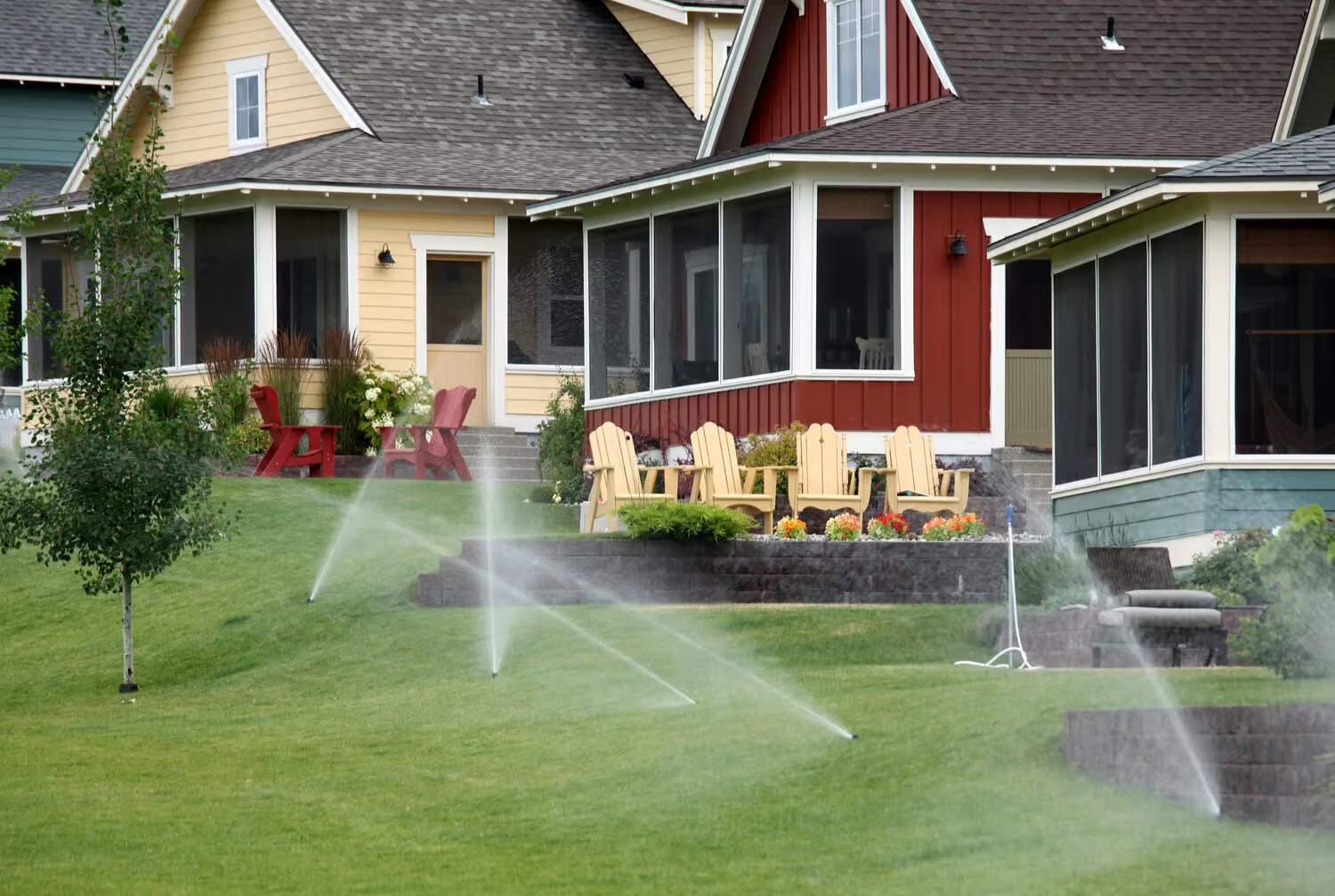
In Seattle, moss never sleeps. While the Emerald City is famous for its lush forests and fern-lined ravines, there is one shade of green that no homeowner should tolerate: the creeping invasion of moss on your roof, lawn, and hardscapes.
Every year, the pattern repeats. That velvety layer thickening on your shingles. The slippery film spreading across your driveway. The spongy mat choking your lawn. These are not cosmetic inconveniences. They are signs of a biological infestation that is actively degrading your most valuable asset.
At LandscapingFactory, we see the damage every season. Roofs that need premature replacement because of rot. Lawns that have to be completely re-sodded after suffocation. And increasingly, homeowners who have received insurance cancellation notices triggered by drone inspections and satellite imagery.
If you are reading this between January and March, your window to act is open right now. This is your complete guide to Seattle's moss season: the biology, the timing, the risks, and the professional solutions that reset your property before it is too late.
The Goldilocks Window: Why February and March Are Your Only Effective Chance
Most Seattle homeowners make a costly mistake: they wait until the sun comes out in May to think about moss. By then, the damage is locked in and removal becomes significantly more difficult and expensive.
Effective moss removal depends on hitting a precise biological and environmental window. That window exists in February and March, and only then.
Why December and January Are Too Early
During December and January, the Pacific Northwest ground is fully saturated. Soil moisture can exceed 40% in Seattle's clay-heavy soils. Bringing heavy scarifying machinery onto a lawn in these conditions tears up the topsoil, destroys soil structure, and creates ruts that take months to recover. For roofs, constant rainfall makes it unsafe and ineffective to apply treatment solutions — the chemicals wash off before they can penetrate the moss.
What Makes February–March the Ideal Window
The soil begins to drain and firm up, becoming stable enough to support professional equipment. Meanwhile, the moss is still soft, actively growing, and at its most vulnerable. The rhizoids (the moss anchor filaments) have not hardened yet, making removal dramatically easier and less damaging to the surfaces underneath.
For lawns: Scarifying now gives the grass a full 8 to 10 weeks of cool, moist spring weather to heal, thicken, and fill in bare patches before the summer drought arrives.
For roofs: Chemical treatments applied now have the ideal dwell time. Moderate rain washes dead moss away gradually without overwhelming the gutters.
What Happens If You Wait Until May or June
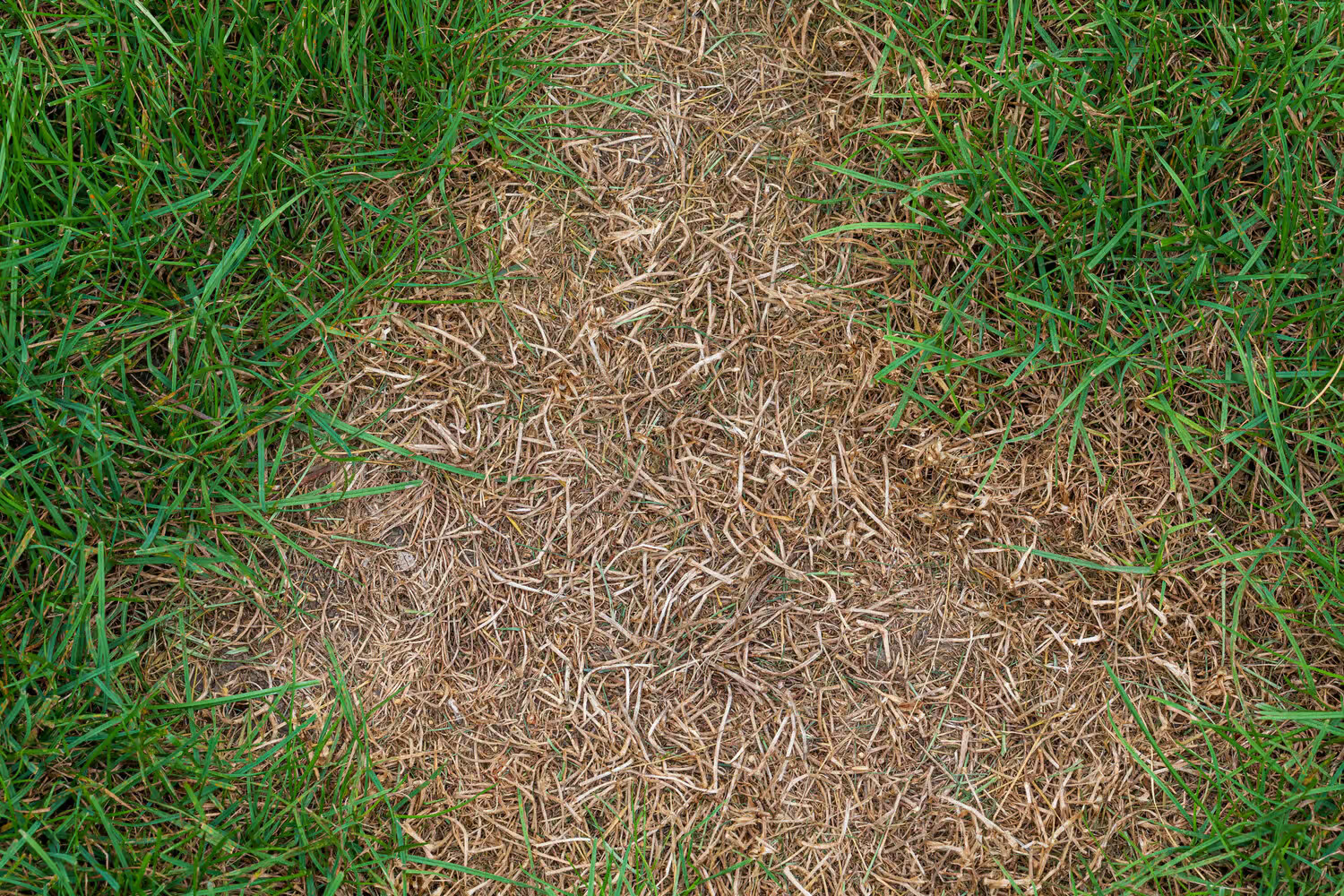
Once temperatures rise above 60°F consistently, moss goes dormant. Dormant moss hardens into a brittle, wire-like consistency. Removing it in this state requires significantly more aggressive mechanical force, which stresses grass roots and risks stripping protective granules from roof shingles. If you scarify a lawn in late spring, you expose the roots just as Seattle's summer dry season begins. Without adequate recovery time, the bare patches turn to dust and weeds colonize the open soil.
You have approximately 6 weeks — mid-February through March — to effectively save your lawn and roof. Outside this window, moss removal becomes harder, more expensive, and riskier. Early action is the only thing that changes the outcome.
How Moss Destroys Your Roof: The Biology You Need to Understand
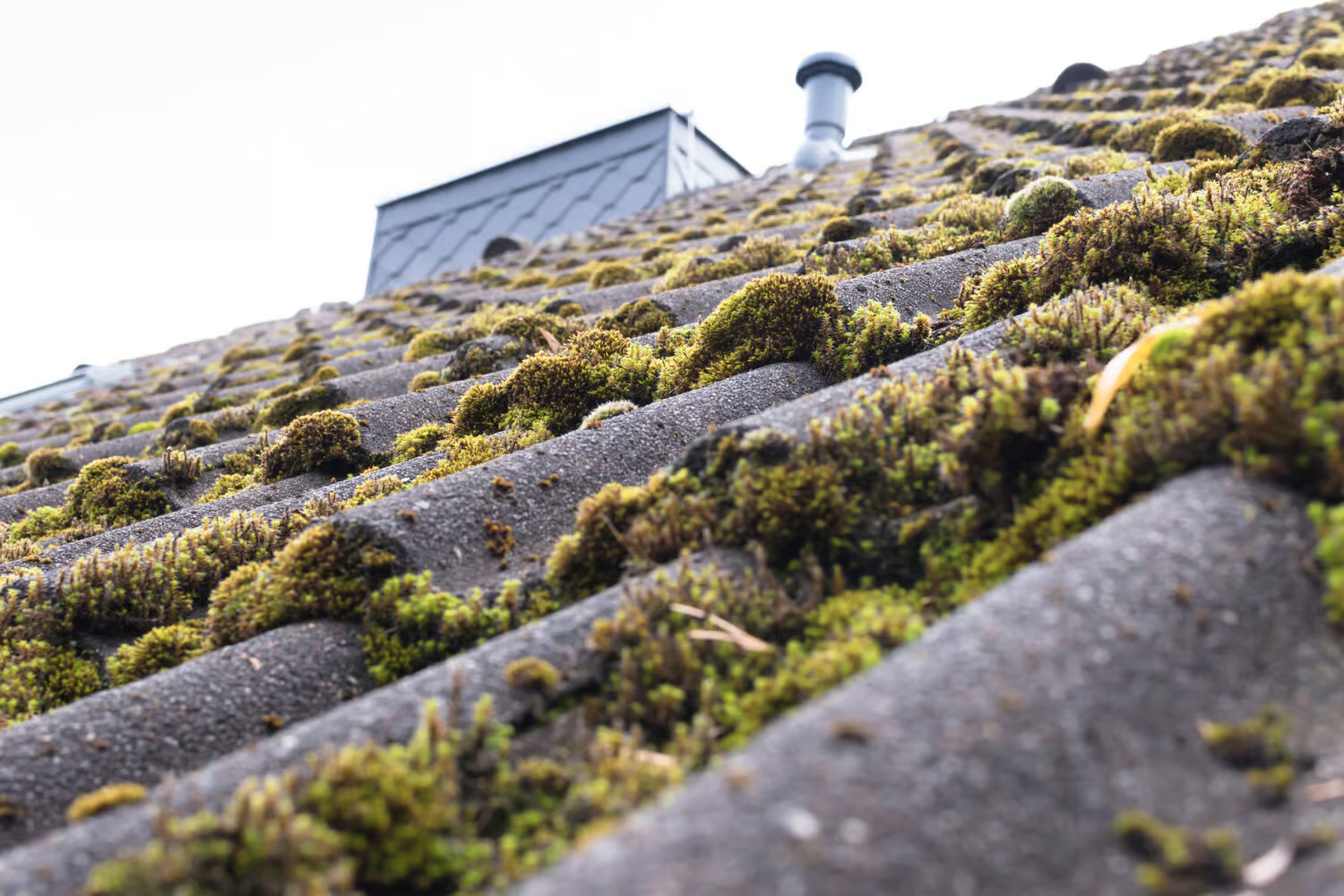
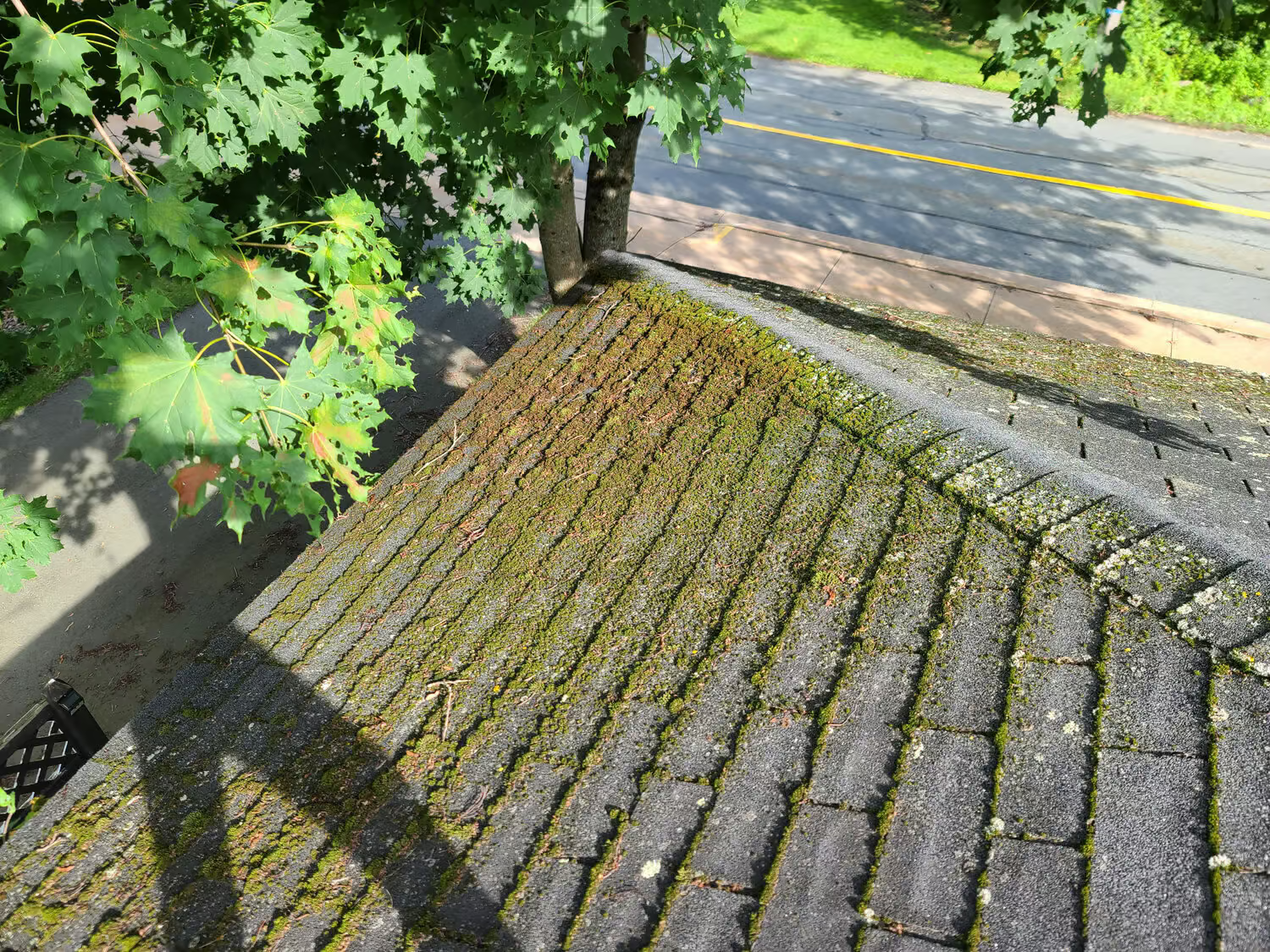
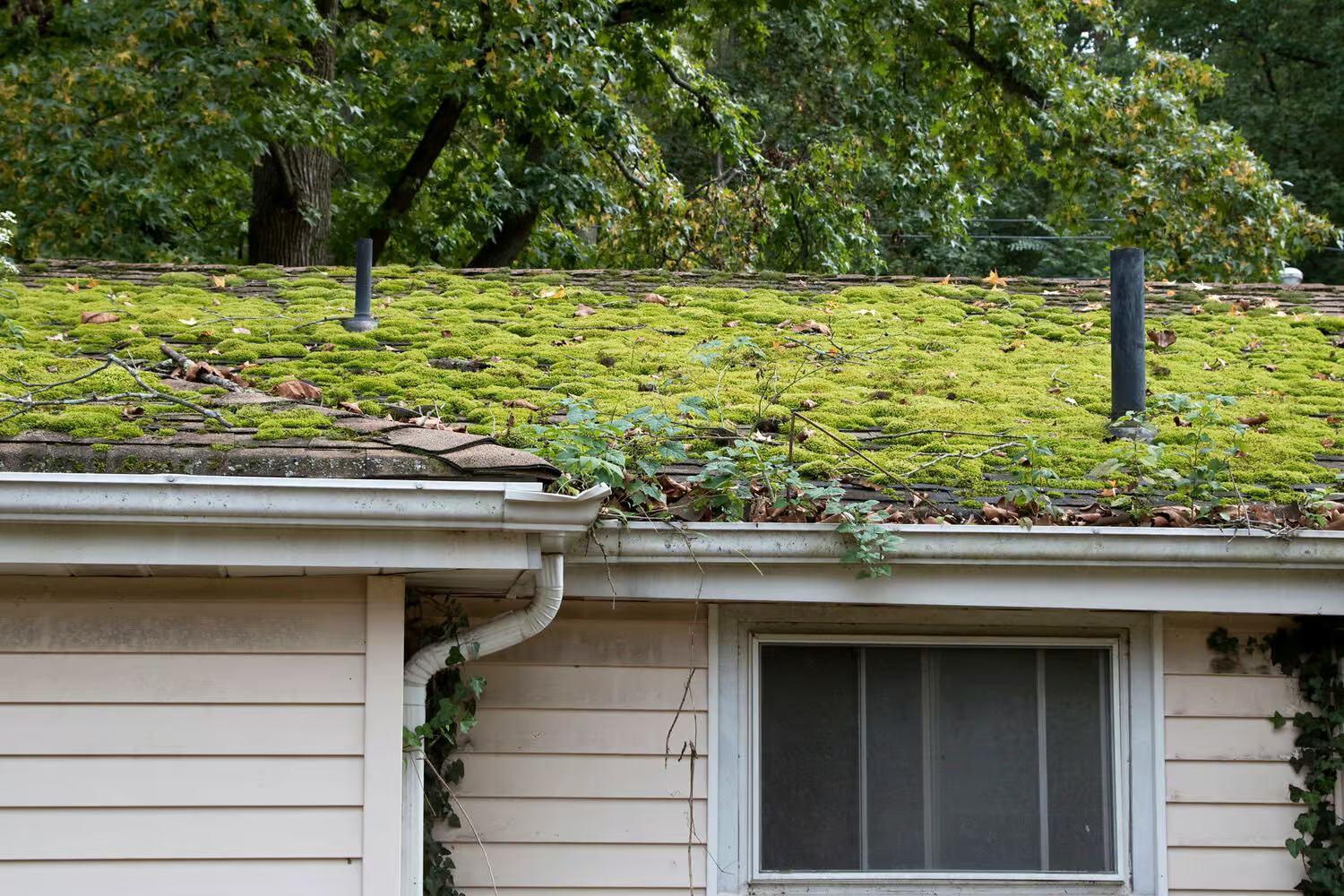
Many homeowners dismiss a mossy roof as aesthetic. In the professional roofing industry, moss is classified as a destructive biological organism that can shorten the lifespan of an asphalt shingle roof by 10 to 15 years if left unchecked.
How Moss Rhizoids Damage Shingles
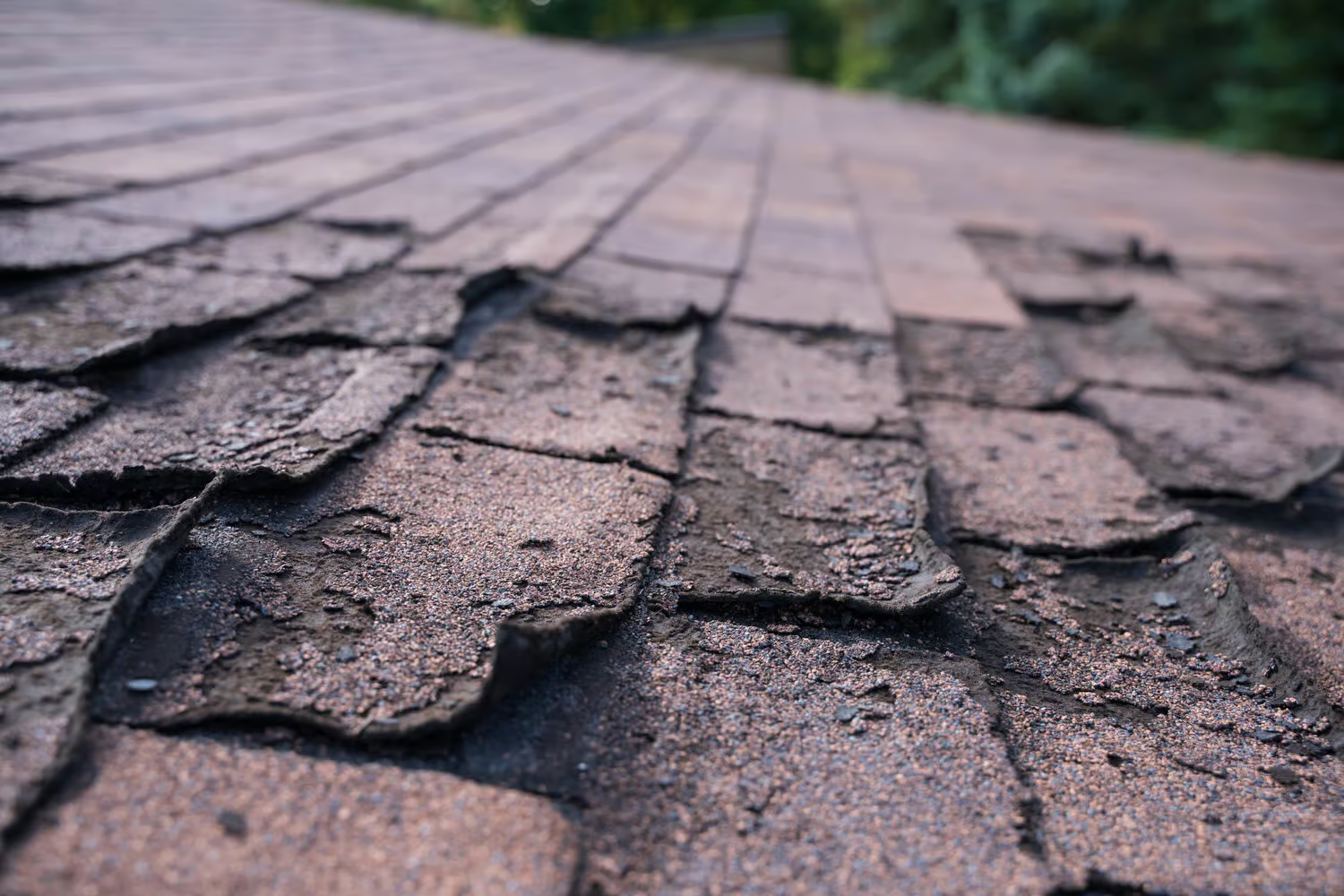
Granule loss: As moss expands, it physically pries granules off the shingle surface. These granules are your roof's UV shield. Without them, the underlying asphalt dries out, cracks, and fails prematurely. The Asphalt Roofing Manufacturers Association identifies granule loss as the leading cause of premature shingle failure in the Pacific Northwest.
The Lifter Effect: As moss clumps grow thicker, they physically wedge underneath shingle edges, breaking the factory adhesive seal. During a Pacific Northwest windstorm, these lifted shingles catch the wind and tear off entirely.
Biological degradation: Moss produces weak organic acids as a metabolic byproduct. Over years, these acids slowly dissolve the calcium carbonate in shingle granules, accelerating surface breakdown at the chemical level.
Capillary Action: The Silent Killer Under Your Shingles
This is the damage that most homeowners never see until it is too late.
Moss is hygroscopic — it absorbs and retains up to 20 times its dry weight in water. The real danger is not the weight. It is capillary action. Moss draws water upward against gravity through its dense mat, pulling moisture underneath the shingle overlap and onto the wooden roof deck continuously during Seattle's 6 to 8 month wet season.
Even if your ceiling looks perfectly dry inside, your roof deck can be slowly rotting from the outside in. By the time you notice a water stain on your ceiling, the structural damage is often extensive, potentially requiring full deck replacement rather than just new shingles.
Worried about what is under your shingles?
We provide free roof assessments with photographic documentation. See our Roof Cleaning and Moss Removal service.
Moss and Insurance Cancellation: Why Seattle Homeowners Are Getting Notices
This is the single biggest reason our phones ring from January through April.
Insurance companies across Washington State have become significantly more aggressive about property inspections. They now routinely deploy drones and high-resolution satellite imagery to scan neighborhoods and assess roof conditions — without setting foot on your property or notifying you in advance.
If an underwriter identifies significant moss coverage on your roof, they classify it as deferred maintenance, a red flag that significantly increases the risk of water damage claims. The consequences can include premium increases, coverage exclusions for roof-related water damage, and non-renewal notices giving you 30 to 60 days to professionally clean or replace the roof or lose your coverage entirely.
LandscapingFactory provides certified moss removal receipts, before-and-after photographic documentation, and Proof of Remediation letters specifically formatted to satisfy insurance audit requirements. If you have received an insurance notice about roof moss, contact us — we provide same-week emergency treatment with complete documentation.
Soft Washing: The Only Safe Way to Clean an Asphalt Roof
Why You Should Never Pressure Wash an Asphalt Roof
Standard pressure washers deliver 2,500 to 3,500 PSI of force. Asphalt shingles are engineered to withstand rain, wind, and UV — not a concentrated water jet. Pressure washing strips the protective granule layer instantly, effectively aging your roof by 10 or more years in a single afternoon. It also voids the manufacturer's warranty on virtually every asphalt shingle product on the market.
The LandscapingFactory Soft Wash Protocol
We follow the cleaning method recommended by the Asphalt Roofing Manufacturers Association — the industry body that sets the standard for shingle care. Our protocol has three stages:
Manual Removal
Technicians gently brush off large moss clumps using specialized soft-bristle tools engineered specifically for shingle surfaces. No scraping, no wire brushes, no granule damage.
Chemical Neutralization (Soft Wash)
A low-pressure, biodegradable treatment solution is applied at under 100 PSI (compared to 3,000+ PSI for pressure washing). The solution penetrates the moss, killing the spores and rhizoids at the cellular level. Within hours of treatment, the moss turns white or brown — the sign that the organism is dead.
Natural Rinse
Over the following 2 to 4 weeks, Seattle's natural rainfall gently rinses the dead material from the roof, leaving a clean, intact surface without a single granule lost. No blasting, no scraping after treatment.
Free roof assessment — We inspect and photograph your roof at no cost.
See our Roof Cleaning and Moss Removal service for full details and pricing.
Why Moss Takes Over Seattle Lawns (And How to Fight Back)
Look at your lawn right now. Is it patchy? Yellow in spots? Does it feel spongy underfoot? If so, moss is winning the battle for your soil — and the biology is stacked against your grass during Seattle winters.
The Biology Behind the Moss Takeover
Grass goes dormant. Moss does not. Cool-season grasses slow their growth dramatically when temperatures drop below 50°F. Moss, however, thrives in exactly these conditions — temperatures between 40°F and 55°F, constant moisture, and low light. While your grass rests from November through February, moss colonizes aggressively.
The chokehold: Moss forms a dense, impermeable mat over the soil surface that blocks water, oxygen, and fertilizer from reaching the grass roots below. It suffocates your turf from above while starving it from below.
The pH problem: Moss loves acidic soil (pH below 6.0). Healthy grass prefers pH 6.2 to 7.0. In our region, persistent rainfall leaches calcium and magnesium from the topsoil, naturally driving pH downward. Most untreated Seattle-area lawns test between pH 5.0 and 5.8 — ideal for moss, hostile to grass. If you rake the moss out without correcting the soil pH, the moss returns within weeks. You are treating the symptom, not the cause.
Mechanical Scarifying and Soil Rebalancing: The Professional Lawn Moss Fix
You cannot fix a seriously mossy lawn with a hand rake and a bag of fertilizer. Professional-grade moss removal requires mechanical scarifying combined with targeted soil chemistry correction.
Mechanical Scarifying
A commercial-grade scarifier — a heavy machine fitted with rows of vertical steel blades — slices into the turf at controlled depth. The blades rip through the moss mat, thatch layer, and dead organic material, pulling enormous volumes to the surface. After a typical Seattle lawn scarification, 8 to 15 large bags of moss and debris are removed. The blades simultaneously score the soil surface, breaking up compaction and creating channels for water, oxygen, and nutrients to reach the root zone.
Ferrous Sulfate (Iron) Application
A calibrated dose of liquid iron (ferrous sulfate) is applied across the entire lawn. This turns any remaining moss spores black and kills them within hours, while simultaneously feeding the grass and turning it a deep, rich green. Iron is a key micronutrient that PNW soils are often deficient in.
Dolopril Lime Application
Agricultural lime is applied to raise the soil pH from its typical acidic range (5.0 to 5.8) toward the neutral zone (6.2 to 6.8). This creates an environment that is hospitable for grass growth and hostile to future moss colonization. Lime takes 4 to 6 weeks to fully integrate — another reason February timing is ideal.
Overseeding
Immediately after scarifying is the single best time to overseed. The soil is freshly opened, ensuring excellent seed-to-soil contact. Overseeding thickens turf density and creates a natural defense against future moss colonization.
Ferrous sulfate creates permanent rusty-orange stains on concrete and stone. If you attempt DIY application, overspray on your driveway or patio is almost guaranteed. LandscapingFactory technicians are trained to apply it exclusively to lawn areas and immediately clear any product off adjacent hardscapes. The chemical rebalancing described above requires a WSDA Commercial Pesticide Applicator license for commercial application — our service is homeowner-engaged professional treatment, not DIY advice.
Ready to rescue your lawn before the March window closes?
See our Lawn Care and Maintenance service for the full scarifying, aeration, and reseeding program.
The Hardscape Hazard: Moss on Driveways, Patios, and Walkways
Moss does not stop at the gutter line. It spreads across every horizontal surface on your property. In Seattle's persistently damp climate, moss and algae create a biofilm on concrete, stone, and pavers that is genuinely as slippery as ice.
The Liability Reality
As a property owner in Washington State, you have a legal duty to maintain safe conditions on your property. Delivery drivers, guests, mail carriers, and contractors walk your driveway every single day. If someone slips on a mossy walkway and is injured, you bear the liability. A professional cleaning with documentation is your strongest demonstration of Duty of Care.
Paver Joint Damage
Beyond the liability issue, moss growing between pavers is physically destructive. The rhizoids burrow into the joint sand and expand when moisture freezes in winter, progressively pushing pavers apart. This frost heaving creates uneven surfaces, trip hazards, and costly patio repairs.
Professional Hardscape Cleaning
Rotary surface cleaners: Commercial rotary heads distribute pressure evenly, preventing the streaky zebra-stripe pattern that DIY pressure washing creates. They flush grime out of exposed aggregate valleys that a standard wand misses entirely.
Post-treatment inhibitor: After cleaning, a moss and algae inhibitor is applied that delays regrowth for up to 12 months depending on the surface's sun exposure and drainage.
Paver restoration: For pavers, cleaning is followed by Polymeric Sand joint installation — an engineered material that hardens when wet, blocking weeds, ants, and moss from re-establishing in the joints.
For full hardscape cleaning details, see our Pressure Washing and Exterior Restoration service page.
Long-Term Moss Prevention: Keeping Your Property Moss-Free
Tree Pruning for Sunlight
Moss hates two things: direct sunlight and air circulation. Overhanging branches create the dense shade and trapped humidity that moss needs to thrive. By strategically pruning back branches that overhang your roof and shade your lawn, we increase UV exposure and airflow. A dry roof and a dry lawn are moss-free zones. See our Pruning and Shrub Trimming service for canopy management.
Zinc or Copper Strips for Roofs
Metal strips installed near the roof ridge line release trace amounts of zinc or copper oxide every time it rains. The metallic solution washes down the roof slope, creating an environment where moss and algae spores cannot establish. Zinc strips typically last 15 to 20 years and are significantly cheaper than repeated chemical treatments over the same period.
Mowing Height for Lawns
Stop cutting your lawn below 2 inches. Cutting grass too short weakens the root system, reduces photosynthetic capacity, and exposes bare soil to light — exactly what moss spores need to germinate. Maintain a mowing height of 2.5 to 3 inches year-round in the Pacific Northwest. Taller grass shades the soil surface and physically outcompetes moss for space.
How Much Does Moss Removal Cost in Seattle?
Pricing depends on property size, infestation severity, and which surfaces need treatment. Here are general ranges for the Seattle metro area as of 2026:
| Service | Typical Range | Key Factors |
|---|---|---|
| Roof soft wash (average home) | $450 – $900 | Roof size, pitch, moss severity |
| Lawn scarifying + treatment | $350 – $750 | Lawn area, moss density, soil amendment needs |
| Driveway / patio pressure wash | $200 – $500 | Square footage, surface type, stain severity |
| Full property package (roof + lawn + hardscape) | $900 – $1,800 | Bundled discount applies |
Prices are estimates for the greater Seattle area as of 2026. Actual pricing depends on a free on-site assessment. We provide transparent, written quotes with no hidden fees.
Combining roof, lawn, and hardscape treatment in one visit is the most cost-effective approach. Our crew is already mobilized and we apply the bundled discount to the total. Most homeowners who book the full property package save $200 to $400 compared to separate visits.
Ready to protect your roof, rescue your lawn, and make your hardscapes safe?
LandscapingFactory provides professional moss removal across Seattle, Kirkland, Bellevue, and the Eastside. Free assessment, certified documentation, same-week availability in season.
Frequently Asked Questions About Moss Control in Seattle
Can I use laundry detergent or Tide to kill moss on my roof? +
Will scarifying ruin my lawn? +
How often should I have my roof cleaned in Seattle? +
Why does moss only grow on the north side of my roof? +
Is roof moss bad for my family's health? +
Can I overseed my lawn immediately after scarifying? +
Does moss actually damage concrete? +
My insurance company sent a drone to photograph my roof. What should I do? +
Can you clean cedar shake roofs? +
Why is there moss growing in my gutters? +
Will the roof cleaning chemicals kill my plants and landscaping? +
Does soft washing void my roof warranty? +
Can I use granular Moss Out products on my roof? +
Does ferrous sulfate (iron moss killer) stain concrete? +
Is a hand rake enough to dethatch my lawn? +
The Window Is Open. Act Before It Closes.
Moss in the Pacific Northwest is not a someday problem. It is an active, ongoing biological threat to your roof's integrity, your lawn's health, your property's value, and increasingly your insurance coverage. The six-week window from mid-February through March is when professional treatment is most effective and least damaging to your surfaces.
After March, the window closes. The moss hardens. The stains set. The shingles lift further. And another season of damage compounds on the last.
Similar Posts

Contact Us Today For A Free Consultation
Let's get started.
Tell us what you'd like to tackle when you request a quote and we'll do the rest.