July 26, 2026
Where Does the Water Go? A Seattle Homeowner's Guide to Property Drainage
Growing up in Kirkland taught us the soil, the seasons, and what holds. We build what lasts here because we live here. That matters.

Seattle receives an average of 38 inches of rain per year, spread across 150+ days. For homeowners, the total volume matters less than where that water goes after it hits your property. A 2,000-square-foot roof sheds over 1,200 gallons during a single inch of rainfall. If that water reaches your foundation, pools in your yard, or saturates the soil around your retaining wall, the damage compounds with every storm.
Most drainage failures happen because homeowners (and some contractors) only look at one piece of the system. A gutter company cleans the gutters but ignores where the downspouts dump. A landscaper grades the yard but does not check whether the gutters are overflowing onto the beds. A paver installer builds a beautiful patio but does not account for where the runoff goes.
Water management is a system. It starts at the roof peak and ends at the street, the storm drain, or the water table. If any link in that chain fails, the links downstream fail too. This guide follows the water from top to bottom: where it enters, how it moves, what breaks, and what to do about each stage.
Stage 1: The Roof (Where All Water Enters Your Property)
Every drop of rain that hits your property starts on the roof or the ground. The roof is by far the larger collector. On a typical Seattle home with a 2,000-square-foot roof area, one inch of rainfall produces approximately 1,200 gallons of water. During a typical November week with 2 to 3 inches of rain, that is 2,400 to 3,600 gallons your roof must shed and your gutters must transport.
How Roof Condition Affects Drainage
Moss as a dam. A thick layer of moss on asphalt shingles slows water flow and holds moisture against the roof surface like a sponge. Instead of running cleanly into the gutter, water backs up under shingle edges, causing deck rot and leaks. Keeping the roof clean is a drainage decision as much as a roofing decision.
Shingle integrity. Damaged, curled, or missing shingles allow water to bypass the gutter system entirely, dripping directly onto the fascia, siding, or foundation below. If you see water stains on exterior walls that do not align with a downspout, the issue may be above the gutter line.
Roof valleys and flashing. Roof valleys (where two roof planes meet) concentrate water into high-volume streams. If the valley flashing is damaged or debris has accumulated, water overshoots the gutter at these points — the most common cause of localized gutter overflow on an otherwise functional system.
Professional roof cleaning and moss removal: See our Roof Cleaning and Moss Removal Services. Detailed moss biology and prevention: See our Moss Control Guide.
Stage 2: Gutters and Downspouts (The Transport System)
The gutter system is the bridge between the roof and the ground. Its job is simple: collect water from the roof edge and deliver it to the downspouts without leaking, overflowing, or backing up. When it fails, every downstream component fails with it.
Why Gutters Overflow
Debris accumulation. This is the most common cause. Pine needles, leaves, and organic matter accumulate in the trough, decompose into a dense sludge, and reduce the effective water capacity. In neighborhoods with mature conifers, gutters can fill with needle debris within 3 to 4 months of cleaning.
Downspout clogs. This is the hidden failure. The gutter trough may look clean, but if a sludge plug forms at the downspout elbow (where the gutter transitions into the vertical pipe), water backs up in the entire run. Flushing downspouts with water to verify flow is the step that separates real gutter maintenance from cosmetic leaf scooping.
Undersized gutters. Standard 5-inch K-style gutters handle most residential roofs, but homes with large roof areas, steep pitches, or multiple valleys may need 6-inch gutters. A 6-inch gutter handles approximately 40% more water volume than a 5-inch. If your gutters overflow during heavy rain but are clean and unclogged, they may simply be too small for your roof. Gutter sizing and installation should be done by a licensed gutter contractor.
Incorrect pitch. Gutters must slope slightly (approximately 1/4 inch per 10 feet of run) toward the downspout. Over time, gutter hangers loosen and the pitch flattens or reverses, causing water to pool in the trough instead of flowing to the downspout.
What Proper Gutter Cleaning Involves
Effective gutter cleaning is more than scooping leaves from the trough. It requires removing all debris from the trough, flushing the entire run and every downspout with water to verify flow, identifying and clearing any downspout clogs (sludge plugs at elbows), checking gutter pitch and hanger condition, and verifying that water exits the downspout base and moves away from the foundation.
Gutter cleaning with full downspout flush. We verify flow, not just scoop leaves.
Free estimate.
Stage 3: Ground-Level Drainage (Where Downspouts Terminate)
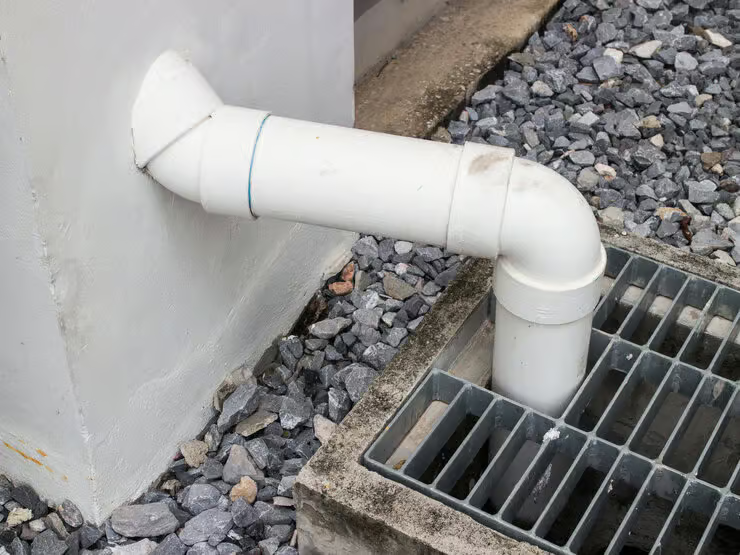
This is where most residential drainage systems fail. The gutters work. The downspouts flow. But the water dumps directly at the base of the foundation, saturating the soil within inches of the house. Over time, this causes foundation settling, basement moisture, crawl space humidity, and erosion of landscaping beds.
The Problem: Short Downspout Extensions
Many homes have downspouts that terminate with a short elbow or splash block directly at the foundation. This deposits all roof water (1,200+ gallons per inch of rain) within 1 to 2 feet of the house. In Seattle's clay-heavy soil, that water does not drain quickly. It saturates the soil around the foundation for days or weeks after a storm.
The Solutions
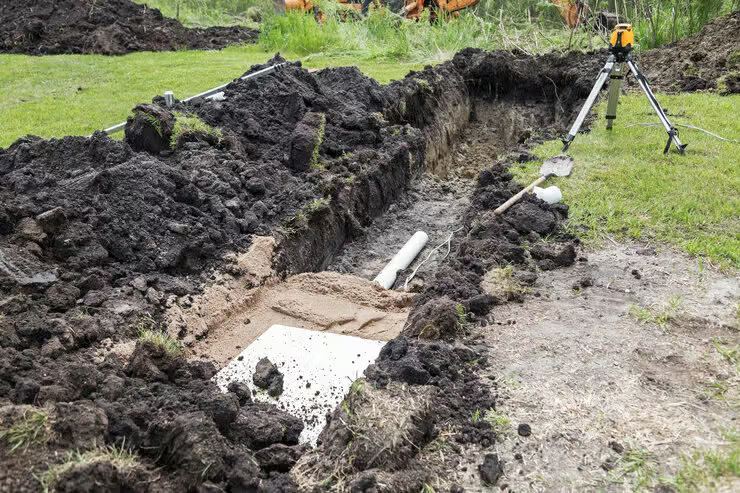
Tight-line piping (underground). The most effective solution is connecting downspouts to rigid PVC pipe (SDR 35) buried underground, carrying roof water at least 10 feet from the foundation. The pipe terminates at a pop-up emitter in the lawn or connects to the city storm sewer. Rigid PVC is preferred over corrugated black pipe because it has a smooth interior (debris flushes out rather than catching in ridges) and is crush-resistant. Tight-line installation requires trenching and should be done by a drainage contractor or licensed plumber.
Above-ground extensions (DIY). If underground piping is not feasible, above-ground downspout extensions that carry water at least 4 to 6 feet from the foundation are a significant improvement over a splash block. These are available at hardware stores and can be installed by homeowners in minutes. They are not as clean or permanent as tight-line piping, but they solve the immediate proximity problem.
Pop-up emitters. Pop-up emitters are spring-loaded lids at the end of underground drain lines. Water pressure pops the lid open to disperse water, and the lid snaps shut when flow stops to prevent debris and rodents from entering the pipe.
Stage 4: Surface Grading (Directing Water Away from the Foundation)
Even with perfect gutters and downspout extensions, if the ground around your foundation slopes toward the house instead of away from it, water will pool against the foundation. This is called 'negative grade' and it is one of the most common drainage deficiencies found in Seattle home inspections.
Positive grade standard: The soil surface should slope away from the foundation at a minimum rate of 6 inches of drop over the first 10 feet. This ensures surface water flows away from the house, not toward it.
How grade changes over time: Soil settles. Landscaping beds built against the foundation compact and sink. Mulch decomposes and reduces volume. Irrigation and rain erode soil. Over 5 to 10 years, a property that originally had positive grade can develop negative grade in spots. Winter is the best time to inspect because you can see where water actually pools and flows during rain events.
Fixing grade: For minor corrections (1 to 3 inches of fill needed), adding topsoil or compost and re-grading by hand is a manageable project. For significant grade issues, or where the grade must be corrected around hardscapes, retaining walls, or foundation plantings, professional grading ensures the slope is consistent and does not create new problems (like directing water toward a neighbor's property).
Stage 5: Sub-Surface Drainage (French Drains and Curtain Drains)
If your yard stays soggy despite having functional gutters, clean downspouts, and positive grade, the problem is below the surface. Seattle's clay-heavy soil drains slowly. In areas with a high water table or clay content, surface grading alone cannot fix saturation. This is where sub-surface drainage systems become necessary.
French Drain
What it is: A trench (typically 12 to 18 inches deep) lined with geotextile fabric, filled with washed drainage rock, and containing a perforated pipe at the bottom. The pipe collects groundwater that percolates through the rock and transports it to a discharge point (storm drain, dry well, or daylight outlet at a lower elevation).
When you need one: When the water table is high and the soil stays saturated from below. When garden beds or lawn areas remain waterlogged for days after rain stops. When water seeps into basements or crawl spaces.
Curtain Drain
What it is: Functionally similar to a French drain, but installed specifically to intercept water flowing from uphill. Placed along a property line or at the top of a slope to catch surface and shallow sub-surface water before it enters your yard.
When you need one: When a neighbor's property uphill is sending water into your yard. When water flows down a slope and saturates a flat area at the bottom.
Catch Basins and Dry Wells
Catch basins: A box with a heavy-duty grate installed at a low point where surface water collects. It acts like a bathtub drain for your yard, capturing fast-moving surface runoff and directing it into underground pipe.
Dry wells: A buried chamber (typically a large perforated barrel or engineered plastic chamber) filled with rock. Water from catch basins or downspout piping enters the dry well and slowly percolates into the surrounding soil. Used when connection to the city storm sewer is not available.
French drain installation, curtain drains, catch basins, dry wells, and tight-line piping are excavation and plumbing projects that require proper design, correct pipe sizing, geotextile selection, and discharge planning. In many jurisdictions, connecting to the city storm sewer requires a permit. Hire a licensed drainage contractor or plumber for this work. A poorly designed French drain (wrong depth, wrong rock, missing fabric) fails within 2–3 years and requires excavation to fix. LandscapingFactory does not install French drains or underground drainage systems. We refer to licensed specialists.
Stage 6: Hardscapes That Manage Water (Permeable Pavers and Retaining Walls)
Hardscapes are both a cause of drainage problems and a solution to them, depending on how they are designed and built. A solid concrete driveway creates 100% runoff. A permeable paver driveway absorbs rainfall. A retaining wall without drainage traps water behind it and eventually fails. A retaining wall with proper drainage management lasts decades.
Permeable Pavers
How they work: Permeable interlocking concrete pavers (PICP) are installed with wider joints filled with small crushed stone chips, sitting on an engineered aggregate base. Rainfall passes through the gaps between pavers, filters through the aggregate base, and infiltrates into the soil below.
Why they matter in Seattle: King County and the City of Seattle have stormwater management codes that limit the amount of impervious surface on residential properties. Permeable pavers satisfy these requirements while providing a durable, attractive surface. They also eliminate standing water and ice formation because water drains through instead of pooling on the surface.
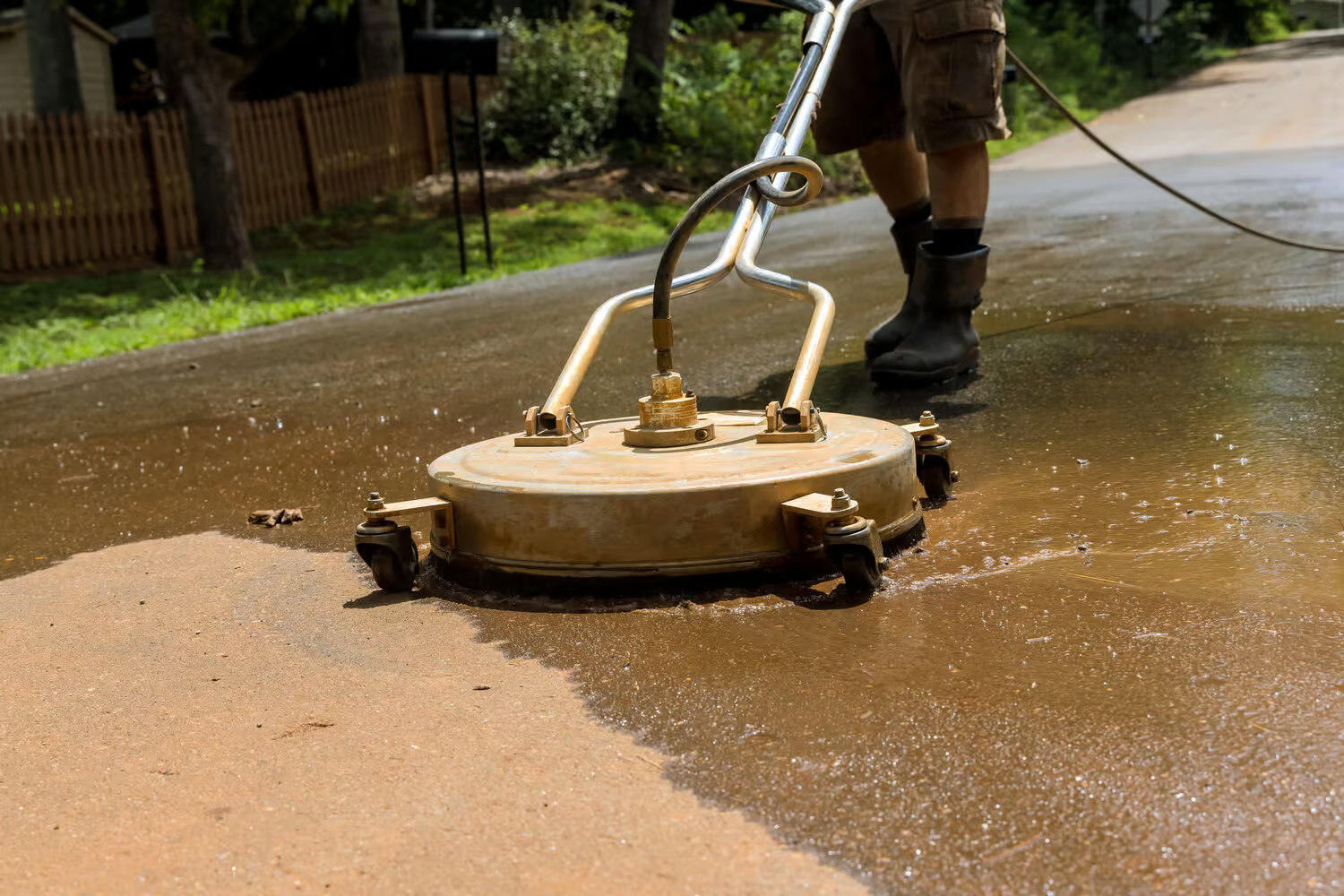
Maintenance: Minimal. Occasionally the stone chips in the joints need topping up. The surface may need vacuuming or power sweeping every few years to keep the pores open. Do not seal permeable pavers — sealing closes the pores and defeats the purpose.
Standard Pavers with Drainage
Even standard (non-permeable) paver patios and walkways must account for drainage. The surface must slope at least 1% (1/8 inch per foot) away from the house and toward a permeable area. Without this slope, water pools on the paver surface, feeds moss growth, and creates ice hazards in winter.
Retaining Walls and Drainage
Water is the primary cause of retaining wall failure. When water saturates the soil behind a retaining wall, it creates hydrostatic pressure that pushes the wall forward. Every retaining wall must include drainage management.
Drainage gravel backfill: The space directly behind the wall (12 to 18 inches) should be filled with clean drainage gravel, not native soil. Gravel allows water to move freely downward instead of building up pressure against the wall.
Perforated drain pipe: A perforated pipe at the base of the gravel collects water and carries it to a daylight outlet or drain. This is the single most important component of a retaining wall that most DIY builders skip.
Weep holes: Openings at the base of the wall face that allow trapped water to escape. These provide a visible pressure relief point and are a sign of a properly engineered wall.
Geotextile fabric: Separates the drainage gravel from the native soil behind it. Without fabric, fine clay particles migrate into the gravel over time (a process called piping), clogging the drainage layer.
LandscapingFactory designs and builds paver patios, walkways, driveways (including permeable pavers), and retaining walls with integrated drainage. We build walls with drainage gravel backfill, perforated drain pipe, weep holes, and geotextile fabric as standard practice. See our Landscaping Services page for project consultation.
Paver installation and retaining walls with proper drainage.
Free consultation.
Stage 7: Eco-Friendly Options (Rain Gardens and Rainwater Harvesting)
Rain Gardens
A rain garden is a shallow, planted depression designed to capture and absorb stormwater runoff. It is typically positioned where downspout discharge, driveway runoff, or surface water naturally collects. The garden is planted with deep-rooted native plants (red-twig dogwood, sedges, sword fern, Oregon grape) that tolerate both wet and dry conditions. Water collects in the depression during rain, soaks into the soil over 24 to 48 hours, and is filtered by plant roots and soil biology before reaching the water table.
King County and many Seattle-area municipalities actively encourage rain gardens as a stormwater management tool. Some jurisdictions offer rebates or credits for rain garden installation that reduces impervious surface runoff. Check with your local jurisdiction for incentive programs.
Rainwater Harvesting
Rain barrels and cisterns capture roof runoff for later use (garden irrigation, car washing, or non-potable household use). A rain barrel (typically 50 to 80 gallons) connects to a downspout and fills during rain events. Larger cisterns (200 to 1,000+ gallons) can capture significant volumes.
Critical design requirement: Every rain barrel and cistern must have a dedicated overflow pipe that connects to your drainage system. When the barrel is full (which happens quickly during Seattle rain), the overflow must be directed away from the foundation, not allowed to spill at the base of the house. A rain barrel without overflow management is worse than no barrel at all because it concentrates water at the foundation once it overflows.
The Water Management Checklist (What to Inspect Seasonally)
Use this checklist twice per year: once in fall (October, before the rainy season) and once in late winter (February, after the heaviest storms).
| Component | Inspection Items |
|---|---|
| Roof | Is the roof clean (no heavy moss or debris)? Are shingles intact (no curling, missing, or damaged)? Are valleys clear of debris? |
| Gutters | Are gutters clear of debris? Do downspouts flow freely (verified by flushing)? Are gutters pitched correctly (no standing water)? |
| Downspouts | Does water exit at least 4–6 feet from foundation? Are underground connections (if present) flowing? Are extensions in place and directed away from the house? |
| Grade | Does soil slope away from foundation (6 inches over 10 feet)? Are there low spots where water pools near the house? |
| Hardscapes | Are paver joints intact (no missing sand, no moss displacement)? Do surfaces slope away from the house? Are retaining wall weep holes clear? |
| Beds and Lawn | Are beds draining (no standing water 24+ hours after rain)? Is lawn soggy or spongy in areas (sub-surface saturation)? |
| Catch Basins | Are grates clear of leaves and sludge? Is water flowing into basins during rain? |
What LandscapingFactory Does vs. What Requires a Specialist
| Service | LandscapingFactory | Specialist Referral |
|---|---|---|
| Gutter cleaning + downspout flush | Yes | |
| Roof cleaning and moss removal | Yes | |
| Paver patio/walkway/driveway installation (including permeable pavers) | Yes | |
| Retaining wall construction with drainage | Yes | |
| Landscape grading (surface) | Yes | |
| Mulching, bed maintenance, debris cleanup | Yes | |
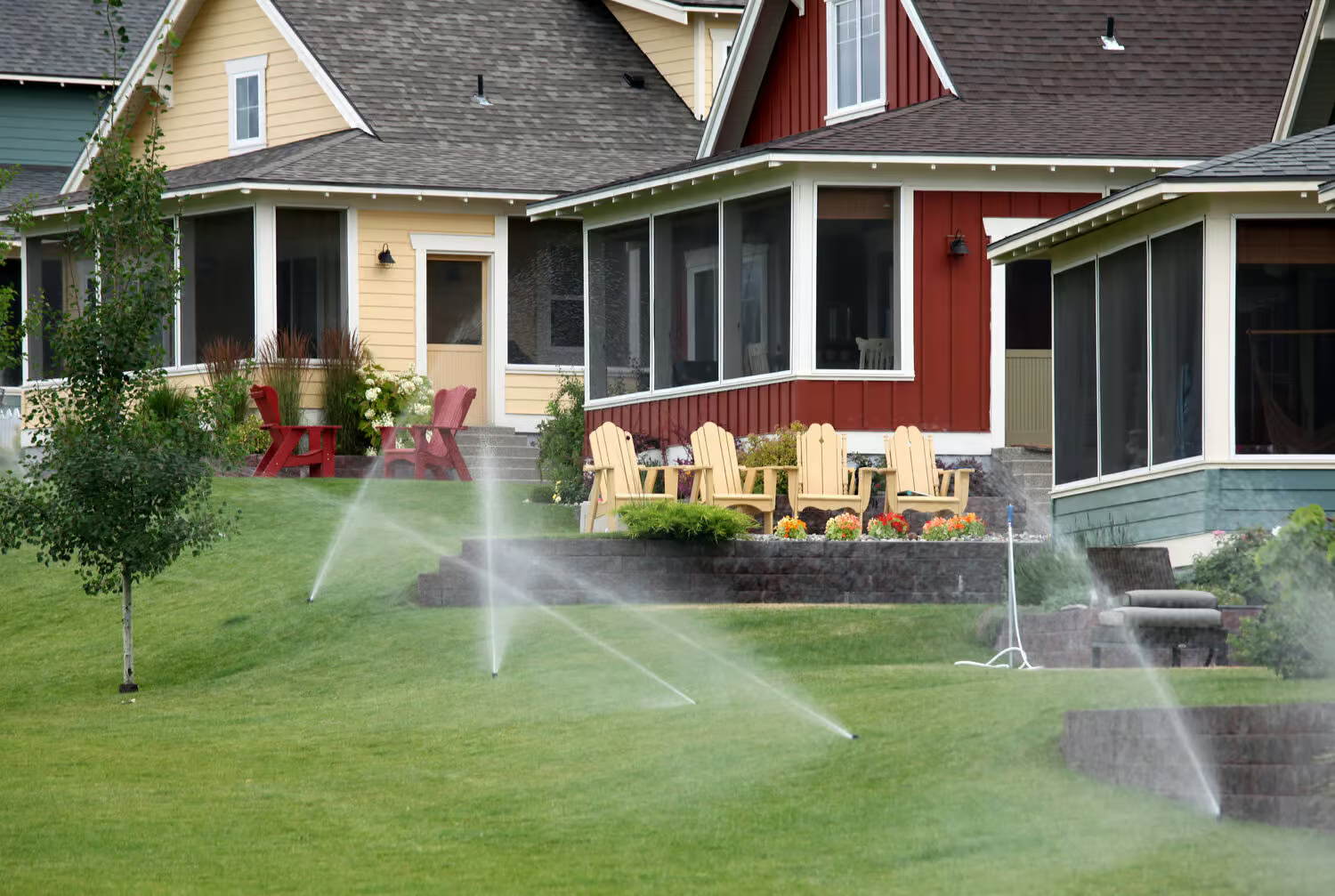
| Irrigation system maintenance | Yes | |
| Gutter installation (seamless, new) | Licensed gutter contractor | |
| Fascia/soffit replacement | Licensed carpenter/contractor | |
| French drain / curtain drain installation | Licensed drainage contractor | |
| Tight-line piping (underground) | Licensed drainage contractor or plumber | |
| Catch basin / dry well installation | Licensed drainage contractor | |
| Hydro-jetting underground pipes | Licensed plumber or drain service | |
| Rain barrel / cistern installation | Homeowner or licensed plumber |
LandscapingFactory is a landscape maintenance and hardscape construction company. For plumbing, gutter fabrication, and underground drainage installation, we refer to licensed specialists.
Gutter Cleaning. Roof Moss Removal. Paver Installation. Retaining Walls.
Free property assessment. We inspect the whole system and tell you honestly what needs attention.
Frequently Asked Questions About Drainage in Seattle
How do I know if my gutters are big enough? +
Does a new roof fix drainage problems? +
What is the difference between a French drain and a trench drain? +
Why are my pavers sinking or uneven? +
Do permeable pavers require maintenance? +
Where should downspouts drain? +
Is rigid PVC better than corrugated pipe for underground drainage? +
Can drainage work be done in winter? +
Does moss on the roof affect drainage? +
What is a rain garden? +
My neighbor runoff is flooding my yard. What can I do? +
Do I need a permit for drainage work? +
How long do gutters last? +
What causes water to pool next to my foundation? +
Does LandscapingFactory install gutters or French drains? +
Water Follows the Path of Least Resistance. Make Sure That Path Leads Away from Your House.
Every drainage problem has a cause upstream. Standing water in the yard often starts with clogged gutters. Foundation moisture often starts with downspouts dumping at the base of the house. Retaining wall failure almost always starts with missing drainage behind the wall. Fix the upstream cause, and the downstream problem resolves.
The most cost-effective approach is seasonal inspection and maintenance: clean gutters before the rainy season, verify downspout flow, check grade around the foundation, and address small problems before they become expensive ones.
Similar Posts


Contact Us Today For A Free Consultation
Let's get started.
Tell us what you'd like to tackle when you request a quote and we'll do the rest.