July 26, 2026
Winter Pruning in Seattle: The Complete Science-Based Guide to Every Plant in Your Garden
Growing up in Kirkland taught us the soil, the seasons, and what holds. We build what lasts here because we live here. That matters.
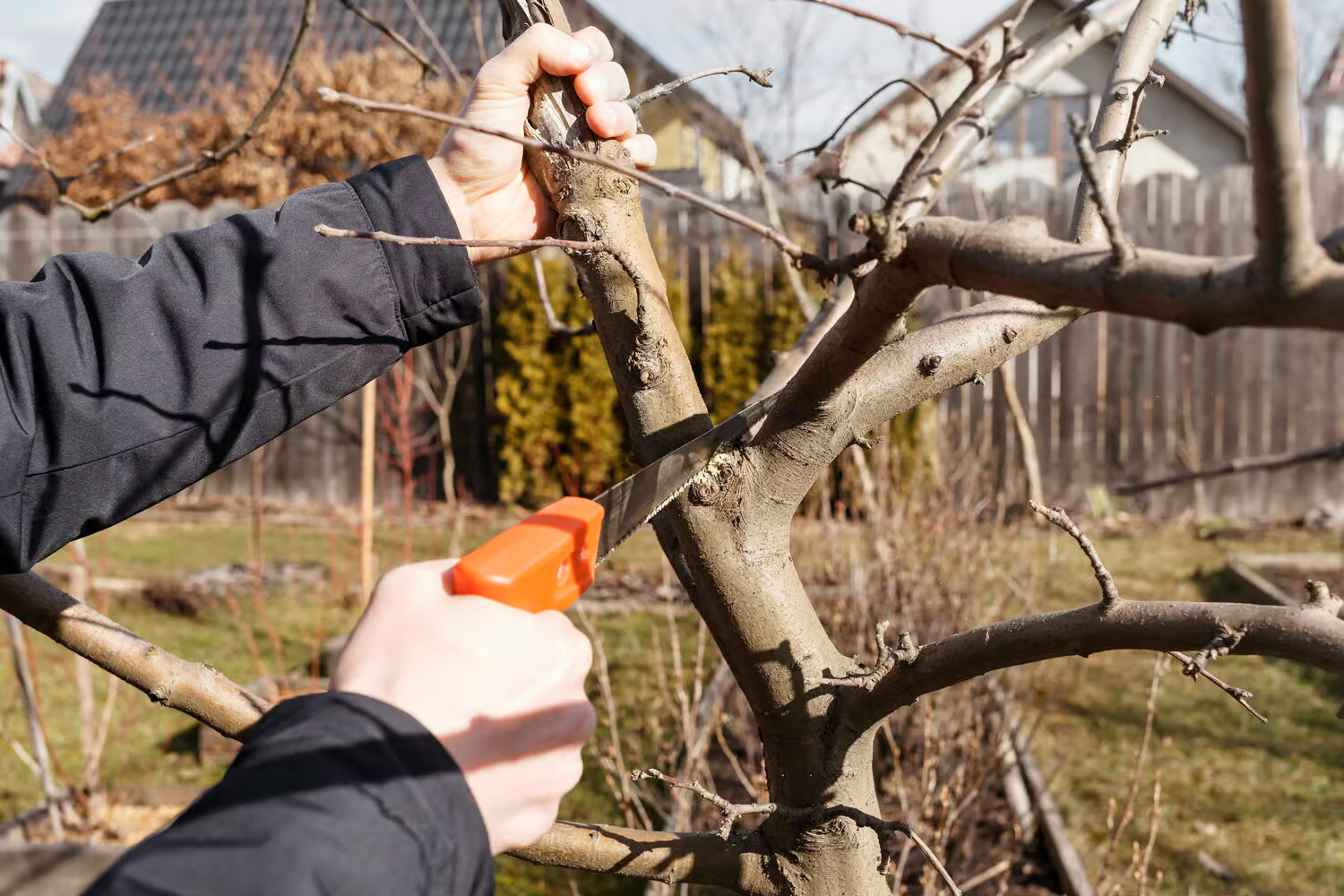
Every year in Seattle, thousands of plants get butchered by well-meaning homeowners and untrained crews who do not understand the biology behind what they are cutting. Hydrangeas that will not bloom because someone pruned the flower buds off. Japanese maples that look like they were attacked with hedge trimmers. Rose bushes producing nothing but weak, spindly canes because nobody had the courage to cut them hard enough.
Right now, in the grey drizzle of a Pacific Northwest February, your garden appears to be in a deep coma. The branches are bare. The ground is cold. The color is gone. But looks are deceiving. Underneath the bark of your maples and inside the canes of your roses, a massive biological engine is revving up. Sap is beginning to mobilize. Buds are swelling. Hormonal signals are firing.
We are standing in what horticulturists call the Goldilocks Window: that fleeting period between the last hard freeze of winter and the explosive bud break of spring. This is the only time of year when you can perform structural pruning safely, cleanly, and with maximum benefit to the plant.
At LandscapingFactory, we do not trim bushes. We practice structural pruning based on plant physiology. This guide explains the science behind every cut and shows you exactly how we wake up Seattle gardens the right way.
Why Pruning Works: The Plant Physiology Behind Every Cut
Apical Dominance and How Pruning Breaks It
Plants are genetically programmed to grow upward, toward the sun. The terminal bud at the very tip of each branch produces a hormone called Auxin that actively suppresses the growth of every bud below it. This is called Apical Dominance, and it is the reason your unpruned rose bush produces one tall, leggy cane with a single flower at the top instead of a thick, bushy plant covered in blooms.
When we cut off that terminal bud in late winter, we stop the downward flow of Auxin. This sends a chemical signal to all the lower buds: the boss is gone, wake up. Multiple buds below the cut activate simultaneously, producing several new branches where there was only one before. This is how we transform a leggy, sparse rose bush into a dense, flower-producing machine.
Why Late Winter Pruning Produces Stronger Growth
Right now, approximately 90% of your deciduous plants' energy is stored in the root system as carbohydrates. The above-ground wood is essentially an empty pipeline waiting for spring. If you prune now, you remove branches before the energy moves up from the roots. When spring arrives, the same massive root system pushes the same volume of stored energy into fewer remaining branches. The result is vigorous, explosive growth on every remaining bud.
If you wait until leaves have already appeared in April, the stored energy has already moved up into the canopy. Cutting branches at that point literally throws away the plant's food reserves. The plant will grow back, but it will be weaker for the entire season.
Roses: The Presidents' Day Protocol for Seattle
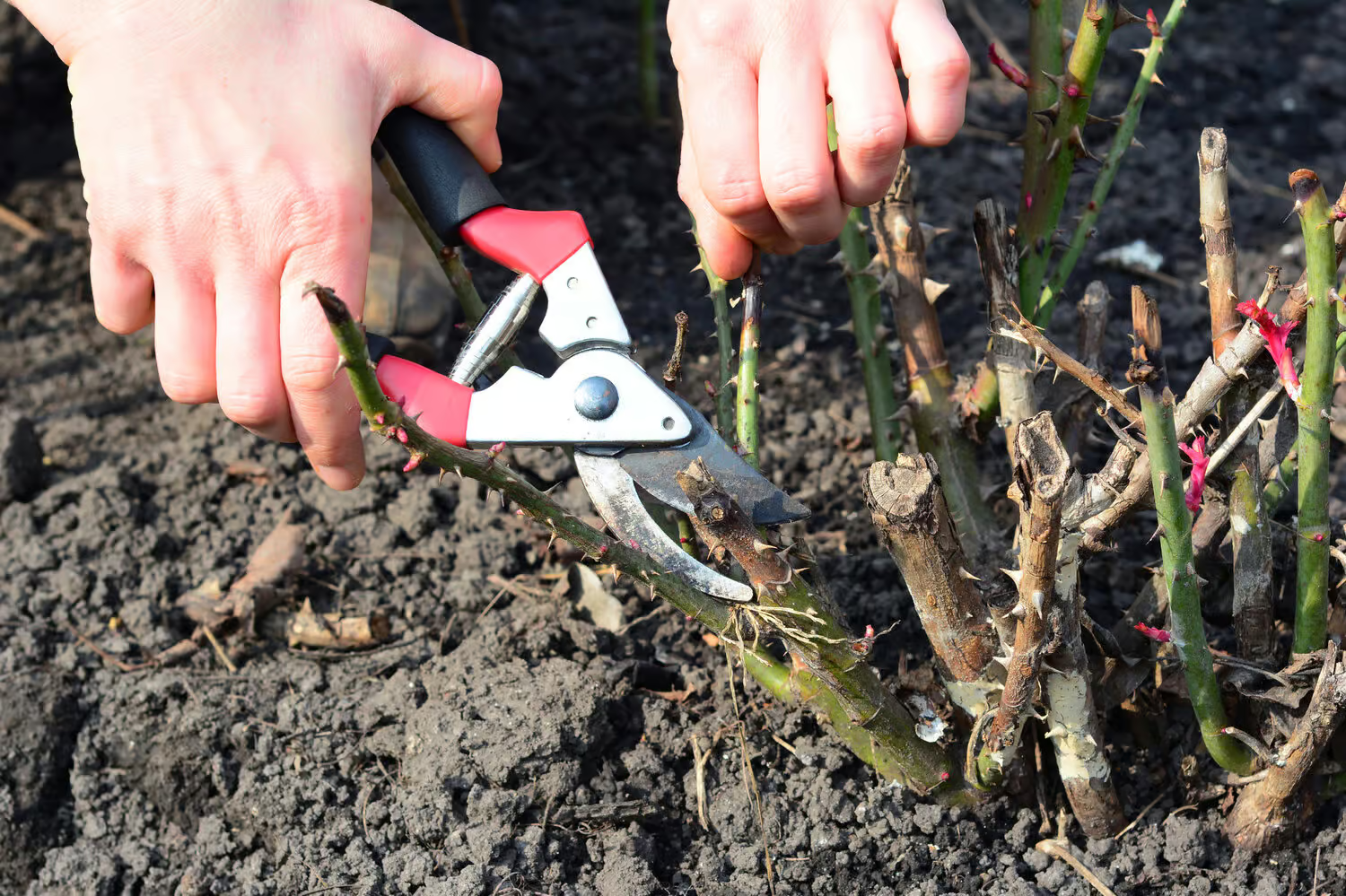
In the Pacific Northwest, Presidents' Day weekend (mid-February) is the traditional starting gun for rose pruning. The date correlates with average soil temperature thresholds that trigger root activity in our climate zone (USDA Zone 8b).
Hybrid Tea and Floribunda Roses
The architecture we build: We prune these into an Open Vase shape — removing center canes entirely to create an open bowl. In Seattle's damp climate, stagnant air inside a dense rose bush is the number one cause of Black Spot (Diplocarpon rosae), the fungal disease that defoliates roses by midsummer.
The height: Be brave. We cut Hybrid Teas down to 12 to 18 inches from the ground. Yes, it looks drastic. But this forces the plant to push thick, strong new canes from the base that can support heavy blooms without flopping over. Leaving the old wood means weak, pencil-thin stems that snap under the weight of the first rain-soaked flower.
The cut angle: Every cut is made at a 45-degree angle, approximately 1/4 inch above an outward-facing bud. This directs new growth outward (reinforcing the open vase shape) and allows water to run off the cut surface instead of pooling and rotting the stem.
Climbing Roses
Do not cut climbing roses to the ground. This is one of the most common mistakes we see. Climbers build a permanent structural framework of main canes over several years. Your job in late winter is to prune the laterals (the side shoots growing off those main canes) back to 2 or 3 buds, while leaving the main structural canes intact and tied horizontally to their support.
Tying canes horizontally is biology, not just tidiness. A horizontally trained cane breaks Apical Dominance along its entire length, causing buds to activate at every node. A vertical cane produces flowers only at the tip. More horizontal training equals more blooms.
Wisteria: Spur Pruning Without Losing the Blooms
Wisteria is one of the most beautiful and most dangerous plants in a Seattle garden. Left unchecked for even a single season, it can crush trellises, pry apart pergola joints, invade gutters, and produce nothing but a jungle of leaves with zero flowers. The frustration of a non-blooming wisteria is one of the most common complaints we hear.
The secret is understanding the spur system.
The Wisteria Spur Pruning Method
Wisteria flowers on short, stubby structures called spurs. These spurs develop on wood that is at least two years old. The long, whippy green shoots that grew last summer will never flower in their current state. They need to be shortened into spurs.
We locate every long shoot from last summer's growth and cut it back to just 2 or 3 buds (approximately 6 inches from the main framework). This concentrates all of the plant's flowering energy into those few remaining buds. The result is massive, cascading flower clusters in spring instead of a tangled wilderness of leaves.
The critical distinction: We never cut the main structural framework — the thick, woody trunks and arms that form the skeleton of the vine. We only shorten the side shoots. Cutting the framework means starting over from scratch.
Is your wisteria all leaves and no flowers? We can fix that.
See our Pruning and Shrub Trimming service for specialist wisteria training.
The Hydrangea Matrix: Which Species Can You Cut in Winter?
This is where more Seattle gardens are ruined than anywhere else. Hydrangeas are the most commonly mispruned plant in the Pacific Northwest because multiple species look similar but have completely opposite pruning requirements.
The Chop Group: Bloom on New Wood (Prune Now)
Hydrangea paniculata (Limelight, Little Lime, Vanilla Strawberry): These bloom on new growth. Cut them back to 12 to 18 inches right now. They will grow fresh stems and flower on every single one this summer.
Hydrangea arborescens (Annabelle, Incrediball): Same rule. Cut hard. They bloom on new wood and respond beautifully to aggressive winter pruning.
The Do Not Touch Group: Bloom on Old Wood (Deadhead Only)
Hydrangea macrophylla (the classic Bigleaf or Mophead with blue or pink flowers): These set their flower buds on last year's stems. Those brown sticks that look dead are loaded with dormant flower buds. Cut them now and you remove every single bloom for this summer. The only winter pruning allowed on macrophylla is removing the old, dried flower heads (deadheading) to tidy the plant. Do not cut the stems.
Every spring, homeowners call us devastated that their Bigleaf Hydrangeas did not bloom. When we inspect, the stems were cut back hard in winter, removing all the flower buds. If you are unsure which species you have, do not prune. We will identify it and prune it correctly.
Japanese Maples: Sculpting, Not Shearing
A Japanese maple is a piece of living sculpture. It is arguably the most valuable ornamental tree in any Seattle garden, and it should never look like a hedge, a mushroom, or a blob. Unfortunately, that is exactly what happens when untrained crews attack them with hedge trimmers.
Japanese maples are among the most commonly butchered trees in the Pacific Northwest, according to PlantAmnesty, the Seattle-based nonprofit dedicated to ending the mistreatment of plants. Proper pruning is an art that requires patience, restraint, and an understanding of the tree's natural growth habit.
The Shelling Technique
Our goal when pruning a Japanese maple is to create distinct layers of foliage with negative space (visible air and light) between them. We call it shelling because the result resembles stacked layers of delicate foliage floating on an elegant branch structure.
The Bird Test: When we finish pruning, a bird should be able to fly through the interior of your maple without touching its wings. If the interior is still an impenetrable tangle, we have not pruned enough. If it looks hollow and stripped, we have pruned too much.
The 1/4 Rule: We never remove more than one quarter of the living canopy in a single year. Japanese maples are slow growers. A bad cut on a mature specimen takes 5 to 10 years to grow out and correct.
Sap Bleeding
If you prune maples in late January through February, they will often bleed sap from fresh cuts during warmer spells. This looks alarming but is largely harmless to a healthy tree. The sap flow is driven by root pressure, not injury. We prefer to complete major structural work on maples before March when sap flow intensifies.
Fruit Trees: Architecture for Maximum Production
Fruit production is a math equation: Sunlight plus Airflow equals Fruit. Every pruning decision on a fruit tree serves one goal — getting more light and air into the interior of the canopy so flower buds develop, pollinators can reach them, and fruit ripens evenly without rotting.
Apples and Pears (Central Leader): Pruned to a Christmas tree silhouette with a single dominant trunk and tiers of horizontal scaffold branches radiating outward. This shape naturally supports heavy fruit loads and allows sunlight to reach every level of the canopy.
Plums and Cherries (Open Center): Pruned to a wine glass silhouette. The central leader is removed entirely, creating an open bowl that maximizes sun penetration. This is critical in Seattle's climate because stone fruits are highly susceptible to Brown Rot, a fungal disease that thrives in damp, shaded conditions. An open canopy dries faster after rain and dramatically reduces infection risk.
If the fruit tree requires a ladder, if branches are thicker than 4 inches in diameter, or if the tree is taller than 15 feet, this is no longer a homeowner pruning project. Since August 2024, Seattle requires tree work to be performed by a Registered Tree Service Provider (RTSP). For large tree pruning, contact an ISA Certified Arborist at treesaregood.org. LandscapingFactory handles shrub, hedge, small ornamental, and small fruit tree pruning. For large tree work, we refer to licensed arborists.
Rejuvenation Pruning: The Hard Reset for Old Shrubs
Do you have Red Twig Dogwoods that have turned brown and woody? Willows that lost their bright color? Spiraea that is leggy and bare at the base? These shrubs are evolved to recover from severe damage. They actually need hard pruning to stay vibrant.
How Coppicing Works
Coppicing is the technique of cutting 30 to 50% of the oldest stems right to the ground, leaving only the youngest, most vigorous growth. Many deciduous shrubs evolved in environments where they were regularly browsed by animals, burned by fire, or broken by ice. Hard pruning mimics these natural disturbances and triggers a vigorous regenerative response.
Red Twig Dogwood (Cornus sericea): We cut the oldest, brownest stems to the ground. The plant responds by shooting up bright, neon-red new stems that will light up your garden next winter. Without this pruning, all the stems eventually turn brown and the signature color is lost.
Willows, Spiraea, Elderberry: Same principle. Aggressive renewal pruning produces the healthiest, most colorful, most floriferous growth.
Tool Hygiene: Why We Sterilize Between Every Tree
In the damp Pacific Northwest, your pruning shears can become a vector for devastating plant diseases. A single contaminated blade can spread Fire Blight (Erwinia amylovora) from an infected apple tree to every other tree on your property in a single afternoon.
Every LandscapingFactory arborist carries a sterilization holster. Between every tree, and between cuts on any tree showing signs of disease, we spray blades with 70% Isopropyl Alcohol. It adds time to the job, but it protects your garden. Think of it this way: a surgeon changes gloves between patients. We sterilize blades between trees. The principle is identical.
The most dangerous pathogens we guard against: Fire Blight on apples, pears, and crabapples; Nectria Canker on maples and beeches; and Bacterial Canker on cherries and plums.
Aftercare: Feeding the Recovery After Pruning
Pruning sends a strong hormonal signal to grow. Fertilizer provides the building blocks for that growth. The timing is synergistic: feed the plant immediately after pruning and you maximize the response.
Immediately after pruning, we apply organic, slow-release fertilizer around the root zone and cover it with 2 to 3 inches of fresh compost mulch. See our Spring Cleanup Guide for how we combine pruning aftercare with a full spring restoration.
What we do NOT do: We never apply wound sealant or pruning paste to cuts. Decades of research on the CODIT (Compartmentalization of Decay in Trees) model has shown that sealants trap moisture and fungal spores inside the wound. A clean, air-exposed cut heals faster and more completely than a sealed one. The tree has its own internal chemical barrier system.
How Much Does Professional Pruning Cost in Seattle?
Pruning is one of the most skill-intensive services in landscaping. Pricing reflects the expertise required, the size of the plant, and the time investment. Here are honest ranges for the Seattle metro area:
| Service | Typical Range | Key Factors |
|---|---|---|
| Rose pruning (up to 10 bushes) | $150 – $350 | Number of plants, variety mix |
| Japanese maple (structural pruning) | $250 – $600 | Tree size, density, access |
| Fruit tree pruning (per tree) | $150 – $400 | Species, size, years since last prune |
| Wisteria training / spur pruning | $200 – $450 | Vine size, structural condition |
| Full property pruning package | $500 – $1,500+ | Property size, plant inventory |
| Rejuvenation pruning (per shrub group) | $100 – $250 | Species, number of stems, hauling |
Prices are estimates for greater Seattle as of 2026. Includes cleanup and hauling of all pruning debris, and post-pruning mulch application.
Your plants are waiting for their spring surgery.
LandscapingFactory provides specialist pruning for shrubs, hedges, small ornamental trees, and small fruit trees across Seattle and the Eastside. Free on-site assessment, species identification, transparent pricing.
Frequently Asked Questions About Winter Pruning in Seattle
What happens if I prune during a freeze? +
Can I prune a tree to reduce its height by half? +
Why are my Clematis not blooming? +
How do I fix a tree that leans to one side? +
Is moss on tree branches harmful? +
What is the Three-Cut Method for large branches? +
Can I prune weeping trees like Weeping Cherry? +
When should I prune Lavender in Seattle? +
Do fruit trees need wound sealant on pruning cuts? +
Why do you disinfect tools between trees? +
Can I use pruned branches as mulch? +
How do I tell the difference between a sucker and a water sprout? +
My Boxwoods have orange leaves. Can I prune them? +
What is the difference between deadheading and structural pruning? +
Why should I hire a specialist instead of doing it myself? +
The Sap Is Rising. The Window Is Closing.
A bad cut on a slow-growing Japanese maple takes 5 to 10 years to grow out. A topped tree produces dangerous water sprouts for decades. A mispruned Hydrangea loses an entire season of flowers. Professional pruning requires species-specific knowledge, sterilized tools, and the restraint to know when not to cut.
Every cut we make in late winter is an instruction we give the plant for how to behave in spring, summer, and beyond.
Similar Posts
Contact Us Today For A Free Consultation
Let's get started.
Tell us what you'd like to tackle when you request a quote and we'll do the rest.