July 26, 2026
Summer Lawn Care in Seattle and Kirkland: Why Your Lawn Is Turning Brown and What to Do About It
Growing up in Kirkland taught us the soil, the seasons, and what holds. We build what lasts here because we live here. That matters.
Summer lawn care in Seattle and Kirkland is nothing like what the back of a fertilizer bag suggests. That bag was written for a homeowner in Ohio, or Georgia, or somewhere with regular summer rainfall and warm-season grass. You have cool-season grass, glacial till clay soil, 37 inches of annual rain packed mostly into winter, and roughly 75 dry days from July through September when your lawn tries to survive on what it stored up in May.
This article covers what actually happens to Seattle and Kirkland lawns between May and September: why the grass turns brown, how much water it really needs, whether it is dormant or dead, what to do about brown patches in July, and how much it costs to repair damage once summer stress has already happened.
Why Is My Seattle Lawn Turning Brown in Summer?
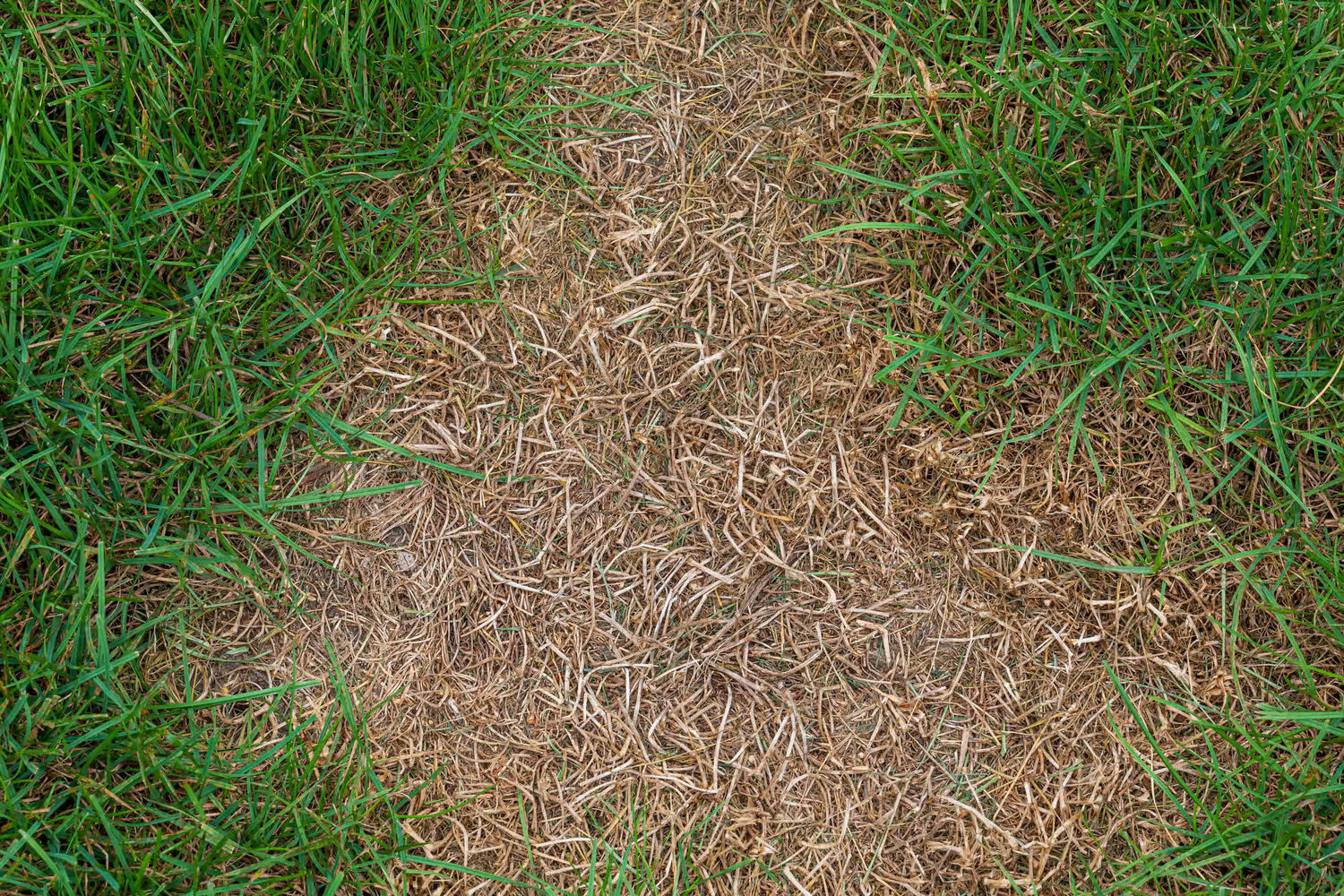
Your Seattle or Kirkland lawn is turning brown in summer for one of three reasons: drought stress, insect damage, or fungal disease. Drought stress is the most common cause, showing up in late June or early July when rainfall drops below one inch per month and temperatures climb above 80 degrees.
Drought stress (the most common cause): Symptoms start along driveway edges, sidewalk strips, and south-facing slopes. Grass blades take on a blue-gray tint first, then fade to straw yellow, then go crispy brown. Footprints stay visible longer because dehydrated blades cannot spring back. This is drought stress or early dormancy, not death.
Crane fly larvae damage: Seattle-area crane fly larvae (Tipula paludosa) feed on grass roots from March through early summer. By June or July, damaged areas show up as irregular brown patches that peel back from the soil when pulled. Bird activity (starlings and crows pecking at the lawn at dawn) is a strong secondary indicator.
Fungal diseases: Red thread appears as pink or reddish patches with visible thread-like structures on the blades. Necrotic ring spot forms distinct donut-shaped brown rings 6 to 24 inches across. Both are more common after heat waves followed by wet conditions.
If the brown areas are along edges and near hardscapes, it is probably drought stress. If the patches are irregular and the grass lifts like a loose carpet when you pull it, it is probably crane fly larvae. If you see rings or colored threads on the blades, it is fungal. Most Seattle and Kirkland brown lawns in July are dormant, not dead, and will recover in fall.
How Much Should I Water My Lawn in Seattle Summer?
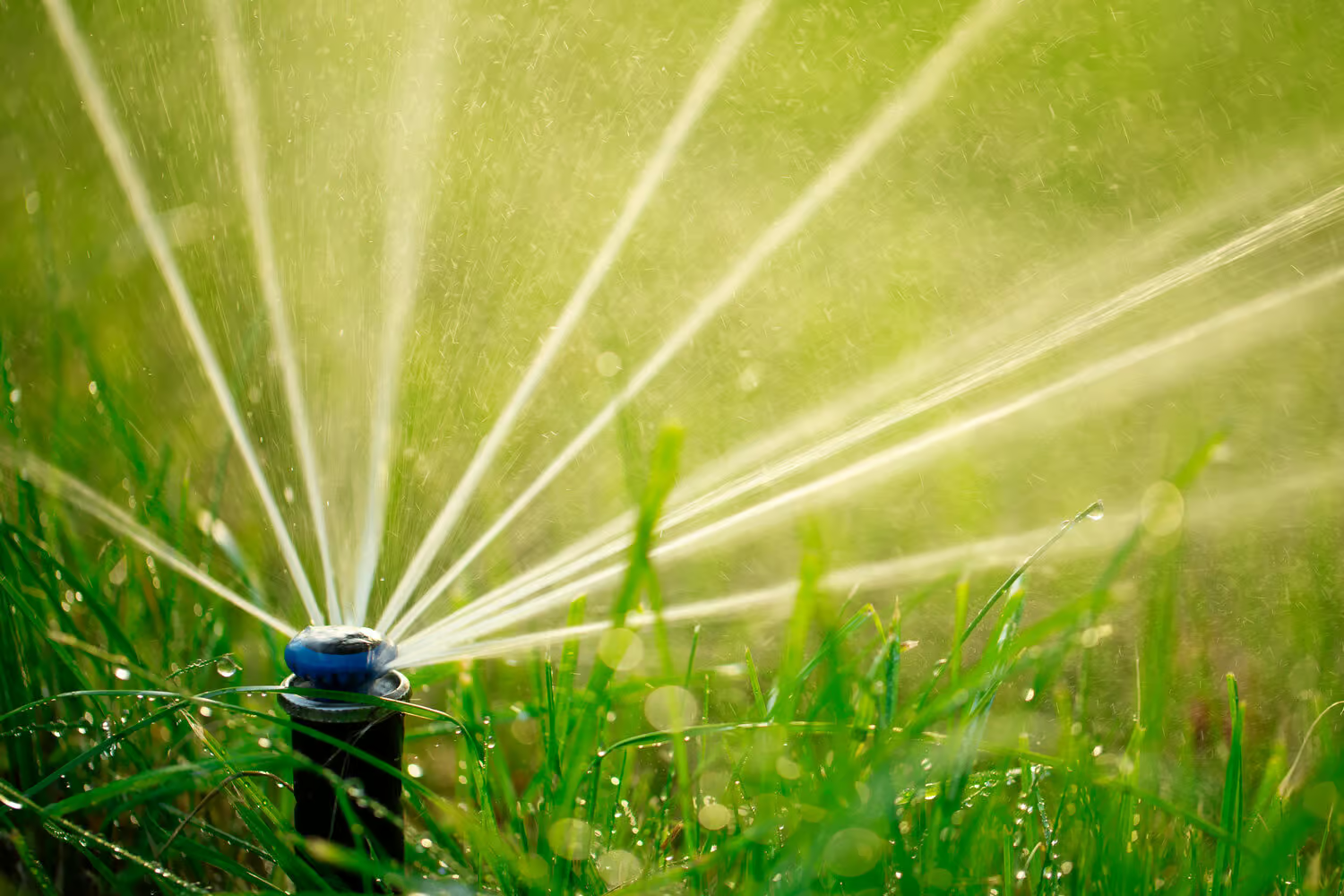
Seattle and Kirkland lawns need about one inch of water per week during summer to stay green, according to Seattle Public Utilities and King County conservation guidelines. Split this into two sessions per week (not seven shallow sessions), run between 5 AM and 8 AM, and always account for rainfall first.
To calibrate your specific system, place straight-sided containers around the lawn while the sprinklers run and time how long it takes to accumulate one inch. Seattle Public Utilities recommends this method because every system is different.
| Summer Watering Approach | Weekly Water Applied | Expected Lawn Appearance | Typical Bill Impact |
|---|---|---|---|
| Full green (active irrigation) | 1–1.5 inches/week | Fully green all summer | +$75 to $200/month (May–Sep) |
| Partial green (deep infrequent) | 0.5–1 inch every 10–14 days | Slightly blue-gray, thin | +$30 to $75/month |
| Protective dormancy (recommended) | 1 inch in July + 1 inch in August | Fully brown/dormant | $0 to $20/month extra |
| No watering at all | Zero | Brown, higher risk of damage in heat waves | $0 |
From May 16 through September 15, Seattle Public Utilities charges a 3-tier summer rate structure specifically designed to discourage heavy irrigation. A household keeping the lawn fully green can see monthly water bills $75 to $200 higher than a household letting the lawn go dormant.
For irrigation system tune-ups, head adjustments, and smart controller programming, see our Seattle Irrigation Service.
Is My Lawn Dormant or Dead? The Screwdriver and Pull Tests
Cool-season grass can survive 4 to 6 weeks of summer drought without damage if temperatures stay moderate. Past that window, the crown (the growing point at the base of each grass plant) begins to die, and no amount of fall watering will bring it back. Two simple tests tell you which side of the line your lawn is on.
Test 1 — The screwdriver test: Push a long flathead screwdriver into the soil in a brown area. If it slides in easily, the soil has moisture and the lawn is likely in dormancy. If it bounces off hard, compacted soil, your turf is genuinely dry and needs deep irrigation. Used by Pacific Northwest horticulturists as the first diagnostic step.
Test 2 — The pull test: Grab a handful of brown grass and pull firmly. If the grass resists and the roots hold the soil, the plant is alive and dormant. If the grass pulls out like loose carpet with shallow roots, you are looking at crane fly larvae damage or dead crowns. Both require replacement, not just watering.
Test 3 — The bounce test: Walk across the brown area and look behind you. Dormant grass springs back within 30 to 60 minutes. Dead grass stays flat permanently.
Screwdriver slides in + grass resists pulling + grass bounces back = Dormant. Your lawn will recover with fall rain. Water once in July and once in August to protect crowns. Screwdriver hard to push + grass lifts like carpet + grass stays flat = Dead. Plan for fall overseeding or consider lawn alternatives. Screwdriver moderate + patches peel back + bird activity = Crane fly damage. Soil treatment in spring and fall will prevent recurrence.
What Causes Brown Patches in Seattle Lawns in July?
Irrigation coverage gaps (the #1 cause): Most sprinkler systems installed 10+ years ago have heads that have drifted out of alignment or developed clogs. During peak summer, undersprayed zones show up as brown patches that form the exact outline of where one sprinkler head reaches and the next one cannot.
Soil compaction: Pacific Northwest glacial till compacts aggressively under foot traffic and pets. Compacted areas cannot absorb water, so even with proper irrigation, the grass in those zones suffers first during drought stress.
Crane fly larvae: The damage often does not become visible until July when drought stress reveals how much of the root system has been consumed over the winter.
Dog urine spots: High nitrogen concentrations in dog urine burn grass, creating circular brown patches usually surrounded by a ring of extra-green grass. Rinsing within 8 hours of urination prevents the burn.
Fungal disease: Necrotic ring spot creates distinctive donut-shaped brown rings. Red thread appears as pinkish patches. Both require adjusting watering practices; severe cases may require fungicide application, which requires a WSDA Commercial Pesticide Applicator license in Washington State.
For persistent brown patches that do not recover, see our guide on what to do when your lawn has failed.
Diagnose Your Brown Patches Before They Spread.
Free lawn assessment for Kirkland and Seattle. We identify the cause before quoting any service.
Should I Let My Lawn Go Dormant in Seattle Summer?
King County, Seattle Public Utilities, and most Pacific Northwest horticulturists recommend letting lawns go dormant as the default choice. But dormancy has tradeoffs.
The case for embracing dormancy: Significantly lower summer water bills, zero irrigation labor from late June through early October, and lower environmental impact. Healthy cool-season grass that has been allowed to go dormant typically greens up within 2 to 3 weeks of the first sustained fall rain.
The case against dormancy: Lawns allowed to go dormant year after year become progressively thinner, which creates openings for moss and weed invasion. Dormancy is not recommended for newly seeded lawns or lawns already weakened by compaction, pest damage, or moss.
The middle path — protective dormancy: Let the lawn go dormant, but water deeply once in July and once in August to protect the crowns. This uses minimal water, maintains crown viability, and still delivers most of the water conservation benefits. Your lawn stays brown all summer. It also stays alive.
| Approach | Water Used | Lawn Health Impact | Best For |
|---|---|---|---|
| Fully green (high irrigation) | 12–18 inches over summer | Optimal if done correctly, but summer stress still reduces density | Lawns with heavy use, properties showing for sale |
| Protective dormancy (recommended) | 2–3 inches over summer | Preserves crowns, prevents thinning, recovers fully in fall | Most established Kirkland and Seattle lawns |
| Full dormancy with no watering | 0 inches | Risk of thinning over multiple years, heat wave vulnerability | Healthy established lawns in cool summers only |
When Should I Start Watering My Lawn in Seattle?
Most Seattle and Kirkland homeowners should not activate their irrigation system before mid-May, and often not until early June. Spring rainfall typically meets or exceeds grass water needs through April and early May. Turning sprinklers on too early trains grass roots to stay shallow, making the lawn more vulnerable when summer drought actually arrives. Use the screwdriver test: only water when it shows dry soil.
Turning on the sprinklers on a fixed calendar date regardless of rainfall. If it rained 2 inches last week, your lawn does not need irrigation this week. Smart controllers with rain sensors automatically adjust, but most Seattle systems still run fixed schedules that waste water during wet stretches and under-deliver during dry ones.
5 Summer Lawn Problems Getting Worse While You Wait in Seattle
1. Soil compaction deepens during dry weather. Pacific Northwest glacial till clay gets harder as it dries. Foot traffic that the lawn shrugs off in wet spring conditions causes measurable compaction by July. Compacted soil prevents fall rain from penetrating, and moss conditions develop exactly where compaction is worst.
2. Crane fly larvae finish their feeding cycle. By July, larvae have consumed the root systems that were still functional in May. Fall aeration and soil amendments address the root cause, but only if scheduled at the right window.
3. Thatch accumulates beyond the critical threshold. Healthy lawns have a quarter-inch thatch layer. Stressed summer lawns typically double that during July and August. By fall, thatch depths exceeding half an inch block water, air, and seed from reaching the soil, which compromises fall overseeding results.
4. Weed seeds germinate in thin summer turf. Crabgrass germinates when soil temperatures exceed 55 degrees and continues spreading all summer in any thin or bare spot. A single plant produces thousands of seeds before the first frost.
5. Late-July heat compounds all of the above. The hottest weeks of Seattle's summer stack all five problems together. July scheduling for lawn restoration services in Kirkland and the Eastside is booked out 3 to 6 weeks.
Summer Lawn Stress Compounds. Do Not Wait for September.
Free assessment for Seattle and Kirkland lawns.
How Much Does Summer Lawn Repair Cost in Kirkland and Seattle?
| Service | Typical Cost (2026) | When Needed |
|---|---|---|
| Sprinkler system tune-up (head adjustment + leak check) | $150–$400 | Any brown patches from irrigation coverage gaps |
| Core aeration (standard 5,000 sq ft lot) | $100–$300 | Compacted soil, thin turf, before overseeding |
| Overseeding (after aeration) | $150–$400 | Fall recovery after summer stress |
| Lime application (pH correction) | $50–$150 | Preparing soil for fall overseeding |
| Sod patch (small area, 200 sq ft) | $340–$600 | Dead spots that cannot recover from seed |
| Full lawn renovation (1,000 sq ft) | $1,700–$3,000 | Severe damage, extensive dead areas |
| Irrigation installation (new system, standard lot) | $3,000–$10,000 | Chronic drought stress without existing irrigation |
The most cost-effective summer repair strategy: diagnose the cause before spending on the surface. A $300 aeration plus overseeding on a lawn with broken sprinkler heads will fail again next summer. A $200 irrigation tune-up plus the same aeration will solve the problem for years.
For what monthly lawn care plans include and how they prevent summer repair bills, see our Monthly Lawn Care Cost Guide.
Summer Lawn Problems? We Diagnose Before We Quote.
Free assessment for Kirkland and Seattle. Identify the actual cause of brown patches before any service is scheduled.
Frequently Asked Questions About Summer Lawn Care in Seattle and Kirkland
Why is my lawn turning brown in June in Seattle? +
How often should I water my lawn in Seattle summer? +
How much water does a lawn need in Kirkland summer? +
Is my lawn dead or just dormant? +
Should I let my lawn go dormant in Seattle? +
When should I start watering my lawn in Seattle? +
What causes brown patches in my lawn in July? +
Will my brown lawn come back in fall? +
Can I fertilize my Seattle lawn in summer? +
Is crabgrass a problem in Seattle lawns? +
What is the screwdriver test for lawns? +
Do Seattle water rates change in summer? +
How do I know if I have crane fly damage? +
Can I overseed in summer in Seattle? +
Does LandscapingFactory serve Kirkland and Seattle summer lawn needs? +
Summer Does Not Wait. Your Lawn Does Not Either.
Most Seattle homeowners over-water and under-diagnose. They keep the sprinklers running on a fixed schedule, and the actual cause — crane fly, compaction, irrigation coverage gap — is never addressed. The path forward is simpler than most summer lawn advice suggests: diagnose before treating, water deeply and infrequently, let the lawn go dormant if that fits your budget, protect the crowns with minimal July and August watering, and fix coverage gaps before September overseeding.
For help deciding whether your lawn is worth restoring or whether it is time for a different solution, see our Lawn Replacement Decision Guide. For recurring weekly lawn maintenance in Kirkland, we offer consistent crews and a full seasonal treatment calendar.
Summer Lawn Diagnosis for Kirkland, Seattle, Bellevue, Redmond, and the Eastside.
Free on-site assessment. We identify the actual cause of brown patches before any service is quoted.
Similar Posts


Contact Us Today For A Free Consultation
Let's get started.
Tell us what you'd like to tackle when you request a quote and we'll do the rest.