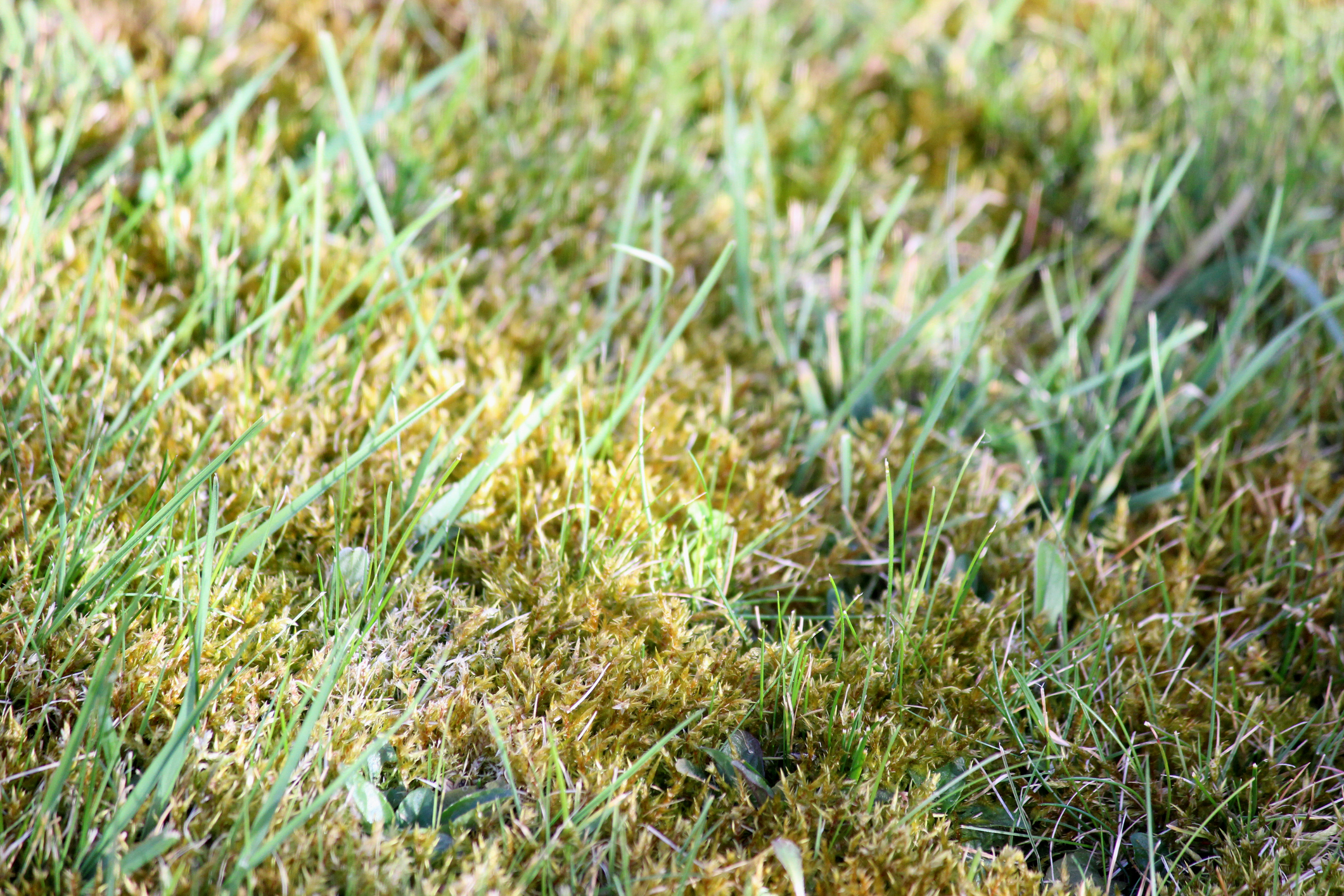
If you are researching lawn replacement in Seattle or Kirkland, the question underneath the search is usually not 'how do I fix my lawn.' You have already tried to fix your lawn. Probably multiple times. You have spread seed in September. You have laid down lime. You have hired a lawn service, fired them, hired another one. You have bought bags of moss killer that said 'results in 2 weeks' and watched the moss come back anyway.
The real question is whether you should keep trying, or whether it is time to do something different. This article is for the Seattle or Kirkland homeowner standing in their yard, looking at a lawn that has failed three years in a row, trying to decide: one more restoration attempt, or turf, or something that is not grass at all.
We install and maintain lawns, we install artificial turf, and we design landscape conversions. We have no incentive to push you toward any specific answer because we benefit from all three. The only bad decision is to keep doing the same thing that has not worked for three years and hope this time is different.
Should I Replace My Lawn or Try to Fix It Again?
The question comes down to a single diagnostic: is the problem your lawn is having solvable with the resources you are willing to commit, or is it structural? A lawn that fails because of skipped aeration, acidic soil, and missed overseeding is fixable. A lawn that fails because 80% of the yard is under dense tree canopy, stays saturated 9 months a year, and dogs run the same path every morning is not fixable in any realistic sense.
The Honest Question
Before spending another dollar on your failed lawn, answer one thing: in the last 5 years, how many times have you restored, renovated, or aggressively treated this lawn? If the answer is two or more, and the lawn is failing again, you are dealing with structural conditions. Two restorations that both failed is the pattern. Not bad luck. Not the wrong company. The site itself is telling you something.
5 Signs Your Seattle Lawn Is Fixable (And Worth Fixing)
1. The lawn has been neglected, not structurally compromised. If the problem list is a maintenance backlog — never aerated, never limed, broken irrigation heads — the lawn is fixable. A full renovation typically brings a neglected Kirkland or Seattle lawn back to health within one full growing season.
2. The yard gets at least 4 hours of direct sun per day. Cool-season grass needs a minimum of 4 hours of direct sunlight daily to maintain density. Partial shade is manageable with shade-tolerant seed blends. Full shade under mature conifers is not.
3. Soil test shows pH below 6.0 but drainage works. Most Seattle soil is acidic (5.0 to 5.5 pH range) because of glacial till and decades of rainfall leaching. This is correctable with lime applications. As long as water actually drains through the soil instead of sitting on top, acidic pH is one of the most solvable lawn problems in the Pacific Northwest.
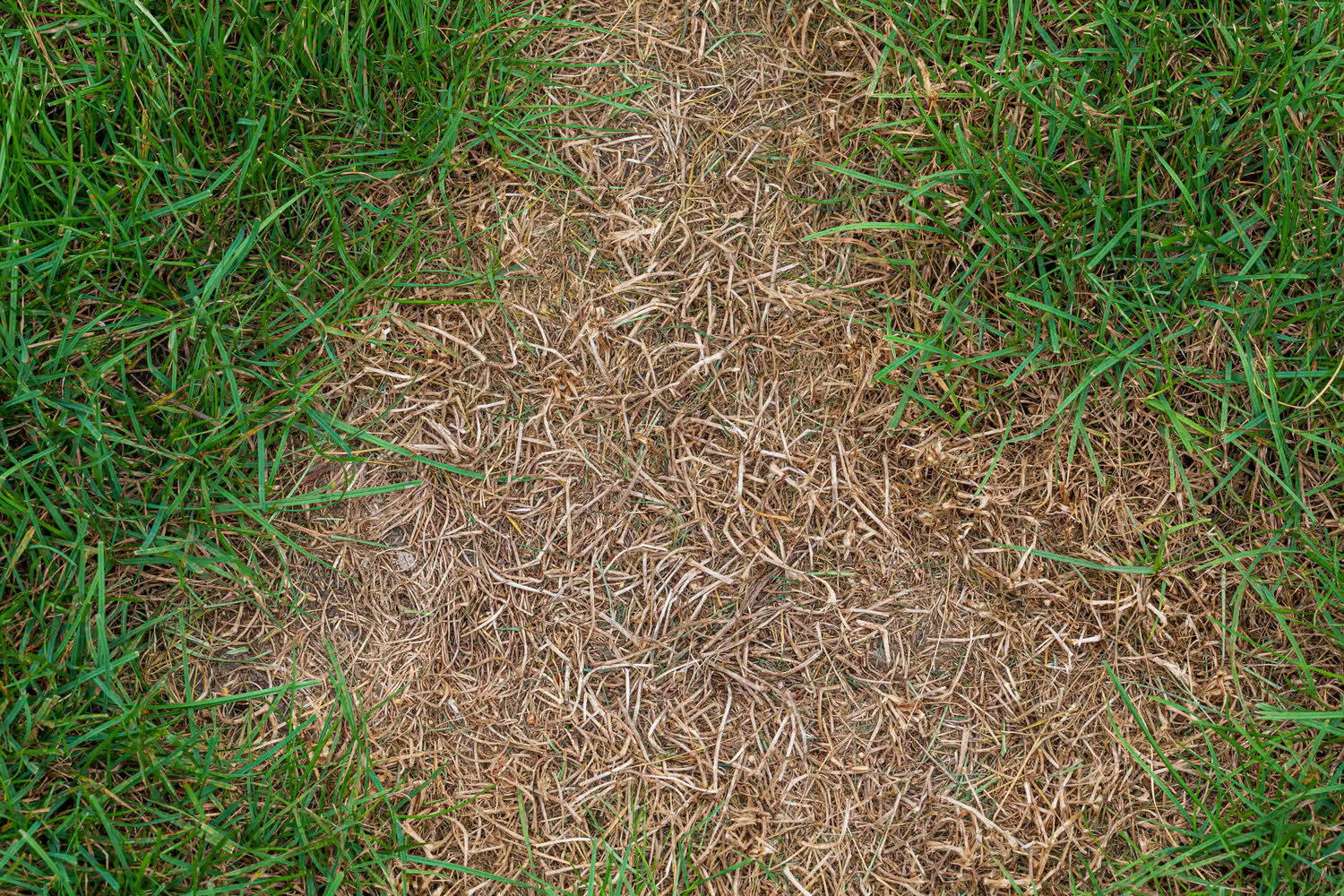
4. Failed areas are less than 50% of the total lawn. Bare spots and moss-dominated sections covering less than half of the lawn are restorable through aggressive overseeding after aeration.
5. The lawn had good density at some point in the last 5 years. A lawn that used to be thick and green but has declined is fixable. The genetic potential of the grass and the soil viability have already been proven.
The Verdict on Fixable
If you checked three or more of these five signs, a proper restoration has a strong chance of working. Most failed restoration attempts in Seattle and Kirkland are not failures of the lawn — they are failures of the restoration protocol. Skipping lime, seeding too late, inadequate aeration, and mowing too short all kill the result even when the site is viable.
For the full Seattle lawn restoration protocol — aeration, lime, overseeding, timing — see our Lawn Aeration Seattle Guide.
5 Signs Your Lawn Will Keep Failing No Matter What You Do
1. More than 60% of the lawn is under dense tree canopy. Mature Douglas fir, Western red cedar, and Big Leaf maple create conditions where grass cannot survive: full shade, acidic needle drop, aggressive surface roots, and reduced airflow. Kirkland neighborhoods like Finn Hill, Bridle Trails, and parts of Market have canopies that make significant lawn areas structurally non-viable. No restoration fixes this.
2. The yard stays saturated more than 4 months per year. Heavy clay soil with poor drainage keeps water sitting at root level for much of the Pacific Northwest wet season. Grass roots in these conditions rot and cannot establish. Drainage correction is possible but expensive ($5,000 to $20,000) and sometimes not enough.
3. Dog runs destroy the lawn faster than it can regrow. Two or more dogs running the same routes create damage cycles that exceed the recovery capacity of cool-season grass. No amount of overseeding keeps up.
4. The lawn has been restored twice or more and failed each time. Two serious restoration attempts that both resulted in failure within 2 to 3 years means the conditions making restoration fail have not been identified or cannot be corrected. Additional restoration attempts are not investments — they are donations.
5. The total cost of ongoing maintenance exceeds $3,000 per year with no improvement. At that spending level, the annual payment approaches the one-time cost of a landscape conversion that would solve the problem permanently.
The Verdict on Unfixable
If you checked two or more of these five signs, additional restoration attempts will likely produce the same disappointing result. The site is not compatible with natural grass and the correct response is to change what you are trying to grow, not try harder with grass.
Option A: One More Lawn Restoration in Seattle (The Right Way)
If your lawn is fixable, a proper restoration can bring it back to full density within one growing season. But the restoration has to be done correctly, not in pieces, and not on the wrong timeline.
1
Soil test
Before anything else. Confirm pH, nutrient deficiencies, and any structural issues with the soil. This $20 to $50 test prevents $3,000 in misdirected effort.
2
Moss treatment
Iron-based moss control applied 4 to 6 weeks before aeration. Kills existing moss before it gets disturbed and redistributed during aeration.
3
Core aeration
Pull 2 to 3 inch cores from the soil to relieve Pacific Northwest glacial till compaction. Twice if the compaction is severe.
4
Lime application
Corrects acidic soil pH (most Seattle and Kirkland soil is 5.0 to 5.5). Without this, no amount of seed will establish long-term density.
5
Overseeding with Pacific Northwest cool-season blend
Perennial ryegrass and fine fescue mix, applied at 6 to 8 pounds per 1,000 square feet immediately after aeration.
6
Daily watering for 3 weeks, then weekly mowing
New seed cannot survive summer drought conditions. September restoration works because fall rains begin before the seed matures.
Restoration Component
Cost (1,000 sq ft lot)
Cost (5,000 sq ft lot)
Soil test
$20–$50
$20–$50
Moss treatment
$75–$150
$150–$400
Core aeration
$75–$150
$150–$350
Lime application
$50–$125
$125–$300
Overseeding + seed
$150–$300
$400–$800
Total restoration
$370–$775
$845–$1,900
Followed by $250/mo maintenance
$3,000/year
$3,000/year
For the full breakdown of what monthly lawn care includes after restoration, see our Monthly Lawn Care Cost Guide.
Lawn Restoration for Kirkland, Seattle, and Eastside Properties.
Option B: Replace Your Lawn with Artificial Turf in Kirkland
Artificial turf replacement makes sense when your Seattle or Kirkland lawn has unfixable structural conditions, when you want to eliminate ongoing maintenance, or when the 10-year cumulative cost of natural grass exceeds the one-time turf installation cost.
When artificial turf replacement is the right choice: Dogs are destroying the lawn faster than it can recover. Kids use the yard daily for active play that exceeds grass recovery capacity. The site has structural conditions that make grass non-viable. You are spending $3,000+ per year on maintenance and still not satisfied. You are in the house long-term and want to eliminate yard work permanently.
When artificial turf is NOT the right choice: You are selling the house within 2 to 3 years. The lawn is fixable with restoration and you just have not done a proper one yet. You have large areas (5,000+ sq ft) where the installation cost exceeds $50,000.
Turf Type
Cost per sq ft (installed)
500 sq ft project
1,000 sq ft project
2,000 sq ft project
Standard landscape turf
$10–$14
$5,000–$7,000
$10,000–$14,000
$20,000–$28,000
Pet turf (with drainage)
$12–$18
$6,000–$9,000
$12,000–$18,000
$24,000–$36,000
Premium realistic turf
$15–$22
$7,500–$11,000
$15,000–$22,000
$30,000–$44,000
Proper installation is more than half the cost and almost all the quality. The difference between $10/sq ft and $16/sq ft is the base preparation, drainage system, and installation care — not the turf product itself.
Option C: Convert to Low-Maintenance Ground Cover or Native Plants
The third option that most homeowners do not seriously consider: stop trying to have a lawn, and convert the space to a low-maintenance landscape of native plants and ground covers that actually want to grow in Pacific Northwest conditions.
When landscape conversion is the right choice: Environmental impact matters to you. The yard is rarely walked on or used for recreation. You have deep shade or heavy tree canopy. You want a more interesting, textured landscape with seasonal color instead of a flat green surface.
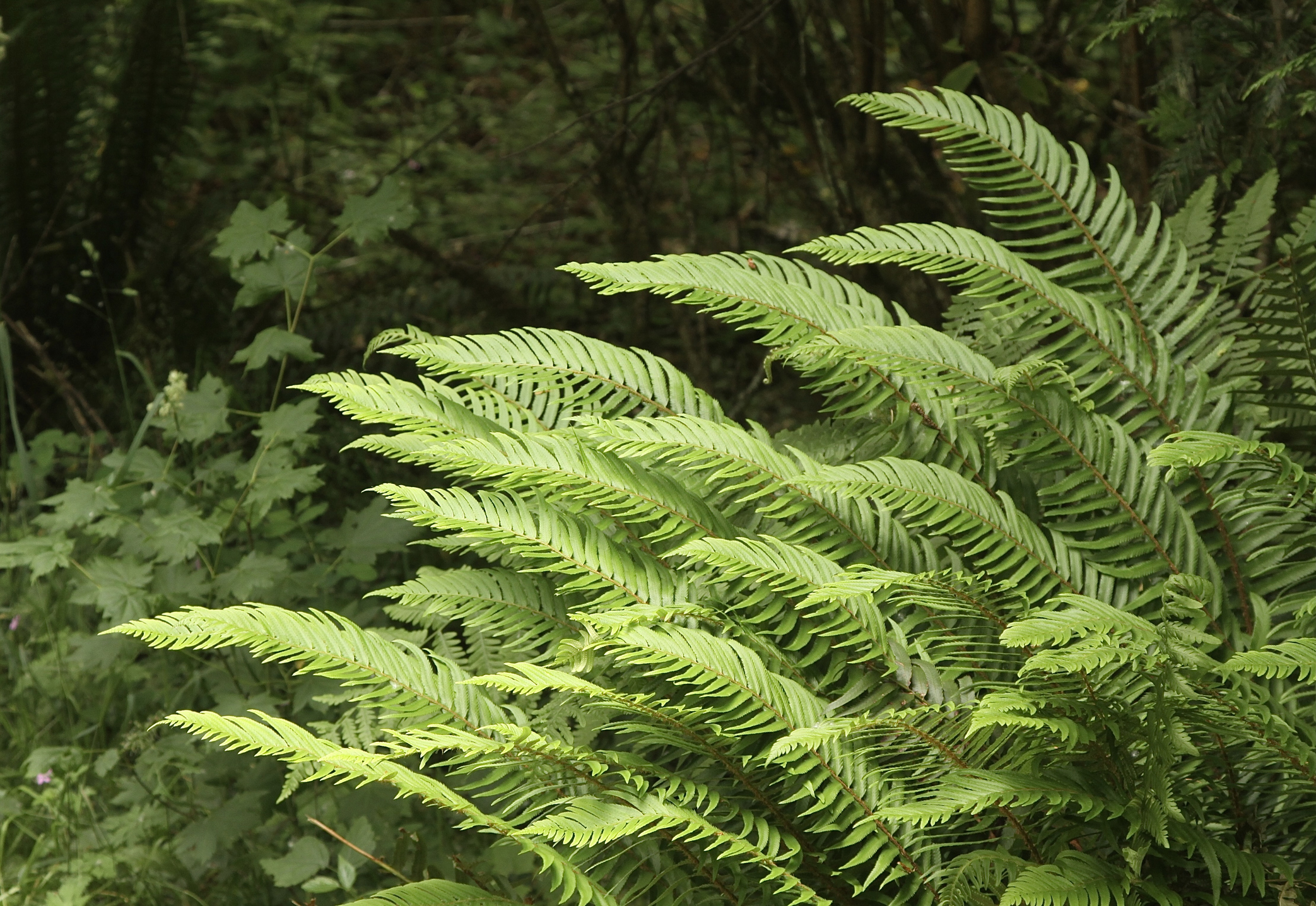
Pacific Northwest native ground covers for lawn replacement: Kinnikinnick (Arctostaphylos uva-ursi) — evergreen, drought-tolerant, spreads horizontally, produces red berries. Sword fern (Polystichum munitum) — handles deep shade, almost zero maintenance once established. Salal (Gaultheria shallon) — evergreen, drought-tolerant, food for wildlife. Creeping thyme — walkable, fragrant, tolerates light foot traffic. Oregon grape (Mahonia aquifolium) — Washington State flower, evergreen, wildlife-friendly. Intentional moss — thrives in exactly the conditions where grass fails.
Lawn Replacement Cost Comparison in Seattle (5-Year Total)
5-Year Cost Breakdown (1,000 sq ft)
Option A: Restore + Maintain
Option B: Artificial Turf
Option C: Native Conversion
Year 1 up-front cost
$1,000–$2,000 (restoration)
$12,000–$15,000 (installation)
$6,000–$10,000 (design + install)
Year 1 maintenance
$2,500–$3,500
$200 (optional cleaning)
$800–$1,200 (establishment)
Years 2–5 annual maintenance
$2,500–$3,500/year
$200–$400/year
$400–$800/year
5-YEAR TOTAL
$11,000–$16,000
$13,000–$17,000
$8,000–$13,000
What you have after 5 years
A maintained lawn, ongoing cost
A 15-year product at year 5/15
An established low-maintenance landscape
The 5-year numbers are closer than most Seattle homeowners expect. Restoration plus monthly care and artificial turf installation land within $2,000 to $3,000 of each other for most Kirkland properties. Landscape conversion is the lowest-cost option long-term and the highest-impact option environmentally.
Frequently Asked Questions About Lawn Replacement in Seattle and Kirkland
Should I replace my lawn or try to fix it again? +
Fix it if it is structurally viable (decent sun exposure, drainage works, less than 50% failed area, and has been green in the last 5 years). Replace it if it has failed two or more restoration attempts, is under dense tree canopy on most of the property, stays saturated for months at a time, or is destroyed by dog or kid use faster than grass can recover.
How much does lawn replacement cost in Seattle? +
Lawn replacement in Seattle ranges from roughly $4 per square foot for basic native ground cover conversion up to $22 per square foot for premium artificial turf installation in 2026. A typical 1,000 square foot front yard in Seattle or Kirkland costs $4,000 to $8,000 for native conversion, $8,000 to $15,000 for artificial turf, and $800 to $1,900 for restoration plus ongoing maintenance.
When should I give up on my Seattle lawn? +
Two restoration attempts that both failed within 2 to 3 years is the strongest signal. Other signals: annual maintenance exceeding $3,000 with no visible improvement, more than half the yard under dense shade, dog routes destroying the grass faster than regrowth, or drainage problems that keep soil saturated for months. At that point, the site is incompatible with natural grass and a different solution is required.
Is replacing my lawn with turf worth it in Kirkland? +
For a Kirkland homeowner with dogs, kids, or unfixable site conditions who plans to stay 5+ years, artificial turf typically pays back within 6 to 8 years and eliminates yard work. For short-term owners or properties where grass is genuinely viable, turf is overkill. The 5-year cost is actually close to equivalent for restored grass and installed turf on typical properties.
What are the best alternatives to grass in Seattle? +
The Pacific Northwest has strong native ground cover and plant options: kinnikinnick, sword fern, salal, creeping thyme, Oregon grape, and intentional moss gardens. These thrive in Seattle and Kirkland conditions that defeat grass: shade, acidic soil, and heavy winter rainfall. Conversion costs $4 to $20 per square foot depending on plant selection and design complexity.
Why does my Seattle lawn keep dying every year? +
The most common reasons in this climate: acidic soil that has never been limed, compacted glacial till that has not been aerated, moss that was treated but not removed, skipped overseeding, mowing too short, and irrigation coverage gaps during summer drought. Pacific Northwest lawns require a specific protocol; generic lawn care does not work here. If your lawn has received consistent Seattle-appropriate care and still fails, the site is the problem.
Can I replace part of my lawn and keep part? +
Yes, and this is often the best answer for Kirkland and Seattle properties with mixed conditions. Restore the sunny, viable areas. Install turf in pet zones or high-traffic play areas. Convert shaded areas under trees to native ground cover. One yard can use all three approaches, each where it fits best. This is almost always more cost-effective than forcing one solution on the entire property.
How long does lawn replacement take? +
Restoration takes 2 to 3 weeks of work spread over 4 to 6 weeks, with full density achieved within one growing season (roughly 6 months). Artificial turf installation takes 3 to 7 days for a typical 1,000 to 2,000 square foot area. Landscape conversion takes 1 to 2 weeks for installation, but full establishment of native plants requires 2 to 3 growing seasons before the landscape looks mature.
What is the cheapest way to replace a lawn? +
Basic native ground cover conversion is typically the cheapest lawn replacement at $4 to $8 per square foot, well below turf ($10 to $22/sq ft) or new sod ($1.70 to $3.00/sq ft but requires ongoing maintenance). Kinnikinnick, moss gardens, and creeping thyme are the most affordable established ground covers for Pacific Northwest conditions.
Will lawn replacement hurt my Seattle home value? +
Well-executed replacement of a failing lawn typically improves property value because curb appeal increases. A neglected lawn actively hurts value by signaling deferred maintenance. The specific replacement matters: quality artificial turf and designed native landscapes both add value. Poorly installed turf or an unkempt mulch yard can reduce appeal. Context matters: a turf front yard in a neighborhood of natural lawns may look out of place.
Can I DIY lawn replacement in Kirkland? +
Restoration is partly DIY-friendly if you rent an aerator and handle overseeding yourself, saving $400 to $800. Artificial turf installation is not recommended DIY; Pacific Northwest drainage engineering is specialized and cheap installations fail within 2 to 3 years. Native landscape conversion can be DIY if you have time to source plants and handle the physical labor, though designing for success requires Pacific Northwest horticultural knowledge.
Does artificial turf work for dogs in Seattle? +
Yes, pet turf specifically designed for Pacific Northwest installations handles urine drainage, odor control, and heavy use. Cost runs $12 to $18 per square foot installed for quality pet turf with engineered drainage. Properly installed pet turf eliminates the urine burn spots, muddy paws, and destroyed grass that plague Kirkland and Seattle homeowners with dogs. Improper installation creates odor problems.
Is native plant landscape legal in Kirkland and Seattle HOAs? +
Most Kirkland and Seattle HOAs allow native plant landscapes but may have specific requirements about edges, tidiness, and screening. Check your HOA covenants before committing. King County actively promotes landscape conversion through the Natural Yard Care program. Most HOAs have updated their rules in recent years to accommodate water conservation and native plantings.
How do I know which neighborhoods in Kirkland have grass-compatible soil? +
Most Kirkland neighborhoods sit on Puget Sound glacial till, which is clay-heavy and acidic. This is correctable with lime and drainage improvements. Juanita, Rose Hill, and Houghton tend to have moderate conditions. Finn Hill and Bridle Trails have more mature tree canopy and variable drainage. Market and Moss Bay have smaller lots with often better-amended urban soils. A site-specific soil test ($20 to $50) is the only reliable way to know your specific conditions.
Does LandscapingFactory handle all three lawn replacement options in Kirkland and Seattle? +
Yes. We provide lawn restoration, artificial turf installation, and native landscape conversion across Kirkland (all neighborhoods: Juanita, Rose Hill, Finn Hill, Houghton, Totem Lake, Bridle Trails, Market), Seattle, Bellevue, Redmond, Sammamish, Issaquah, and the broader Eastside. Because we offer all three, our site assessment gives honest recommendations without bias toward a single service. Free on-site evaluations tell you which option fits your specific yard.
The Lawn Is Not the Problem. The Decision Is.
Sometimes the correct answer is to try harder with grass. Many Pacific Northwest lawns are fixable, and a proper restoration produces a lawn you can actually enjoy. Sometimes it is not. The yard has structural conditions that grass cannot overcome, and you are better off choosing turf for the high-use areas or converting to native plants for the shaded areas — or both.