
August 25, 2026
Clearing a Family Home in Seattle: The Estate Cleanout Guide Nobody Wants to Need
Growing up in Kirkland taught us the soil, the seasons, and what holds. We build what lasts here because we live here. That matters.
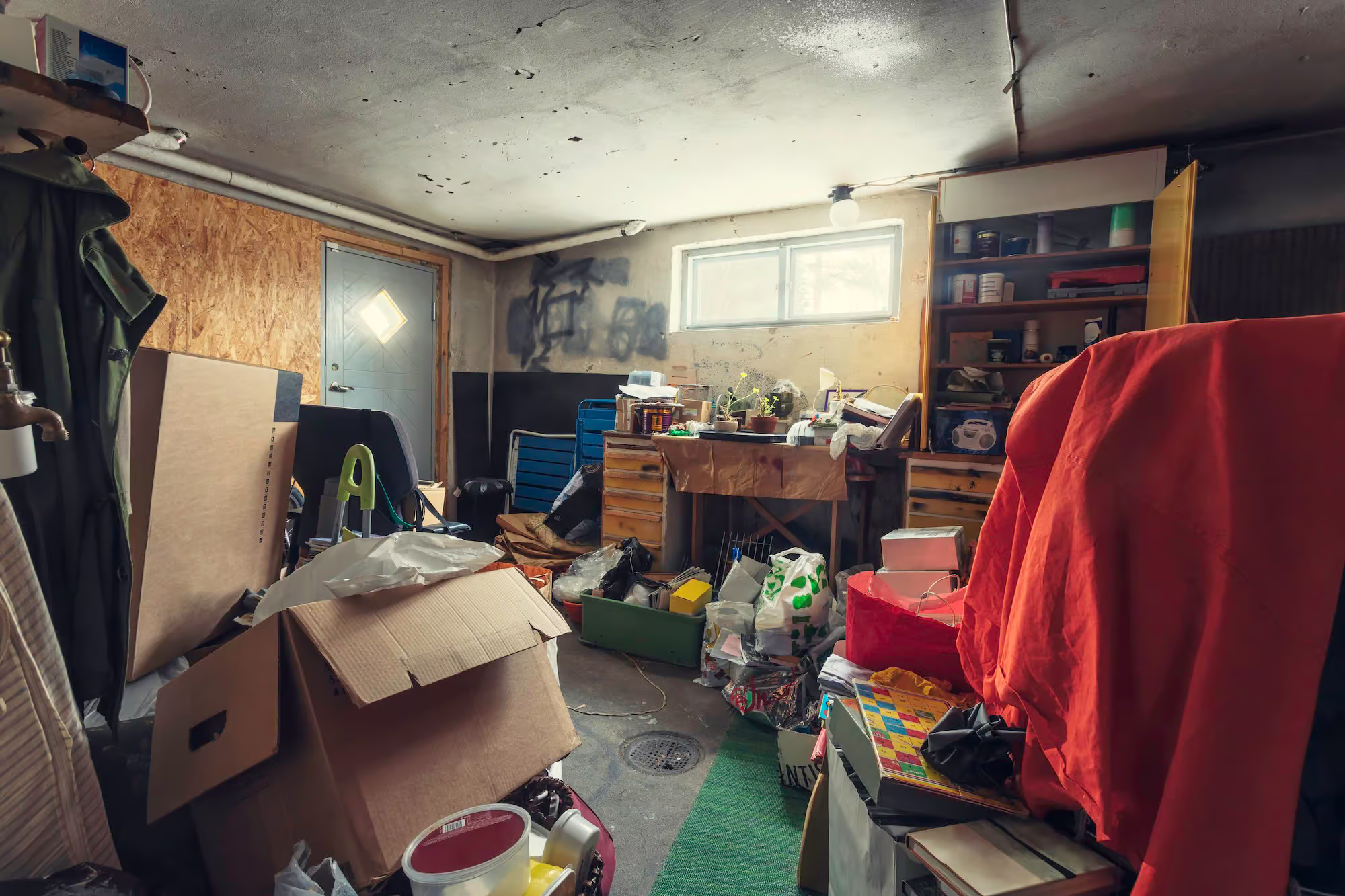
There is no good version of this task. A parent has passed, or moved into memory care, or the family home simply has to be sold — and now somebody has to deal with fifty years of belongings, usually while grieving, usually on a deadline, and usually with siblings who each have opinions and none of whom live nearby anymore.
We are a hauling and cleanout company, so our part of this is trucks and labor. But we have walked into enough of these houses to know that the hauling is the easy part. The hard part is everything before the truck arrives: what to keep, what to sell, what has value, what only looks like it does, who decides, and in what order. Families that get the sequence right come through it intact. Families that skip steps end up donating grandma's ring inside a coat pocket, or paying an estate sale company 40% to sell furniture that was worth less than the commission.
This guide is the sequence. What to do, in order, with real Seattle costs for every option — and honest advice about which parts you should not pay anyone (including us) to do.
First: What Not to Do in the First Two Weeks
The biggest estate cleanout mistakes all happen early, and they all come from moving too fast.
Do not order a dumpster in week one. The family that starts with a dumpster ends with regret. Once the container is sitting in the driveway, it creates pressure to fill it, and things go in that should not have. Sorting comes first; disposal comes last.
Do not let anyone 'just take a few things.' Even in loving families, the free-for-all phase creates resentments that outlast the estate. Nothing leaves the house until there is an agreed process — even a simple one.
Do not throw away paper. Every box of 'old papers' gets opened before it goes anywhere. Estates hide savings bonds in cookbooks, cash in envelopes, deeds in shoeboxes, and safe-deposit keys taped inside drawers. Boring boxes are where the valuables live.
Do not clean out before you have the authority to. If the estate is going through probate, the executor or personal representative controls the belongings — not whichever family member has a truck. Confirm who has the legal say before anything of value leaves the property.
Unless the house must be vacated on a hard deadline, give the family two weeks before any irreversible decision. Grief distorts judgment in both directions — some people want to keep everything, some want it all gone tomorrow. Both feelings fade. The house can wait fourteen days.
The Order of Operations: Documents, Valuables, Then Everything Else
Secure Documents and Obvious Valuables
Wills, deeds, titles, insurance policies, financial statements, tax returns, and anything with account numbers goes into one box that leaves with the executor. Jewelry, cash, firearms, and small heirlooms get gathered and secured. Check the classic hiding spots: freezers, mattresses, coat pockets, book pages, toilet tanks, and the backs of framed pictures. This pass happens before anyone else enters the house.
Identify What Might Have Real Value
Before anything is sold or donated, walk the house for categories that surprise people: mid-century furniture, tools, vinyl records, cameras, watches, first-edition books, original art, and anything genuinely old. A knowledgeable friend, a local appraiser for a flat fee, or an hour of photographing items for online price comparison is enough. The goal is not to squeeze every dollar; it is to avoid giving away the one thing worth four figures.
Then — and Only Then — Sort the Rest
With documents secured and valuables identified, everything remaining is furniture, housewares, clothing, and accumulation. This is where the three-pile method (below) takes over, and where the volume decisions get made: sale, donation, or haul-away.
Estate Sale, Auction, Buyout, Donation, or Cleanout: Which Fits
| Option | How It Works | Best When | Reality Check |
|---|---|---|---|
| Estate sale | Company stages and runs a public sale in the home | House is full of quality, sellable items | Commission 30–50%; needs 2–4 weeks and a worthy inventory |
| Auction / consignment | High-value pieces sold individually | Art, antiques, collections, jewelry | Only for genuinely valuable items; slow |
| Whole-estate buyout | Buyer takes everything for one cash price | Speed matters more than maximizing value | Convenient, but the price reflects that |
| Online selling (DIY) | Marketplace listings, piece by piece | A few valuable items and no time pressure | Enormous time cost per dollar recovered |
| Donation | Charity pickup or drop-off of usable goods | Good furniture and housewares without resale value | Charities decline damaged and dated items |
| Professional cleanout | Crew sorts, donates, recycles, and hauls everything | The volume that remains after the above — or all of it | The only option that ends with an empty house |
Most estates end up combining two or three options: a handful of pieces to auction or family, a donation run for the good furniture, and a cleanout for everything else. The mistake is forcing one option to do a job it cannot — an estate sale cannot empty a house, and a cleanout crew should not be pricing your mother's jewelry.
What Estate Sale Companies Actually Charge
Estate sale companies charge 30 to 50 percent of gross sales, with 35 to 40 percent being typical, usually with no upfront fee. Read the contract for the extras: minimum-sale fees, staffing charges, and crucially, what happens to the unsold remainder. Many contracts charge extra for post-sale cleanout, which means the house is not empty when the sale ends.
Ask any estate sale company what fraction of items actually sells. Even good sales leave 30 to 50 percent of the house behind. Whatever route you choose, someone still has to make the leftovers disappear — which is why 'what happens after the sale' belongs in your plan from day one, not as a surprise in the final week.
The break-even question is simple: will the sale gross enough that 60 percent of it beats the hassle? A house full of quality furniture, tools, and collectibles: often yes. A typical house of well-used furniture and ordinary housewares: frequently no — the donation-plus-cleanout route costs less than the sale nets, and finishes weeks sooner.
The Three-Pile Method That Keeps Families Sane
Simple, old, and it works: everything in the house gets one of three labels — Keep, Sell/Donate, or Go.
Make the piles physical. Colored sticker dots on furniture, three zones in the garage for smaller items. Ambiguity is where family arguments start; a sticker is a decision made.
One room at a time, finished before the next. A house where every room is half-sorted feels endless and demoralizes everyone. A house with four done rooms and six untouched ones feels like progress.
Give distant family a deadline and photos. The sibling in Texas gets a photo album of tagged items and two weeks to claim. After the deadline, the plan proceeds. This single rule prevents the most common estate stall: the house that sits for a year because someone might want the dining set.
Handle the sentimental trap honestly. The kindest reframe we have seen families use: keeping one meaningful item honors a person more than storing thirty boxes of them. Photograph the rest before it goes; photos hold the memory without holding the square footage.
Sorting done, and the volume is overwhelming?
Estate cleanouts handled with care. Firm quote after a free walkthrough.
What a Professional Estate Cleanout Includes and Costs in Seattle
When the keeping and selling is decided, the cleanout crew does the rest. Here is what that looks like when it is done right, and what it runs in Seattle in 2026:
The scope: Every room, closet, attic, crawl space, garage, and outbuilding cleared. Items sorted as they are loaded — donation, recycling, disposal — not tipped blind into one truck. Anything personal that surfaces mid-cleanout (photos, documents, jewelry, cash) set aside and handed to the family, every time, without being asked. The house broom-swept when it is empty.
| Cleanout Type | Typical Cost (2026) | Timeline |
|---|---|---|
| Partial cleanout (single area, 1–2 loads) | $450–$800 | Half-day to one day |
| Full whole-house estate cleanout | $800–$3,500+ | One to two days |
| Heavy-accumulation / hoarding condition | Quoted by scope | Multiple days; on-site assessment required |
Every reputable quote should include all labor, hauling, dump fees, and donation runs — ours do. Any quote that does not itemize disposal is hiding a surprise. Ask specifically before signing.
Working from out of town: A large share of Seattle estate cleanouts are managed by an executor in another state. The remote version works fine: video walkthrough for the quote, keys via the realtor or a neighbor, photo documentation of anything personal found, photos of the empty house when done. You do not need to fly in for the trucks.
Similar Posts



Contact Us Today For A Free Consultation
Let's get started.
Tell us what you'd like to tackle when you request a quote and we'll do the rest.